
Grueber Germany Launches iSpring Digital Bogie Monitoring Technology for High-Speed and Intercity Trains Ahead of InnoTrans 2026
German manufacturer Grueber unveils Steel Spring Generation 4.0 and iSpring digital sensors for high-speed train bogie predictive maintenance.

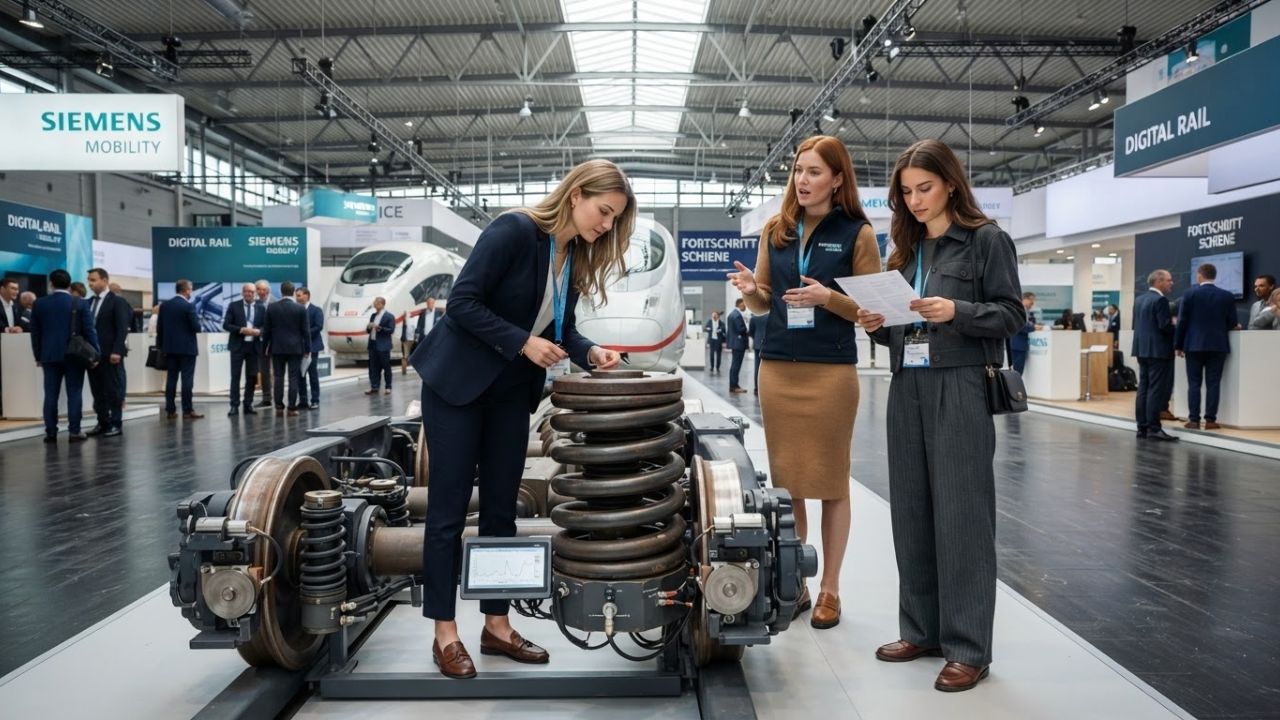
Image generated by AI
German industrial manufacturer Federnwerke J.P. GRUEBER GmbH & Co. KG is introducing its "Steel Spring Generation 4.0" and "iSpring" digital monitoring systems ahead of InnoTrans 2026 in Berlin. By embedding real-time sensor technology into mechanical bogie suspension springs, Grueber enables railway operators—including Siemens, Alstom, Stadler, Hitachi, and Indian Railways—to shift from scheduled inspections to condition-based predictive maintenance.
The Core Transit Update
[BERLIN, Germany, Sept. 2, 2026] — Technical previews released by Hagen-headquartered engineering specialist Federnwerke J.P. GRUEBER detail a major digital evolution in rolling stock suspension. Ahead of the global InnoTrans 2026 trade exhibition taking place from September 22 to 25, 2026, in Berlin, Grueber is transforming traditional mechanical springs into data-generating digital assets.
Operating continuously since the industrial revolution with railway production dating to 1880, Grueber’s new "iSpring" digital measurement system addresses a primary cause of unexpected train delays: unpredicted bogie suspension wear. By transmitting real-time vibration, load stress, and temperature metrics directly to maintenance depots, the technology allows operators to detect early mechanical fatigue before component failure occurs.
The bogie—the structural undercarriage framework housing train wheels, axles, and suspension—absorbs tremendous kinetic forces during high-speed travel. Mechanical springs absorb track shocks, maintain vehicle stability, and protect passenger cabins from vibration.
Under traditional maintenance models, suspension components are inspected manually or replaced at fixed mileage intervals regardless of actual wear. Grueber’s iSpring digital architecture replaces fixed replacement cycles with real-time condition monitoring:
- Embedded Sensors: Measures load distribution, dynamic stress, and micro-cracks under high-speed operation.
- Predictive Analytics: Transmits performance data via wireless gateways to depot maintenance platforms.
- Supply Chain Integration: Supplies global rolling stock manufacturers including Alstom, Siemens, Stadler, Hitachi, and major passenger operators such as Indian Railways.
Transit Schedule & Route Specifications
| Engineering Parameter | Traditional Railway Spring Technology | Next-Generation Digital iSpring Technology |
|---|---|---|
| Engineering Design | Passive mechanical steel forging focused solely on durability | Mechanical load bearing combined with embedded digital sensors |
| Maintenance Strategy | Fixed calendar / mileage replacement schedules | Condition-based predictive maintenance driven by real-time data |
| Data Visibility | No data captured between scheduled depot inspections | Continuous telemetry monitoring during passenger revenue service |
| Failure Detection | Identified during routine visual inspections or post-failure | Early anomaly alerts generated before mechanical failure occurs |
| Fleet Reliability | Risk of unscheduled train cancellations due to component wear | Higher fleet availability & optimized maintenance window scheduling |
| Industry Display | Standard mechanical hardware exhibits | InnoTrans 2026 Berlin (Sept 22–25, 2026) digital showcase |
Traveler Logistics Guide (Information Gain)
For international travelers and rail passengers visiting Germany and Europe in late 2026, predictive maintenance technology enhances long-distance travel reliability:
- Navigating Berlin Airport to InnoTrans Transit Links: Visitors attending InnoTrans 2026 at Messe Berlin from Berlin Brandenburg Airport (BER) can take the S-Bahn S9 or regional express train (FEX) directly to Berlin Westkreuz or S-Bahnhof Messe Süd in under 35 minutes.
- Booking High-Speed Deutsche Bahn (DB) Connections: For intercity travel across Germany (e.g., Berlin to Munich or Frankfurt), reserve Deutsche Bahn ICE tickets via the DB Navigator app at least 14 days in advance to secure seat reservations and Sparpreis discount fares.
- Optimal Connection Windows at Major German Hubs: Allow a minimum layover window of 15 to 20 minutes when transferring between ICE high-speed trains at major stations like Berlin Hauptbahnhof, Frankfurt Hbf, or Köln Hbf.
- Digital Rail Passes & International Transit: Travelers using Eurail or German Rail Passes should validate pass activation on mobile apps prior to boarding and check digital platform displays for real-time coach alignment.
Infrastructure Impact Assessment
From an international logistics and transport perspective, predictive bogie monitoring eliminates unexpected mechanical breakdowns on high-speed lines. When passenger trains avoid unscheduled trackside failures, high-speed rail corridors maintain tighter headways and higher punctuality rates.
Additionally, extending the operational life of heavy steel suspension components through data-driven usage analysis reduces raw material consumption and lowers lifecycle maintenance costs for national rail operators.
Key Takeaways
- iSpring Innovation: Hagen-based Grueber combines steel spring manufacturing with digital telemetry sensors for real-time bogie monitoring.
- InnoTrans 2026 Showcase: Technology to be demonstrated at InnoTrans 2026 in Berlin from September 22 to 25, 2026.
- Global Manufacturer Supply: Supplies major train builders including Alstom, Siemens, Stadler, Hitachi, and Indian Railways.
- Predictive Maintenance: Shifts fleet operations from fixed mileage replacements to real-time condition monitoring.
FAQ
What is Grueber iSpring digital technology?
iSpring is a digital sensor and telemetry system embedded in railway bogie springs that measures real-time load stress and vibration to predict maintenance needs.
Where and when will Grueber showcase this technology?
Grueber will present Steel Spring Generation 4.0 and iSpring at InnoTrans 2026 in Berlin, Germany, taking place from September 22 to 25, 2026.
Which major rail manufacturers use Grueber technology?
Grueber supplies precision springs to global builders including Alstom, Siemens, Stadler, Hitachi, and passenger operators such as Indian Railways.
How does predictive spring monitoring benefit passengers?
By catching component wear early in the depot, predictive monitoring prevents trackside breakdowns, reducing unscheduled train delays and improving ride comfort.
Related Travel Guides
- Network Rail Accelerates £1.4 Billion East Coast Digital Programme to Retrofit Fleet and Implement Level 2 ETCS Signalling
- Egypt Advances 2,250-Kilometer Electrified High-Speed Railway Megaproject to Serve 4 Million Daily Passengers by 2030
- GCF Italy Expands Integrated Rail Network Infrastructure Across Europe and North Africa With Turnkey Signalling and Electrification Systems in 2026
Disclaimer
This article is for informational and educational purposes only. It does not constitute legal, financial, or professional advice. While we strive to provide accurate and up-to-date information, travel policies, regulations, and conditions change rapidly. Always verify information with official sources before making travel decisions. Nomad Lawyer makes no representations about the accuracy, reliability, completeness, or suitability of the information provided. Readers should consult qualified professionals for advice specific to their circumstances. The views expressed in this article are those of the author and do not necessarily reflect the views of Nomad Lawyer.
Raushan Kumar
Founder & Lead Developer
Full-stack developer with 11+ years of experience and a passionate traveller. Raushan built Nomad Lawyer from the ground up with a vision to create the best travel and law experience on the web.
Learn more about our team →