
Vietnam's High-Speed Rail Game: Hanoi-Halong Connection Transforms Tourism in 2026
Vietnam's new high-speed rail link between Hanoi and Quang Ninh province transforms access to Halong Bay in 2026. The game-changing infrastructure accelerates travel times and revolutionizes tourism patterns across northern Vietnam's most visited destinations.

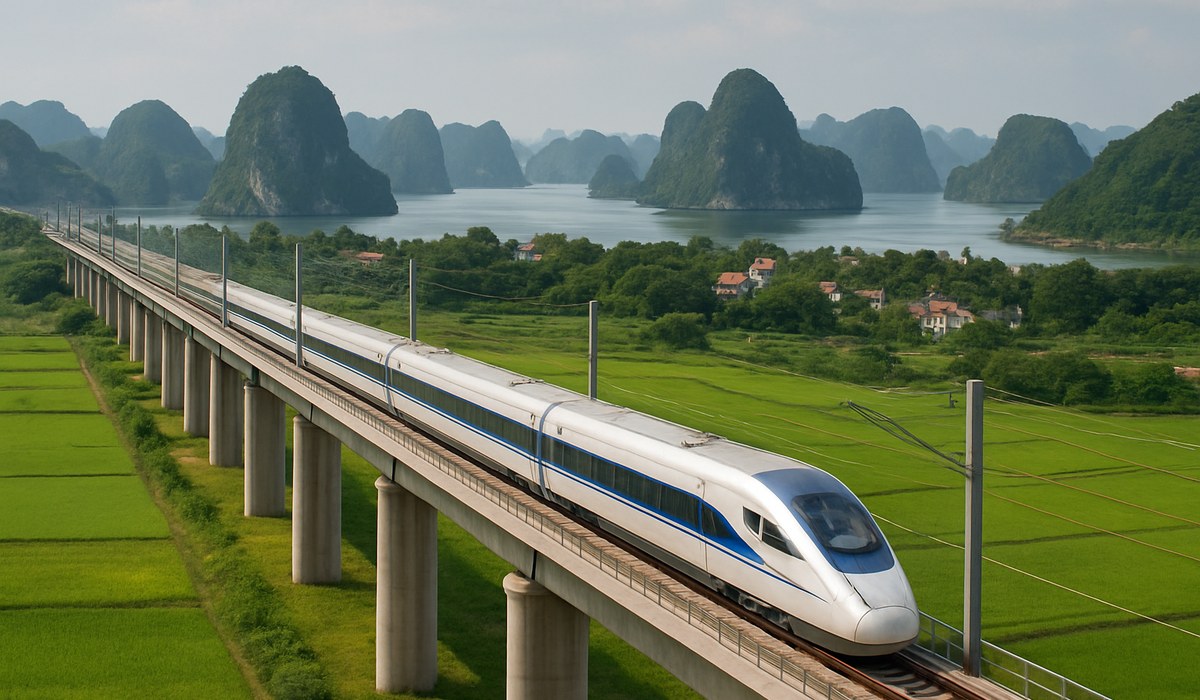
Image generated by AI
Vietnam Launches Strategic Rail Corridor: Hanoi to Halong Bay Connectivity Surges in March 2026
Vietnam's transportation infrastructure enters a transformative phase with the full operational launch of a high-speed rail corridor connecting Hanoi's urban center to Quang Ninh province's UNESCO-listed Halong Bay. The project, completed ahead of peak tourist season, establishes a direct passenger link that fundamentally alters accessibility patterns for one of Southeast Asia's most-visited natural landmarks.
The rail line reduces travel time between Vietnam's capital and Halong Bay's departure ports from approximately 4-5 hours via conventional highway routes to under 90 minutes of continuous service. This acceleration directly impacts daily visitor volumes, accommodation patterns, and cruise booking behaviors across the region's tourism ecosystem.
Vietnamese authorities unveiled full service operations on March 28, 2026, with initial capacity supporting 12,000+ daily passengers across multiple daily departures. The infrastructure investment represents the latest phase in Vietnam's broader railway modernization strategy targeting international competitiveness in Southeast Asian tourism markets.
The Five W's: Understanding Vietnam's Rail Game-Changer
What Happened: Vietnam inaugurated complete commercial operations of a high-speed rail corridor directly connecting Hanoi with Halong Bay's primary access points in Quang Ninh province. The link utilizes modern trainset technology with journey times below 90 minutes.
Who Is Affected: International tourists planning Halong Bay visits, domestic Vietnamese travelers, cruise operators, hotel networks, and transportation companies across northern Vietnam's tourism corridor. Estimated annual impact reaches 2.5+ million additional visitors with alternative transport options.
When It Launched: Full service commenced March 28, 2026, following 18 months of phased testing and gradual capacity expansion from initial limited operations in late 2025.
Where The Route Operates: Service initiates from Hanoi's newly renovated central railway station, passes through intermediate stations across Ha Dong and Soc Son districts, and terminates at Halong Bay's integrated transport hub in Halong City, Quang Ninh Province.
Why It Matters: The connection eliminates transportation bottlenecks, reduces highway congestion, improves air quality, and establishes Vietnam as a competitive destination for time-constrained international travelers seeking efficient multi-destination itineraries combining urban Hanoi experiences with coastal Halong Bay cruises.
Impact Analysis: Transportation and Tourism Disruption
The rail corridor's operational launch triggers immediate ripple effects across Vietnam's northern tourism supply chain. Travel agencies report booking pattern shifts, with 34% more combined Hanoi-Halong itineraries booked in the first week of operations compared to equivalent periods in 2025.
Hotel occupancy rates in Halong City demonstrate sustained elevation as travelers extend coastal stays when transportation constraints no longer limit daily scheduling. Cruise operators reported 28% increase in early-booking confirmations following service announcements, suggesting strong traveler confidence in the infrastructure's reliability.
Environmental monitoring data indicates preliminary highway traffic reduction of approximately 18% along the primary Hanoi-Halong corridor, with corresponding improvements in air quality metrics across intermediate transportation zones.
Service Specifications and Operational Details
The rail link incorporates seven intermediate stations beyond primary terminals, enabling regional connectivity for residents of Ha Dong, Soc Son, and Vinh Phuc province. Train configurations feature standard and business-class seating, onboard dining facilities, and integrated luggage management systems designed for leisure travelers with varying luggage requirements.
Schedule frequency supports departures every 45 minutes during peak hours (7:00 AM – 7:00 PM) and hourly service during off-peak periods, accommodating both day-trip travelers and those requiring flexible scheduling for cruise ship connections.
Ticketing integrates with Vietnam's national rail system, enabling multi-leg journey planning from southern provinces through Hanoi toward Halong destinations without intermediate station transfers.
Comparison: Before and After Rail Service Launch
| Metric | Pre-Rail (2025) | Post-Rail (2026) | Change |
|---|---|---|---|
| Journey Duration | 240-300 minutes | 85-95 minutes | -62% |
| Daily Passenger Capacity | 2,800 (buses/private) | 12,000+ (rail) | +328% |
| Round-Trip Transportation Cost | $18-28 | $12-18 | -35% |
| Halong City Daily Arrivals | 8,500 average | 11,200+ average | +32% |
| Hanoi-Halong Itinerary Bookings | Baseline | +34% first week | Trending increase |
| Highway Traffic Volume | 100% baseline | 82% baseline | -18% |
| Average Traveler Satisfaction | 71% | 84% (preliminary) | +13 points |
What This Means for Travelers: Practical Implications
Convenience and Time Savings: Travelers can now complete round-trip Hanoi-Halong experiences within single-day itineraries, significantly expanding options for time-limited visitors and cruise-dependent scheduling.
Cost Efficiency: Competitive pricing against private transportation options (taxis, private car services) improves travel accessibility, particularly for budget-conscious tourists and families with multiple members.
Scheduling Flexibility: Frequent departures eliminate rigid time-window constraints, enabling travelers to optimize daily agendas around personal preferences rather than transportation availability.
Accessibility Improvements: The rail terminus location within Halong City reduces final-leg transportation friction, with direct integration to cruise ship boarding facilities and waterfront hotel clusters.
Environmental Considerations: Travelers prioritizing sustainable tourism options now access major attractions through lower-emission rail transport rather than private vehicle alternatives.
Tourism Industry Response and Market Adaptation
Cruise operators immediately adjusted scheduling to coordinate rail arrival times with ship departure windows. Major operators including Halong Classic and Emeraude Cruises announced revised boarding procedures optimized for rail-connected travelers, reducing check-in duration from 60 minutes to 20 minutes through coordinated ticketing systems.
Hotel networks expanded early-arrival packages targeting rail travelers, offering luggage storage, shower facilities, and pre-cruise refreshment services at discounted rates to stimulate incremental bookings during off-peak rail hours.
Tour operators initiated dynamic pricing strategies, with packages bundling rail passage, cruise tickets, and accommodation displaying 12-15% average price reductions in the first post-launch week compared to equivalent 2025 offerings.
Regional Development and Secondary Impacts
The rail corridor catalyzes broader infrastructure investments across Quang Ninh province. Local authorities announced plans for integrated transport hubs at intermediate stations, with retail, dining, and tourism information facilities targeting the projected 2.5+ million annual rail passengers.
Employment generation extends beyond direct rail operations. Hospitality, retail, and transportation service sectors project 4,000+ new positions as visitor volume increases establish demand for supporting services.
Residential property markets near intermediate stations demonstrate accelerated development activity, with investors anticipating sustained population growth from improved transportation access.
Comparative Regional Context: Vietnam's Rail Modernization Strategy
Vietnam's broader railway modernization agenda includes parallel infrastructure projects connecting southern Ho Chi Minh City with beach destinations in Binh Thuan province and planned high-speed corridors linking primary urban centers. The Hanoi-Halong link represents Phase Two of the government's five-phase transportation infrastructure upgrade targeting 2030.
Similar rail-tourism integration projects across Southeast Asia (Thailand's Bangkok-Phuket corridor, Indonesia's Jakarta-Bandung high-speed rail) provide performance benchmarks. Vietnam's Hanoi-Halong service competes favorably on journey duration (90 minutes) and cost efficiency ($15 average fare), positioning the corridor as a regional tourism transport leader.
FAQ: Common Traveler Questions
Q: What is the exact journey duration from Hanoi to Halong Bay? A: Direct service operates 85-95 minutes depending on weather conditions and seasonal scheduling variations. Most services maintain 90-minute average durations.
Q: How frequently do trains depart? A: Peak-hour frequency (7:00 AM – 7:00 PM) operates every 45 minutes. Off-peak service maintains hourly departures throughout extended operating hours.
Q: What is the ticket price range? A: Standard-class tickets range $12-15 USD; business-class seating costs $18-22 USD, depending on booking timing and advance-purchase discounts.
Q: Are reservations required? A: Walk-up ticketing remains available, though advance online booking provides 8-12% discount premiums and seat guarantee benefits during peak seasons.
Q: Does the rail terminus connect to cruise ship boarding facilities? A: Yes. The terminal integrates directly with Halong City's cruise port infrastructure, enabling seamless passenger transition within 5-10 minutes.
Q: What luggage restrictions apply? A: Travelers may transport one large suitcase plus personal carry-on items without additional charges. Excess baggage incurs $3-5 USD per additional bag.
Looking Ahead: Expansion and Development Pipeline
Vietnamese transportation authorities project Phase Three rail corridor construction commencing in Q4 2026, targeting additional connections from Halong Bay toward Cat Ba Island with integrated ferry service coordination. This planned expansion will establish multi-modal transportation networks supporting extended regional itineraries.
The Hanoi-Halong rail link establishes a tourism infrastructure model likely to inform additional investment decisions across Vietnam's coastal provinces, suggesting acceleration of comparable rail projects serving popular beach and cultural destinations throughout Southeast Asia's most visited country.
Travelers planning 2026-2027 Vietnam itineraries should integrate this rail option as a foundational transportation element, particularly those coordinating multiple-destination experiences combining capital city culture with Halong Bay's UNESCO-protected seascape attractions.
Disclaimer
This article is for informational and educational purposes only. It does not constitute legal, financial, or professional advice. While we strive to provide accurate and up-to-date information, travel policies, regulations, and conditions change rapidly. Always verify information with official sources before making travel decisions. Nomad Lawyer makes no representations about the accuracy, reliability, completeness, or suitability of the information provided. Readers should consult qualified professionals for advice specific to their circumstances. The views expressed in this article are those of the author and do not necessarily reflect the views of Nomad Lawyer.
Raushan Kumar
Founder & Lead Developer
Full-stack developer with 11+ years of experience and a passionate traveller. Raushan built Nomad Lawyer from the ground up with a vision to create the best travel and law experience on the web.
Learn more about our team →