Saudi Arabia's Haramain High-Speed Rail Transports 1.16 Million Passengers During 1447 AH Hajj

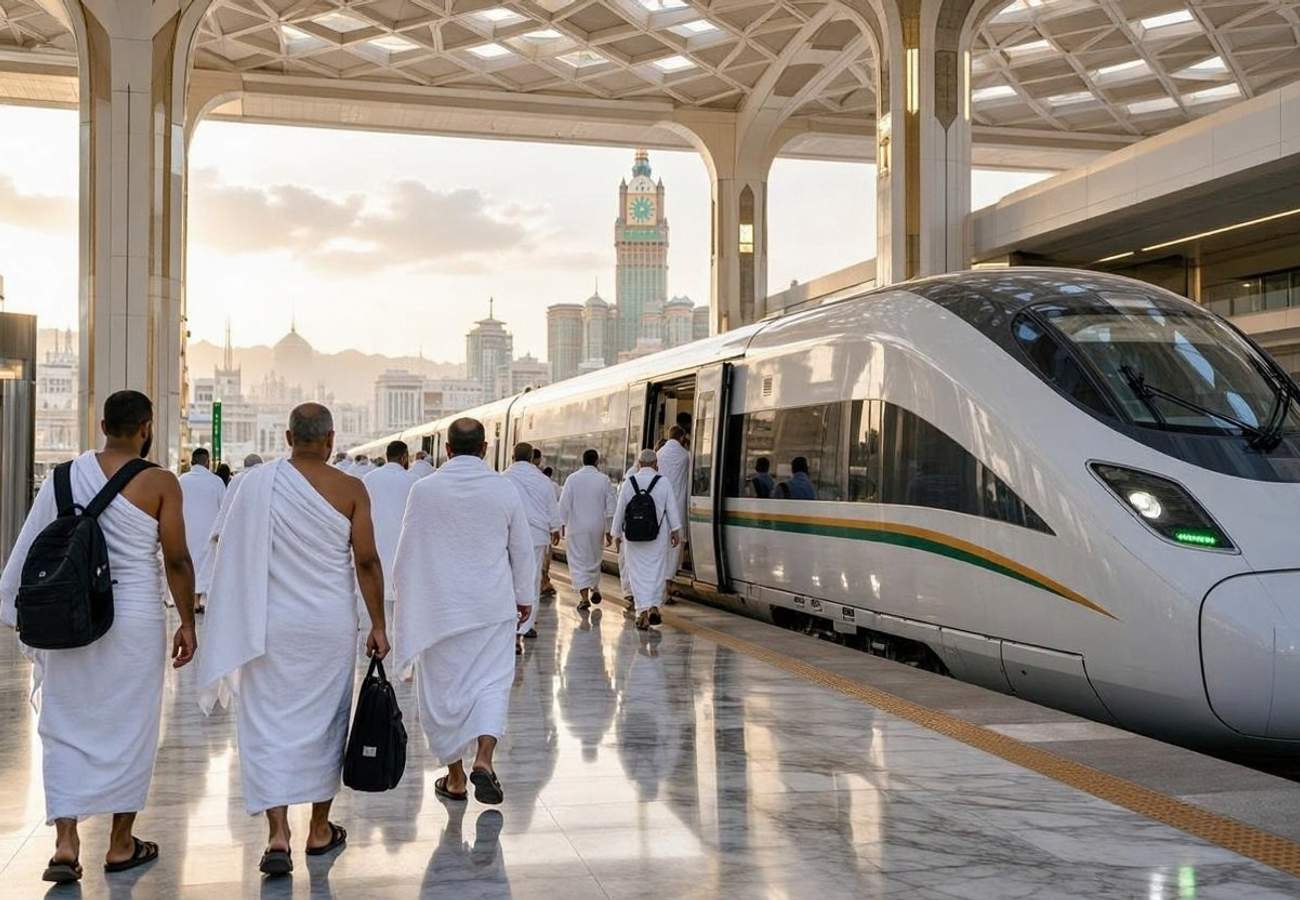
Image generated by AI
1.16 million passengers utilized the Haramain High-Speed Railway during the 1447 AH Hajj season, according to data released by Saudi Arabia Railways. This surge in ridership confirms the 300 km/h network has transitioned from a luxury alternative to the primary logistical artery connecting the holy cities of Makkah and Madinah.
The Infrastructure of the Makkah–Madinah Corridor
The Haramain High-Speed Railway is an electrified double-track system spanning 453 km. It integrates five strategic hubs: Madinah, Makkah, Jeddah Main Station, King Abdullah Economic City, and a dedicated terminal at King Abdulaziz International Airport. Built to European high-speed specifications, the line allows the Saudi government to execute the Pilgrim Experience Program, a key pillar of the Vision 2030 initiative aimed at digitizing and streamlining the pilgrimage process.
The operational scale during the 1447 AH season was immense. Saudi Arabia Railways deployed 5,569 services to manage the concentrated demand of the pilgrimage. This operational intensity is designed to mitigate the traditional bottlenecks of road travel, where heavy traffic and security checkpoints often extend journey times significantly.
Operational Data and Performance Metrics
The efficiency of the line is most evident when comparing rail transit to traditional road transport. For the 1447 AH season, the system provided over 2.2 million available seats across more than 5,300 planned trips.
Haramain Rail Performance Comparison
| Metric | High-Speed Rail (HSR) | Road Transport (Bus/Taxi) |
|---|---|---|
| Max Operating Speed | 300 km/h | Variable (Traffic Dependent) |
| Makkah to Madinah Time | ~2 hours 15 minutes | 4+ hours |
| Jeddah Airport to Makkah | < 1 hour | 90+ minutes |
| On-Time Performance | > 95% | Low (High Variance) |
| Hajj 1447 Passengers | 1.16 million | Not specified |
The Transport General Authority reported that in the third quarter of 2026, the Haramain line accounted for approximately 75% of all intercity rail passengers in the kingdom, illustrating a massive market consolidation toward high-speed rail for long-distance travel in the western region.
Expert Analysis: The Logistics of Mass Pilgrimage
For travelers booking this route, the direct consequence of the Haramain line's dominance is a shift in how the "last mile" of the journey is managed. The railway has effectively turned King Abdulaziz International Airport into a multimodal transit hub. By removing the need for long-haul highway coaches, the system reduces physical exhaustion for elderly pilgrims and those traveling with children.
However, the pricing pressure created by this monopoly on speed means that rail is not always the most economical choice for large families. Because fares fluctuate based on demand—particularly during peak Hajj and Umrah windows—the cost can spike significantly.
The 95% on-time performance rate is the most critical figure for travel agents and group coordinators. In a high-stakes environment where prayer times and flight connections are non-negotiable, the predictability of rail allows for tighter, more efficient itineraries. The risk for the independent traveler remains the "bottleneck effect" during the post-Arafat and post-Eid periods; while the system can move millions, the concentration of departures on specific days creates intense competition for limited seat inventory.
Key Takeaways
- Massive Throughput: 1.16 million passengers were moved during Hajj 1447 via 5,569 scheduled services.
- Time Efficiency: The 453 km corridor reduces the Makkah–Madinah trip to 2 hours 15 minutes, roughly half the time of road travel.
- Network Dominance: Haramain services represented 75% of all Saudi intercity rail traffic in Q3 2026.
- Integration: Booking is streamlined through the Nusuk platform, integrating rail segments directly into pilgrimage packages.
- Last-Mile Gap: While the rail link is fast, travelers still require taxis or shuttles for the final leg between the five stations and their specific hotels.
FAQ: Haramain High-Speed Rail 2026
How do I book tickets for the Haramain train? Tickets are available through the official Saudi Arabia Railways digital channels and the Nusuk platform for pilgrims. It is recommended to book well in advance during Hajj and Umrah seasons due to high demand.
Is the train faster than a taxi from Jeddah Airport to Makkah? Yes. The rail journey typically takes under one hour, whereas road travel often exceeds 90 minutes due to heavy traffic and security checks, particularly during peak pilgrimage periods.
Does the train go directly to the hotels in Makkah and Madinah? No. The train arrives at the city's main stations. You will need to arrange a taxi, ride-hail service, or group shuttle to reach your specific hotel or neighborhood.
What happens if my train is delayed? The line maintains an on-time performance rate of over 95%. However, passengers should check the official app for real-time updates, especially during the high-congestion periods following Eid.
The shift toward high-speed rail in Saudi Arabia isn't just about speed—it's about the industrialization of pilgrimage logistics.
Related Travel Guides
This article is for informational purposes. Flight routes, passenger regulations, visa rules, and transit advisories are subject to change by airlines and aviation authorities. Readers are advised to verify schedules and travel documentation with relevant carriers and border agencies before departure.
Related Stories
Korean Air Restores Daily Seoul-Newark Flights May 2027: Strategic New York Market Expansion

Singapore Cruise Expansion 2026-2028: Royal Caribbean and Princess Cruises Scale Vietnam and Thailand Routes