Delta Air Lines Weight and Balance Automation Glitch Triggers Nationwide Delays Ahead of Thanksgiving

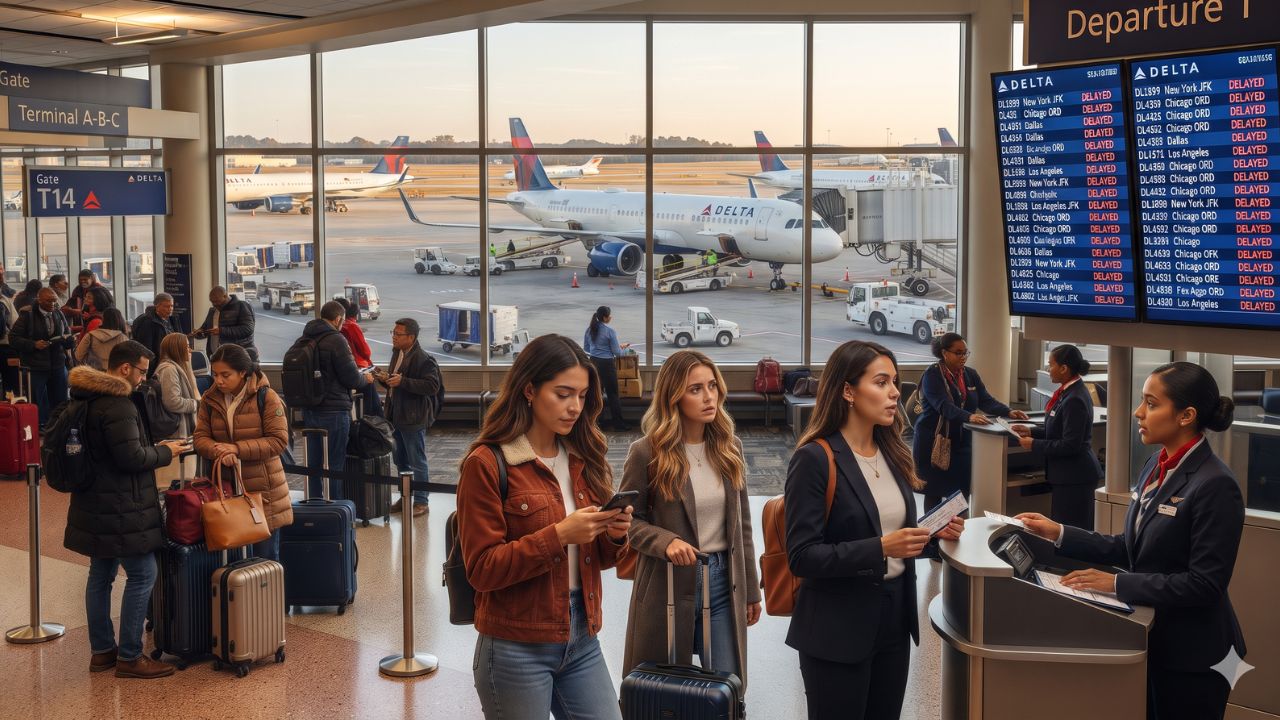
When Delta Air Lines' automated weight and balance computer system crashed on Sunday, ground dispatchers were forced to compute aircraft cargo, passenger loads, and fuel trim settings by hand on paper manifests, delaying nearly half of the carrier's entire nationwide fleet just four days before Thanksgiving.
The technical breakdown struck during peak Sunday departure banks on 22 November 2026, causing cascading schedule delays that reverberated across the continental United States. Real-time aviation tracking figures compiled by FlightAware confirmed that approximately 48 percent of all Delta Air Lines flights nationwide were running behind schedule by midday. At the airline's global headquarters and primary connecting megahub, Hartsfield-Jackson Atlanta International Airport (ATL), 38 percent of all scheduled departures and 36 percent of arrivals suffered extensive delays, leaving thousands of connecting passengers stranded between terminal concourses.
The Role of Weight and Balance Automation in Safe Aircraft Dispatch
Modern commercial aviation relies on centralized algorithms to calculate an aircraft’s center of gravity before the cockpit crew can release the parking brakes. Flight computers must balance passenger seat assignments, cargo hold luggage, freight pallets, and kerosene fuel reserves to determine proper takeoff stabilizer trim and runway departure speeds (V1, VR, and V2).
When Delta's digital load-planning platform suffered an unexpected internal communications fault on Sunday morning, automated dispatch pipelines halted. To keep airframes moving safely without violating federal safety regulations, the airline instructed ground handlers and captains to revert to manual paper load-sheet calculations.
While manual calculations preserve flight safety, the procedure requires individual telephone and radio verification between gate agents, ramp loaders, and flight dispatchers. The labor-intensive verification added 30 to 75 minutes of gate delay per flight. Because single aircraft fly multiple domestic hops each day, morning delays in cities like Boston, Detroit, and Minneapolis compounded throughout the afternoon, starving departure gates at secondary outstations.
Flight Disruption Metrics and Atlanta Hub Impact
The timing of the outage created severe bottlenecks across high-volume domestic transfer hubs, especially in the American South.
| Operational Flight Metric | Measured Impact at Midday | Operational Facility / Scope | Primary Disruption Consequence |
|---|---|---|---|
| Delta Nationwide Flights Delayed | 48% of total scheduled fleet | Nationwide network (US Domestic & Int'l) | Rolling schedule delays across all hubs |
| Atlanta (ATL) Outbound Departures | 38% delayed across all airlines | Hartsfield-Jackson Atlanta International | Gate holdbacks and taxiway metering queues |
| Atlanta (ATL) Inbound Arrivals | 36% delayed across all airlines | Hartsfield-Jackson Atlanta International | Aircraft holding in arrival stacks |
| Primary System Root Cause | Computerized weight & balance failure | Delta internal dispatch software | Mandatory fallback to manual load manifests |
| Federal Airspace System Status | 100% operational (Unimpacted) | Federal Aviation Administration | Confirmed zero FAA network culpability |
| Calendar Timing | Sunday, 22 November 2026 | 4 days before Thanksgiving (26 Nov) | Depleted crew hours and repositioning gaps |
The Federal Aviation Administration (FAA) issued a formal statement clarifying that the disruptions did not originate within federal air traffic control systems or navigational equipment. The glitch was strictly isolated to Delta's proprietary IT architecture.
The incident follows a turbulent month for United States aviation infrastructure. On 13 November 2026, an FAA telecommunications router upgrade failure triggered a nationwide ground stop lasting over four hours—the longest national airspace shutdown in 25 years. United Airlines subsequently endured an unrelated technical outage that temporarily grounded flights. Although federal analysts confirmed these three events share no underlying common technical cause, their occurrence within a ten-day span highlights how fragile airline operational schedules become when software automations falter.
Concourse Dynamics at Hartsfield-Jackson Atlanta
Handling more than 100 million passengers annually, Atlanta relies on rapid 45-to-50-minute aircraft turnarounds across Concourse T through Concourse F. When an arriving flight lands 45 minutes late, connecting travelers face an uphill sprint to catch onward flights.
At ATL, connecting passengers who arrived late on Sunday found their outbound flights either holding at active taxiways or boarding early to protect takeoff slots. The resulting passenger spillover congested customer assistance centers across Concourse A and B. Compounding the challenge, commercial airline pilots and flight attendants are bound by strict federal duty-time limits. As manual calculation delays dragged on, several flight crews reached their maximum legal work hours, forcing Delta to scramble reserve crews or cancel flights entirely when replacement pilots were unavailable.
Visitor Insider Tips for Holiday Air Travelers
With Thanksgiving falling on Thursday, 26 November 2026, passenger volumes will peak on Tuesday and Wednesday. Travelers booked on Delta should execute immediate defensive strategies:
- Audit Connection Times in Atlanta and Minneapolis: If your itinerary through Atlanta, Detroit, or Minneapolis allows fewer than 60 minutes between gates, call Delta reservations or use the mobile app’s flight-change tool to switch to an earlier feeder flight. Aim for minimum layover buffers of 90 to 120 minutes during holiday weeks.
- Avoid Checking Baggage on Tight Itineraries: When automated dispatch systems fail, ground handlers prioritize loading fuel and passengers to push aircraft off the gate, increasing the risk of luggage misconnects. Pack everything into an overhead-compliant roller bag and personal backpack so you can sprint between concourses without worrying about lost baggage.
- Monitor Plane Tail Numbers via Radar Trackers: Rather than watching airline departure monitors—which often display "on-time" status until 15 minutes before scheduled boarding—track the physical tail number of your assigned incoming aircraft. If your plane has not yet departed its previous city, you have early intelligence to request rebooking before customer service lines lengthen.
- Know Your Rebooking and Refund Rights: Under passenger protection rules enforced by the U.S. Department of Transportation Aviation Consumer Protection, travelers whose flights are canceled or significantly delayed due to internal airline computer outages are entitled to a full cash refund back to their original payment method if they decline alternate routing. Because an IT glitch is an internal carrier-controlled failure, request hotel and meal vouchers directly from airport gate supervisors if stranded overnight.
Fleet Vulnerabilities During Holiday Travel Surges
The disruption on 22 November highlights the knife-edge operating margins of major American network carriers. Ahead of Thanksgiving, commercial airlines operate at load factors exceeding 90 percent. When an automated software suite malfunctions, there are virtually no empty seats on subsequent flights to absorb displaced passengers.
Manual dispatch procedures act as a dependable mechanical safety barrier, ensuring that no airliner takes off in an unbalanced, dangerous flight condition. However, reverting to 1970s-era paper calculations in an era of high-frequency commercial schedules inevitably fractures network reliability. As technical teams restore automated databases ahead of Thanksgiving Day, the airline faces a multi-day scramble to reposition out-of-place aircraft and rested flight crews back into their scheduled hubs.
Frequently Asked Questions
What caused the widespread Delta Air Lines delays on 22 November 2026?
A computer malfunction in Delta's automated aircraft weight and balance system halted electronic flight preparation, forcing personnel to perform manual load calculations and delaying 48 percent of Delta flights nationwide.
Did the FAA ground stop Delta flights?
No. The Federal Aviation Administration confirmed that national air traffic control radar and telecommunications systems operated normally and that the delay stemmed entirely from Delta’s internal software systems.
Can I get a refund if my Delta flight is significantly delayed by a computer glitch?
Yes. Department of Transportation regulations mandate that passengers are entitled to a full cash refund if an airline cancels or significantly alters a flight schedule and the passenger chooses not to travel on the offered alternative.
Taking control of your flight monitoring and expanding connecting buffers turns unexpected holiday airline delays into a manageable journey.
Related Travel Guides
This article is for informational purposes. Flight routes, passenger regulations, visa rules, and transit advisories are subject to change by airlines and aviation authorities. Readers are advised to verify schedules and travel documentation with relevant carriers and border agencies before departure.
Related Stories
Delta Flight DL2498 In-Flight Lavatory Vaping Triggers Smoke Alarm Before Newark Landing, Sparking Safety Alert on Airbus A321neo

Saudi Arabia Travel Warnings Renew Focus on Middle East Stopover Refunds and Passenger Rights in 2026