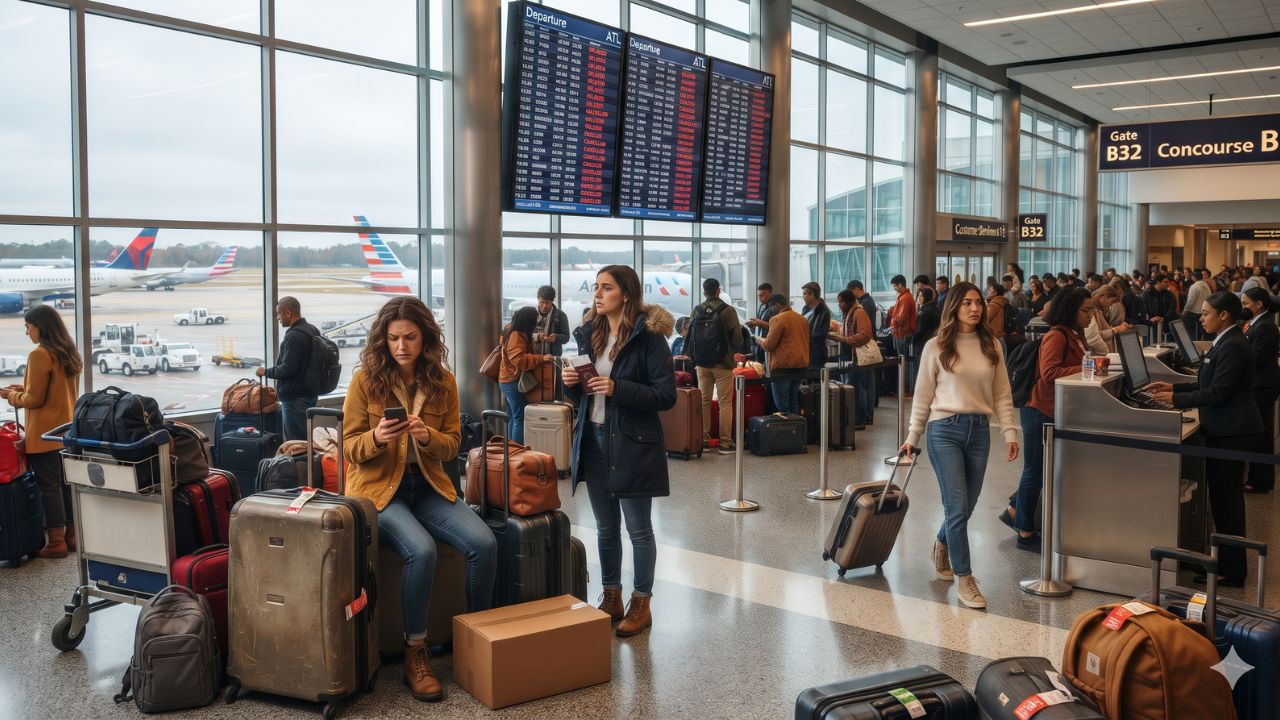
FAA Imposes Atlanta Ground Delays as Delta Dispatches Over 1,100 Late Flights Ahead of Thanksgiving

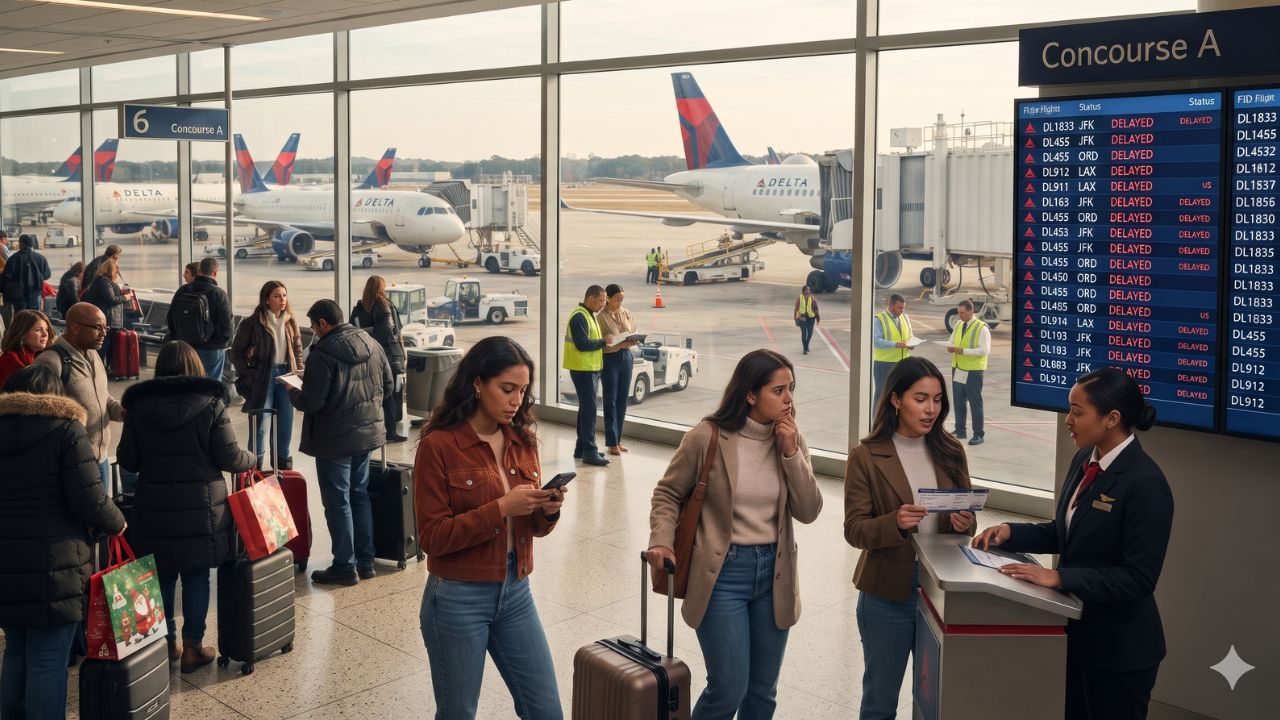
At Delta Air Lines’ request, federal regulators halted inbound traffic to the world’s busiest airport and instituted a nationwide ground delay program averaging 57 minutes per flight after a central computer failure pushed more than 1,160 departures off schedule.
The operational crisis escalated throughout Sunday, 22 November 2026, as Delta Air Lines wrestled with a software crash in its automated weight-and-balance systems. The digital failure prevented dispatchers from automatically validating aircraft center-of-gravity and passenger loads, forcing ground personnel across dozens of airports to perform manual calculations. By midday, flight tracking data verified that roughly 1,160 Delta flights were delayed nationwide, with 712 delayed movements tied directly to Hartsfield-Jackson Atlanta International Airport (ATL). The disruption struck as nearly six million Americans prepared to take to the skies for the Thanksgiving holiday window.
The Cascade from Ground Stop to FAA Ground Delay Program
To manage ramp gridlock and saturated taxiways at its primary global megahub, Delta requested immediate air traffic intervention from the Federal Aviation Administration (FAA). Federal controllers initially implemented a targeted ground stop on all Delta-operated flights bound for Atlanta, halting departures at origin airports across North America.
As airfield congestion stabilized, the FAA transitioned the restriction into a formal Ground Delay Program (GDP). Under this program, inbound Delta aircraft were assigned metered departure slots, generating average en-route arrival delays of 57 minutes before the operational restrictions were fully lifted. Federal authorities clarified that the GDP applied strictly to Delta Air Lines airframes and was not an airport-wide shutdown, with neighboring carriers maintaining standard operations.
The incident marks the third severe technical breakdown to batter the United States air transport system in November 2026. On 13 November, an FAA telecommunications failure in Texas and Arkansas forced a nationwide four-hour ground stop, followed on 16 November by an internal technical glitch at United Airlines that temporarily froze departures. While civil aviation authorities confirmed these events share no common architectural flaw, their rapid succession highlights the vulnerability of complex scheduling networks entering peak holiday volume.
Thanksgiving Travel Surge and Network Impact Metrics
The operational strain on 22 November arrived at an exceptionally fragile operational moment, as passenger throughput approached record levels.
| Travel & Disruption Metric | Official Operational Count | Source / Regulatory Authority | Logistical Implication |
|---|---|---|---|
| Delta Nationwide Delayed Flights | Approximately 1,160 flights | CBS News / FlightAware (Midday) | Spread across domestic and international routes |
| Atlanta-Specific Flight Delays | 712 flights | Hartsfield-Jackson Airport logs | Major bottleneck for connecting travelers |
| Morning Initial Delay Count | ~700 flights (~20% of schedule) | Early operational briefing | Precursor to afternoon cascading delays |
| FAA Ground Delay Program Impact | 57 minutes average delay | FAA Air Traffic Control System | Applied strictly to inbound Delta flights |
| National Thanksgiving Air Travelers | Nearly 6.0 million passengers | AAA Annual Travel Forecast | 90%+ load factors limit rebooking seats |
| Atlanta Holiday Traffic Forecast | Over 4.0 million passengers | Hartsfield-Jackson (19 Nov – 1 Dec) | Multi-terminal congestion through holiday |
| Prior FAA Outage Travel Waiver | 13–16 November 2026 | Delta Customer Service (Expired) | Does NOT automatically cover 22 Nov glitch |
According to projections issued by the American Automobile Association (AAA), nearly six million Americans will fly between 24 November and 30 November. Concurrently, Hartsfield-Jackson Atlanta prepared to process more than four million travelers between 19 November and 1 December. With passenger load factors consistently topping 90 percent ahead of Thanksgiving Day on Thursday, 26 November, displaced passengers had limited seat inventory on subsequent flights when connections broke down.
Understanding the Limits of Airline Travel Waivers
A significant point of confusion for travelers centers on ticket change waivers. Delta previously issued a systemwide travel waiver covering the separate FAA telecommunications breakdown that occurred between 13 and 16 November 2026.
Aviation consumer advocates caution that the expired 13–16 November waiver does not automatically apply to Sunday’s internal IT failure. Passengers impacted by the 22 November weight-and-balance disruption must confirm whether Delta has posted a distinct, dedicated waiver for their specific travel dates before making changes. Altering an itinerary or canceling an un-waived ticket without airline authorization can trigger non-refundable change penalties or result in forfeited return legs.
Under standards enforced by the U.S. Department of Transportation Aviation Consumer Protection, passengers are entitled to prompt cash refunds if an airline cancels a flight or imposes a significant schedule modification and the traveler declines the alternative transportation offered. However, routine schedule delays where the carrier eventually delivers the passenger to their final destination do not legally mandate cash compensation.
Visitor Insider Tips for Navigating Holiday Hub Delays
Travelers flying through Atlanta, Detroit, Minneapolis, or Salt Lake City during Thanksgiving week should take proactive precautions:
- Verify Dedicated Waiver Activation: Do not modify flight reservations on assumptions. Open the Delta mobile app or website and check the "Travel Alerts" header. If a specific waiver for 22–23 November is active, you can rebook to alternate dates or routings without paying fare differences. If no waiver appears, call a reservations agent to negotiate changes.
- Insist on Protection for Secondary Connections: If an inbound flight into Atlanta lands 45 minutes late, do not rely on automated rebooking algorithms. Visit an airport Sky Club service desk or customer assistance station in Concourse B immediately to protect seats on the next two outbound departures.
- Preserve Itemized Expense Receipts: If an internal airline technical delay strands you overnight in Atlanta, keep itemized paper and digital receipts for hotel stays, ground transportation, and meals. Because the outage was an internal carrier software malfunction rather than severe weather, Delta is responsible for providing reasonable overnight accommodation vouchers or subsequent expense reimbursements.
- Track Baggage Scans via Airline App: When dispatchers switch to manual weight manifests, ramp personnel often stage baggage carts separately. Use the Delta Fly app's bag tracking feature to verify that your checked suitcase was physically scanned into the cargo hold of your connecting aircraft before the cabin boarding door closes.
System Dependencies and Commercial Flight Dispatch
Aircraft dispatch operations require meticulous safety calculations. Flight dispatchers must calculate the precise distribution of passenger body weights, cargo containers, fuel burn rates, and cargo ballast to ensure the aircraft remains stable across its longitudinal axis. Taking off with an unverified center of gravity can cause catastrophic pitch control issues upon rotation.
When automated computer architecture fails, manual calculations must be double-checked by ground personnel and certified by the pilot-in-command before pushback. In a modern airline operating thousands of daily flights, the human labor required to compute load sheets manually slows operations to a crawl. As Delta works to stabilize its digital dispatch network before Thanksgiving Eve, the airline faces an intensive operational effort to reposition aircraft and crews back into proper alignment.
Frequently Asked Questions
Did the FAA issue an airport-wide ground stop at Atlanta on 22 November?
No. The FAA implemented a targeted ground stop and subsequent Ground Delay Program averaging 57 minutes specifically for Delta Air Lines flights bound for Atlanta, leaving other commercial carriers unaffected.
How many Delta flights were delayed by the weight-and-balance software glitch?
By midday on Sunday, 22 November 2026, approximately 1,160 Delta flights were delayed nationwide, including 712 flight delays connected to Hartsfield-Jackson Atlanta International Airport.
Does Delta's previous mid-November travel waiver cover these new delays?
No. Delta's earlier travel waiver applied strictly to the separate FAA telecommunications outage between 13 and 16 November 2026. Travelers must verify whether a new, separate waiver has been established for flights delayed on 22 November.
Staying ahead of airline schedule alerts and verifying connecting gate assignments ensures your holiday homecoming stays on track despite unexpected system delays.
Related Travel Guides
This article is for informational purposes. Flight routes, passenger regulations, visa rules, and transit advisories are subject to change by airlines and aviation authorities. Readers are advised to verify schedules and travel documentation with relevant carriers and border agencies before departure.
Related Stories
US Holiday Travel Rush Faces Disruption Risks Following Nationwide FAA Telecommunications Outage

Saudi Arabia Travel Warnings Renew Focus on Middle East Stopover Refunds and Passenger Rights in 2026