
Tunnels Through the Sacred Peaks: How New Rail Corridors Are Halving Travel Times to Rishikesh and Karnaprayag
With 105 kilometres of mountain tunnels and a rapid Namo Bharat link, two transformative rail projects will cut Delhi-to-Rishikesh journeys to two hours and slash the transit to Karnaprayag from 13 hours to just five.

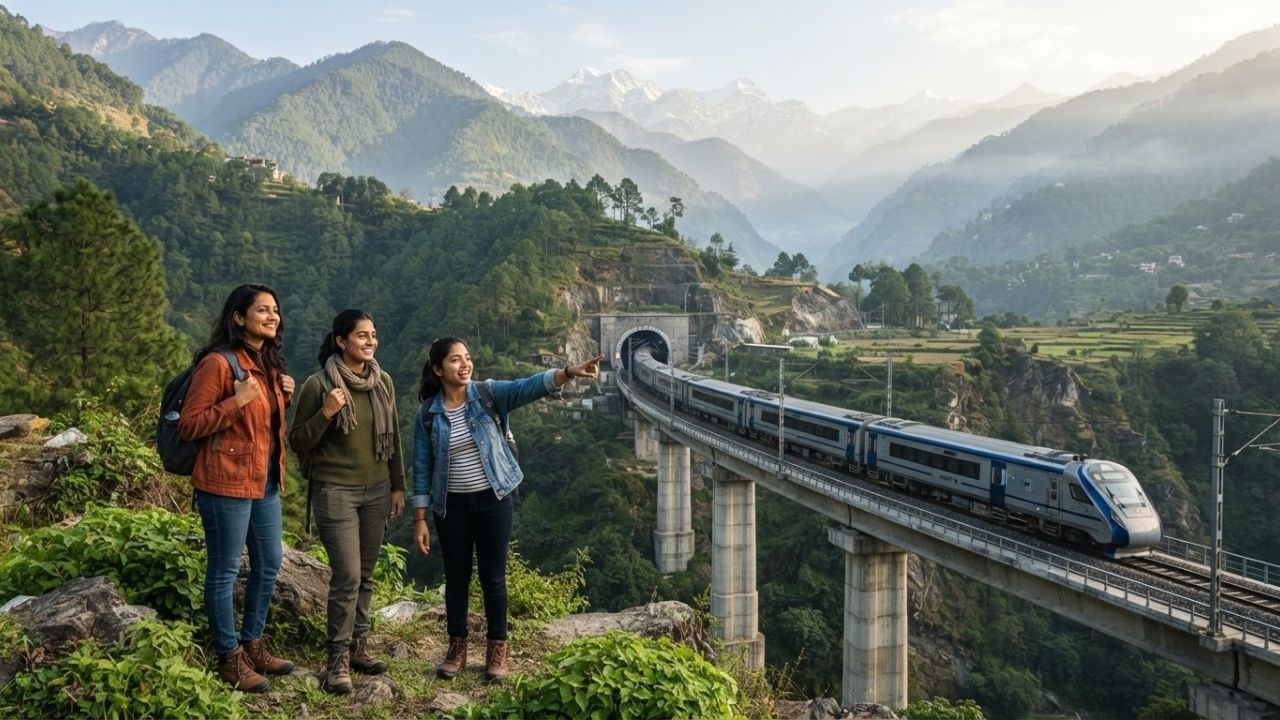
Advanced Himalayan rail engineering connects the plains of Delhi directly to the holy confluences of Uttarakhand
Out of the 127 total kilometres comprising the monumental Rishikesh–Karnaprayag railway line carving through the Garhwal Himalayas, an astonishing 105 kilometres will run entirely inside deep mountain tunnels, fundamentally transforming how human beings access the sacred peaks of Uttarakhand. For generations, pilgrims, yogis, and mountaineers journeying toward the shrines of the Char Dham or the white-water gorges of the upper Ganga had to endure grueling twelve-to-thirteen-hour highway journeys from Delhi, braving sheer cliff drops, severe monsoon landslides, and chronic traffic gridlock along National Highway 7. That perilous mountain transit is about to become history. Through a dual rail strategy combining the proposed Meerut–Rishikesh Namo Bharat rapid transit extension with the 127-kilometre mountain railway, travel time from the National Capital Region to Rishikesh will collapse to just two to two-and-a-half hours, while reaching Karnaprayag will take approximately five to six hours—slashing travel durations by more than half.
The project achieved a decisive engineering benchmark on September 11 with the final breakthrough of Escape Tunnel-1, a ten-kilometre subterranean safety artery drilled through unstable Himalayan tectonic strata. Currently around 75 per cent complete, the broad-gauge mountain railway is scheduled for full commercial operations by 2029, with an initial scenic segment linking Shivpuri and Byasi projected to welcome passenger services as early as 2028. By linking Delhi directly to the river confluences of the high Garhwal, India is executing one of the most audacious civil engineering triumphs in the history of Asian mountain transit.
Engineering the Sacred Spine: 105 Kilometres of Subterranean Himalayan Rail
Constructing a high-capacity railway through the young, seismically active ranges of the Himalayas requires extraordinary technological precision. The Rishikesh–Karnaprayag corridor traverses five administrative districts of Uttarakhand: Dehradun, Tehri Garhwal, Pauri Garhwal, Rudraprayag, and Chamoli. The track threads along the steep gorges carved by the Alaknanda River, where summer cloudbursts and winter rockfalls historically severed road communication for days. By running over 82 per cent of the route inside ventilated, digitally monitored tunnels equipped with parallel escape passages, rail engineers are building an all-weather transit corridor impervious to landslides and monsoon washouts.
The railway incorporates twelve purpose-built stations designed to integrate seamlessly with the natural topography: Rishikesh, Muni Ki Reti, Shivpuri, Byasi, Devprayag, Maletha, Srinagar Garhwal, Tilani, Gauchar, and Karnaprayag. In parallel, the proposed Namo Bharat regional rapid transit extension from Meerut toward Haridwar and Rishikesh brings the high-speed electric network of the National Capital Region directly to the Himalayan foothills. Passengers can board modern aerodynamic trainsets in central Delhi and arrive at the tranquil river ghats of Rishikesh faster than the typical morning automobile commute across metropolitan traffic.
Beyond leisure travel, the railway is a lifeline for indigenous Garhwali mountain communities. Rural residents living along the Alaknanda basin will gain rapid, affordable access to advanced tertiary healthcare hospitals in Rishikesh and Dehradun, higher educational universities in Srinagar Garhwal, and major commercial markets across northern India. Agricultural producers cultivating organic mountain millets (mandua and jhangora), aromatic pahadi garlic, and sweet red kidney beans (rajma) will gain reliable logistics to supply urban organic food cooperatives, transforming the rural mountain economy.
What Makes the Garhwal River Corridor Different: The Holy Prayags
Traveling through the Garhwal Himalayas by rail offers an encounter with geography and spiritual tradition unlike anywhere else in the world. Rishikesh serves as the threshold where the sacred Ganga emerges from steep mountain gorges into the northern plains. Long celebrated as the yoga capital of the world, Rishikesh's quiet ashrams in Swarg Ashram and Tapovan echo with morning temple bells, while international rafters navigate churning class-four rapids between Byasi and Shivpuri.
As the railway advances deeper into the river canyons, it reaches Devprayag, one of the most spiritually revered confluences on the subcontinent. Here, the thundering turquoise rapids of the Alaknanda collide with the gentle, jade-green waters of the Bhagirathi, officially taking the name of the holy river Ganga. Looking down from ancient stone ghats where priests have chanted Vedic mantras for millennia, the raw geological beauty of two distinct rivers merging in a narrow chasm is breathtaking.
Further up the line, the tracks reach Rudraprayag (confluence of the Alaknanda and Mandakini rivers) and Karnaprayag (where the Alaknanda meets the Pindar River rushing from the Pindari Glacier). These river junctions form the sacred stepping stones toward high-altitude shrines, including regions bordering the UNESCO World Heritage Centre recognized Nanda Devi and Valley of Flowers National Parks in Chamoli district. Rather than enduring exhausting, nauseating multi-day bus journeys along winding roads, travelers can step off comfortable electric trains at Karnaprayag and smoothly transition to short road connections toward Joshimath and Badrinath.
Visitor Insider Tips: Navigating the Garhwal Corridor Like an Insider
- Experience the Evening Ganga Aarti from Lesser-Known Ghats: While tourists crowd Triveni Ghat and Parmarth Niketan in central Rishikesh, walk across the pedestrian suspension footbridges to the quiet stone ghats near Shatrughna Mandir in Muni Ki Reti. Arrive by 5:30 PM to sit peacefully along the water’s edge as temple bells chime and flickering oil lamps (diyas) drift down the river against the twilight mountain silhouette.
- Master High-Altitude Pilgrim Logistics for Kedarnath and Badrinath: When the railway reaches full operations, use Tilani and Rudraprayag stations to access the road connection to Gaurikund (the trekking base for Kedarnath), and Karnaprayag for Badrinath via Joshimath. Complete mandatory biometric pilgrim registration on the official portal of the Uttarakhand Tourism Development Board weeks before departure, and ensure you allocate forty-eight hours for gradual acclimatization before attempting high-altitude treks above 3,500 metres.
- Savor Authentic Pahadi Himalayan Cuisine: Skip generic fast food along the highway and patronize local Garhwali eateries (dhabas). Savor Chainsoo (a rich, slow-cooked paste made from roasted black gram lentils tempered with local aromatic herbs), Kafli (steamed winter spinach and fenugreek greens thickened with rice paste), and warm Jhangore ki Kheer (sweet mountain barnyard millet pudding garnished with wild almonds).
- Time Rafting and Trekking Around Seasonal Clear Skies: The premier window for river rafting, outdoor camping, and valley trekking spans from October to mid-December and March through early May. During these dry seasons, daytime temperatures hover around twenty-two degrees Celsius, river waters flow crystalline emerald-green, and Himalayan peaks like Trishul and Nanda Devi stand sharp against cloudless skies. Avoid mountain travel during peak monsoon months (July and August) when heavy rains trigger temporary roadway closures.
- Respect Riverbank Sanctuaries and Local Traditions: Rishikesh, Devprayag, and sacred pilgrimage towns enforce strict municipal bans on meat, fish, and alcohol. Respect local spiritual sensibilities by dressing modestly when visiting river ghats, removing leather shoes before stepping onto sacred platforms, and refraining from leaving plastic water bottles or wrappers along mountain rivers.
Cultural and Environmental Context: Eco-Resilience in a Fragile Himalayan Ecology
The transformation of Himalayan transport infrastructure arrives alongside profound environmental and geological responsibilities. The Garhwal Himalayas lie within an active tectonic belt, making the preservation of subterranean aquifers, natural river courses, and forest canopies essential to community safety. In recent years, land subsidence challenges in high-altitude towns like Joshimath have underscored the vital importance of advanced geotechnical monitoring, controlled tunnel-boring machines (TBMs), and strict environmental impact assessments.
The transition from diesel-heavy highway transport to an electrified railway network provides decisive environmental benefits. Highway traffic currently emits thousands of tons of vehicular soot, carbon dioxide, and fine particulate matter that settle directly upon Himalayan snowfields and glaciers, accelerating seasonal ice melt. Electric trainsets powered by clean energy will dramatically reduce vehicular emissions, easing the carbon footprint of millions of annual Char Dham pilgrims while eliminating heavy diesel traffic from fragile river corridors.
Furthermore, community-centered tourism initiatives are empowering local youth across Tehri, Pauri, and Chamoli. By establishing village homestays near mountain stations like Byasi and Maletha, training bilingual local guides, and promoting traditional handwoven wool shawls and organic mountain teas, Uttarakhand ensures that economic prosperity remains decentralized. Travelers who choose to patronize village cooperatives, travel by clean rail, and honor local environmental traditions help protect the pristine serenity of the Himalayas for generations to come.
FAQ: Traveling on Uttarakhand's New Mountain Railways
How much time will the new railway save between Delhi and Karnaprayag? The journey currently takes 12 to 13 hours by road. Once the Namo Bharat extension and Rishikesh–Karnaprayag railway are fully integrated, the total transit will drop to approximately 5 to 6 hours.
When will the Rishikesh–Karnaprayag railway open for tourists? The entire 127-kilometre line is scheduled for full commercial operations by 2029, with an earlier section between Shivpuri and Byasi planned to open by 2028.
Will the train take passengers directly to Kedarnath and Badrinath temples? No. The railway terminates at Karnaprayag and nearby stations like Tilani and Rudraprayag. From these railheads, passengers continue by scenic mountain roads to Joshimath (for Badrinath) and Gaurikund (for the Kedarnath trek).
Is Rishikesh connected to Delhi by high-speed trains right now? Delhi is currently connected to Rishikesh and Haridwar via regular express trains and Vande Bharat services. The proposed Namo Bharat rapid rail will reduce transit times down to just two to two-and-a-half hours.
Through ancient granite cliffs and sacred river mist, the rails of Uttarakhand forge a quiet path toward the clouds, bringing the eternal sanctuary of the Himalayas closer than ever before.
Related Travel Guides
- Breaking the Continental Divide: How the 90 MPH Denver West Express Plans to Revolutionize Colorado Ski Travel
- Kinship Across the Strait: Why Over Two Million Malaysians Are Exploring Indonesia Ahead of a 70-Year Milestone
- Pilgrims and Rapids: The Insider Rail and River Guide to the Garhwal Himalayas from Rishikesh to Karnaprayag
Disclaimer
This article is for informational and educational purposes only. It does not constitute legal, financial, or professional advice. While we strive to provide accurate and up-to-date information, travel policies, regulations, and conditions change rapidly. Always verify information with official sources before making travel decisions. Nomad Lawyer makes no representations about the accuracy, reliability, completeness, or suitability of the information provided. Readers should consult qualified professionals for advice specific to their circumstances. The views expressed in this article are those of the author and do not necessarily reflect the views of Nomad Lawyer.
Raushan Kumar
Founder & Lead Developer
Full-stack developer with 11+ years of experience and a passionate traveller. Raushan built Nomad Lawyer from the ground up with a vision to create the best travel and law experience on the web.
Learn more about our team →