
United States Unveils Colorado Mountain Travel Revolution With Proposed High Speed Train Reaching 90 Miles Per Hour
United States Unveils Colorado Mountain Travel Revolution With Proposed High Speed Train Reaching 90 Miles Per Hour

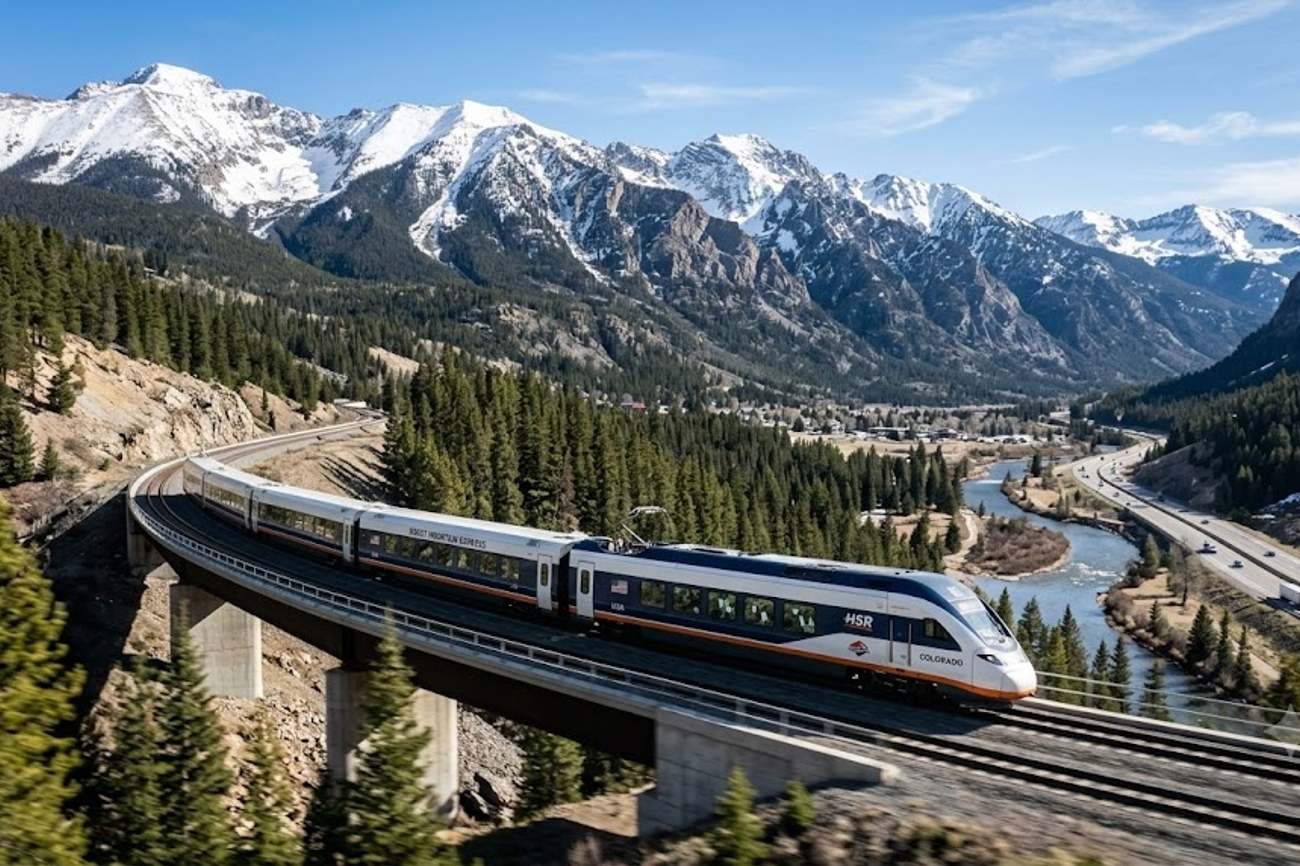
Image generated by AI
[Denver, October 2024] — Colorado is weighing a massive infrastructure overhaul with the proposal of the Denver West Express, a high-speed electric railway designed to slash travel times between Denver International Airport and the state's premier mountain destinations.
The project envisions a 178-mile electric rail corridor connecting Denver to Bailey, Frisco, and Avon, with a final terminus at a maintenance facility in Gypsum. By deploying trains capable of hitting top speeds of 120 mph—with a projected average operating speed of 90 mph—the system aims to dismantle the chronic congestion plaguing Interstate 70, providing a reliable, high-capacity alternative for millions of annual skiers and tourists.
The Drive for High-Speed Connectivity
The primary catalyst for the Denver West Express is the systemic failure of current road infrastructure to handle peak seasonal surges. The Colorado Department of Transportation (CDOT) manages some of the most congested mountain corridors in the United States, specifically along the I-70 artery. The proposed rail link seeks to bypass this volatility by offering a predictable transit window.
Under the current proposal, a passenger traveling from Denver International Airport to Avon would spend approximately one hour and 37 minutes in transit. This represents a 28 percent reduction in travel time compared to standard vehicle trips. The push for speed is not merely for convenience; proponents argue that an average speed of 90 mph is the minimum threshold required to make rail a competitive alternative to private car ownership and rental vehicles in the Rocky Mountains.
Markets and Destinations Impacted
The railway is designed to serve as a primary artery for the "Ski Country" economy, directly benefiting several high-traffic resorts and municipalities.
| Impact Category | Specific Locations/Entities |
|---|---|
| Primary Hubs | Denver International Airport, Bailey, Frisco, Avon, Gypsum |
| Ski Resorts Served | Vail, Beaver Creek, Breckenridge, Keystone, Copper Mountain, Arapahoe Basin, Silverthorne |
| Critical Infrastructure | Interstate 70, Eisenhower Tunnel, Johnson Memorial Tunnel |
| Target Ridership | 18.5 million annual passenger trips by year 10 |
The scale of the project is intended to absorb the massive influx of visitors that currently saturate the Eisenhower and Johnson Memorial tunnels, where peak weekly volumes often approach 300,000 vehicles.
What This Means for Travelers
For the modern nomad or seasonal tourist, the Denver West Express would fundamentally change the "last mile" logistics of a Colorado trip. Currently, travelers arriving at Denver International Airport (DEN) must navigate rental car queues or expensive shuttle services, followed by unpredictable traffic on I-70 that can turn a three-hour drive into a six-hour ordeal during winter storms or holiday weekends.
Plain-Language Impact:
- Elimination of Rental Cars: Travelers could move from the arrivals terminal to the slopes without ever touching a steering wheel or navigating mountain passes in snow.
- Predictable Scheduling: Unlike I-70, which is subject to closures and "mountain traffic," the rail system provides a fixed timetable, allowing for tighter connections and more efficient itinerary planning.
- Increased Accessibility: The link makes remote resorts like Vail and Beaver Creek more accessible to international travelers who prefer rail over driving in foreign terrain.
- Cost Shifts: While high-speed rail often carries a premium ticket price, the removal of rental car fees, fuel, and parking costs may offset the expense for many.
Engineering Hurdles and Financial Architecture
The transition from proposal to reality faces steep geographic and financial barriers. The project is estimated to cost between $28.5 billion and $33 billion, making it one of the most expensive infrastructure undertakings in the history of the state.
The physical construction is equally daunting. The route requires the carving of 12 miles of new tunnels through rugged, undeveloped mountain terrain. Because of the complexity of the geography and the scale of the investment, the projected construction timeline is 12 to 14 years.
The funding model relies on a diversified mix of public and private capital:
- Federal Grants: 54% (The largest share, relying on national infrastructure priorities).
- State Appropriations: 27%.
- Local Contributions: 7%.
- Private Investment: 6%.
- Bond Financing: 6%.
Looking ahead, the proposal includes "future-proofing" options. While the current plan targets 120 mph, engineers have outlined secondary phases that could introduce trains operating between 120 and 150 mph, or even ultra-high-speed services reaching 150 to 220 mph.
Demand Analysis and Economic Viability
The viability of the Denver West Express rests on whether passenger demand can sustain a $33 billion investment. Project planners estimate 18.5 million annual trips by the tenth year of operation. To put this in perspective, Colorado's 26 ski areas saw 13.9 million visits during the record-breaking 2024-2025 season, though this dropped to 10.5 million the following year due to poor snowfall.
The disparity between these numbers suggests that the railway must attract not only the "hardcore" ski demographic but also general mountain tourists and local commuters to hit its ridership targets. By linking the airport directly to the mountains, the project aims to capture the "fly-in, fly-out" market that currently relies on expensive private transfers.
FAQ: Denver West Express 2024
How much faster is the train than driving? The trip from Denver International Airport to Avon is estimated at one hour and 37 minutes, which is roughly 28 percent faster than the current average driving time.
Which ski resorts will be accessible via the rail link? The system is designed to provide improved access to Vail, Beaver Creek, Breckenridge, Keystone, Copper Mountain, Arapahoe Basin, and Silverthorne.
When will the railway be open for passengers? Construction is projected to take between 12 and 14 years, meaning the system would not be operational until the late 2030s, pending funding and approvals.
Who is paying for the project? The funding is a hybrid model: 54% comes from federal grants, 27% from the state, 7% from local sources, and the remaining 12% split between private investment and bonds.
A high-stakes gamble on steel and electricity to break the gridlock of the Rockies.
#DenverWestExpress #ColoradoRail #I70Traffic #DENAirport #ColoradoTourism2024 #HighSpeedRailUS
Related Travel Guides
- Spain High-Speed Rail Passenger Numbers Plunge 21% in 2026 Following Major Network Disruptions Across Key Tourism Routes
- Indian Railways Updates RailOne App to Launch Multi-Passenger Family Season Tickets Across Suburban and Regional Commuter Networks
- Transatlantic Travel Trends 2026: US Overseas Tourism Slump Meets UK Visitor Levy Debate
Disclaimer
This article is for informational and educational purposes only. It does not constitute legal, financial, or professional advice. While we strive to provide accurate and up-to-date information, travel policies, regulations, and conditions change rapidly. Always verify information with official sources before making travel decisions. Nomad Lawyer makes no representations about the accuracy, reliability, completeness, or suitability of the information provided. Readers should consult qualified professionals for advice specific to their circumstances. The views expressed in this article are those of the author and do not necessarily reflect the views of Nomad Lawyer.
Preeti Gunjan
Contributor & Community Manager
A passionate traveller and community builder. Preeti helps grow the Nomad Lawyer community, fostering engagement and bringing the reader experience to life.
Learn more about our team →