
Darwin Ranked Cheapest Capital City for Parking in Australia 2026: Costs vs Sydney and Brisbane
Darwin emerges as Australia's most affordable capital for motorists in 2026, with daily parking costs as low as $5, contrasting sharply with $80+ rates in Sydney and Brisbane.
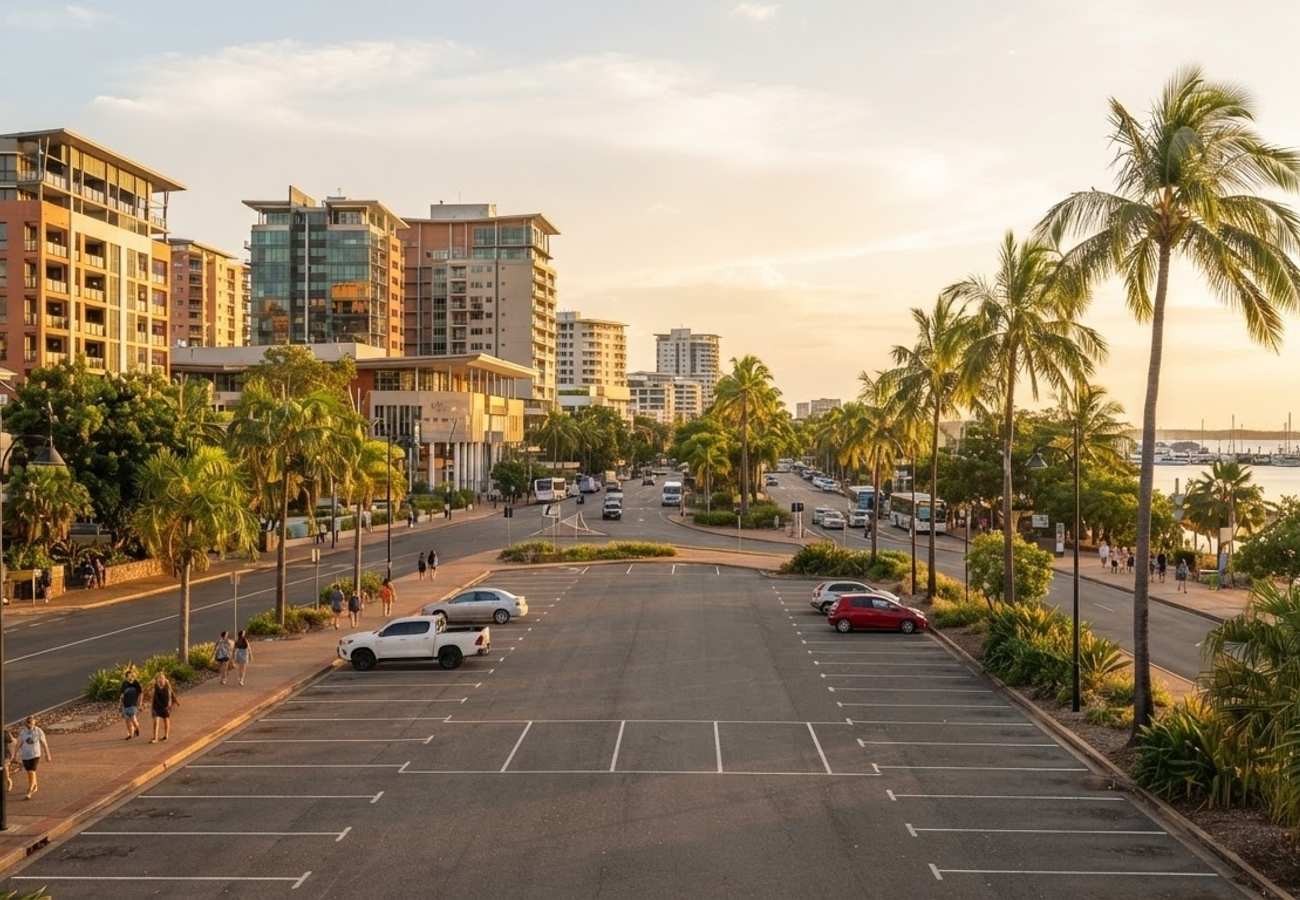
Image generated by AI
Darwin dominates the 2026 rankings as Australia's most affordable capital for drivers, with street meters starting at just $1.80 per hour. In stark contrast, motorists in Sydney and Brisbane face budget-breaking daily commercial rates exceeding $80.
The financial divide between Australia's northern and southern urban hubs has reached a tipping point. While the East Coast struggles with extreme spatial scarcity and high land values, Darwin has maintained a pricing structure that favors the visitor and the local commuter alike. For those navigating the Top End, the cost of vehicle placement is a negligible part of the travel budget, whereas in the metropolitan giants, it has become a significant daily expense.
The 2026 Australian Parking Cost Index
The gap in pricing is not merely a slight variation but a systemic difference in how city councils manage urban mobility. Darwin's municipal strategy focuses on supporting local business districts rather than treating parking as a high-margin revenue stream.
| City | Hourly CBD Rate Range | Typical All-Day Commercial Rate | Average Early Bird / Online Rate | Relative Cost Level |
|---|---|---|---|---|
| Darwin | $1.80 – $3.20 | $9.50 – $15.00 | $8.00 – $10.00 | Cheapest |
| Hobart | $3.00 – $5.00 | $15.00 – $22.00 | $12.00 – $16.00 | Very Low |
| Adelaide | $4.00 – $6.50 | $18.00 – $30.00 | $14.00 – $18.00 | Low |
| Canberra | $4.40 – $7.00 | $20.00 – $35.00 | $15.00 – $20.00 | Moderate |
| Perth | $5.40 – $8.00 | $20.00 – $35.00 | $15.00 – $22.00 | Moderate |
| Brisbane | $8.00 – $15.00 | $25.00 – $40.00 (Up to $80 casual) | $15.00 – $25.00 | High |
| Melbourne | $10.00 – $18.00 | $30.00 – $45.00 (Up to $67 casual) | $15.00 – $25.00 | Very High |
| Sydney | $12.00 – $25.00 | $35.00 – $55.00 (Up to $78 casual) | $20.00 – $35.00 | Most Expensive |
Regional Value Drivers: From the Top End to the South
Darwin’s affordability is rooted in lower land acquisition costs and a smaller demographic scale. The City of Darwin manages public spaces to ensure accessibility, with off-street maximums capped between $5 and $10 for full-day stays. This creates a competitive environment where private operators cannot inflate prices because municipal bays remain an attractive, low-cost alternative.
Similarly, Hobart and Adelaide keep costs suppressed through strategic planning. Hobart’s casual on-street rates fluctuate between $2.20 and $5.60 per hour, while full-day off-street options range from $10.00 to $25.00. Adelaide utilizes a grid layout to distribute traffic across various multi-story garages, keeping daily caps between $15.00 and $35.00. Both cities benefit from lower real estate overheads compared to the East Coast.
In the moderate tier, Canberra and Perth balance council-operated facilities with private interests. In Canberra’s Central National Area, short stays average $2.00 to $5.00 per hour. Perth’s CBD daily maximums average $15.00 to $40.00, with street parking typically costing between $5.40 and $7.00 per hour.
The High Cost of East Coast Urbanism
The financial burden is heaviest in Sydney, Melbourne, and Brisbane. These cities use steep rates as a tool for congestion management, effectively pricing private vehicles out of the city center to encourage public transit.
Unreserved casual parking in Sydney and Brisbane frequently reaches $77.00 to $83.00 per day. Melbourne is close behind, with peak garages charging between $60.00 and $75.00 for a full day. These figures are driven by high property taxes and state-mandated congestion levies.
Visitor Insider Tips: Navigating the Cost Gap
For the traveler or digital nomad moving between these cities, the strategy for vehicle management must shift based on the destination:
- In Darwin: Prioritize official City of Darwin kerbside guidelines to find designated low-cost zones. There is little need for pre-booking apps here; municipal bays are the gold standard for value.
- In the East Coast Metros: Never pay the "drive-up" casual rate. Use pre-booking apps to slash fees by 30% to 65%. If arriving before 9:30 AM, always seek "Early Bird" specials for fixed flat rates.
- The "Fringe" Strategy: In Sydney and Melbourne, park near public transport lines on the city periphery. This allows you to access lower outer-zone rates while utilizing trains or trams for the final leg.
- Peer-to-Peer Options: Look for platforms like Parkhound to find residential driveways, which often cost 30–50% less than commercial garages.
Tourism and Urban Outlook
The stark difference in parking costs reflects a broader shift in Australian urban planning. While smaller capitals like Darwin and Hobart use affordability to stimulate local business and tourism, the major hubs are pivoting toward "car-lite" city centers. This trend suggests that the price gap will only widen as Sydney and Melbourne continue to implement aggressive congestion pricing. For the visitor, this means the "Top End" remains not only a cultural destination but a financially accessible one for those who prefer the freedom of their own vehicle.
To verify current rates and mobility initiatives, visitors should consult the City of Perth Parking Portal, the South Australian Department for Infrastructure and Transport, and the official Darwin Council guidelines.
The road to savings in 2026 leads directly north.
Related Travel Guides
Disclaimer
This article is for informational and educational purposes only. It does not constitute legal, financial, or professional advice. While we strive to provide accurate and up-to-date information, travel policies, regulations, and conditions change rapidly. Always verify information with official sources before making travel decisions. Nomad Lawyer makes no representations about the accuracy, reliability, completeness, or suitability of the information provided. Readers should consult qualified professionals for advice specific to their circumstances. The views expressed in this article are those of the author and do not necessarily reflect the views of Nomad Lawyer.