
Japan Airlines Boeing 767 Emergency Landing After Tire Failure at Haneda
A Japan Airlines Boeing 767 made an emergency landing at Narita after suspected tire failure during takeoff from Tokyo Haneda. All 226 aboard escaped injury as authorities investigate runway debris and aircraft maintenance protocols.

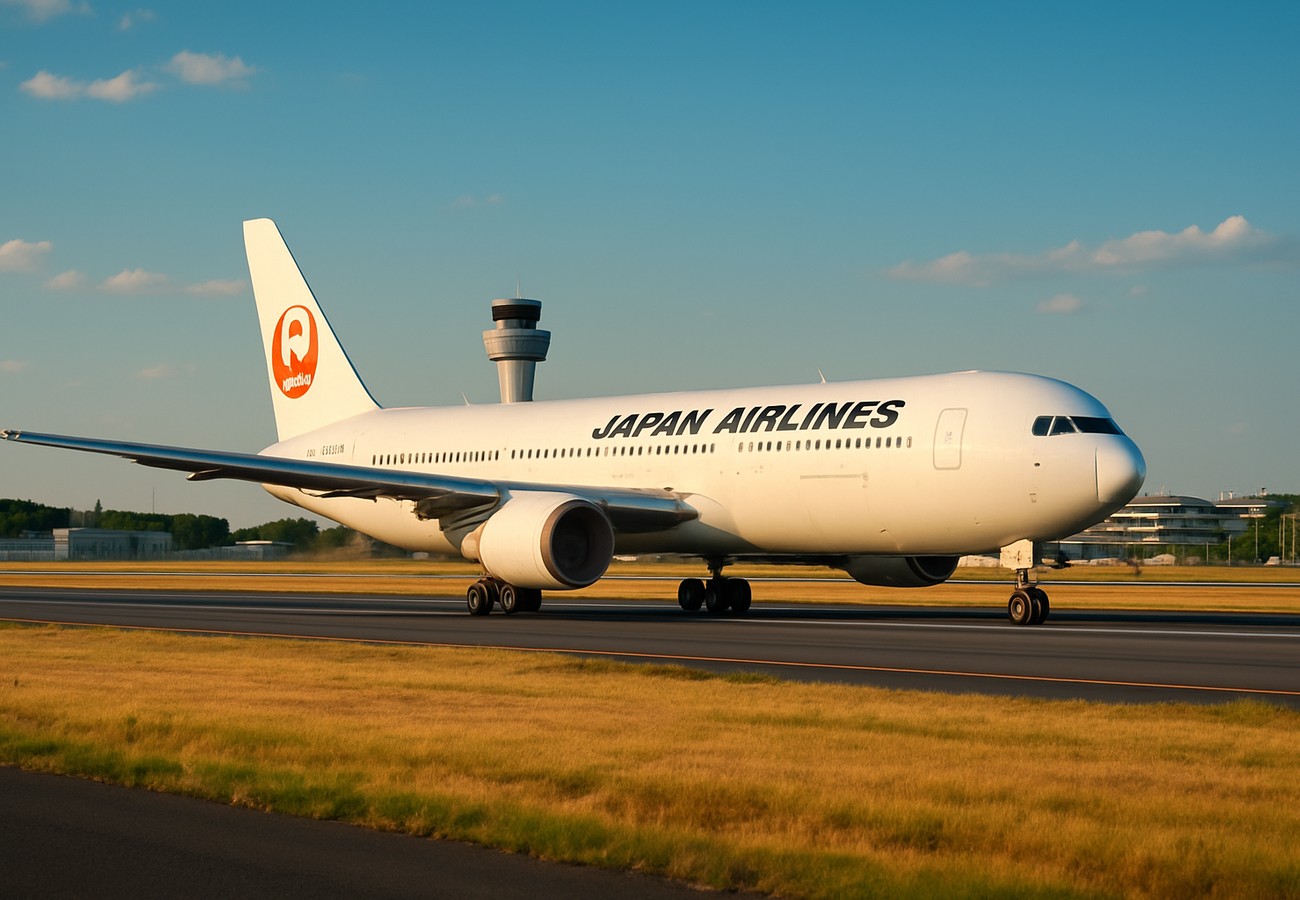
Image generated by AI
The Critical Moment at 11:55 AM
A Japan Airlines Boeing 767 carrying 218 passengers and eight crew members experienced what could have been catastrophic—but didn't become one. The aircraft, departing from Tokyo Haneda Airport bound for Kagoshima, encountered a suspected tire failure shortly after takeoff. The flight crew made the immediate decision to divert to Narita International Airport, where the plane touched down safely at approximately 11:55 AM without a single injury reported.
This wasn't merely another routine landing. This was aviation safety working exactly as designed—until you dig deeper into what happened on the ground.
What Triggered the Emergency Response
The sequence of events unfolded with precision. Moments after the Boeing 767 rotated off Runway D at Haneda, pilots detected mechanical trouble believed to involve a tire burst. The flight crew executed emergency procedures flawlessly, coordinating with air traffic control and diverting to Narita—Japan's second-largest international hub, located 60 kilometers east of Tokyo.
All 226 people aboard disembarked safely. No evacuation slides were deployed. No injuries. The textbook execution masked a deeper concern: this was the second tire-related incident in a single week.
Haneda's Runway Became a Crime Scene
What Japanese transport authorities discovered on Runway D at Haneda raised immediate flags. Debris had been found on the very runway used by the Japan Airlines flight during takeoff. Officials closed Runway D around 10:30 AM while forensic-style examinations determined whether the debris originated from the Boeing 767 or represented a pre-existing hazard.
The runway reopened at 1:45 PM—nearly five hours of disruption at one of Asia's busiest aviation hubs. The investigation remains active, probing whether foreign object damage (FOD) contributed to the tire failure, or whether the debris was an unrelated operational hazard.
Reddit: "Two tire incidents in five days? That's not coincidence—that's a pattern." — r/aviation
The Narita Response: A Masterclass in Emergency Protocol
Narita International Airport closed Runway A immediately following the emergency landing. Ground crews conducted rigorous inspections lasting nearly two hours. The swift, methodical response ensured minimal cascading delays across international operations.
This is what distinguishes Japan's aviation system: the infrastructure, training, and regulatory framework exist to handle crises. But the question emerging from this week isn't whether Japan can respond—it's why tire failures are occurring in the first place.
A Pattern Emerges: Skymark's Monday Incident
On Monday, May 27, Skymark Airlines experienced a tire rupture on a Boeing 737 departing from Haneda. That aircraft also made an emergency landing safely. No injuries occurred. But within 72 hours, another tire-related emergency. Japanese transport authorities now face uncomfortable questions about:
- Aircraft maintenance protocols across carriers
- Tire durability under high-density operational stress
- Runway surface conditions at Haneda
- Whether preventive measures are sufficient for Japan's flight volumes
The recurrence transforms this from an isolated incident into a systemic concern requiring immediate regulatory scrutiny.
The Investigation: Deep Into Root Cause
Japanese transport authorities launched a multi-layered investigation examining:
- Mechanical wear patterns on the Boeing 767's tire systems
- Operational stress factors during takeoff rotation
- Runway maintenance records and surface integrity at Haneda
- Connection between discovered debris and the tire failure
- Comparative analysis with the Skymark incident
These investigations typically take weeks. What emerges will shape safety protocols across Japan's domestic aviation network, affecting every carrier operating in the region.
Impact on Asia's Busiest Corridor
Tokyo Haneda processes over 700 daily flights. The temporary runway closures disrupted domestic and international scheduling. Airlines adjusted flight plans. Air traffic control coordinated complex rerouting. Passengers experienced delays, though no major cancellations cascaded.
But the operational strain reveals vulnerability. Japan's aviation infrastructure is exceptionally safe—yet increasingly stretched by demand. Add mechanical failures to the equation, and the fragility becomes evident.
What Happens Next: Regulatory Tightening
Japanese aviation authorities will almost certainly implement enhanced inspection protocols for aircraft tires. Expectations include:
- Increased pre-flight tire pressure and integrity checks
- More frequent tire replacement cycles
- Enhanced runway foreign object detection systems
- Mandatory maintenance audits across carriers
- Potential investigation into tire manufacturing standards
Japan Airlines has already confirmed ongoing monitoring of aircraft systems and maintenance schedules. The carrier faces potential regulatory sanctions if investigations reveal maintenance lapses.
The Broader Safety Lesson
This incident—or rather, this pair of incidents—demonstrates that aviation safety isn't static. It requires continuous reassessment, data analysis, and proactive intervention. The Boeing 767, a workhorse of Japan's domestic fleet, has an excellent safety record. Yet mechanical systems age. Operational stress accumulates. Without vigilance, even the most reliable aircraft become vectors for disaster.
The fact that both emergencies ended without casualties reflects decades of training, infrastructure investment, and regulatory rigor. But preventing emergencies entirely demands more than effective response—it demands identifying and eliminating root causes before they manifest as critical failures at 35,000 feet.
Japanese regulators understand this calculus. The investigation will be thorough. The regulatory response will be decisive. Whether it arrives fast enough to prevent a third incident remains the question everyone should be asking.
Aviation safety isn't about preventing all failures—it's about ensuring that when systems fail, the consequences stop at inconvenience rather than tragedy.
Related Travel Guides
- Kenya Railways Adds Special Madaraka Express Trains Amid Aviation Disruptions
- Tripadvisor Makes 'Good Progress' on TheFork Sale While Exploring LLM Data Partnership Opportunities
- FAA Extends Flight Restrictions at Chicago O'Hare International Airport Until 2027 Amid United and American Airlines Rivalry
Disclaimer
This article is for informational and educational purposes only. It does not constitute legal, financial, or professional advice. While we strive to provide accurate and up-to-date information, travel policies, regulations, and conditions change rapidly. Always verify information with official sources before making travel decisions. Nomad Lawyer makes no representations about the accuracy, reliability, completeness, or suitability of the information provided. Readers should consult qualified professionals for advice specific to their circumstances. The views expressed in this article are those of the author and do not necessarily reflect the views of Nomad Lawyer.
Raushan Kumar
Founder & Lead Developer
Full-stack developer with 11+ years of experience and a passionate traveller. Raushan built Nomad Lawyer from the ground up with a vision to create the best travel and law experience on the web.
Learn more about our team →