Croatia Is Now On Track To See Better Tourism Recovery As More Foreign Visitors Return To The Adriatic Coast

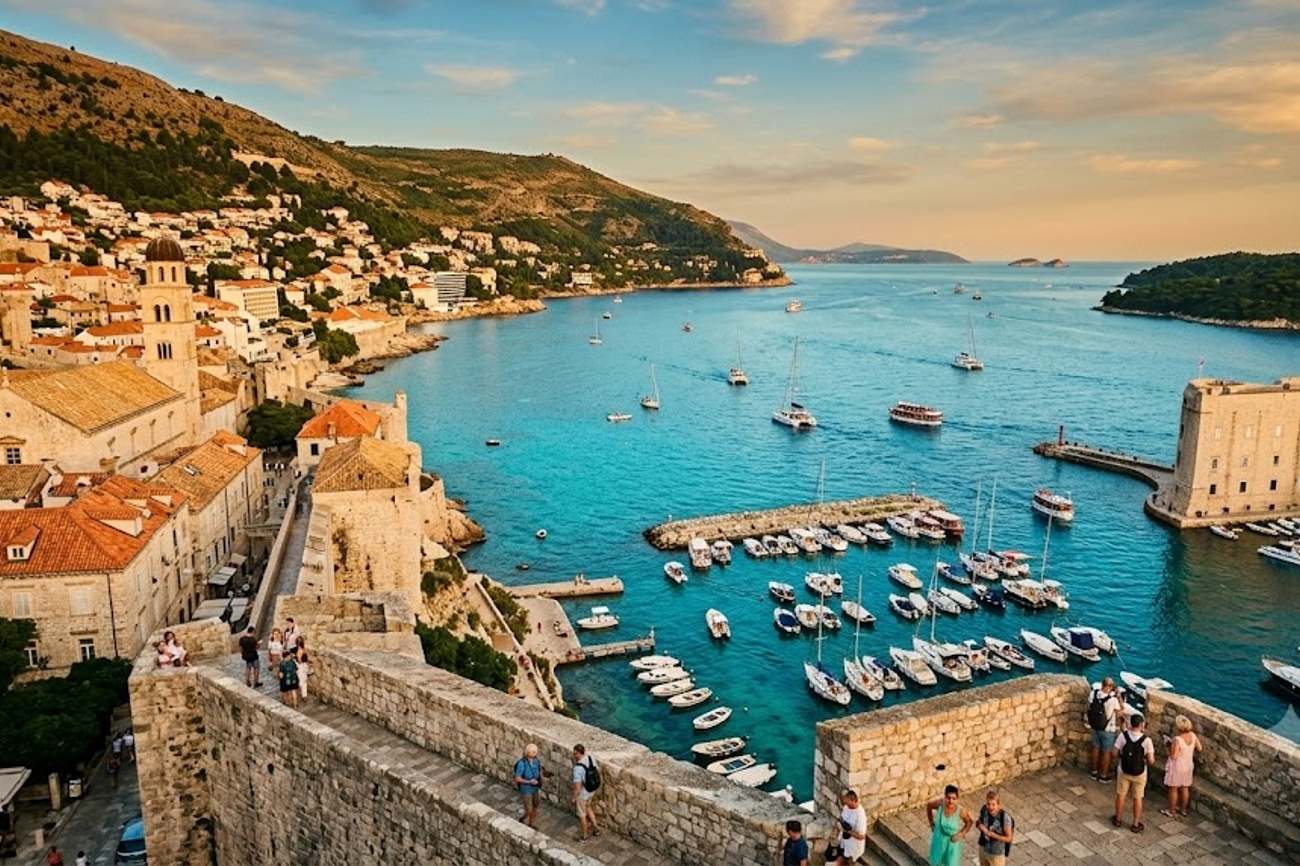
Image generated by AI
4,476,012 arrivals and 25,264,201 overnight stays in commercial accommodation defined Croatia's July 2026 performance, marking a critical pivot from a volatile start to the summer season. This surge represents a 2.7% increase in arrivals and a 1.2% rise in overnight stays compared to July 2025, effectively erasing the deficit created by a lackluster June. For the global nomad and the high-frequency traveler, these figures are not merely statistics; they are indicators of a tightening hospitality market in the Adriatic, where demand is concentrating heavily in a few key coastal hubs.
The June Deficit and the July Pivot
To understand the current state of Croatian tourism, one must analyze the sharp divergence between June and July 2026. June served as a cautionary tale, recording only 3 million arrivals and 13.5 million overnight stays. On an annual basis, June 2026 saw a 6.6% drop in arrivals and a 6.1% decline in nights compared to the previous year. The instability was driven almost entirely by the international sector, where foreign arrivals plummeted by 8.9% (2.6 million) and nights fell by 7.5% (12.3 million).
While domestic tourism showed resilience in June—with Croatian residents increasing arrivals by 11.8% (387,000) and nights by 11.7% (1.2 million)—this local growth was insufficient to offset the international slump. The July rebound, therefore, is less about a sudden explosion of new interest and more about a recovery of the expected peak-season trajectory. International arrivals climbed 2.2% to 4,065,279, while international nights rose 0.9% to 23,411,809. This shift suggests that while the shoulder season may be experiencing instability, the core summer demand remains intact, anchored by a heavy reliance on the Schengen Area framework.
Market Concentration and Capacity Data
The recovery is not evenly distributed across the country. Instead, it is concentrated in specific regions and accommodation types, creating "pressure points" for travelers. The data reveals a heavy leaning toward short-stay rentals and a few dominant geographical zones.
| Region/Category | July 2026 Nights | % of National Total | Annual Growth |
|---|---|---|---|
| Istria | 7,460,208 | 29.5% | +1.3% |
| Split-Dalmatia | 5,272,484 | 20.9% | +1.6% |
| Primorje-Gorski Kotar | 4,240,678 | 16.8% | +1.9% |
| Holiday Properties | 14,300,000 | 56.4% | +1.0% |
| Campsites | 6,000,000 | 23.7% | +1.2% |
| Hotels | 5,000,000 | 19.8% | +1.7% |
From a capacity standpoint, Croatia operated with 424,000 available units (rooms, apartments, and camping plots) in July, providing roughly 1.1 million permanent beds. The dominance of holiday properties is stark: they provide 59.9% of all available units and 60.9% of permanent beds. Hotels, while showing the strongest growth in overnight stays (+1.7%), remain a smaller slice of the pie with 83,000 rooms and 174,000 beds.
Expert Analysis: The "Turnover Trap" and Market Fragility
The most telling data point in this report is the relationship between arrivals and overnight stays. Arrivals grew at 2.7%, while nights grew at a much slower 1.2%. For the business of tourism, this creates a "turnover trap." When arrivals outpace stay duration, accommodation providers face higher operational costs—more check-ins, more cleaning cycles, and higher administrative overhead—without a proportional increase in total occupied nights.
For travelers booking these routes, the direct consequence is a shift in pricing and availability. Because 92.7% of all July nights were generated by foreign visitors, the market is hyper-sensitive to European economic shifts. We see this in the "uneven recovery" across source markets. While Ukraine saw a massive 16.7% increase in nights and Czechia and Hungary rose by 8.3%, traditional powerhouses like Austria (-3.8%), the Netherlands (-3.4%), and Italy (-1.2%) are contracting.
The pricing pressure this creates means that the "premium" coastal regions—Istria, Split-Dalmatia, and Primorje-Gorski Kotar—which account for over two-thirds of all stays, will likely see price rigidity despite the decline in some Western European markets. The growth in arrivals suggests a trend toward shorter, more frequent trips rather than extended stays. This behavior increases the volatility of local transport and short-term rental markets, making "last-minute" booking a high-risk strategy for the 2026-2027 cycle.
Travelers should monitor updates from the Croatian National Tourist Board to gauge if this recovery extends into the autumn shoulder season or if the June slump was a harbinger of a broader cooling in demand.
Key Takeaways
- Recovery Pivot: July 2026 reversed a negative June trend, with 4.47 million arrivals and a 2.7% annual increase in visitors.
- Geographic Bottlenecks: Over 67% of all overnight stays are concentrated in just three regions: Istria, Split-Dalmatia, and Primorje-Gorski Kotar.
- Accommodation Dominance: Short-term holiday properties are the primary engine of the industry, controlling 56.4% of all overnight stays.
- Market Shift: Demand is shifting away from Austria and the Netherlands toward growth in Ukraine, Czechia, and Hungary.
- Operational Strain: Faster growth in arrivals relative to overnight stays indicates higher guest turnover, potentially impacting service quality and pricing.
FAQ: Croatia Travel 2026
Are there any new visa or passport requirements for Croatia in 2026? No. Based on the latest official data, there are no new visa, passport, or border rules. Travelers continue to operate under the existing European Union and Schengen framework.
Which regions of Croatia are currently the most crowded? Istria is the busiest, accounting for 29.5% of all overnight stays, followed by Split-Dalmatia (20.9%) and Primorje-Gorski Kotar (16.8%).
What is the best type of accommodation for availability? Holiday properties and short-stay rentals offer the most capacity, providing nearly 60% of all available units and permanent beds in the country.
How long is the average stay for international tourists in Croatia? Foreign guests averaged 5.8 nights per arrival in July 2026, compared to 4.5 nights for domestic Croatian travelers.
As the Adriatic balances record-breaking July volumes against a shaky June, the window for affordable, spontaneous coastal travel is closing.
Related Travel Guides
- Spain Stands AlongSide Portugal and Others As The Northern Hemisphere Enters A New Autumn Era With Powerful Seasonal Shifts Across Europe
- Vietnam’s Quảng Trị Unlocks A New Tourism Era With World-Class Caves, Nature And Heritage Attractions
- United States Partners With Japan And More Destinations As PTAA Travel Tour Expo 2027 Manila Nears Full Capacity With 98 Percent Booths Booked
This article is for informational purposes. Flight routes, passenger regulations, visa rules, and transit advisories are subject to change by airlines and aviation authorities. Readers are advised to verify schedules and travel documentation with relevant carriers and border agencies before departure.
Related Stories

Thailand Tourism Slowdown Tests Small Businesses as Kingdom Pivots to High-Yield Travel and Secondary Provinces

South Africa Expands Inclusive Wildlife Tourism with Woman-Owned Wellness Centre at Addo Elephant National Park