
United States Partners With Japan And More Destinations As PTAA Travel Tour Expo 2027 Manila Nears Full Capacity With 98 Percent Booths Booked
United States Partners With Japan And More Destinations As PTAA Travel Tour Expo 2027 Manila Nears Full Capacity With 98 Percent Booths Booked

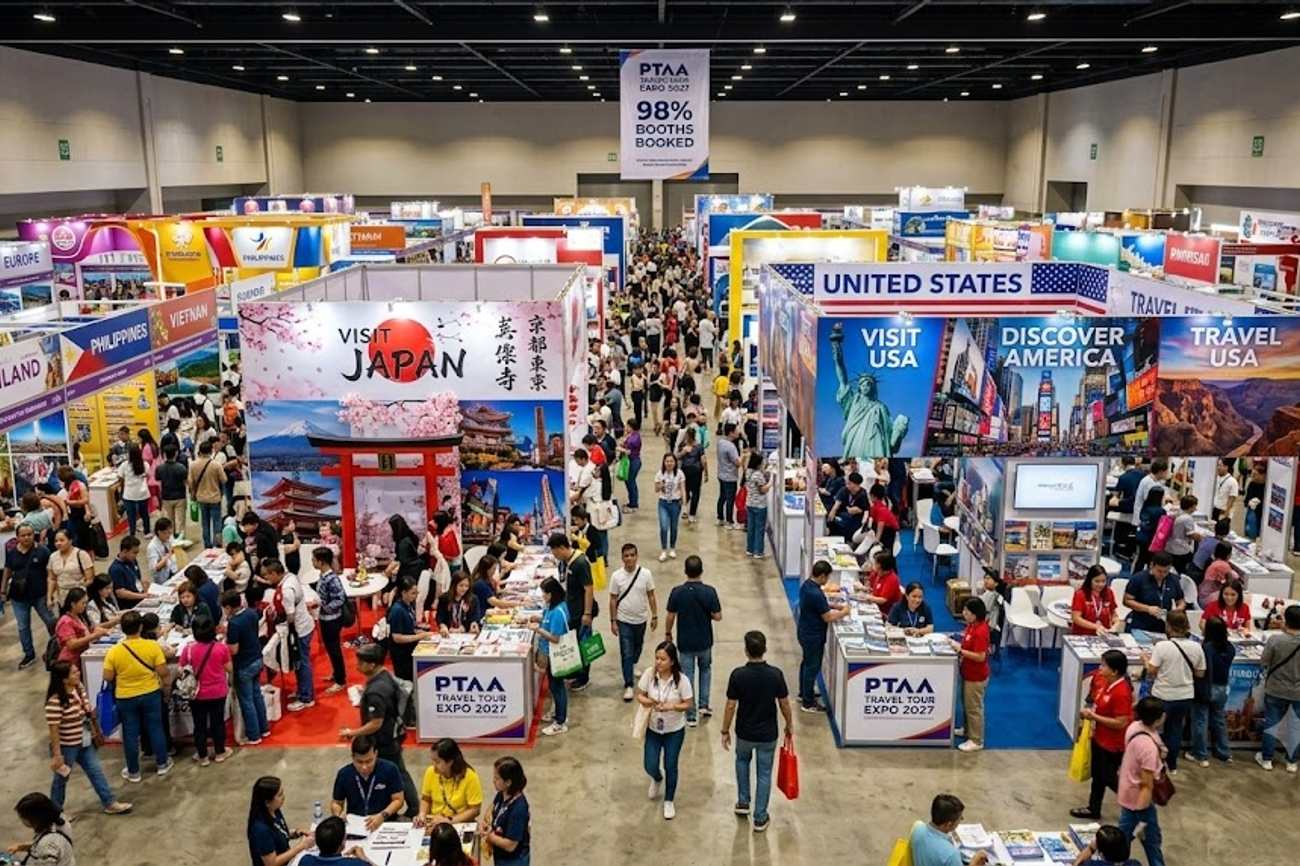
Image generated by AI
Exhibitor demand for the 34th PTAA Travel Tour Expo has surged to a 98% booking rate well ahead of its February 2027 launch—a stark contrast to the slower recovery cycles seen in regional B2C trade shows during the 2021-2023 period. This near-total sell-out of booth space at the SMX Convention Center signals a decisive shift in the Philippine outbound travel market, moving from tentative post-pandemic exploration to an aggressive, high-volume expansion phase.
The Manila Tourism Marketplace in Numbers
The scale of the 2027 PTAA Travel Tour Expo reflects a strategic expansion of the Philippine Travel Agencies Association Inc. (PTAA) footprint. The event is scheduled for February 5 to 7, 2027, and will occupy a total of 13,880 square metres of exhibition space. This footprint is distributed across Halls 1–4 on the ground floor and Function Rooms 1–4 on the second floor of the SMX Convention Center.
The 98% occupancy rate for exhibitor booths suggests that the "oversubscribed" status of the event is not merely a projection but a current reality. This demand is driven by a convergence of domestic and international providers. For the first time, the event will integrate two previously distinct formats: the Travel Tour Expo (TTE) and the International Travel Trade Expo (iTTE). By merging the B2C (consumer) and B2B (trade) platforms, the PTAA is attempting to shorten the sales cycle between international destination marketing organizations (DMOs) and the end Filipino traveler.
The institutional backing for this event is comprehensive, involving a four-pillar support system:
- PTAA: Primary organizational lead.
- Department of Tourism (DOT): Strategic development oversight.
- Tourism Promotions Board (TPB): Direct destination marketing.
- Tourism Infrastructure and Enterprise Zone Authority (TIEZA): Infrastructure and zoning support.
Regional Market Penetration and Competitive Benchmarks
The 2027 expo highlights a specific cluster of high-priority markets. The presence of the United States (via Guam), Japan, South Korea, Taiwan, Hong Kong, and Thailand indicates a strategic focus on the "East Asian Circle" and Pacific territories. According to data from the World Travel & Tourism Council (WTTC), the recovery of outbound travel in Southeast Asia has been characterized by a preference for short-haul, high-frequency destinations—a pattern mirrored exactly in the PTAA exhibitor list.
The decision to route US participation through Guam is a data-driven move. Guam serves as a lower-friction entry point for Filipino travelers compared to the US mainland, offering a balance of American infrastructure and Pacific proximity. This reflects a wider regional trend where "gateway territories" are seeing increased traffic as travelers optimize for flight duration and visa accessibility.
The following table compares the strategic focus of the primary international participants for the 2027 cycle:
| Destination | Primary Growth Driver | Strategic Focus Area | Market Position |
|---|---|---|---|
| Japan | Cultural/Seasonal | Regional cities & Nature | Established Leader |
| South Korea | Entertainment/K-Culture | Seoul & Winter Tourism | High-Growth Trend |
| Taiwan | Accessibility/Food | Short-haul City Breaks | Value-Driven Option |
| Thailand | Wellness/Luxury | Beaches & Culture | Regional Staple |
| Hong Kong | Connectivity/Retail | Urban Tourism & Dining | Hub-and-Spoke Model |
| USA (Guam) | Pacific Proximity | Family & Marine Leisure | Specialized Niche |
What This Means for Travelers
For the individual traveler, the integration of the TTE and iTTE into a single platform suggests a shift toward more aggressive, direct-to-consumer pricing. When trade providers (iTTE) and retail consumers (TTE) occupy the same physical space, the likelihood of "flash sales" and exclusive expo-only packages increases.
If you are planning an international trip for 2027, the February 5–7 window is now the critical booking period. Based on the 98% exhibitor saturation, we can expect a high density of competing offers. Travelers should focus on the following:
- Short-Haul Optimization: With Taiwan and Hong Kong heavily represented, expect competitive "city break" packages that underprice standard online bookings.
- Regional Diversification: Japan and South Korea are actively promoting destinations "beyond major cities." This is a signal to look for packages to secondary cities (e.g., Fukuoka or Busan) which may offer better value than Tokyo or Seoul.
- Pacific Alternatives: For those seeking a US-style experience without the 15+ hour flight, the Guam presence suggests that Pacific island packages will be a primary promotional focus.
Given the current trajectory of outbound demand, booking 12-16 weeks ahead of the February expo for flights, but waiting for the expo for hotel and tour bundles, is the most mathematically sound strategy to maximize discounts.
Projecting the Manila Travel Hub Trajectory
The move toward an "oversubscribed" event model indicates that Manila is successfully positioning itself as the primary outbound travel hub for the Philippines. By consolidating domestic and international services, the PTAA is creating a "one-stop-shop" ecosystem that mirrors the efficiency of larger global travel marts.
Looking at IATA's passenger traffic trends, the appetite for international connectivity in the Asia-Pacific region is accelerating. The 34th PTAA Expo is a leading indicator that the Filipino middle class is increasing its travel frequency. We expect that by 2028, the event will either require a larger venue than the SMX Convention Center or will move toward a hybrid digital-physical model to accommodate the overflow of exhibitors.
The integration of "allied services"—which includes travel insurance, currency exchange, and visa processing—into the main exhibition floor suggests that the industry is moving toward "frictionless travel." The goal is to convert a casual visitor into a fully booked traveler within a single afternoon.
FAQ: Manila Travel Tour Expo 2027
Will travel prices increase due to high demand at the expo? Generally, no. The high exhibitor turnout (98% booking rate) creates intense competition among providers. This typically leads to lower prices and more aggressive discounting for consumers during the event dates of February 5-7, 2027.
Is it better to book online or at the PTAA Expo? For standard flights, online monitoring is best. However, for curated packages, hotel bundles, and "hidden gem" regional tours in Japan or South Korea, the expo provides direct access to suppliers that often bypass online commission fees.
Which destinations are expanding their presence most aggressively? South Korea and Japan are showing the strongest push into regional (non-capital) tourism. Taiwan is also aggressively targeting the short-haul, food-tourism segment to capture the budget-conscious traveler market.
What is the difference between TTE and iTTE? TTE (Travel Tour Expo) is the consumer-facing marketplace for the general public. iTTE (International Travel Trade Expo) is the professional side where agencies and global providers negotiate contracts. Their integration in 2027 streamlines the booking process.
The 98% saturation of the 34th PTAA Expo is not just a booking statistic; it is a mandate from the market that the Philippine outbound sector has returned to full strength.
#PTAA2027 #ManilaTourismGrowth #PhilippineOutboundTravel #SMXConventionCenter #AsiaPacificTravelTrends2027 #PhilippineTravelAgenciesAssociation
Related Travel Guides
Disclaimer
This article is for informational and educational purposes only. It does not constitute legal, financial, or professional advice. While we strive to provide accurate and up-to-date information, travel policies, regulations, and conditions change rapidly. Always verify information with official sources before making travel decisions. Nomad Lawyer makes no representations about the accuracy, reliability, completeness, or suitability of the information provided. Readers should consult qualified professionals for advice specific to their circumstances. The views expressed in this article are those of the author and do not necessarily reflect the views of Nomad Lawyer.
Raushan Kumar
Founder & Lead Developer
Full-stack developer with 11+ years of experience and a passionate traveller. Raushan built Nomad Lawyer from the ground up with a vision to create the best travel and law experience on the web.
Learn more about our team →