
Condor Transforms Frankfurt Hub With Budapest, Venice, and Barcelona Routes: Summer 2026 Guide

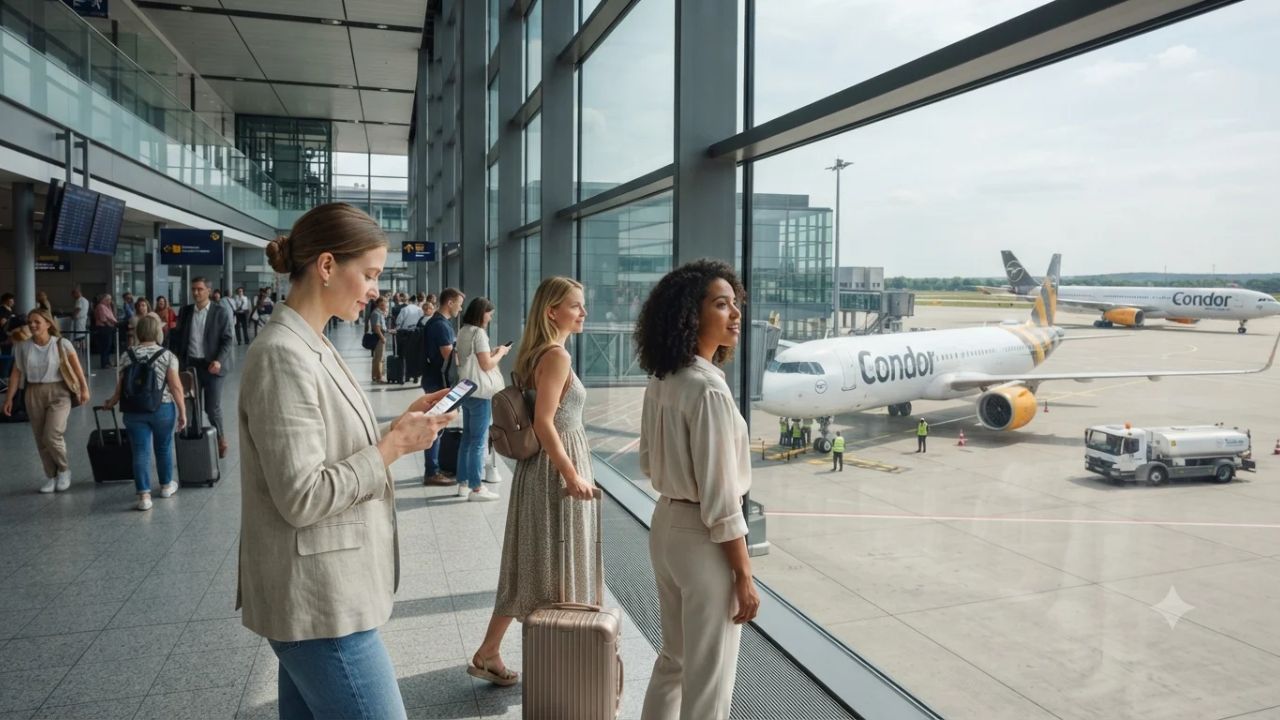
Known for decades primarily as a vacation leisure carrier sporting candy-striped aircraft tails, Condor is orchestrating one of the most audacious network pivots in modern European aviation. Rather than remaining tethered to seasonal holiday charters, the German airline is systematically evolving Frankfurt Airport into a high-frequency scheduled transfer hub. Speaking at the Routes 2026 conference, Niklas, Head of Flight Planning and Traffic at Condor, confirmed that the carrier has introduced high-density European trunk services for summer 2026—deploying three daily flights each to Budapest, Venice, Barcelona, and London Gatwick—feeding an all-Airbus fleet anchored by 18 ultra-efficient Airbus A330-900neo long-haul aircraft even as fuel price volatility forces European carriers to reassess operational capacity.
The Frankfurt Hub Evolution: Triple-Daily City Frequencies Meet Long-Haul Wings
The strategic reinvention of Condor marks a departure from traditional leisure airline economics. Traditionally, vacation carriers operated once- or twice-weekly flights to Mediterranean beaches, leaving lucrative high-frequency corporate and city-break travel to legacy network operators. Condor is directly challenging that divide by building scheduled connecting banks around Frankfurt Airport (FRA).
The four new high-frequency routes introduced for summer 2026 establish an unprecedented operational tempo for the carrier:
| Destination | Flight Frequency | Primary Traveler Segments | Connecting Opportunities |
|---|---|---|---|
| Budapest (BUD) | Three daily flights | Cultural tourism, corporate travel, city breaks | Transatlantic and intercontinental banks |
| Venice (VCE) | Three daily flights | Lagoon leisure, heritage travel, cruise departures | Long-haul North American arrivals |
| Barcelona (BCN) | Three daily flights | Catalan cultural tourism, conferences, beach breaks | Global partner transfer traffic |
| London Gatwick (LGW) | Three daily flights | UK business, leisure, visiting friends/relatives | European cross-hub connectivity |
Niklas emphasized that triple-daily schedules are essential for building a legitimate hub carrier. By offering departures across morning, afternoon, and evening banks, Condor provides the schedule flexibility demanded by business travelers while simultaneously allowing seamless two-way transfers with long-haul services.
However, growth is occurring against a backdrop of severe cost pressure. Niklas acknowledged that rising fuel prices are "definitely a topic that is affecting us heavily," confirming that while Condor "had to take out some flights this summer, not as heavily as other carriers," the airline is actively monitoring market developments to protect its summer 2026 schedule stability. Travelers can check terminal gate transfers and facility maps directly via Frankfurt Airport.
What Makes the New Condor Network Model Different
Condor's evolution relies on a cohesive fleet strategy and a rapidly expanding web of global airline alliances:
The All-Airbus Fleet Architecture
Condor operates an entirely modern all-Airbus fleet divided into specialized missions. The backbone of its long-haul international network consists of 18 factory-fresh Airbus A330-900neo aircraft, with additional airframes scheduled for delivery over the coming years. Consuming just 2.1 liters of fuel per passenger per 100 kilometers, the A330neo offers whisper-quiet cabins, advanced four-class seating, and private front-row Prime Seats. Short- and medium-haul European routes are operated by modern Airbus A320 and A321neo jets, supplemented during summer peaks by A319s and seasonal wet-lease (ACMI) partnerships utilizing Embraer E190 regional aircraft to match capacity precisely to demand.
The Global Partnership Architecture
Rather than operating as an isolated point-to-point airline, Condor is scaling deep intercontinental airline partnerships. The carrier maintains well-established partnerships with Alaska Airlines in the United States and WestJet in Canada, allowing travelers across North America to book single-ticket itineraries through Frankfurt to European destinations. Looking eastward, Condor has established a new interline partnership with Korean Air, with additional global alliance agreements actively being developed at Routes.
Looking ahead, Niklas confirmed that the airline is currently mapping an expanded leisure footprint for summer 2027, focusing on Mediterranean sun-and-beach destinations while simultaneously broadening its presence across the German domestic market. Destination travel ideas across Germany can be explored through Germany Travel.
Visitor Insider Tips: Fast Hub Transfers, Thermal Baths, and Lagoon Logistics
The Frankfurt (FRA) Layover Protocol
Frankfurt is a colossal multi-terminal complex. When booking connecting flights through FRA on Condor, allow a layover window of at least 60 to 75 minutes. If arriving on a long-haul flight from North America or the UK (non-Schengen) and transferring to Budapest, Venice, or Barcelona (Schengen), you must clear security and passport control. Utilize the automated biometric EasyPASS e-gates if you hold an eligible e-passport to bypass manual customs queues.
Budapest: Thermal Bath Timing and Ruin Bars
With three daily flights into Budapest Ferenc Liszt International Airport (BUD), weekend city breaks are completely seamless. Take the direct 100E Airport Express bus straight into Deák Ferenc tér. Avoid tourist crowds at Széchenyi Baths by arriving at opening time (07:00), or head across the Danube to the historic Ottoman-era Rudas Baths. In the evening, explore the vibrant Jewish Quarter (District VII), sipping Hungarian furmint wine in historic ruin bars like Szimpla Kert.
Venice: Lagoon Transit and Municipal Entry Rules
Touching down at Venice Marco Polo Airport (VCE) gives you direct maritime access. Walk along the covered airport moving walkway to the water dock and board the Alilaguna water bus (Arancio or Blu lines) to reach your hotel directly by canal, avoiding congested bus terminals at Piazzale Roma. Note that if you visit Venice as a day-tripper during peak spring and summer weekends, you must pre-register online and pay the municipal Access Fee (Contributo di Accesso) to enter the historic pedestrian islands.
Barcelona: Catalan Tapas and Modernist Quarters
Flights into Barcelona-El Prat (BCN) drop you 25 minutes from the city center via the frequent Aerobús into Plaça de Catalunya. Skip tourist traps along Las Ramblas; base yourself in the leafy Eixample district to admire Antoni Gaudí’s architectural masterworks, or stay in El Poblenou near the beach. For dinner, head to Gràcia for artisan vermouth and local tapas like bombas and grilled octopus. Review regional cultural itineraries through Spain Tourism.
Cultural and Environmental Context: Overtourism Pressures and Green Fleet Transitions
Condor's rapid expansion into iconic European heritage destinations like Venice and Barcelona places the airline at the center of the continent's carrying capacity debate. In Venice, rising tides and tourism congestion threaten delicate lagoon ecology, prompting strict bans on mega-cruise liners and the introduction of visitor entry fees. In Barcelona, municipal authorities are regulating short-term vacation rentals to preserve neighborhood affordability for local residents. Responsible visitors should travel during shoulder seasons, patronize neighborhood artisans, and use public transit like Venice's vaporettos and Barcelona's metro.
From an environmental standpoint, Condor's investment in the Airbus A330-900neo represents an important leap forward. Burning 20% less fuel than previous-generation widebodies, these aircraft significantly lower the carbon footprint of long-haul flights into Europe. Combined with Germany’s rail-to-air agreements with Deutsche Bahn, which allow travelers to replace short domestic flights with high-speed ICE trains directly into Frankfurt Airport's long-distance railway station, the network model emphasizes sustainable multi-modal transit.
FAQ: Condor European Routes and Fleet 2026
Which new European routes did Condor launch for Summer 2026?
Condor launched three daily flights each from Frankfurt to Budapest, Venice, Barcelona, and London Gatwick, transforming its primary hub with high-frequency European connectivity.
What aircraft make up Condor's long-haul fleet?
Condor operates an all-Airbus long-haul fleet featuring 18 modern Airbus A330-900neo aircraft, with additional units scheduled for delivery over the coming years.
Which international airlines partner with Condor?
Condor maintains established partnerships with Alaska Airlines in the United States and WestJet in Canada, and recently launched a new interline agreement with Korean Air.
How is Condor managing elevated jet fuel costs?
Condor has made selective flight trims while avoiding major disruptions, closely monitoring fuel markets to maintain schedule stability across summer 2026.
By pairing high-frequency European city routes with fuel-efficient Airbus A330neo wings, Condor is turning its famous striped aircraft into the foundation of a modern, connected European hub.
Related Travel Guides
Disclaimer
This article is for informational and educational purposes only. It does not constitute legal, financial, or professional advice. While we strive to provide accurate and up-to-date information, travel policies, regulations, and conditions change rapidly. Always verify information with official sources before making travel decisions. Nomad Lawyer makes no representations about the accuracy, reliability, completeness, or suitability of the information provided. Readers should consult qualified professionals for advice specific to their circumstances. The views expressed in this article are those of the author and do not necessarily reflect the views of Nomad Lawyer.
Kunal K Choudhary
Co-Founder & Contributor
A passionate traveller and tech enthusiast. Kunal contributes to the vision and growth of Nomad Lawyer, bringing fresh perspectives and driving the community forward.
Learn more about our team →