
China’s Nanchang Boosts Night Tourism With A Stunning Ganjiang River Drone Show Creating A New Cultural Attraction
China’s Nanchang Boosts Night Tourism With A Stunning Ganjiang River Drone Show Creating A New Cultural Attraction

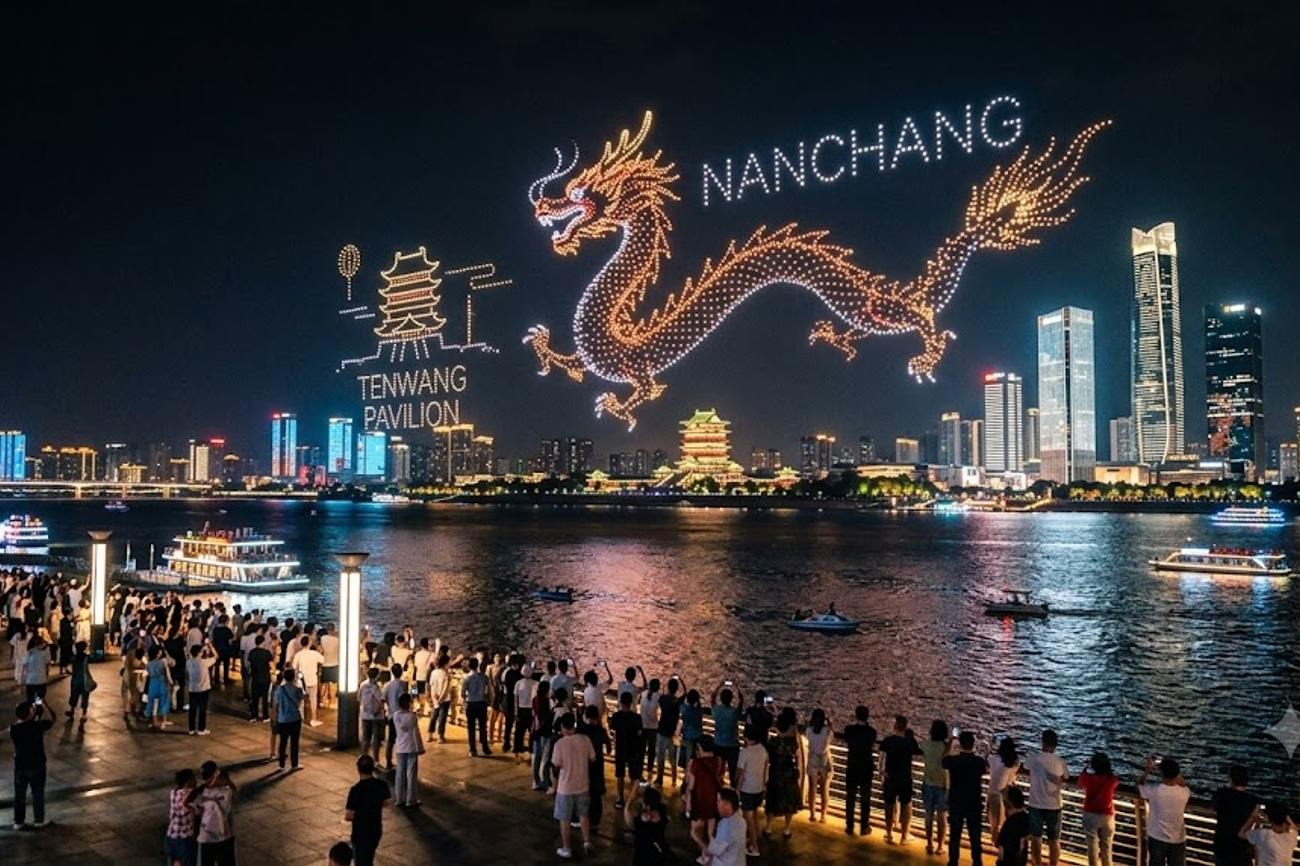
Image generated by AI
Nanchang is currently rewriting its 3,000-year-old history not in textbooks, but across the night sky using hundreds of coordinated drones. While most visitors to Jiangxi Province gravitate toward the mountains, the provincial capital is transforming the Ganjiang River waterfront into a massive, digital canvas that bridges the gap between ancient heritage and futuristic urbanism.
The Digital Awakening of the Ganjiang River
For centuries, the Ganjiang River has been the lifeblood of Nanchang, dictating the city's trade, defense, and growth. Now, it serves as the stage for a monthly tourism initiative that replaces traditional sightseeing with high-tech immersion. This isn't a one-off spectacle; the city has established a recurring monthly program designed to anchor its night tourism economy. By utilizing the riverfront, Nanchang is shifting the visitor experience from passive observation of monuments to an active, evening-based engagement with the city's identity.
The strategic move toward "night tourism" is a response to a broader shift in Chinese urban planning. By creating a reason for travelers to remain in the city after sunset, Nanchang is effectively increasing the average length of stay and boosting the revenue of local hospitality and dining sectors. The waterfront has evolved from a transit corridor into a cultural hub where the illuminated skyline and the flowing river provide a dramatic backdrop for aerial storytelling.
What Makes Nanchang Different
Nanchang occupies a unique space in the Chinese cultural psyche, serving as a critical center for Jiangxi Province's history. What separates this city from the hyper-modernity of Shanghai or the imperial weight of Beijing is its ability to blend a deep, ancestral legacy with a bold, experimental approach to technology. The city's history is not just preserved in museums; it is being projected.
The current drone performances are structured into ten themed sections, each meticulously choreographed to represent a different era or cultural milestone of Nanchang’s 3,000-year trajectory. This approach solves a common problem in cultural tourism: making ancient history accessible to younger, digitally native generations. Instead of reading a plaque in a quiet courtyard, visitors witness the evolution of the city through precise, colorful formations that materialize and dissolve in the air.
To truly understand Nanchang, one must look at the interplay between its traditional architecture and these futuristic displays. The city is leveraging its position as a provincial capital to create a brand that is simultaneously a guardian of the past and a pioneer of the future. This duality is reflected in the way the city manages its public spaces, turning the riverfront into an interactive gallery that requires no permanent infrastructure but leaves a lasting psychological impression.
Visitor Insider Tips
Navigating Nanchang requires a shift in timing and perspective. To experience the city like a local, avoid the midday heat and focus your energy on the "blue hour" and beyond.
Timing the Drone Show: Since the drone performances are scheduled as monthly events, check the official China Tourism updates or local Jiangxi government notices to pin down the exact Saturday evening of the performance. Arrive at the Ganjiang Riverfront at least two hours early. The crowds peak just before the launch, and securing a spot along the railing is essential for an unobstructed view of the ten themed segments.
Neighborhood Base: For those visiting for the night tourism circuit, stay in the districts adjacent to the river. This allows you to avoid the peak-hour traffic that clogs the city center just before the shows begin. You will find a higher concentration of boutique hotels and local eateries that cater to the evening crowds.
Local Flavors: While waiting for the show, seek out Nanchang’s famous spicy cuisine. The city is known for a heat that rivals Sichuan, but with a distinct Jiangxi profile. Try the local street snacks near the waterfront, but keep a cold beverage handy—the local peppers are unforgiving.
Transport Hack: Use the local metro system to reach the riverfront. Taxis and ride-shares often struggle with the gridlock caused by the drone show spectators. The metro is the most reliable way to enter and exit the area quickly. For broader regional travel, refer to the China Railway portal to coordinate your arrival from nearby hubs like Hangzhou or Wuhan.
Cultural and Environmental Context
The integration of drone technology into Nanchang's tourism strategy is more than a marketing ploy; it is a study in sustainable urban attraction. Unlike traditional fireworks, which contribute significant noise pollution and chemical runoff into the Ganjiang River, drones offer a clean, reusable alternative for large-scale celebrations. This allows the city to maintain a high-impact visual experience while minimizing the environmental footprint on the river's ecosystem.
However, the rise of night tourism brings its own set of challenges. The influx of thousands of visitors to the riverfront every month puts pressure on local waste management and pedestrian flow. Nanchang is currently balancing the need for economic growth with the preservation of the river's natural serenity. There is a delicate tension between the "spectacle" of the drone show and the quiet dignity of the city's 3,000-year-old heritage.
Furthermore, this initiative reflects a broader Chinese trend of "Digital Heritage." By translating history into data and light, Nanchang is participating in a national effort to ensure that traditional culture remains relevant in an era of rapid urbanization. The Ganjiang River is no longer just a geographic feature; it has become a medium for cultural transmission, ensuring that the stories of the Jiangxi people are told in a language that the 21st century understands. For those interested in how China preserves its broader heritage, the UNESCO World Heritage Centre provides excellent context on the types of sites and traditions that Nanchang seeks to emulate and protect.
FAQ: Visiting Nanchang 2026
What is the best time to visit Nanchang for the drone shows? Plan your trip around the monthly schedule, typically on Saturday evenings. Spring and autumn offer the most comfortable temperatures for spending several hours outdoors along the Ganjiang Riverfront.
Do I need a visa to visit Nanchang? Most international travelers require a visa to enter China. However, check for current transit visa-free policies if you are stopping over in a major hub like Shanghai or Beijing before heading to Jiangxi.
How do I get to Nanchang from other major cities? Nanchang is well-connected via high-speed rail. It is a major stop on the networks connecting the coast to the interior. Booking through the official 12306 platform is the most efficient method.
Is the riverfront area safe for solo travelers? Yes, the Ganjiang Riverfront is highly monitored and generally very safe, especially during the monthly drone events when there is a significant security and police presence to manage the crowds.
When the drones fade and the lights of the skyline take over, you realize Nanchang isn't just showing you its history—it's showing you its ambition.
#NanchangTourism2026 #GanjiangRiver #JiangxiCulture #ChinaNightTourism #DroneArtNanchang
Related Travel Guides
- Spain Follows Other Countries as France Spotlights Porquerolles Island in European Coastal Tourism Growth
- Italy and France Unlock A New Tourism Wave As Chinese Travellers Rush Back To Europe In 2026
- Colombia Travel Experiences Are Captivating Modern Travelers Worldwide With Soul-Stirring Biodiversity And Unmatched Cultural Warmth
Disclaimer
This article is for informational and educational purposes only. It does not constitute legal, financial, or professional advice. While we strive to provide accurate and up-to-date information, travel policies, regulations, and conditions change rapidly. Always verify information with official sources before making travel decisions. Nomad Lawyer makes no representations about the accuracy, reliability, completeness, or suitability of the information provided. Readers should consult qualified professionals for advice specific to their circumstances. The views expressed in this article are those of the author and do not necessarily reflect the views of Nomad Lawyer.
Preeti Gunjan
Contributor & Community Manager
A passionate traveller and community builder. Preeti helps grow the Nomad Lawyer community, fostering engagement and bringing the reader experience to life.
Learn more about our team →