
China Travel Boom Surges as Shaanxi Yan’an Unlocks Historic Tourism Growth With New High Speed Railway Connectivity
China Travel Boom Surges as Shaanxi Yan’an Unlocks Historic Tourism Growth With New High Speed Railway Connectivity

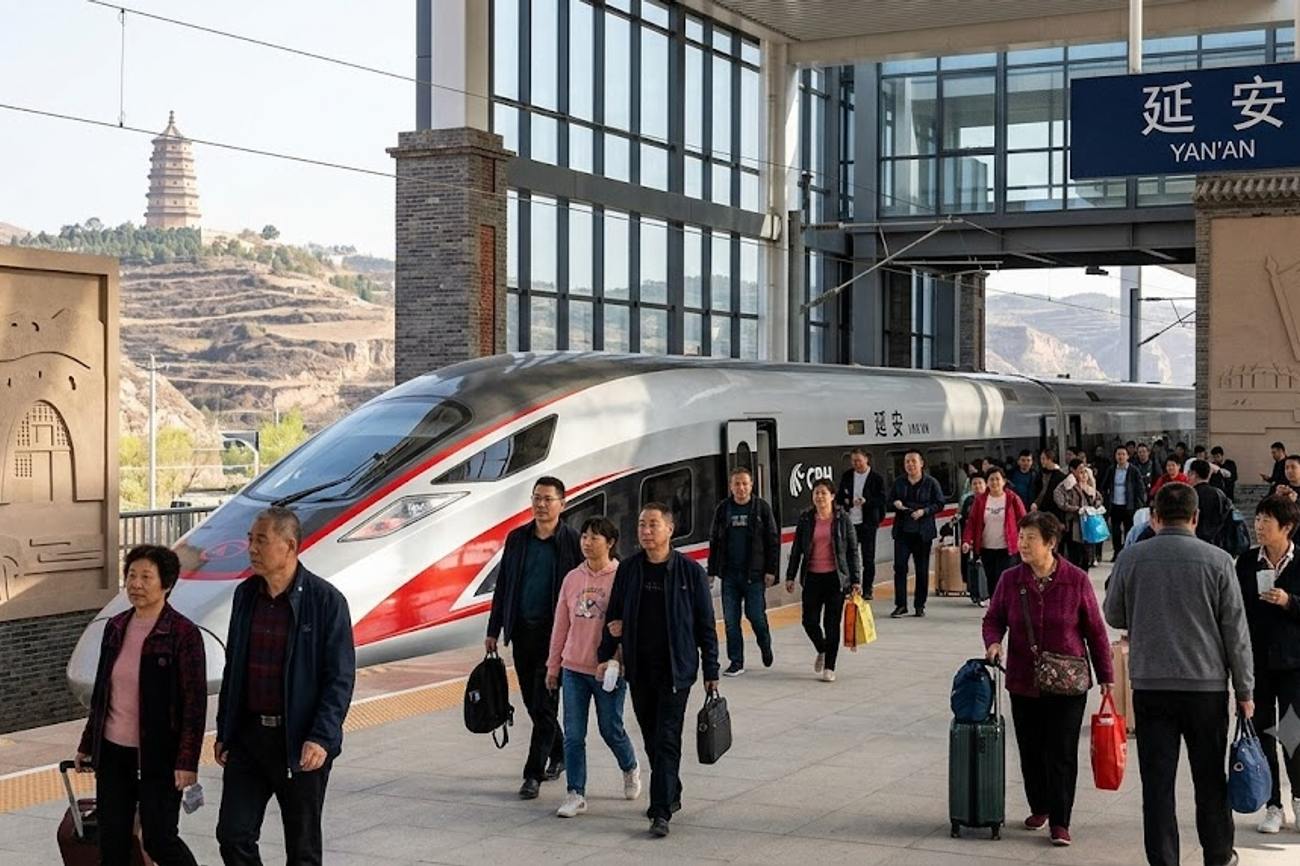
Image generated by AI
[Yan’an, 2025] — The city of Yan’an in Shaanxi Province has recorded over 50 million domestic and international tourist visits in 2025, fueled by the strategic launch of the Xi’an–Yan’an high-speed railway. This surge in arrivals marks a pivotal shift for the northwest Chinese destination, transforming it from a remote historical site into a high-accessibility heritage hub.
The rapid influx of travelers follows the completion of the high-speed rail link at the end of 2025, which integrates Yan’an directly into China’s national transport grid. By slashing travel times and removing previous logistical barriers, the China Railway network has enabled the city to pivot toward a modern tourism model that balances its revolutionary history with contemporary urban infrastructure.
The High-Speed Rail Catalyst
The primary driver of this growth is the operationalization of the Xi’an–Yan’an high-speed railway. Prior to this development, reaching Yan’an required significantly longer journeys, often deterring short-term visitors and international tourists. The new rail link has effectively shrunk the distance between the regional capital of Xi’an and the historic center of Yan’an, allowing for seamless transit and the creation of new regional tourism circuits.
This infrastructure project does more than move passengers; it serves as an economic artery. The increased velocity of travel has accelerated commercial exchanges and attracted new investment into the Shaanxi region. By linking a secondary historic city to a primary transport node, the project demonstrates a broader national strategy to decentralize tourism and distribute economic gains across provincial interiors.
Impacted Markets and Destinations
The shift in accessibility has fundamentally altered who visits Yan’an and how they experience the city. The following sectors and demographics are seeing the most significant impact:
- Short-Break Travelers: The reduction in transit time has made Yan’an a viable option for weekend trips and short-term cultural excursions from Xi'an and surrounding provinces.
- International Tourists: With easier connectivity to major hubs, global travelers are now more likely to include Yan’an in their broader China itineraries.
- Regional Hospitality: Local hotels, restaurants, and transport services are experiencing a surge in demand to accommodate the 50 million+ annual visitors.
- Cultural Heritage Sites: Landmarks such as Baota Mountain are seeing record attendance as the city's visibility increases on national travel platforms.
- Local SMEs: Small and medium enterprises specializing in regional cuisine and traditional crafts are benefiting from the increased foot traffic.
What This Means for Travelers
For the individual traveler, the "New Yan’an" experience is a departure from the rugged, difficult-to-reach destination of the past. The practical implications of this transformation include:
Simplified Logistics: Travelers no longer need to plan multi-day journeys to reach the city. The high-speed rail connection allows for precise scheduling and faster arrivals, making it possible to visit Yan’an as part of a larger Shaanxi province tour.
Upgraded Amenities: To support the volume of 50 million visitors, the city has invested heavily in urban improvements. This means a higher standard of public services, modernized tourism facilities, and a more comfortable hospitality infrastructure than was available in previous years.
Diversified Itineraries: While Yan’an remains a center for revolutionary history, the city is diversifying its offerings. Visitors can now combine visits to historical landmarks with explorations of natural landscapes and modern urban developments, moving beyond the traditional "red tourism" image.
Increased Crowds: The sheer volume of visitors suggests that peak travel periods will see significant congestion at major sites like Baota Mountain. Travelers should expect higher demand for hotel bookings and rail tickets during national holidays.
The Evolution of a Revolutionary Base
Yan’an is currently executing a delicate balancing act: preserving its identity as a former revolutionary base while evolving into a modern urban destination. The city’s historical significance remains the core draw, but the method of delivery has changed. The integration of heritage sites with modern tourism strategies allows the city to maintain its cultural integrity without remaining stagnant.
The development of the city's infrastructure is part of a wider trend across China where historic cities are being "unlocked" via high-speed rail. By upgrading the surrounding urban environment—including better roads, improved signage, and expanded public transport—Yan’an is ensuring that the visitor experience matches the efficiency of the rail journey.
This modernization extends to the local economy. The shift toward a service-oriented economy is encouraging the promotion of community-based activities and regional traditions, allowing visitors to engage with the local population in ways that were previously uncommon.
Future Trajectory and Growth
The trajectory for Yan’an suggests a continued climb in visitor numbers as the high-speed rail network further matures. The city is positioned to become a cornerstone of tourism in northwest China, serving as a bridge between the ancient history of the region and the rapid modernization of the 21st century.
Future developments are expected to focus on the expansion of tourism products. This includes the creation of more integrated travel packages that link Yan’an with other cultural hubs in Shaanxi, potentially leveraging the Shaanxi Provincial Government initiatives to promote regional heritage. As the city continues to refine its balance between preservation and progress, it will likely attract a more diverse demographic of travelers, including younger domestic tourists and a growing number of international researchers and historians.
The long-term goal is the creation of a sustainable tourism ecosystem where the economic benefits of 50 million annual visits are reinvested into the preservation of the very historical sites that attract the crowds.
FAQ: Yan’an Tourism 2025
How do I get to Yan’an now? The most efficient method is via the new Xi’an–Yan’an high-speed railway. This link connects the city directly to the national rail network, significantly reducing travel time from Xi’an and other major Chinese cities.
What are the must-visit sites in Yan’an? Baota Mountain is the city's most iconic landmark and a primary draw. Visitors should also explore the city's various revolutionary heritage sites and the surrounding natural landscapes.
Is Yan’an suitable for international tourists? Yes. With improved high-speed rail access and modernized tourism infrastructure, the city is more accessible and comfortable for international visitors than ever before.
Will the city be crowded? Given that Yan’an recorded over 50 million visits in 2025, expect high volumes of people, particularly at major landmarks and during national holiday periods. Advance booking for rail and hotels is recommended.
Yan’an has officially transitioned from a secluded historical outpost to a high-speed heritage powerhouse.
#YanAn2025 #XiAnYanAnRail #ShaanxiTourism #ChinaHighSpeedRail #BaotaMountain #NorthwestChinaTravel
Related Travel Guides
- United Kingdom Aligns With France And More As New Train Rule Cuts Travel Costs After Cancellations
- UK Regional Rail Revival Gains Momentum As Penrith Keswick Link Could Transform Lake District Travel
- United Kingdom’s St Pancras Railway Capacity Takes Centre Stage as Virgin Builds London–Paris Travel Plans
Disclaimer
This article is for informational and educational purposes only. It does not constitute legal, financial, or professional advice. While we strive to provide accurate and up-to-date information, travel policies, regulations, and conditions change rapidly. Always verify information with official sources before making travel decisions. Nomad Lawyer makes no representations about the accuracy, reliability, completeness, or suitability of the information provided. Readers should consult qualified professionals for advice specific to their circumstances. The views expressed in this article are those of the author and do not necessarily reflect the views of Nomad Lawyer.
Kunal K Choudhary
Co-Founder & Contributor
A passionate traveller and tech enthusiast. Kunal contributes to the vision and growth of Nomad Lawyer, bringing fresh perspectives and driving the community forward.
Learn more about our team →