
China Transforms River Cruises Into Luxury Holidays As Yangtze And Pearl River Drive Global Tourism Growth
China Transforms River Cruises Into Luxury Holidays As Yangtze And Pearl River Drive Global Tourism Growth

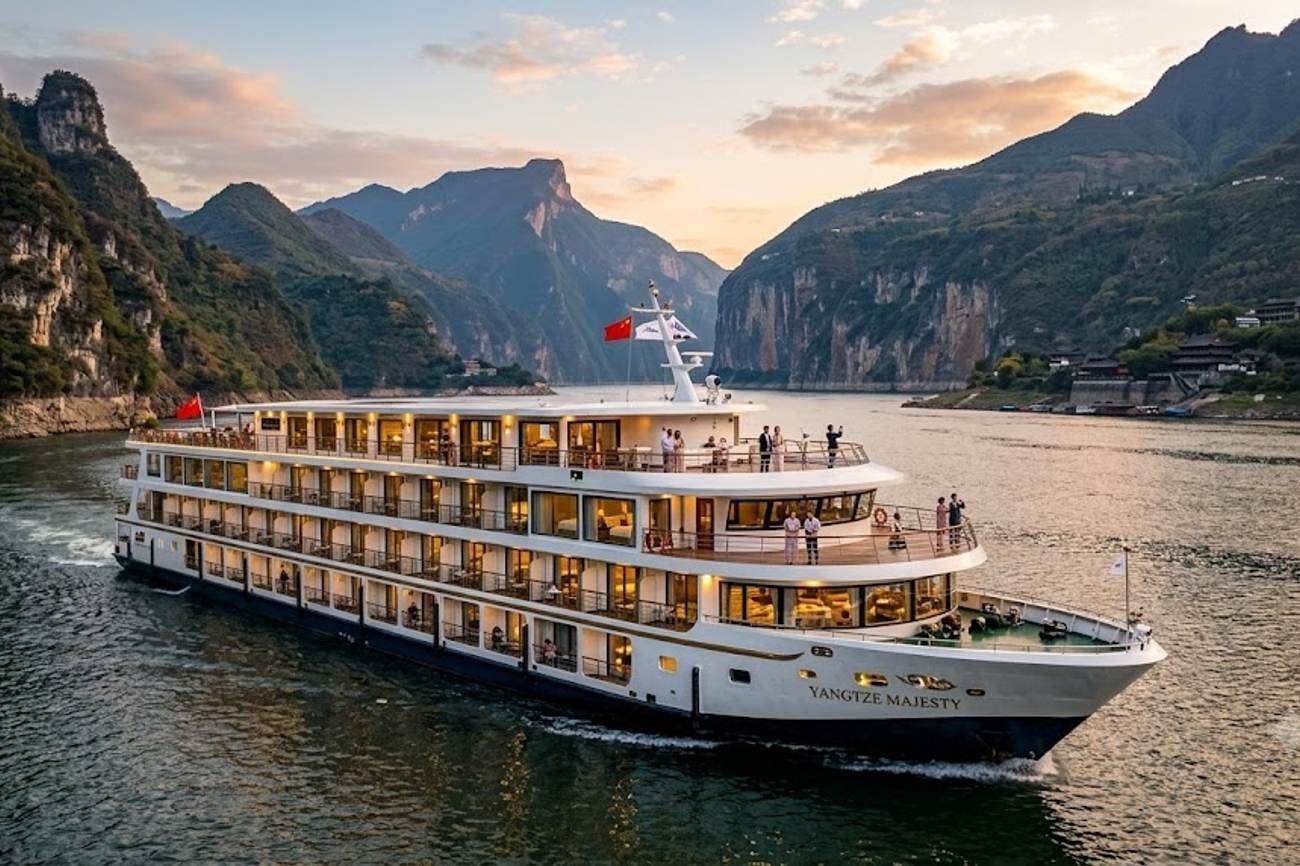
Image generated by AI
[Beijing, October 2024] — China is aggressively pivoting its river cruise sector toward a high-end luxury model, driven by a surge in international demand and a sharp decline in economy-class travel along the Yangtze and Pearl Rivers.
The strategic shift marks a transition from traditional sightseeing tours to premium leisure experiences. Data reveals a significant migration of passengers toward luxury vessels, particularly on the Yangtze River's Three Gorges route, as the country leverages its vast inland waterway infrastructure to attract global tourists seeking immersive cultural discovery.
The Luxury Pivot
The catalyst for this industry evolution is a clear divergence in passenger preferences. On the Three Gorges cruise route, luxury passenger numbers climbed by 18.2 percent during the first five months of the year. Conversely, economy-class passenger volume plummeted by 21.3 percent over the same period.
This trend has pushed the luxury market share to 86 percent of total passengers, up from 82 percent in 2023. Cruise operators are responding by redesigning vessels as "complete vacations," integrating high-end dining, personalized hospitality, and curated cultural programming to replace the previous model of simple transport-based sightseeing.
Regional Capacity and Market Reach
China has established a dual-core cruise network centered on its two most prominent waterways. The scale of these operations provides a massive foundation for the luxury transition:
-
The Yangtze River Network:
- Vessel Count: 47 inter-provincial cruise ships (as of August).
- Total Capacity: 21,351 passengers.
- Performance: Average occupancy rate of 79.5 percent during the first seven months.
- Primary Focus: The Three Gorges region, blending natural landscapes with heritage sites.
-
The Pearl River Network:
- Vessel Count: 39 cruise ships.
- Total Capacity: 10,690 passengers.
- Primary Focus: Connecting southern urban hubs, coastal tourism, and the Guangzhou metropolitan area.
Global Demand Surge
International travelers are now a primary engine for growth, fundamentally altering the passenger profile of Chinese river cruises. The Ministry of Transport of the People's Republic of China oversees the infrastructure supporting this growth, which includes 128,700 kilometers of navigable inland waterways and 16,540 commercial operation berths.
The influx of foreign visitors is most evident in the following statistics:
- Yangtze River: International passenger volume rose 56.8 percent year-on-year to 117,600 travelers. Their share of the total market jumped to 9.8 percent, a massive increase from just 1.5 percent in 2023.
- Pearl River: Foreign travelers using the Guangzhou river liner increased by approximately 75 percent, reaching 61,000 passengers.
Practical Traveler Advisory and Strategic Insights
For the modern traveler, the "budget" river cruise in China is effectively disappearing. Those booking trips to the Yangtze or Pearl Rivers should expect the following:
Higher Price Points: As economy options decline by over 20 percent, the baseline cost for a river cruise is rising. Travelers should budget for premium-tier pricing.
Enhanced Onboard Amenities: The shift to luxury means more than just better linens. Expect full-service spas, gourmet international cuisine, and English-speaking concierge services designed for global tourists.
Shift in Demographics: While these cruises were traditionally the domain of retirees (60+), there is a concerted effort to attract younger, middle-aged travelers. This means more flexible itineraries, adventure-based excursions, and tech-integrated booking processes.
Integrated Logistics: Cruises are moving away from being a "leg" of a trip and becoming the primary destination. Packages now typically bundle accommodation, sightseeing, and entertainment into a single luxury product.
Infrastructure and Future Scaling
The expansion is underpinned by a massive investment in waterway classification. By the end of 2025, China’s network of 68,600 kilometers of classified waterways will allow for more consistent scheduling and the deployment of larger, more sophisticated luxury vessels.
China is aggressively upgrading its river cruise infrastructure to attract high-net-worth international travelers through enhanced luxury amenities and streamlined visa processes. Travelers can find updated entry requirements and official travel advisories via the Ministry of Foreign Affairs of the People's Republic of China.
The industry is now focusing on diversifying its product line to move beyond the "retirement travel" stereotype. By introducing adventure and family-oriented luxury packages, operators aim to stabilize year-round demand and reduce the reliance on seasonal peaks. This evolution is expected to further integrate river tourism with China's broader goal of increasing foreign visitor arrivals through improved hospitality standards.
FAQ: China River Cruises 2024
Is it still possible to find budget river cruises on the Yangtze? Economy-class passenger numbers have dropped by 21.3 percent as the industry pivots to luxury. While some budget options may remain, the market is overwhelmingly shifting toward premium experiences, with luxury now accounting for 86 percent of the Three Gories route.
Which river is better for first-time international visitors? The Yangtze River is ideal for those seeking iconic natural scenery and heritage (Three Gorges), while the Pearl River is better for those wanting to explore southern urban landscapes and the Guangzhou region.
Are these cruises accessible for non-Chinese speakers? Yes. With international passenger numbers on the Yangtze rising to 117,600 (a 56.8 percent increase), operators are aggressively implementing more international-focused services and English-language programming.
What is the typical occupancy rate for these vessels? Yangtze River cruises maintained a strong average occupancy rate of 79.5 percent during the first seven months of the year, indicating high demand despite the shift toward more expensive luxury models.
The era of the basic river ferry is ending; the era of the floating five-star hotel has arrived.
Related Travel Guides
- Adventure Canada Introduces Two Distinct Expedition Cruise Experiences In Greenland And Beyond
- Greece Cruise Tourism Enters Critical New Phase as Green Transformation and Port Expansion Shape Future Growth
- Spain Aligns With Greece As Seabourn Quest Celebrates 15 Years Of Luxury Mediterranean And Caribbean Voyages
Disclaimer
This article is for informational and educational purposes only. It does not constitute legal, financial, or professional advice. While we strive to provide accurate and up-to-date information, travel policies, regulations, and conditions change rapidly. Always verify information with official sources before making travel decisions. Nomad Lawyer makes no representations about the accuracy, reliability, completeness, or suitability of the information provided. Readers should consult qualified professionals for advice specific to their circumstances. The views expressed in this article are those of the author and do not necessarily reflect the views of Nomad Lawyer.
Preeti Gunjan
Contributor & Community Manager
A passionate traveller and community builder. Preeti helps grow the Nomad Lawyer community, fostering engagement and bringing the reader experience to life.
Learn more about our team →