
China-Laos Railway Passenger Volume Surges by 50% as Regional Tourism Booms
Cross-border rail travel between China and Laos surges in 2026, with 244,000 passengers and a 35% boost in local tourism spending along the 1,035km route.

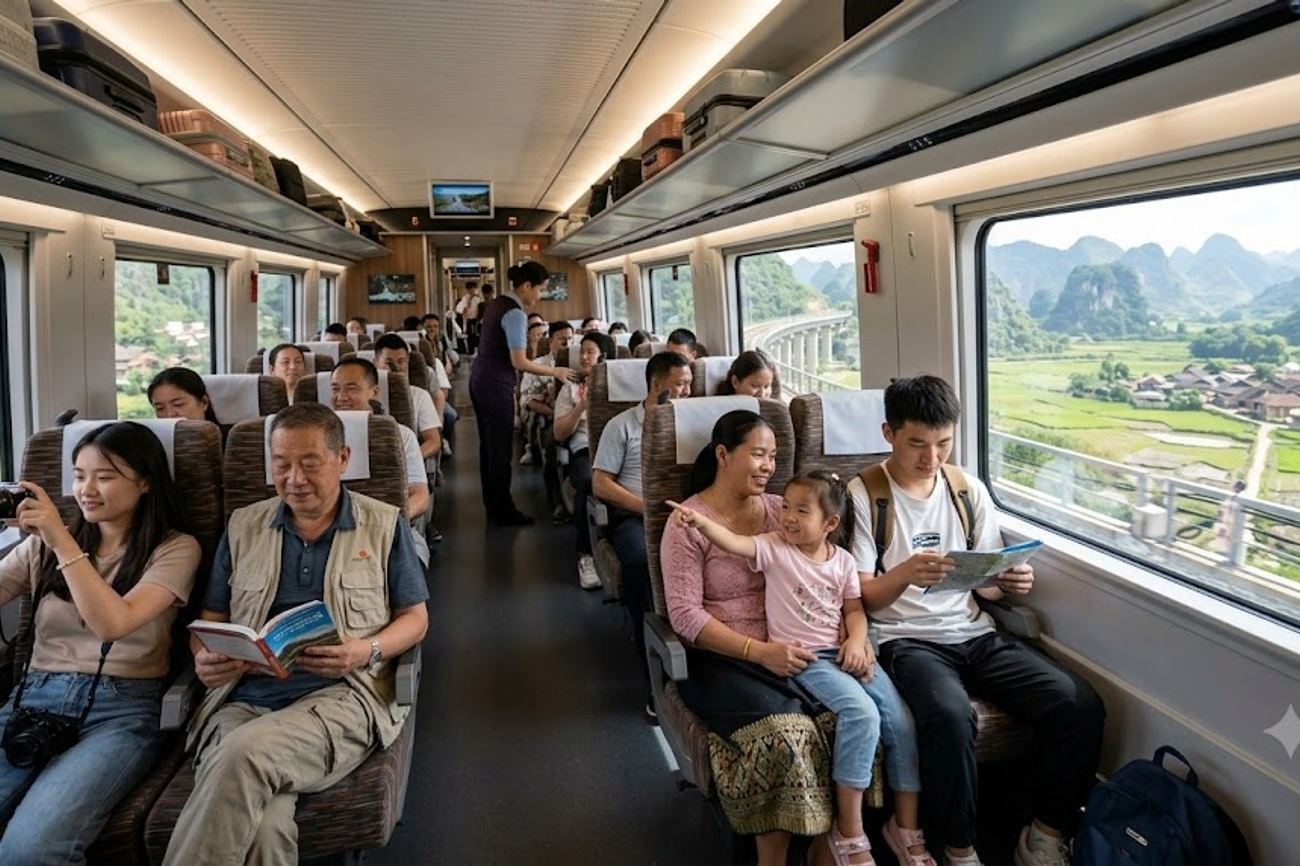
Image generated by AI
[Vientiane, September 11, 2026] — The China-Laos Railway is fundamentally reshaping the logistics of Southeast Asian travel, driven by a massive spike in passenger demand and a corresponding explosion in regional tourism. Data from the first eight months of 2026 reveals that passenger volumes have climbed by more than 50% compared to the same period in 2025, signaling a permanent shift in how international visitors and business travelers navigate the corridor between China and Laos.
The rail link has evolved from a mere infrastructure project into a primary engine for economic activity, facilitating a seamless flow of people across borders that previously relied heavily on slower, less efficient road networks. This growth is not limited to bilateral travel; the line is increasingly serving as a gateway for global travelers exploring the wider Indochina region.
Kunming to Vientiane: A New International Gateway
The railway provides a direct, high-capacity link between Kunming South Station in China's Yunnan Province and the Laotian capital of Vientiane. While the overall line began operations in December 2021, the specific international passenger services were launched in April 2023 to provide a viable alternative to road-based border crossings.
Currently, the corridor supports four international passenger trains daily. For travelers prioritizing speed, the fastest available service completes the journey in approximately 9 hours and 36 minutes.
Efficiency gains are most evident at the Mohan railway port. Industry reports indicate that customs clearance procedures have been streamlined, with passengers now completing international formalities in roughly 50 minutes. This reduction in bureaucratic friction has been a primary catalyst for the increased adoption of rail over air or road travel.
Scaling Capacity to Meet Record Passenger Demand
The sheer volume of interest in the route has forced a rapid expansion of available seating and operational capacity. In the early stages of international service, trains were configured with approximately 250 passenger seats. To accommodate the current surge, capacity has been increased to roughly 420 seats per train.
The impact on daily traffic is stark. During the initial phase of operations, daily international movement averaged around 300 travelers. Recent data shows this has skyrocketed to a record peak of 1,640 passengers in a single day. This trajectory suggests that the railway is successfully capturing a significant share of the regional transit market.
Unlocking 560 Scenic Attractions Across Two Nations
Beyond simple transit, the railway is functioning as a tourism catalyst by integrating previously isolated destinations into a single itinerary. The route specifically links major hubs including Kunming, Xishuangbanna, and Vientiane.
According to regional data, there are now more than 560 scenic attractions accessible along the railway corridor. By allowing tourists to visit multiple cities and nature sites in one trip, the rail line is promoting a "multi-destination" travel model. This has significantly reduced the time and cost associated with cultural and nature-based tourism in the region.
Summer 2026 Peak Travel Statistics
The 2026 summer holiday window provided a clear snapshot of the railway's current scale. Between 1 July and 1 September, the Mohan railway port processed more than 57,000 international travelers.
The diversity of the passenger base is particularly notable, with visitors from 72 different countries and regions utilizing the border crossing during this two-month window. This represents a growth rate of over 51% compared to the summer of 2025. At the height of the season, a single day saw more than 1,100 travelers complete entry and exit procedures, testing the limits of the current infrastructure.
Economic Stimulus for Local Border Communities
The influx of passengers is translating directly into financial gains for local economies situated along the 1,035-kilometre line. The increase in tourism, educational exchanges, and business missions has created a ripple effect for small and medium enterprises.
Local hospitality sectors, including hotels and restaurants, have reported a significant uptick in patronage. Tourism-related consumption in areas connected by the railway has risen by more than 35%. This suggests that the railway is not just moving people through the region, but encouraging them to spend within local communities.
Strengthening the Southeast Asian Transport Corridor
Since its inception in December 2021, the China-Laos Railway has transitioned from a bilateral project to a critical piece of Southeast Asian connectivity. The line has now welcomed travelers from more than 120 countries and regions through thousands of cross-border trips.
The combination of expanded seating capacity, faster border processing, and a growing network of accessible tourist sites has solidified the route's position as a preferred choice for international transit.
| Metric | Early Operations | 2026 Status/Peak |
|---|---|---|
| Daily International Passengers | ~300 | 1,640 (Record High) |
| Passenger Seats per Train | ~250 | ~420 |
| Mohan Port Customs Time | Higher | ~50 Minutes |
| Summer Int'l Travelers (July-Sept) | N/A | 57,000+ |
| Total Route Length | 1,035 km | 1,035 km |
| Tourism Consumption Growth | Baseline | 35%+ Increase |
Why This Matters: The Shift in Regional Mobility
For the modern traveler, the success of the China-Laos Railway represents a shift toward "slow travel" that doesn't sacrifice efficiency. The ability to move from a major Chinese metropolis to the heart of Laos in under ten hours—while bypassing the stress of regional airport transfers—creates a new logistical blueprint for Southeast Asia.
From a logistical standpoint, the 50% growth in passengers proves that infrastructure-led tourism is viable. When the "friction" of border crossing is reduced (as seen with the 50-minute customs window), travel demand increases almost instantly. For the local economy, the 35% rise in spending indicates that the railway is effectively decentralizing tourism, pushing wealth away from primary hubs and into the smaller towns and scenic areas along the tracks.
Related Travel Guides
- RezLive.com Expands B2B Rail Bookings Across Saudi Arabia, Qatar, Asia and North America in 2026
- MBTA and Amtrak Face Major Delays on Boston-Providence Route After Locomotive Fire and Fatal Accident in 2026
- India's Delhi-Patna Bullet Train Corridor: 58-Minute Agra and 3.5-Hour Varanasi Journeys by 2026
Disclaimer
This article is for informational and educational purposes only. It does not constitute legal, financial, or professional advice. While we strive to provide accurate and up-to-date information, travel policies, regulations, and conditions change rapidly. Always verify information with official sources before making travel decisions. Nomad Lawyer makes no representations about the accuracy, reliability, completeness, or suitability of the information provided. Readers should consult qualified professionals for advice specific to their circumstances. The views expressed in this article are those of the author and do not necessarily reflect the views of Nomad Lawyer.
Preeti Gunjan
Contributor & Community Manager
A passionate traveller and community builder. Preeti helps grow the Nomad Lawyer community, fostering engagement and bringing the reader experience to life.
Learn more about our team →