China Inbound Tourism Projected to Hit $470 Billion by 2040 as Visa-Free Policies and Social Media Drive Post-Pandemic Revival

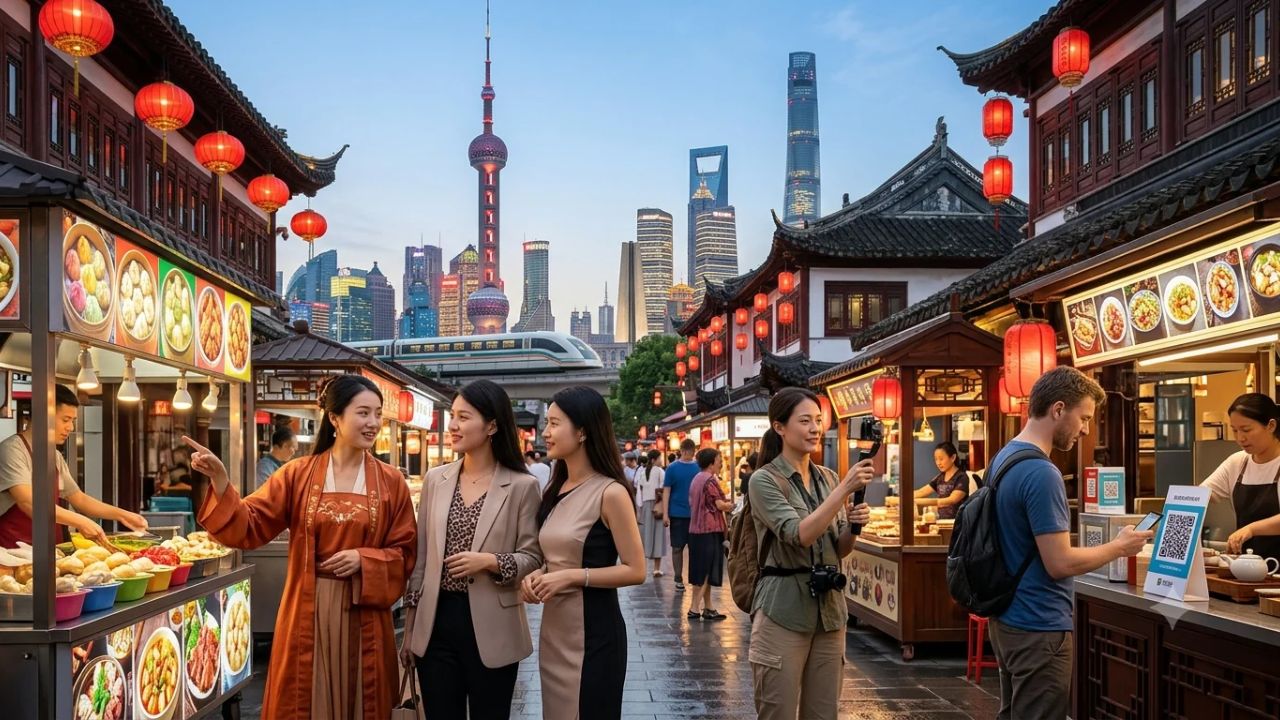
China’s inbound visitor economy is undergoing a systemic structural transformation, shifting from an historically neglected commercial sector into a multi-hundred-billion-dollar economic engine projected to reach $470 billion in annual revenue by 2040. Econometric modeling from UBS Securities, led by Head of China Leisure and Transportation Research Chen Xin, indicates that inbound tourism receipts will expand at a Compound Annual Growth Rate (CAGR) of 8.9% between 2025 and 2040—nearly double the 4.8% growth rate forecast for the domestic travel circuit. Backed by sweeping administrative border openings, unilateral visa-free entry for citizens across 50 countries, and deep financial integration allowing international credit cards on Alipay and WeChat Pay, China welcomed 22.91 million foreign visitors in the first half of 2026, with 77.7% entering entirely visa-free.
For decades, China's tourism architecture stood on an uneven foundation. While domestic holiday movements were the largest on Earth by volume and outbound Chinese travelers drove luxury retail across European and Asian capitals, inbound foreign visitation lagged behind, often characterized by economists as the nation’s "missing pillar." Today, this imbalance is reversing rapidly. Powered by viral, short-form travel vlogs across YouTube, TikTok, and Instagram that showcase neon-lit smart transit, cashless storefronts, and historic water towns, international perception has shifted from bureaucratic apprehension to curiosity.
Beyond viral media, fundamental policy reforms have dismantled the friction points that once deterred independent global travelers. The expansion of 144-hour and 240-hour visa-free transit windows to 57 nationalities, universal foreign-guest registration across budget hotels, and direct English booking on the national 12306 high-speed railway portal have established a smooth travel environment. By 2040, China is projected to command roughly 15% of the total global inbound tourism market, elevating international tourism receipts from 0.65% to 1.5% of national Gross Domestic Product.
CHINA INBOUND TOURISM TRANSFORMATION MATRIX (2025-2040)
| Column 1 |
|---|
| MACROECONOMIC BENCHMARK HISTORIC BASELINE 2040 PROJECTED HORIZON (UBS) |
| ------------------------------------------------------------------------------------------------ |
| Annual Inbound Revenue Underperforming Asset $470 Billion USD Inbound Market |
| Global Market Share Capture Fragmented Share ~15% of Worldwide Inbound Tourism |
| Projected Growth Rate (CAGR) Domestic Baseline: 4.8% Inbound Sector: 8.9% Annual Growth |
| Contribution to National GDP Historic Baseline: ~0.65% Projected Contribution: 1.5% of GDP |
| OPERATIONAL BORDER REALITIES (FIRST HALF 2026 DATA) |
| - Total Foreign Entrances: 22.91 Million Arrivals (+20.4% Year-on-Year Growth) |
| - Visa-Free Arrivals: 17.82 Million Visitors (77.7% of total entries; +30.6% YoY Expansion) |
| - Travel Services Exports: 229.2 Billion Yuan in H1 2026 (+31.1% YoY; Fastest Growing Sector) |
| - Unilateral Visa-Free Access: 50 Nations (15-30 days); Over 1.22 Billion Eligible Citizens |
| - Transit Visa Exemptions: 144-Hour and 240-Hour Stopovers Open to 57 Nationalities |
Macroeconomic Modeling: Turning the "Missing Pillar" into a $470 Billion Powerhouse
The comprehensive financial audit published by UBS Securities highlights an unprecedented expansion in China’s international travel ledger. Historically, while outbound Chinese vacationers generated hundreds of billions in foreign exchange expenditures across Tokyo, Paris, and London, foreign visitor spending inside China remained suppressed by consular friction and isolated domestic systems.
UBS’s econometric modeling demonstrates that inbound tourism is now on track to outpace every other consumer travel segment in the Chinese economy over the next fifteen years.
Inbound vs. Domestic Tourism Growth Trajectory (2025 to 2040 Forecast)
-------------------------------------------------------------------------------------
Inbound Revenue Expansion (CAGR):  [8.9% Annual Growth] ====================
Domestic Travel Expansion (CAGR):  [4.8% Annual Growth] ==========
2040 Inbound Revenue Horizon:      [$470 Billion USD Milestone]
Share of Total Global Inbound:     [~15% of Global Inbound Tourism Expenditure]
-------------------------------------------------------------------------------------
Four macroeconomic pillars define this projected $470 billion expansion:
- Commanding 15% of Global Inbound Tourism: Capturing $470 billion by 2040 positions China alongside traditional inbound destinations like the United States, Spain, and France, transforming East Asia into the world's most lucrative inbound travel market.
- Outpacing Domestic Growth: Expanding at an 8.9% Compound Annual Growth Rate, inbound tourism growth will nearly double the projected 4.8% annual expansion of domestic leisure travel, acting as an economic engine for regional transit systems.
- Elevating GDP Contribution: Inbound international visitor spending is forecast to contribute 1.5% of China’s national Gross Domestic Product by 2040, more than doubling its historical baseline of approximately 0.65%.
- Providing a High-Yield Buffer: International travelers maintain significantly higher per-diem expenditures than domestic tourists. This higher spending velocity provides airlines, high-speed rail operators, international hotel chains, and municipal retail districts with a resilient, high-margin hedge against domestic consumption cycles.
| Economic Parameter | Historical Baseline (Pre-Reform) | Current Trajectory (2026) | 2040 UBS Projected Horizon |
|---|---|---|---|
| Inbound Tourism Revenue | ~$40 to $60 Billion USD | Rapid post-pandemic recovery | $470 Billion USD |
| Annual Growth Rate (CAGR) | Low single digits | Double-digit post-opening rebound | 8.9% Compound Growth |
| Share of National GDP | ~0.65% of GDP | Accelerating contribution | 1.5% of National GDP |
| Global Inbound Market Share | Less than 5% global share | Rapidly climbing share | ~15% Global Market Share |
| Primary Inbound Driver | Group business & diaspora travel | Independent experiential leisure | Creator-driven independent travel |
Border Deregulation: Unilateral Visa-Free Access and Transit Waivers
While viral social media content generates wanderlust, administrative reforms close the booking loop. Recognizing that complex consular requirements previously deterred spontaneous leisure bookings, Chinese immigration authorities enacted the most aggressive border liberalization in the nation's modern history.
CHINESE BORDER DEREGULATION ARCHITECTURE
| Column 1 |
|---|
| POLICY MECHANISM STATUTORY SCOPE OPERATIONAL BENEFIT |
| ------------------------------------------------------------------------------------------------ |
| Unilateral Visa Waivers Citizens across 50 countries 15- to 30-day visa-free entry; |
| (Europe, SE Asia, Oceania, LatAm) opens access to 1.22B people |
| 144-Hour & 240-Hour Transit Available across dozens of sea, 57 eligible nationalities can |
| Exemptions air, and high-speed rail ports stage multi-city stopovers |
| Consular Application Shortened forms, fewer documents, Drastically reduced processing |
| Simplification elimination of in-person bookings fees and turnaround times |
Unilateral Visa-Free Entry for 50 Nations
In an unprecedented departure from traditional diplomatic reciprocity, China has unilaterally granted visa-free entry to citizens of 50 countries. Covering major European economies (including Germany, France, Italy, Spain, Switzerland, and the Netherlands), key Southeast Asian neighbors (Singapore, Malaysia, Thailand), alongside nations in Oceania and Latin America, the policy permits stays of 15 to 30 days without consular paperwork.
This unilateral policy instantly opened frictionless travel access to over 1.22 billion potential international visitors, eliminating hundreds of dollars in visa fees and weeks of administrative delay.
Multi-Port 144-Hour and 240-Hour Transit Exemptions
For travelers holding passports from 57 eligible nations not covered by unilateral waivers, China expanded its regional transit exemptions:
- 144-Hour Visa-Free Transit: Available across major urban clusters—including the Beijing-Tianjin-Hebei region, the Yangtze River Delta (Shanghai, Hangzhou, Nanjing), and the Guangdong-Hong Kong-Macao Greater Bay Area—enabling travelers to combine international stopovers with multi-day business or leisure tours.
- 240-Hour Extended Transit Windows: Deployed across designated maritime cruise ports and international aviation hubs, facilitating comprehensive regional itineraries.
The Concrete Results: H1 2026 Statistical Surge
The real-world impact of these immigration adjustments is documented in official immigration data for the first half of 2026 (H1 2026):
- 22.91 Million Foreign Entrances: Marking a 20.4% year-on-year surge in total international arrivals across all ports of entry.
- 77.7% Entered Visa-Free: A remarkable 17.82 million international travelers entered without a visa, representing a 30.6% year-on-year increase in visa-free arrivals.
- 229.2 Billion Yuan in Travel Services Exports: Up 31.1% year-on-year, establishing international travel services as the fastest-growing sector among China's top five service export industries.
Eliminating Digital Friction: Payments, High-Speed Rail, and Lodging Access
A primary challenge historically facing independent foreign travelers in China was digital insularity: local mobile payment platforms required domestic bank accounts, train ticketing required standing in station counter lines, and lower-tier hotels were restricted from lodging foreign guests. Over the past two years, state ministries and technology conglomerates coordinated to dismantle these barriers.
FOREIGN TRAVELER INFRASTRUCTURE INTEGRATION
| Column 1 |
|---|
| OPERATIONAL TOUCHPOINT HISTORIC ROADBLOCK MODERN 2026 REFORMED SOLUTION |
| ------------------------------------------------------------------------------------------------ |
| Daily Retail Payments Required Chinese domestic bank card Alipay & WeChat link foreign |
| and local telephone verification Visa, Mastercard, JCB, Amex |
| Merchant Card Terminals Foreign credit cards rejected at Mandatory POS terminals at |
| and Physical Cash small and medium merchants scenic hubs; cash reserves |
| Budget & Boutique Hotels Hotels below 4-star barred from Bureaucratic restrictions cut; |
| housing foreign passport holders any licensed hotel can host |
| High-Speed Rail Bookings Physical counter passport checks Official 12306 app in English |
| and ticket collections at stations with online ID verification |
| Mobile Data & Tax Refunds Complex SIM card registrations and Airport eSIM kiosks & in-store |
| long airport VAT refund queues immediate sales-floor refunds |
1. International Payment Rail Integration: Alipay and WeChat Pay
The complete integration of foreign credit and debit cards into China’s two dominant mobile ecosystems—Alipay and WeChat Pay—has eliminated payment friction:
- International visitors link their Visa, Mastercard, JCB, Discover, or Diners Club cards directly to the mobile apps upon arrival.
- Travelers scan dynamic merchant QR codes to purchase street food, hail electric ride-share vehicles on Didi, pay for subway rides, and settle restaurant bills without opening a domestic bank account.
- In parallel, the People’s Bank of China (PBOC) issued binding directives mandating that all primary transport hubs, major cultural monuments, and commercial centers maintain active POS terminals accepting physical foreign credit cards, while requiring merchants to maintain cash "change purses" to guarantee physical RMB cash acceptance.
2. Universal Accommodation Registration
Previously, budget hotels, boutique bed-and-breakfasts, and rural inns were often legally barred from hosting foreign passport holders because their computer systems lacked direct linkage to municipal public security exit-entry bureaus. Regulatory bodies issued clear statutory guidelines striking down these restrictions. Today, all licensed accommodation providers nationwide can register foreign guests using standard passport scanning protocols, expanding affordable lodging choices beyond international luxury chains.
3. Digital Rail Access via the 12306 English Portal
Navigating China’s 45,000-kilometer high-speed railway network—the largest and fastest rail system on Earth—has been simplified. The national rail operating company rolled out a comprehensive English-language version of its official 12306 booking application, featuring real-time passport verification. International travelers can reserve high-speed bullet train tickets, choose specific seating arrangements, and board trains using only their physical passports, bypassing station ticket counters entirely.
4. Immediate Tax Refunds and Airport Connectivity
Major metropolitan commercial centers in Beijing, Shanghai, Guangzhou, and Chengdu have introduced "tax refund upon purchase" desks. Instead of waiting in long lines at airport departure gates to claim Value-Added Tax (VAT) rebates, international visitors receive cash or digital card refunds directly on the department store sales floor. Concurrently, international arrival halls at primary airports feature dedicated telecommunications service desks offering on-the-spot physical SIM cards and instant eSIM installations.
Shifting Consumer Mindsets: The Ascent of Core Experiential Living
The traveler visiting China in late 2026 demonstrates entirely different spending patterns than the pre-pandemic visitor of 2019. The UBS Securities analysis highlights a permanent structural shift in visitor budget allocations, directly mirroring the lifestyle experiences showcased across global social media:
Inbound Visitor Budget Allocation Shift (2019 vs. 2040 Forecast)
-------------------------------------------------------------------------------------
2019 Historic Spending Allocation:   [51% Lodging, Dining, & Retail / 49% Misc]
2040 Projected Spending Allocation:  [78% Living, Dining, & Experiential Retail]
Primary Consumer Shift:              [From Imported Luxury to Local Authentic Discovery]
-------------------------------------------------------------------------------------
In 2019, combined expenditures on lodging, food and beverage, and retail accounted for roughly 51% of total inbound visitor budgets, with significant portions spent on imported luxury accessories and structured group sightseeing packages.
By 2040, UBS forecasts that accommodation, dining, and experiential retail will consume 78% of all visitor spending. International travelers are allocating capital toward authentic, locally rooted experiences:
- Regional Culinary Exploration: Tasting regional delicacies—from Sichuan hotpot in Chengdu and hand-pulled noodles in Xi'an to Cantonese dim sum in Guangzhou and fresh bamboo shoot dishes in Zhejiang water towns.
- Cultural and Artisanal Immersion: Participating in traditional tea ceremonies in the Wuyi Mountains, booking Hanfu traditional costume photography sessions in the historic alleyways of Luoyang and Xi'an, and purchasing handmade ceramics in Jingdezhen.
- Regional Dispersal Beyond the "Golden Triangle": While Beijing (Forbidden City, Great Wall), Shanghai (The Bund), and Xi'an (Terracotta Warriors) remain essential introductory hubs, viral social media content is redirecting international travelers into secondary and tertiary regional corridors:
- Chongqing: The multi-tiered mountain megacity celebrated for its futuristic monorails passing through residential high-rises and neon-lit riverfronts.
- Guilin and Yangshuo: Cruising along the Li River framed by dramatic limestone karst mountain towers.
- Zhangjiajie: The towering sandstone quartz pillars that inspired the floating Hallelujah Mountains in cinematic pop culture.
- Yunnan: Exploring ancient tea horse road trading towns, the cobbled lanes of Lijiang, and the snow-capped mountain valleys of Shangri-La.
REGIONAL TOURISM DISPERSAL MAP ACROSS CHINA
| Column 1 |
|---|
| REGION GEOGRAPHIC CHARACTERISTICS SIGNATURE EXPERIENTIAL ASSET |
| ------------------------------------------------------------------------------------------------ |
| Chongqing Southwestern mountain metropolis; Multi-level neon architecture, |
| futuristic vertical urban design monorails through buildings, hotpot |
| Guilin & Yangshuo Guangxi Zhuang Autonomous Region; Bamboo rafting along Li & Yulong |
| picturesque limestone karst peaks rivers; scenic countryside cycling |
| Zhangjiajie Hunan province; sandstone pillars and Glass skywalks, Tianmen Mountain cave |
| precipitous mountain ravines cable cars, prehistoric quartz spires |
| Yunnan Province Southwestern highland plateau; Ancient tea caravan towns of Dali & |
| diverse ethnic minority heritage Lijiang; Tiger Leaping Gorge trekking |
Commercial Beneficiaries Across the Inbound Value Chain
The expansion of China’s inbound travel sector to a projected $470 billion is creating commercial opportunities across multiple corporate sectors:
- Commercial Aviation Networks: China’s "Big Three" state-owned network carriers—Air China, China Southern Airlines, and China Eastern Airlines—alongside international long-haul operators are seeing expanding seat loads and rising passenger yields on transatlantic, transpacific, and European routes, supported by lucrative belly-hold cargo space.
- Global and Domestic Hospitality Groups: International hotel operators with extensive Chinese portfolios—including Marriott International, InterContinental Hotels Group (IHG), Hyatt, and Accor—are capturing rising average daily rates (ADR) and RevPAR. Concurrently, leading domestic hospitality giants such as Huazhu Group (H World Group) and Jin Jiang International are benefiting from the deregulation of budget and lifestyle hotels, allowing their thousands of properties to capture international independent travelers.
- Digital Travel Platforms: Global aggregators and domestic leaders such as Trip.com Group (Ctrip) serve as essential operational bridges. By providing verified English-language booking interfaces, direct railway integration, multilingual customer service, and customized regional tour packages, digital platforms are capturing substantial commission revenues from the influx of independent foreign explorers.
Essential Practical Advice for International Travelers Visiting China in 2026/2027
Travelers planning an independent journey to China across late 2026 and 2027 can ensure an effortless trip by incorporating key logistical steps:
- Set Up Alipay and WeChat Pay Prior to Departure: Download both applications on your smartphone before departing. Add your international Visa or Mastercard, complete the basic passport verification, and verify that biometric facial or fingerprint authentication is enabled for fast QR code payments.
- Download the Official 12306 China Railway App: Switch the application language to English and verify your passport profile. Booking high-speed bullet trains directly through the official operator avoids third-party agent markups and gives you direct access to e-tickets linked to your physical passport.
- Verify Visa-Free Eligibility Windows: Check the latest statutory list of eligible nations under China’s unilateral visa waiver programs. If your passport qualifies for 15- or 30-day visa-free entry, confirm that your passport has at least six months of validity remaining and carry proof of outward or return international transit.
- Acquire an eSIM or International Roaming Package: To ensure uninterrupted access to international search engines, messaging applications, and social media platforms without relying on virtual private networks (VPNs), purchase a dedicated travel eSIM or activate an international roaming package from your home mobile carrier prior to arrival.
Frequently Asked Questions
What is driving the projected surge in China's inbound tourism to $470 billion by 2040?
According to research from UBS Securities led by Chen Xin, the surge is driven by a combination of viral creator content on global social platforms (TikTok, YouTube, Instagram), sweeping border deregulation including unilateral visa-free access for 50 countries, and financial technology reforms that allow foreign credit cards to work seamlessly on Alipay and WeChat Pay.
Which countries currently enjoy visa-free entry into China?
China has unilaterally granted 15- to 30-day visa-free entry to citizens of 50 nations across Europe (such as Germany, France, Italy, Spain, Switzerland, and the Netherlands), Southeast Asia (including Singapore, Malaysia, and Thailand), Oceania, and Latin America, providing frictionless access to over 1.22 billion potential travelers. In addition, 144-hour and 240-hour transit waivers cover 57 nationalities.
How do foreign tourists pay for goods and services in China today?
Foreign travelers no longer need a domestic Chinese bank account or cash cards. Visitors can download Alipay or WeChat Pay and directly link their international Visa, Mastercard, JCB, Discover, or Diners Club credit and debit cards. This enables travelers to pay for street food, taxis, dining, and shopping by scanning merchant QR codes just like local citizens. Major hotels and transit hubs also maintain POS terminals accepting physical foreign credit cards.
What are the emerging travel destinations in China beyond Beijing and Shanghai?
While the Golden Triangle (Beijing, Shanghai, Xi'an) remains popular, viral travel media has redirected international visitors to Chongqing (for its futuristic vertical architecture and spicy hotpot), Guilin and Yangshuo (for dramatic karst mountain river landscapes), Zhangjiajie (for its towering sandstone pillars), and Yunnan (for ancient tea horse trading towns, hiking, and ethnic minority culture).
Related Travel Guides
This article is for informational purposes. Flight routes, passenger regulations, visa rules, and transit advisories are subject to change by airlines and aviation authorities. Readers are advised to verify schedules and travel documentation with relevant carriers and border agencies before departure.
Related Stories

Uruguay Targets British Holidaymakers as Buenos Aires Ferry Links and New Aviation Pacts Unlock Southern Cone Travel

Queensland Unveils 2046 Cape York and Torres Strait Regional Plan Integrating Infrastructure and Indigenous Ecotourism