American Airlines Improves Corporate Travel Ratings as Fleet Upgrades, Premium Cabins, and $4 Billion DFW Investment Support Turnaround

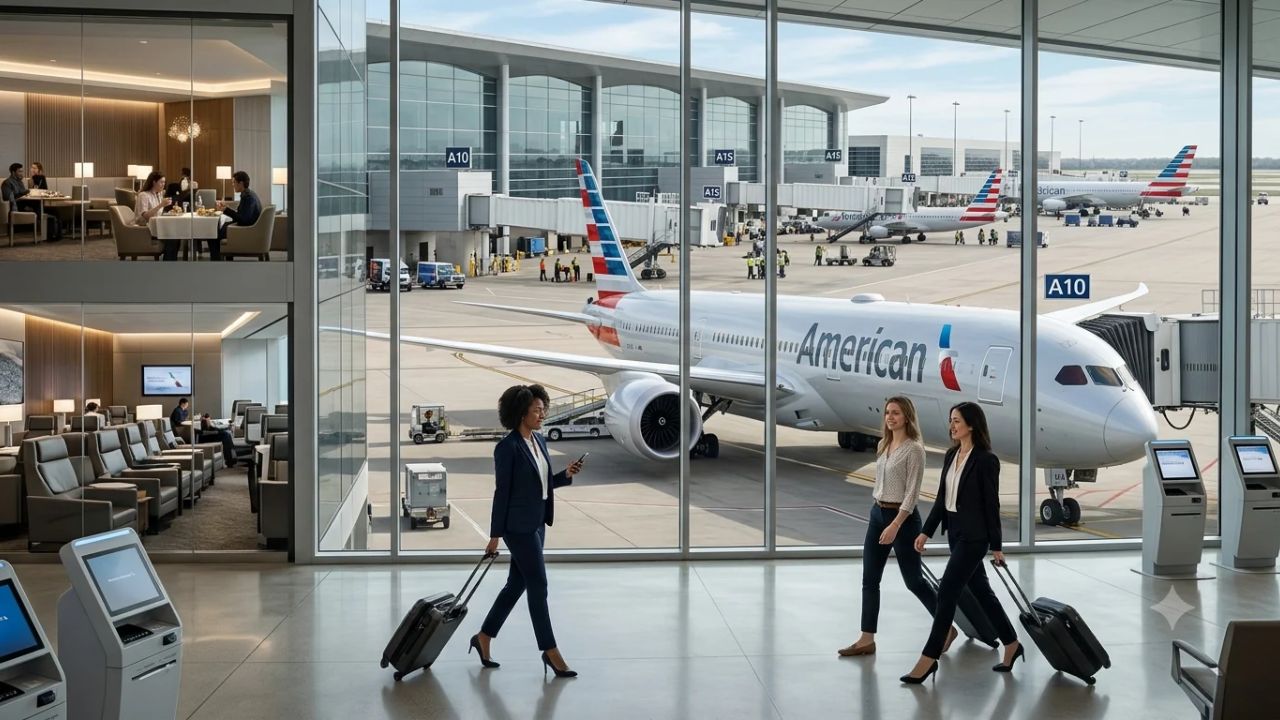
American Airlines has achieved the largest year-over-year rating surge among major United States carriers in the 2026 Business Travel News (BTN) Airline Survey, marking a significant milestone in its multi-year campaign to repair corporate customer sentiment, modernize its passenger fleet, and rebuild relationships with travel management procurement teams. Released on November 11, 2026, the benchmark industry survey reveals that American climbed to an overall corporate buyer score of 3.26, up by 0.51 points from 2.75 in 2025 and an impressive 1.11 points from 2.15 in 2024. While Delta Air Lines retained its first-place position with an industry-leading score of 4.22, American outpaced all domestic competitors in upward rating velocity, posting improvements across all eleven survey categories. The turnaround reflects structural investments across the carrier's commercial ecosystem, including repairing friction over its New Distribution Capability (NDC) ticketing rollout, expanding premium seating from 25% to 40% across narrowbody aircraft, equipping more than 500 aircraft with high-speed Starlink satellite Wi-Fi by 2027, restoring seatback entertainment screens, and anchoring long-term hub growth with an expanded $4 billion Terminal F development at Dallas Fort Worth International Airport.
The corporate travel sector represents the commercial backbone of legacy aviation profitability, accounting for a disproportionate share of high-yield premium cabin revenue, corporate contract commitments, and premium loyalty engagement. American Airlines' substantial score gains demonstrate that corporate travel managers, procurement officers, and corporate travel agencies are acknowledging the tangible results of the airline's capital deployment and strategic repositioning. However, transportation analysts note that while American's rapid trajectory represents a clear operational rebound, its absolute score of 3.26 leaves it behind legacy rivals United Airlines and Delta Air Lines, underscoring the ongoing operational discipline required to permanently close the competitive divide.
2026 BUSINESS TRAVEL NEWS (BTN) AIRLINE SURVEY BENCHMARKS
| AIRLINE CARRIER | 2024 SCORE | 2025 SCORE | 2026 SCORE | NET 2-YR CHANGE |
|---|---|---|---|---|
| Delta Air Lines | 4.18 | 4.20 | 4.22 | +0.04 (Rank #1) |
| Southwest Airlines | 4.02 | 4.08 | 4.11 | +0.09 (Rank #2) |
| United Airlines | 3.42 | 3.55 | 3.68 | +0.26 (Rank #3) |
| Alaska Airlines | 3.30 | 3.38 | 3.41 | +0.11 (Rank #4) |
| American Airlines | 2.15 | 2.75 | 3.26 | +1.11 (Rank #5) |
American Airlines Surges in Corporate Travel Ratings: The 2026 BTN Airline Survey Breakdown
The annual Business Travel News Airline Survey is widely considered the authoritative performance audit of commercial aviation by corporate procurement buyers. Corporate travel managers and travel management company (TMC) executives evaluate airlines across eleven operational and commercial categories, including account management, communication, distribution access, passenger customer service, premium amenities, network routing, and corporate contracting value.
In the 2026 results, American Airlines posted an overall average score of 3.26 out of 5.00. This represents an increase of 0.51 points compared to the 2.75 recorded in 2025, and a cumulative 1.11-point recovery from the historic low of 2.15 recorded in 2024. Across the entire cohort of evaluated domestic carriers, American was the single largest gainer in average corporate buyer perception.
AMERICAN AIRLINES MULTI-YEAR CORPORATE RECOVERY TRAJECTORY
| Column 1 |
|---|
| 2024 Score: [2.15] ===> Friction over NDC distribution, corporate booking agency disputes |
| 2025 Score: [2.75] ========> Initial re-engagement, fleet retrofits, distribution adjustments |
| 2026 Score: [3.26] ================> Fleetwide premium expansion, Starlink Wi-Fi, $4B DFW hub |
| NET TRAJECTORY: +1.11 points over 24 months, with positive gains recorded across all 11 categories |
Despite this upward momentum, the survey context illustrates the competitive landscape. Delta Air Lines maintained its established leadership with a 4.22 average score, followed by Southwest Airlines at 4.11, United Airlines at 3.68, and Alaska Airlines at 3.41. American's 3.26 places it fifth overall among the primary network carriers, confirming that while corporate confidence is returning, significant ground remains to be gained before American can challenge United or Delta for corporate account dominance.
Industry consultants who track corporate procurement dynamics view the rating trajectory as a validation of executive adjustments. Bob Brindley, Chief Strategy Officer at Partnership Travel Consulting, highlighted the broader meaning of the shift:
"American Airlines' year-over-year rating climb is an undeniably positive structural development for the corporate travel market. If American can sustain this momentum across its operational delivery and product consistency, it will move into direct contention with United Airlines in corporate travel rankings, though unseating Delta at the top of the benchmark will remain a formidable challenge."
Repairing the Distribution Rift: Overcoming NDC Friction and Agency Disconnects
The primary driver behind American Airlines' depressed survey ratings in 2024 was an aggressive, controversial overhaul of its commercial distribution strategy. In early 2023, American attempted to rapidly force corporate buyers and travel management companies toward direct digital channels and New Distribution Capability (NDC) connections by removing substantial portions of its most attractive promotional fares from legacy Global Distribution Systems (GDS) such as Sabre, Amadeus, and Travelport.
THE NDC DISTRIBUTION STRATEGY: RIFT TO RESOLUTION
| Category / Entity | Details / Impact |
|---|---|
| HISTORIC FRICTION (2023 - 2024) | MODERN RESOLUTION & TURNAROUND (2025 - 2026) |
| Restricted fare access in legacy GDSs | Restored complete fare parity across all booking channels |
| Penalized third-party agency bookings | Modernized direct NDC connections with leading TMCs |
| Severe friction with procurement teams | Dedicated corporate support teams & account managers |
| 2024 Survey Score: 2.15 (Lowest tier) | 2026 Distribution Category Score: 3.47 (+0.57 YoY increase) |
That strategy provoked intense resistance from corporate travel managers, who faced fractured booking workflows, higher ticketing administration costs, and diminished visibility over negotiated volume discounts. Recognizing the severe damage to its corporate client portfolio, American Airlines executed a comprehensive commercial pivot in mid-2024, removing punitive fare restrictions, restoring fare parity across traditional GDS channels, and reorganizing its corporate sales apparatus.
Distribution Channel Category Rebounds to 3.47
The success of this commercial realignment is evident in the 2026 BTN survey metrics:
- Category Score Jump: American received a score of 3.47 in the distribution channels category, representing a year-over-year increase of 0.57 points.
- Second-Highest Category: Distribution emerged as American's second-highest scoring category across the entire survey, indicating that travel managers now view the carrier's modern booking architecture as a streamlined asset rather than an operational impediment.
- Omnichannel Procurement: Corporate clients can now directly access rich content, customized corporate bundles, and ancillary seat upgrades through their preferred travel management companies, corporate online booking tools (OBTs), or direct API integrations.
Neil Geurin, Vice President of Global Sales at American Airlines, pointed out that while restoring distribution trust was essential, the survey results reflect a holistic business transformation:
"We have committed substantial capital and resources to elevate every dimension of the corporate customer journey. While modernizing our distribution channels was vital for re-establishing strong working relationships with our agency partners, our improved standing in corporate buyer rankings is powered by our fleet modernizations, expanded premium seating, elevated lounge facilities, onboard connectivity, and airport hub infrastructure."
Fleet Modernization: Increasing Premium Seating from 25% to 40% Across Narrowbodies
To attract and retain high-value corporate road warriors, American Airlines has launched an aggressive cabin reconfiguration and fleet modernization initiative across its domestic and short-haul international aircraft. Corporate travelers increasingly demand comfortable working spaces, extra legroom, guaranteed overhead bin capacity, and enhanced onboard service tiers.
Under its updated fleet strategy, American is significantly shifting the seat mix across its narrowbody aircraft—primarily its Airbus A321neo and Boeing 737 MAX fleets:
- Premium Seat Ratio Expansion: American plans to increase the proportion of premium seating across its narrowbody fleet from approximately 25% of total cabin capacity to approximately 40% over the coming years.
- Dual-Tier Premium Growth: This expansion is being achieved by enlarging the domestic First Class cabin and substantially increasing the number of Main Cabin Extra seats (which feature extra legroom, preferred boarding, and complimentary alcoholic beverages).
- Cabin Interior Refreshes: Existing aircraft are undergoing extensive interior refits featuring newly upholstered ergonomic seating, modernized LED mood lighting designed to reduce fatigue on long transcontinental flights, and redesigned lavatories.
- Overhead Bin Capacities: The airline is retrofitting older cabins with spacious Airspace XL and Space Bins, allowing every passenger in premium and preferred rows to stow their carry-on roller bags vertically, virtually eliminating gate-checked luggage on crowded business routes.
AMERICAN AIRLINES NARROWBODY CABIN TRANSFORMATION PROFILE
| Entity / Route | Metrics | Operational Status |
|---|---|---|
| CABIN COMPONENT | PREVIOUS BASELINE CONFIGURATION | TARGET MODERN CONFIGURATION |
| Premium Seating Proportion | ~25% of total narrowbody seats | ~40% of total narrowbody seats |
| First Class Cabin Size | 12 - 16 seats on standard jets | Up to 20 seats on A321neo fleet |
| Main Cabin Extra Rows | Limited dedicated front rows | Expanded across forward cabin |
| Carry-On Luggage Storage | Standard fold-down bins | High-capacity vertical bins |
| Inflight Connectivity | Standard satellite Wi-Fi | Ultra-fast Starlink Wi-Fi |
| In-Seat Entertainment | Bring-Your-Own-Device (BYOD) | High-Definition 4K Seat Screens |
Inflight Technology Shift: Starlink High-Speed Wi-Fi and the Return of Seatback Screens
The modern business traveler regards inflight connectivity and entertainment not as luxury perks, but as essential productivity utilities. American Airlines is executing two major technological decisions that directly respond to corporate feedback: deploying ultra-fast low-Earth orbit satellite Wi-Fi and reversing its past decision to eliminate seatback entertainment screens.
INFLIGHT PRODUCT ROADMAP: 2026 THROUGH 2028
| Entity / Route | Metrics | Operational Status |
|---|---|---|
| INITIATIVE | ROLLOUT TIMELINE | TECHNICAL SPECIFICATIONS & CAPABILITIES |
| Starlink Satellite Wi-Fi | Q1 2027 Launch | Equipped across 500+ narrowbody aircraft; |
| Integration | Low-latency, high-speed corporate streaming | |
| Seatback Screen Restoration | 2028 Deliveries | High-definition 4K seatback touchscreens; |
| & Active Fleet Retrofits | & Phased Retrofits | Integrated Bluetooth audio & power outlets |
| Premium Flagship Dining | Ongoing 2026-2027 | Chef-curated seasonal menus, artisanal wines, |
| & Admirals Club Expansion | Deployments | Expanded private workspaces in hub lounges |
Starlink Low-Earth Orbit Satellite Connectivity
Beginning in the first quarter of 2027, American Airlines will commence the fleetwide installation of SpaceX's Starlink aviation satellite Wi-Fi system across more than 500 narrowbody aircraft:
- Low-Latency Performance: Operating in low-Earth orbit (LEO), Starlink delivers round-trip latency below 50 milliseconds, compared to 600+ milliseconds on traditional geostationary systems. This allows business travelers to engage in live Zoom and Microsoft Teams video conferences, access corporate virtual private networks (VPNs), and transfer large data files reliably during flight.
- Gate-to-Gate Reliability: The service provides continuous high-speed bandwidth from departure gate to arrival gate, ensuring that business productivity remains uninterrupted even when flying over remote oceanic or mountain corridors.
Reversing the BYOD Policy: Restoring Seatback Screens
In a decisive strategic recalibration, American Airlines announced plans to restore seatback entertainment touchscreens across its domestic narrowbody fleet:
- New Aircraft Deliveries: Factory deliveries of new Airbus A321neo and Boeing 737 MAX aircraft arriving from 2028 onward will be delivered with factory-installed, high-definition 4K seatback entertainment monitors.
- Fleetwide Retrofit Program: In parallel, existing narrowbody aircraft will undergo scheduled interior overhauls to install seatback screens, reversing the carrier's previous policy that required passengers to stream entertainment onto their personal smartphones or tablets.
- Bluetooth and In-Seat Power: The new entertainment systems will feature wireless Bluetooth audio pairing for personal noise-canceling headphones, high-output USB-C power delivery ports, and AC power receptacles at every seat.
Ground Hospitality Revolution: Historic Flagship and Admirals Club Investments
Recognizing that premium corporate perception begins long before boarding, American Airlines is executing what it describes as the largest capital investment in new and expanded airport lounges in its corporate history.
AIRPORT LOUNGE & GROUND HOSPITALITY ENHANCEMENTS
| Entity / Route | Metrics | Operational Status |
|---|---|---|
| LOUNGE CATEGORY | TARGET HUB HUBS | UPGRADED AMENITIES & FEATURES |
| Flagship Lounges & | DFW, MIA, ORD, PHX, | Multi-course sit-down dining, |
| Flagship First Dining | PHL, and CLT | Premium mixology & wine cellars |
| Private executive boardrooms | ||
| Admirals Club Lounges | Nationwide Hub & Focus Cities | High-density quiet work zones |
| Network-wide facility expansions | Private shower suites | |
| Enhanced hot artisan buffets |
The lounge expansion strategy focuses on enhancing both Flagship Lounges (dedicated to international and transcontinental premium cabin passengers) and Admirals Club locations (catering to frequent corporate flyers and club members):
- Architectural Reimagining: New club designs feature natural stone, warm wood accents, acoustic soundproofing, and expansive floor-to-ceiling panoramic airfield views.
- Executive Productivity Zones: Expanded clubs include individual soundproof focus pods, high-speed wireless charging surfaces, dedicated conference rooms, and private shower suites with luxury amenities.
- Culinary Elevation: Flagship First Dining facilities continue to offer complimentary fine-dining table service with seasonal menus designed by acclaimed regional chefs, paired with premium champagne and curated wine programs.
The $4 Billion DFW Terminal F Mega-Project and Hub Dominance
The cornerstone of American Airlines' long-term operational resilience and corporate network strategy is its multi-billion-dollar hub expansion at Dallas Fort Worth International Airport (DFW). As the airline's primary connecting fortress hub, DFW processes hundreds of thousands of corporate transfer passengers weekly between the East Coast, West Coast, Latin America, Europe, and Asia.
In May 2025, American Airlines and the DFW Airport Board formally escalated their joint capital commitment for the construction of the brand-new Terminal F, expanding total planned investment to approximately $4 billion.
DFW AIRPORT $4 BILLION TERMINAL F EXPANSION MATRIX
| Category / Entity | Details / Impact |
|---|---|
| PROJECT DIMENSION | DESIGN SPECIFICATIONS & STRATEGIC VALUE |
| Total Planned Gates | 31 modern narrowbody & widebody aircraft gates |
| Exclusive Operator | 100% operated and occupied by American Airlines |
| Phase 1 Delivery Timeline | Initial 15 gates scheduled for operational debut in 2027 |
| Terminal Infrastructure | Dedicated international arrival customs, premium lounges, |
| biometric boarding gates, and integrated multi-story parking deck | |
| Supplementary DFW Work | 9 new gates opened at Terminal C (Sep 2026); ongoing Terminal A |
Terminal F Architectural and Operational Scope
Designed from the ground up as a premier corporate hub terminal, the facility introduces major enhancements:
- Exclusive American Airlines Operation: Terminal F will be operated entirely by American Airlines, giving the carrier total operational control over gate allocation, ground handling efficiency, and passenger processing standards.
- Phased Deployment: The initial phase, comprising 15 contiguous gates, is slated for operational opening in 2027. Successive construction phases will expand the facility to its full 31-gate layout, significantly alleviating ramp congestion across DFW's existing central terminals.
- Modern Ground Processing: The terminal features advanced biometric facial-recognition boarding gates, automated checked-baggage drop zones, integrated Skylink elevated train connections, and a dedicated multi-level parking structure offering direct curbside-to-security pathways.
Neil Hammond, partner at aviation consultancy GoldSpring Consulting, highlighted the long-term competitive weight of this airport development:
"The $4 billion Terminal F program at DFW is an extraordinarily ambitious infrastructure investment that establishes the operational foundation for American's next two decades of network growth. In corporate travel, schedule depth and hub connection reliability are paramount. Expanding gate capacity at DFW allows American to buffer against flight delays, protect connecting banks, and introduce high-frequency business routes that corporate procurement buyers demand."
Ongoing Terminal Upgrades Across DFW
The Terminal F project is part of a broader ongoing modernization across DFW Airport:
- Terminal C Expansion: In September 2026, American and DFW officially brought nine new gates online in Terminal C through an innovative modular construction project, immediately relieving gate pressure on transcontinental routes.
- Terminal A Modernization: Upgrades across Terminal A continue to enhance passenger circulation, introduce modernized concession corridors, and expand security screening lanes equipped with advanced computed tomography (CT) scanners.
Competitive Dynamics: Bridging the Distance to United and Challenging Delta's Dominance
American Airlines' performance in the 2026 BTN survey provides a clear view of both its recent accomplishments and the significant tasks that remain. While leading the industry in year-over-year score acceleration (+0.51), American still trails the upper tier of corporate aviation.
STRATEGIC SCORECARD: US NETWORK AIRLINE CORPORATE BENCHMARK
| PERFORMANCE DIMENSION | AMERICAN AIRLINES | UNITED AIRLINES | DELTA AIR LINES |
|---|---|---|---|
| 2026 Overall BTN Score | 3.26 (Fastest rising) | 3.68 (Established #3) | 4.22 (Dominant #1) |
| Premium Seat Proportion | Growing from 25% to 40% | United Next ~30-35% | High premium density |
| Narrowbody Inflight Wi-Fi | Starlink (500+ jets 2027) | Starlink rolling out | Free Viasat deployed |
| Seatback Entertainment | Restoring by 2028 | Standard across Next | Standard on all jets |
| Hub Infrastructure Anchor | $4B DFW Terminal F | Houston/Denver hubs | Salt Lake/NY/LAX hubs |
| Primary Corporate Strength | Sunbelt / Latin Network | Global Int'l Network | Operational On-Time |
The Competitive Gap to United and Delta
To understand what American must do to move higher in future corporate rankings, corporate travel buyers point to several key variables:
- Operational Consistency (On-Time Performance): Delta Air Lines' enduring lead in corporate surveys (4.22) is underpinned by its industry-leading A14 on-time arrival metrics and low flight cancellation rates. Corporate procurement managers prioritize operational reliability above all else to ensure executives do not miss critical business meetings. American must consistently demonstrate elite on-time completion rates during severe weather disruptions.
- Closing the Product Gap with United: United Airlines' steady climb to 3.68 has been fueled by its comprehensive United Next fleet renewal, which standardized seatback screens, Bluetooth audio, and larger overhead bins years ahead of American. American's decisions to install Starlink Wi-Fi starting in 2027 and reintroduce seatback screens in 2028 will close this physical hardware gap, but execution timelines mean these enhancements will take several years to reach scale.
- Loyalty Program Synergies: Corporate travel managers value programs that reward both the procurement company and the individual business traveler. American's AAdvantage Business program provides dual-accrual points for companies and employees, creating strong incentives for corporate contract adoption when paired with fair distribution pricing.
As corporate procurement contracts come up for competitive review during the upcoming contracting cycle, American Airlines enters negotiations with stronger buyer sentiment, a modernized product pipeline, and substantial hub investment. If the carrier maintains its operational delivery and successfully executes its cabin and airport upgrades, American is well-positioned to continue closing the corporate rating gap and reshape the balance of power across American corporate aviation.
Frequently Asked Questions
What were American Airlines' scores and rankings in the 2026 BTN Airline Survey?
In the 2026 Business Travel News (BTN) Airline Survey, American Airlines earned an overall corporate buyer score of 3.26, ranking fifth among major qualified US airlines behind Delta Air Lines (4.22), Southwest Airlines (4.11), United Airlines (3.68), and Alaska Airlines (3.41). However, American achieved the highest year-over-year improvement across the entire industry, gaining 0.51 points from its 2025 score of 2.75 and 1.11 points from its 2024 low of 2.15, posting rating improvements across all eleven survey categories.
Why did American Airlines' rating in distribution channels improve so significantly?
American's score in the distribution channels category rose to 3.47, an increase of 0.57 points year-over-year, becoming its second-highest rated category. This recovery stems from the carrier reversing its controversial earlier New Distribution Capability (NDC) strategy, which had restricted promotional fares from legacy Global Distribution Systems (GDSs). American restored full fare parity across traditional booking channels, repaired working relationships with travel management companies (TMCs), and improved direct digital booking connections for corporate clients.
How is American Airlines upgrading its passenger cabins and inflight technology?
American Airlines is expanding premium seating across its narrowbody fleet from 25% to approximately 40% of total seats by enlarging domestic First Class and Main Cabin Extra cabins. In addition, the carrier will begin installing SpaceX's ultra-fast, low-latency Starlink satellite Wi-Fi on over 500 narrowbody aircraft starting in Q1 2027. American has also reversed its bring-your-own-device policy, announcing that new aircraft deliveries starting in 2028 will arrive with factory-installed 4K seatback entertainment screens, alongside a retrofit program for active aircraft.
What are the details of American Airlines' $4 billion investment in DFW Airport's Terminal F?
American Airlines and DFW Airport expanded their planned investment in the new Terminal F to approximately $4 billion. The facility will be operated entirely by American Airlines and feature 31 modern gates, dedicated international arrival processing facilities, premium airline lounges, and a dedicated parking garage. The first phase of 15 gates is scheduled to open in 2027. In addition, American and DFW opened nine new gates at Terminal C in September 2026 and are progressing modernization across Terminal A.
Related Travel Guides
- USA Road Travel Reaches Major Safety Milestone as Fatality Rates Approach Historic Lows in 2026
- Germany Issues Strict Travel Advisory for Poland and Portugal: Border Checks, Infrastructure Laws, and Weather Warnings
- Spain Nationwide Transport Strike Shuts Down Air and Rail Corridors in Madrid and Barcelona
- China Inbound Tourism Expansion: Visa-Free Reforms, Viral Creator Campaigns, and $470 Billion Target
This article is for informational purposes. Flight routes, passenger regulations, visa rules, and transit advisories are subject to change by airlines and aviation authorities. Readers are advised to verify schedules and travel documentation with relevant carriers and border agencies before departure.
Related Stories

Fiji Aviation and Sustainable Tourism: Fact-Checking A350 Vancouver Flights, Nadi Airport Solar Farm, and Denarau MICE Claims

Qatar Airways Puts Global Air Connectivity in Focus as Arab Aviation Leaders Gather for 59th AACO AGM in Doha