Tunisia Accelerates Tourism Pivot to Asia and High-Yield UNESCO Heritage Circuits Following Record 2026 Revenue

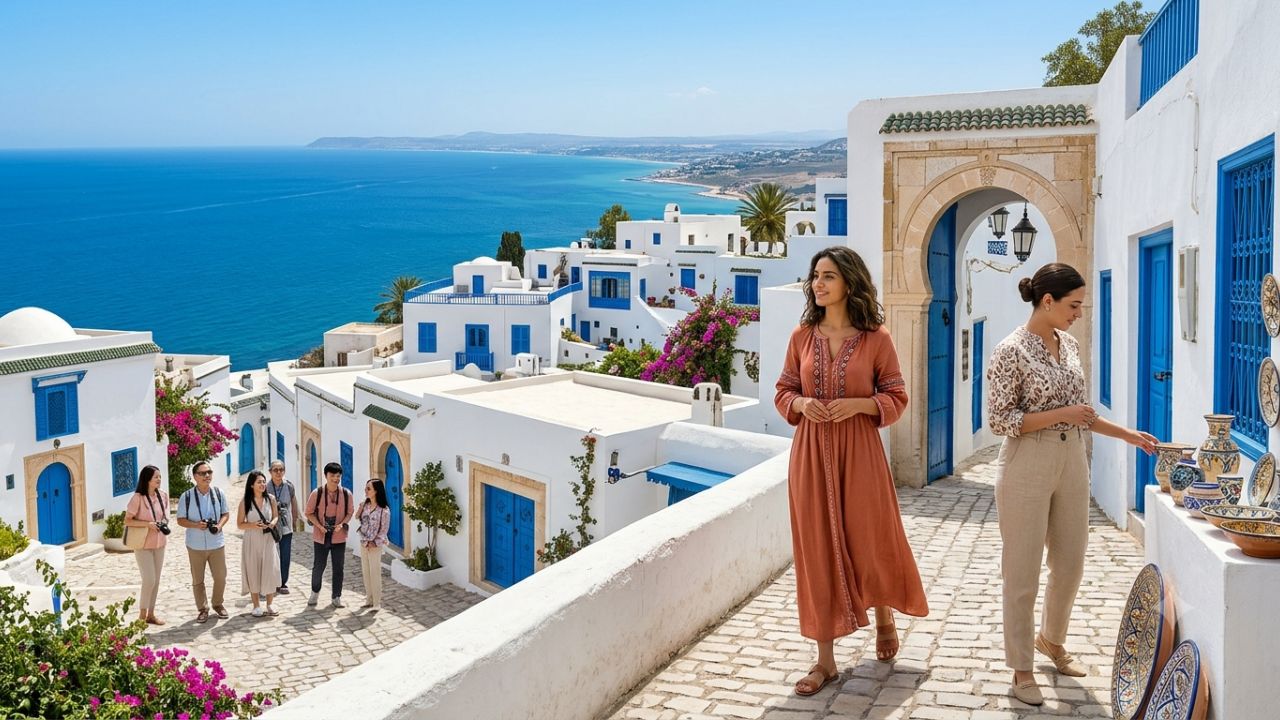
TUNIS, November 4, 2026 — Tunisia has initiated an expansive strategic repositioning of its national tourism architecture, pivoting toward affluent Asian source markets and world-class archaeological circuits after generating 6.89 billion Tunisian Dinars in sector revenues through late October 2026. Backed by 8.69 million international visitor arrivals, the North African nation is executing a structural transition away from seasonal, price-discounted beach resort packages toward high-yield cultural, geological, and heritage travel. Bolstered by recent milestone recognitions from UNESCO for the historic village of Sidi Bou Saïd and the prehistoric arid landscapes of the Dahar Geopark, the Tunisian Ministry of Tourism and Handicrafts is pairing institutional reforms with aggressive marketing deployments across Tokyo, Beijing, and Seoul to build economic resilience across its interior governorates.
The strategic redirection arrives at a decisive juncture for North African hospitality. For decades, Tunisia operated primarily as a summer beach destination for budget-conscious Western European package tourists, a commercial model characterized by razor-thin margins, extreme seasonal volatility, and vulnerability to tour operator insolvency. The macroeconomic returns recorded throughout 2026 demonstrate that deliberate diversification across traveler demographics and regional geography can transform overall sector yields. With average traveler expenditure climbing eight percent year-on-year to 793 dinars per visitor, tourism authorities are leveraging direct flight agreements, expanded cruise dockings at the Port of La Goulette, and tailored diplomatic engagements to position Tunisia as a premier year-round Mediterranean cultural crossroad.
TUNISIA TOURISM METRIC TRAJECTORY (JAN-OCT 2026)
| Indicator | Jan - Oct 2026 Metric | Year-on-Year Shift | Strategic Target 2027 |
|---|---|---|---|
| Total Inbound Arrivals | 8.69 Million Visitors | +4.2% Volume | 10.20 Million |
| Gross Tourism Receipts | 6.89 Billion TND | +3.7% Revenue | 7.80 Billion TND |
| Average Spend per Visitor | 793 TND (~$258 USD) | +8.0% Yield | 870 TND |
| Commercial Bed-Nights | 23.96 Million Nights | +5.1% Occupancy | 27.50 Million |
| La Goulette Cruise Traffic | 243,000 Port Passengers | +21.5% Shore Volume | 355,000 Passengers |
| Vocational Training Intake | 2,070 Hospitality Cadres | +16.6% Capacity | 2,500 Cadres |
Macroeconomic Momentum: Deconstructing Tunisia’s 2026 Fiscal Performance
The statistical baseline published by the Tunisian Ministry of Tourism reveals structural stabilization across core operating indicators during the initial ten months of 2026. The registration of 8.69 million international arrivals by October 20 represents an operational normalization that surpasses pre-crisis benchmarks. More significantly for economic planners in Tunis, gross sector receipts climbed to 6.89 billion dinars, confirming that value capture is outpacing baseline visitor headcounts. Across regional hotels and classified guest accommodations, total registered stays climbed to 23.96 million bed-nights, signaling extended average lengths of stay among independent travelers and cultural tour cohorts.
The rise in average expenditure per visitor to 793 dinars marks a departure from historical consumption patterns. For much of the past two decades, Mediterranean charter holidaymakers spent the vast majority of their travel budgets on prepayments to foreign wholesale tour operators, leaving minimal foreign currency circulating within local municipal economies. The contemporary influx of independent cultural travelers, wellness seekers, and long-haul visitors has rebalanced expenditure patterns toward private ground transportation, regional gastronomy, state archaeological monuments, and certified artisan workshops. This structural shift has insulated local foreign exchange reserves against import inflation while stimulating economic activity in rural regions historically disconnected from coastal resort revenue.
Tourism economists attribute this fiscal performance to targeted administrative adjustments executed by the National Tourism Office of Tunisia (ONTT). Rather than competing exclusively on room rates against neighboring Mediterranean economies like Greece, Turkey, and Egypt, Tunisian tourism authorities prioritized niche product verticals, including high-end thalassotherapy retreats, Sahara desert expeditions, and heritage circuits. Consequently, hotel yields across the capital city of Tunis, the island of Djerba, and the southern oasis of Tozeur recorded double-digit revPAR (revenue per available room) gains throughout both shoulder seasons of spring and autumn.
                    TUNISIA TOURISM DIVERSIFICATION ARCHITECTURE

       [ Historic Foundation ]                         [ Structural Horizon ]
       Low-Yield Beach Resorts                        High-Value Year-Round Pivot
  +-------------------------------+             +-------------------------------------+
  | - All-Inclusive Coastal Enclaves|             | - Curated UNESCO Heritage Circuits   |
  | - Highly Seasonal (June-Aug)  |  ========>  | - Four-Season Archaeological Travel |
  | - Extreme Price Sensitivity   |             | - Premium Thalassotherapy & Wellness|
  | - Limited Local Spend Leakage |             | - High-Yield Asian Inbound Markets  |
  +-------------------------------+             +-------------------------------------+
Strategic Pivot Eastward: Courting Long-Haul Travelers Across Japan, China, and South Korea
Central to Tunisia's growth blueprint is an aggressive marketing expansion across East Asia, targeting seasoned long-haul travelers seeking immersive historical, archaeological, and architectural heritage. Diplomatic delegations from the ONTT stepped up their institutional outreach across Tokyo, Beijing, and Seoul throughout 2026, seeking to rebalance the nation's source market portfolio away from an overreliance on France, Germany, and the United Kingdom. Asian travelers, historically identified by global travel analysts as high-expenditure, culturally engaged visitors with an affinity for ancient history and world heritage, align precisely with Tunisia’s long-term economic objectives.
The Japanese travel market has emerged as a cornerstone of this diplomatic offensive. In September 2026, senior Tunisian tourism executives led an expansive delegation to Tourism EXPO Japan in Tokyo, presenting comprehensive thematic travel packages designed specifically for Japanese outbound agencies. The campaigns highlighted Tunisia’s Roman antiquity, southern desert landscapes, and luxury thalassotherapy installations, pairing these assets with Japanese-language promotional materials and certified culinary standards. The outreach emphasized cultural exploration over coastal leisure, appealing to Japan’s substantial demographic of active retirees and independent cultural explorers who travel predominantly during the shoulder and off-peak seasons.
Concurrently, Tunisian authorities expanded operational connectivity with China, building on the momentum of a 19.3 percent arrivals increase registered in 2025, which brought over 28,000 Chinese visitors to the country. First-quarter metrics for 2026 confirmed an additional 12 percent year-on-year surge in Chinese arrivals, catalyzed by Tunisia’s visa-free entry policy granting up to 90 days of unrestricted travel for Chinese passport holders. In April 2026, the ONTT hosted dedicated familiarization tours for Chinese travel influencers, digital tour operators, and media representatives, spotlighting cinematic desert destinations, troglodyte architecture, and luxury boutique hotels in Tunis and Carthage. Negotiations are actively underway between civil aviation authorities to establish code-share agreements and direct scheduled air links connecting Tunis-Carthage International Airport with primary Chinese aviation hubs.
South Korea represents the third pillar of this East Asian expansion strategy. With South Korean demand for international cultural travel expanding rapidly, Tunisian officials have participated in leading trade exhibitions in Seoul to educate commercial travel operators on the country's security architecture, boutique infrastructure, and logistical accessibility. South Korean itineraries currently under development integrate multi-destination circuits linking Tunisia with southern Mediterranean neighbors, creating regional Mediterranean-North African heritage journeys tailored for long-haul vacationers.
[!NOTE] High-yield East Asian travelers spend an average of two to three times more on regional handicrafts, guided tours, and dining per day than traditional European beach holidaymakers. Opening direct logistical channels and building cultural translation capabilities within the hospitality sector are core priorities of Tunisia's 2026–2030 national tourism masterplan.
UNESCO Milestones as Catalysts: Sidi Bou Saïd and the Dahar Geopark
The cornerstone of Tunisia's cultural rebranding rests on two monumental designations granted by the United Nations Educational, Scientific and Cultural Organization (UNESCO) during 2026, providing independent, prestigious validation of the country's architectural and geological assets. These designations have fundamentally refreshed international travel marketing, moving Tunisia from a sun-and-sand brochure destination to a premier global repository of world civilization and ancient geology.
In July 2026, the cliffside village of Sidi Bou Saïd, perched above the Mediterranean Sea overlooking the Gulf of Tunis, was officially inscribed onto the UNESCO World Heritage List. Celebrated for its preserved Andalusian-Ottoman architecture, blinding white-washed facades, and vibrant cobalt blue shutters and latticed moucharaby balconies, the village has long captured the imagination of international artists, including Paul Klee, August Macke, and philosopher Michel Foucault. The UNESCO inscription formally recognizes the historical continuity of the settlement, founded in the thirteenth century around the tomb of Sufi mystic Abou Said ibn Khalaf el-Baji, alongside the historic palace of Ennejma Ezzahra, built by French-British musicologist Baron Rodolphe d’Erlanger.
The inscription of Sidi Bou Saïd enforces strict conservation standards that protect the settlement against uncontrolled commercial development while channeling public investment into pedestrian infrastructure, historic restoration, and cultural curation. Rather than functioning solely as an afternoon excursion for bus tours, the village is expanding its high-end boutique hospitality sector, inviting visitors to lodge in restored merchant mansions, visit the Centre for Arab and Mediterranean Music, and patronize local art galleries and traditional cafes such as the legendary Café des Délices.
TUNISIA UNESCO HERITAGE MILESTONE MATRIX (2026)
| Entity / Facility | Delays | Cancellations | Details |
|---|---|---|---|
| Site / Asset | Classification | Geographical Zone | Strategic Significance |
| Sidi Bou Saïd | World Heritage Site | Northern Coast (Tunis Gulf) | Preserved Andalusian |
| (Inscribed July 2026) | architecture & culture | ||
| Dahar Region | Global Geopark | Southeast (Tataouine/ | Prehistoric geology, |
| (Inscribed April 2026) | Medenine Governorates) | Berber ksour & caves | |
| El Jem Amphitheatre | World Heritage Site | Central Sahel Plains | Third-largest Roman |
| (Foundational Asset) | arena on Earth | ||
| Medina of Tunis | World Heritage Site | Capital City | Historic core with 700+ |
| (Foundational Asset) | classified monuments |
Complementing the northern maritime heritage of Sidi Bou Saïd, UNESCO awarded Global Geopark status to the Dahar region in April 2026, establishing Tunisia's first globally designated geopark and only the third in the entire African continent. Spanning the jagged mountain ranges across the Tataouine and Médenine governorates, the Dahar Geopark represents a geological and cultural wonderland encompassing hundreds of millions of years of Earth history alongside ancient indigenous Berber human adaptations.
The geopark’s terrain includes the troglodyte subterranean cave dwellings of Matmata, excavated deep into the sandstone hills to provide thermal insulation against desert temperature extremes, and the fortified Berber granaries (ksour) of Tataouine, multi-tiered clay storage fortresses that once anchored trans-Saharan caravan trade routes. Recognized globally through cinematic history as the planetary backdrop for George Lucas's Star Wars franchise, the Dahar Geopark is transitioning from a cinematic curiosity into an eco-tourism destination. The UNESCO designation has unlocked international funding for trail demarcation, geological mapping, and the training of indigenous Amazigh guides, ensuring that economic benefits flow directly to remote southern communities through sustainable homestays and heritage trekking.
Maritime Gateways: Port of La Goulette and the Shore Excursion Economy
Parallel to overland heritage initiatives, Tunisia’s maritime sector recorded rapid growth through the revitalized cruise terminal at the Port of La Goulette, the historical gateway to Tunis. Between January and September 2026, the port processed 243,000 cruise passengers, marking a 21.5 percent expansion compared to the equivalent period in 2025. Port operators and the Ministry of Transport forecast that full-year cruise passenger volume will reach 355,000 travelers, confirming the complete reintegration of Tunisia into western Mediterranean cruise circuits.
Leading global cruise operators, including MSC Cruises, Costa Cruises, and specialized boutique luxury lines, have reinstated Tunis as a marquee port of call on seven- and ten-night Western Mediterranean loops. The return of these vessels has supplied a reliable stream of daytime foot traffic to the surrounding cultural corridor, which links the modern port facilities directly to the UNESCO-listed Medina of Tunis, the National Bardo Museum, the ruins of ancient Carthage, and the scenic overlooks of Sidi Bou Saïd.
       PORT OF LA GOULETTE: MARITIME ECONOMIC DISTRIBUTION CORRIDOR

       +-------------------------------+
       |   Port of La Goulette Terminal|
       |  (243K Pax Inbound Thru Sep)  |
       +---------------+---------------+
                       |
       +---------------+---------------+
       |                               |
       v                               v
+-----------------------------+ +-----------------------------+
| Cultural Excursion Corridor | | Commercial Shore Spending   |
| - Medina of Tunis (World H.)| | - Certified Artisan Guilds  |
| - Bardo National Museum     | | - Regional Gastronomy & Wine|
| - Archaeological Carthage   | | - Private Chauffeur Mobility|
| - Clifftop Sidi Bou Saïd    | | - Traditional Souk Commerce |
+-----------------------------+ +-----------------------------+
To maximize local economic retention from cruise operations, the Ministry of Tourism enacted stringent regulations regarding shoreside transport and guided excursions. Certified local guides and licensed bus cooperatives were given exclusive terminal dispatch rights, curbing predatory third-party intermediaries and ensuring that excursion revenues directly support domestic transport operators. Simultaneously, port authorities introduced streamlined digital biometric border control booths, slashing disembarkation processing times to under twelve minutes per passenger and affording visitors maximum daylight hours to explore regional attractions.
The economic ripple effects of this maritime resurgence extend across the northern governorate. Local artisan guilds operating inside the covered souks of Tunis reported a 28 percent increase in sales of certified olive wood carvings, handwoven carpets, brass lanterns, and traditional perfumes during days when major cruise vessels docked at La Goulette. With cruise lines committing expanded vessel capacities for the 2027 summer and autumn seasons, port authorities are reviewing plans to construct a second dedicated passenger pier capable of handling next-generation, liquefied natural gas (LNG)-powered cruise flagships.
Aviation Connectivity and Winter Capacity: Transavia and Regional Aerodromes
Sustaining year-round tourism depends fundamentally on winter aviation capacity, an area where North African destinations frequently struggle due to off-season airline schedule cuts. Tunisia addressed this vulnerability throughout 2026 by securing aggressive seat commitments from European low-cost carriers while modernizing regional airport infrastructure outside the capital city.
Transavia France, the low-cost subsidiary of the Air France-KLM Group, announced an unprecedented expansion of its winter 2026–2027 flight schedule to Tunisia, deploying 410,000 seats across its network—a nine percent capacity increase over the previous winter. Operating 117 weekly flights across 16 point-to-point routes, the carrier is connecting major French regional centers (including Paris-Orly, Lyon, Marseille, and Nantes) with five Tunisian airports: Tunis-Carthage, Djerba-Zarzis, Monastir-Habib Bourguiba, Sfax-Thyna, and Tozeur-Nefta.
TRANSAVIA WINTER 2026-2027 TUNISIAN AIR NETWORK
| Airport Gateway | Flight Frequency | Key Connecting Hubs | Primary Travel Segment |
|---|---|---|---|
| Tunis-Carthage (TUN) | 54 Weekly Flights | Paris-Orly, Lyon, Marseille | Business, Heritage |
| Djerba-Zarzis (DJE) | 32 Weekly Flights | Paris, Nantes, Bordeaux | Wellness, Desert Gates |
| Monastir (MIR) | 18 Weekly Flights | Paris-Orly, Lyon | Cultural Sahel, Beach |
| Sfax-Thyna (SFA) | 8 Weekly Flights | Paris-Orly | Commercial, Regional |
| Tozeur-Nefta (TOE) | 5 Weekly Flights | Paris-Orly | Sahara Eco-Expeditions |
The expansion of direct winter services into Tozeur-Nefta International Airport holds extraordinary strategic value for the southern desert economy. Located on the edge of the Chott el Djerid salt flats and serving as the primary commercial oasis gateway, Tozeur has historically endured severe logistical isolation. Direct air connections from Western Europe enable international travelers to bypass lengthy overland transfers from northern ports, arriving directly in the Saharan interior to embark on multi-day 4x4 expeditions, stay in luxury desert camps, and explore the cinematic landscapes of Ong Jmel and the mountain oases of Chebika and Tamerza.
In tandem with French carrier expansions, British leisure operators Jet2 and TUI unveiled expanded flight allocations to Enfidha-Hammamet and Djerba for the 2027 calendar year, citing strong forward bookings from British holidaymakers seeking sunny winter alternatives to the Canary Islands. The national flag carrier, Tunisair, simultaneously took delivery of reconfigured narrowbody aircraft to expand frequencies to central European and West African commercial centers, gradually establishing Tunis as a strategic transit hub connecting sub-Saharan Africa with southern Europe.
Institutional Modernization: The 2027 Fiscal Budget and Hospitality Upskilling
Tunisia’s tourism growth strategy is anchored by institutional investments in human capital and regulatory modernization. Recognizing that service excellence and multilingual fluency are prerequisites for capturing sophisticated Asian and high-yield cultural travelers, the Tunisian government unveiled an expanded fiscal framework for the Ministry of Tourism and Handicrafts for 2027.
The proposed 2027 budget allocates 176.8 million Tunisian Dinars to tourism and handicrafts, representing a 9.3 percent budget increase over 2026 appropriations. The expanded funds are earmarked for three foundational pillars: international digital marketing, environmental sustainability certification for regional accommodations, and vocational training across specialized hospitality academies. Under this directive, the national network of hospitality training institutes expanded its student intake capacity by 16.6 percent, offering 2,070 certified openings across 23 technical and managerial disciplines.
       MINISTRY OF TOURISM 2027 BUDGETARY ALLOCATION ARCHITECTURE

                     +---------------------------------------+
                     | Total Proposed Budget: 176.8M TND     |
                     | (+9.3% Year-on-Year Expansion)        |
                     +-------------------+-------------------+
                                         |
         +-------------------------------+-------------------------------+
         |                               |                               |
         v                               v                               v
+--------------------+         +--------------------+         +--------------------+
| Global Marketing   |         | Vocational Training|         | Heritage & Ecology |
| (58.2M TND - 33%)  |         | (65.4M TND - 37%)  |         | (53.2M TND - 30%)  |
| - Asian Trade Expos|         | - 2,070 Trainees   |         | - Sidi Bou Saïd Maint|
| - Digital Outlets  |         | - 23 Disciplines   |         | - Dahar Geopark Trails|
| - Targeted Roadshows|        | - Asian Languages  |         | - Green Certifications|
+--------------------+         +--------------------+         +--------------------+
The curriculum overhaul addresses long-standing service bottlenecks identified by luxury operators. In collaboration with international educational consultants, training institutes introduced specialized coursework in Mandarin Chinese, Japanese, and Korean, alongside certifications in East Asian guest etiquette and dietary preferences. In addition, vocational programs now emphasize sustainable hotel management, farm-to-table culinary curation, and specialized guide training for geological and archaeological reserves.
Complementing human capital investments, the ministry initiated a comprehensive star-rating audit across all operational hotels in Tunisia. Outdated legacy facilities that fail to satisfy contemporary hygiene, structural, and environmental standards are being required to complete renovations or face classification downgrades. The National Hotel Renovation Fund was simultaneously recapitalized to provide low-interest concessionary loans for properties transitioning to solar energy installations, greywater recycling systems, and locally sourced architectural finishes.
Beyond Sun-and-Sea: Structural Diversification Across Wellness and Archaeology
The transformation of Tunisian tourism requires dismantling the historical paradigm that concentrated 85 percent of all hotel capacity along a narrow coastal corridor stretching from Cap Bon down through Hammamet, Sousse, and Djerba. While coastal tourism remains a critical economic base, its traditional reliance on high-volume, low-margin all-inclusive resort packages left local operators exposed to global fuel price spikes, tour operator insolvencies, and shifting consumer trends.
To counteract these vulnerabilities, Tunisia is aggressively promoting its world-class thalassotherapy infrastructure. Capitalizing on pure Mediterranean seawater, mineral-rich marine silt, and a temperate Mediterranean climate, Tunisia ranks as the world's second-largest thalassotherapy destination after France. High-end wellness retreats scattered across Djerba, Mahdia, and Gammarth attract affluent medical and wellness travelers year-round, generating room rates three to four times higher than standard coastal resort tariffs. These facilities operate at peak occupancy during the late autumn, winter, and early spring, smoothing the seasonality curve that once shuttered dozens of coastal hotels every November.
TUNISIA REGIONAL PRODUCT DIVERSIFICATION SPECTRUM
| Entity / Facility | Delays | Cancellations | Details |
|---|---|---|---|
| Travel Sector | Core Geographic Hubs | Seasonality Profile | Economic Impact |
| Thalassotherapy Wellness | Djerba, Gammarth, | Year-Round Peak | High Yield, 3-4x spend |
| Mahdia | (Oct - April Focus) | over standard leisure | |
| Archaeological Circuits | El Jem, Dougga, | Autumn, Winter, Spring | Disperses spend into |
| Carthage, Bulla Regia | rural interior regions | ||
| Saharan Adventure | Tozeur, Douz, Ksar | Winter High Season | Supports Berber lodges, |
| Ghilane, Matmata | (Nov - March Focus) | 4x4 mobility networks | |
| Coastal & Nautical | Hammamet, Sousse, | Summer High Season | Volume baseline, mass |
| Tabarka Marina | (June - Sept Peak) | employment generation |
Inland, Tunisia boasts archaeological assets rivaling any Mediterranean country. The Amphitheatre of El Jem, an exceptionally preserved third-century Roman colosseum that accommodated 35,000 spectators, stands as an engineering marvel in the central olive-growing plains of the Sahel. To the northwest, the ancient Roman city of Dougga presents remarkably intact temples, baths, and theaters overlooking sweeping agricultural valleys, while Bulla Regia preserves subterranean Roman villas built beneath ground level to escape the summer heat.
The integration of these inland archaeological sites into multi-day cultural itineraries has unlocked substantial economic dividends for agricultural governorates such as Kairouan, Siliana, and Béja. Travelers journeying between northern ports and southern desert oases patronize family-run guest farms (maisons d'hôtes), local restaurants, and olive oil tasting rooms, decentralizing foreign currency earnings across the national territory.
Geopolitical Realities, Climate Pressures, and Strategic Outlook for 2027
Despite the extraordinary progress registered across 2026, Tunisia’s tourism modernization faces structural challenges that require sustained policy attention. Chief among these is the escalating impact of Mediterranean climate change. North Africa experiences pronounced water scarcity, prolonged summer heatwaves, and coastal erosion that threaten traditional coastal infrastructure and regional agricultural yields.
In response, the Tunisian government has made environmental compliance a condition for future hotel licensing. Properties across Djerba and Hammamet are installing autonomous seawater desalination units and wastewater treatment plants to irrigate golf courses and resort gardens without depleting local municipal water aquifers. Concurrently, regional tourism boards are incentivizing low-impact eco-lodges in mountainous areas such as the Zaghouan ridge and the cork oak forests of Tabarka, cultivating an emerging segment of hiking, birdwatching, and botanical travel that places minimal demands on water resources.
Regional geopolitical stability remains another operational variable. Operating in a complex North African landscape, Tunisia has prioritized civil security across all tourist zones, ports of entry, and transportation arteries. International security partnerships and rigorous hotel surveillance standards have sustained a peaceful, stable operating environment for over a decade, earning positive travel advisories from Western and Asian foreign ministries alike.
Looking ahead to 2027, the trajectory of Tunisian tourism appears resilient. The convergence of record revenues (approaching 7 billion dinars), soaring average visitor expenditures, expanding Asian market penetration, and international prestige derived from the newly minted UNESCO inscriptions of Sidi Bou Saïd and the Dahar Geopark has positioned Tunisia for sustainable long-term expansion. By continuing to replace low-yield commodity resort models with high-value cultural, geological, and wellness circuits, Tunisia is demonstrating how a heritage-rich Mediterranean nation can transform tourism from a fragile seasonal service into an enduring engine of national economic renewal.
Key Strategic Takeaways of Tunisia's 2026-2027 Tourism Pivot
- Record Revenue Trajectory: Tunisia generated 6.89 billion TND across 8.69 million inbound travelers through late October 2026, driven by an 8.0 percent jump in average spend per visitor to 793 TND.
- Asian Market Rebalancing: Strategic marketing offensives across Tokyo, Beijing, and Seoul are successfully engaging affluent, heritage-oriented travelers, supported by 90-day visa-free entry for Chinese nationals.
- Prestige UNESCO Validations: The July 2026 World Heritage inscription of Sidi Bou Saïd and the April 2026 designation of the Dahar Geopark have redefined Tunisia as a premier global cultural and geological destination.
- Maritime Gateway Surge: The Port of La Goulette handled 243,000 cruise passengers through September (+21.5% YoY), on track for 355,000 arrivals by year-end, stimulating shore excursion commerce across the Tunis cultural basin.
- Winter Air Bridge Expansion: Transavia France added 410,000 winter seats across 16 routes, providing direct connections into Tozeur, Djerba, and Sfax to eliminate off-season logistical bottlenecks.
- Vocational Capacity Growth: A 176.8 million TND budget for 2027 funds a 16.6 percent expansion in hospitality student openings, emphasizing Asian language fluency and sustainable hotel operations.
Related Travel Guides and Analysis
This article is for informational purposes. Flight routes, passenger regulations, visa rules, and transit advisories are subject to change by airlines and aviation authorities. Readers are advised to verify schedules and travel documentation with relevant carriers and border agencies before departure.
Related Stories

Qatar Inbound Tourism Climbs to 2.95 Million Visitors in 2026 Led by GCC Influx and Autumn Seasonal Surge

Italy–Peru Direct Flight Talks: Unlocking Rome, Milan, and High-Speed Rail Two-City Itineraries