
Central Railway Upgrades 5 Special Trains to Regular Status in Maharashtra and Karnataka 2026
Central Railway has transitioned five high-demand special trains to permanent regular status across Maharashtra and Karnataka to stabilize commuter transit and optimize rolling stock.

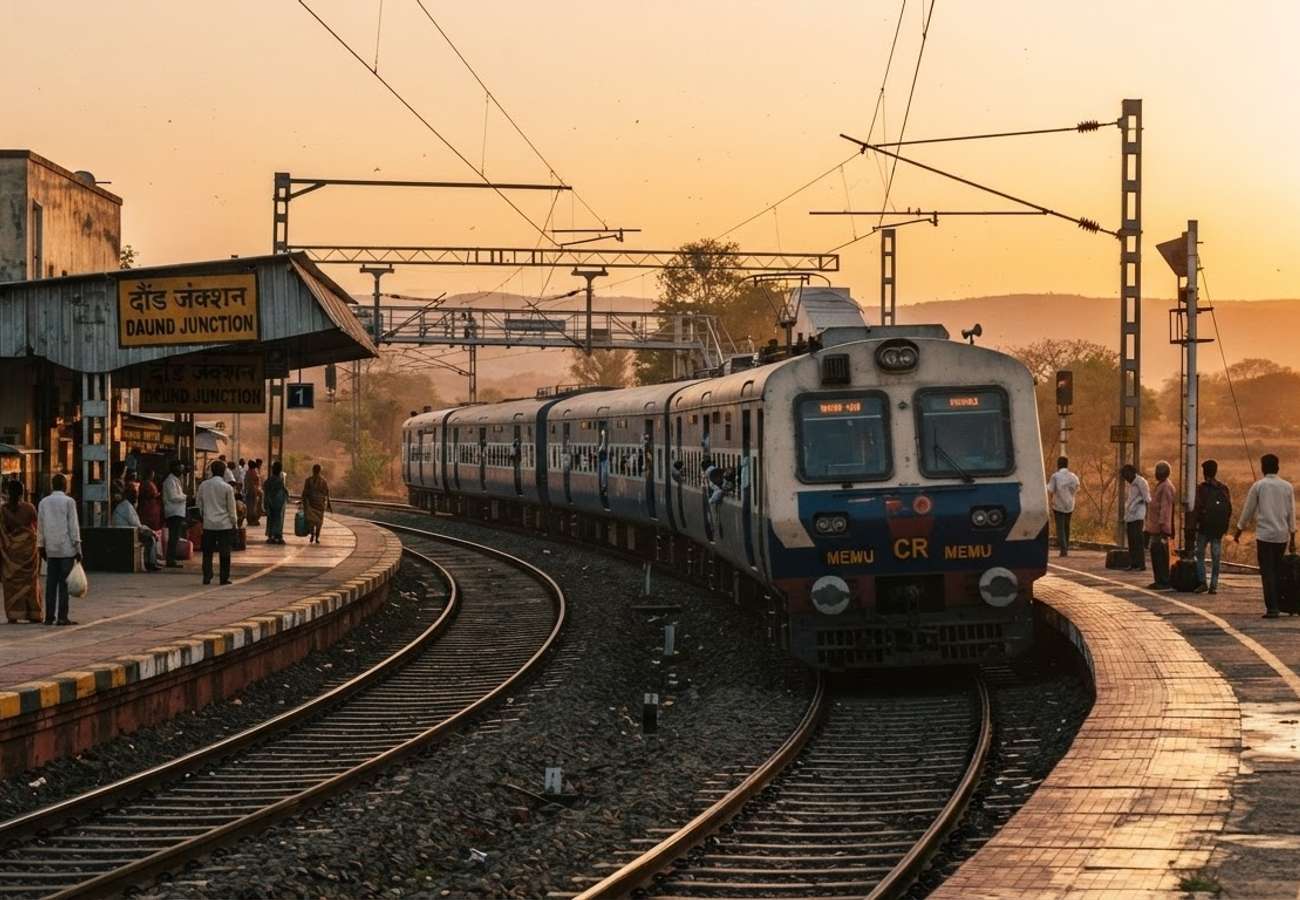
Image generated by AI
Central Railway has converted five seasonal special trains into permanent regular services effective August 15, 2026, eliminating scheduling uncertainty for thousands of daily commuters across Maharashtra and Karnataka.
The administrative shift marks a transition from reactive, ad-hoc scheduling to a data-driven permanent timetable. By integrating high-demand routes into the official registry, Central Railway aims to provide a reliable transport model that reduces the volatility typically associated with "special" train designations.
Regularized Route Specifications and Schedules
The transition involves a mix of Diesel Electric Multiple Units (DEMU) and Mainline Electric Multiple Units (MEMU) to handle varying passenger loads across the regional corridors.
| Route | Train Number(s) | Frequency | Fleet Configuration | Key Halts |
|---|---|---|---|---|
| Solapur $\leftrightarrow$ Daund | 71434 / 71433 | Daily | 10 DEMU Coaches | Mohol, Madha, Kurduwadi, Kem, Jeur, Kettur, Bhigwan |
| Solapur $\leftrightarrow$ Kalaburagi | 71435 / 71436 | Daily | 10 DEMU Coaches | Hotgi, Akalkot Road, Dudhani, Ganagapur Road |
| Daund $\leftrightarrow$ Kalaburagi (A) | 51301 / 51302 | 5 Days/Week (Excl. Sun, Thu) | 10 Gen 2nd Class, 2 SL-cum-Guard Brake Vans | Bhigwan, Kettur, Jeur, Kem, Kurduwadi, Madha, Mohol, Solapur, Tikekarwadi, Hotgi, Akalkot Road, Boroti, Dudhani, Ganagapur Road |
| Daund $\leftrightarrow$ Kalaburagi (B) | 51303 / 51304 | Sundays & Thursdays | 10 Gen 2nd Class, 2 SL-cum-Guard Brake Vans | Bhigwan, Kettur, Jeur, Kem, Kurduwadi, Madha, Mohol, Solapur, Tikekarwadi, Hotgi, Akalkot Road, Boroti, Dudhani, Ganagapur Road |
| Badnera $\leftrightarrow$ Nashik Road | 61130 / 61129 | Daily | 12-car MEMU | Murtizapur, Borgaon, Akola, Shegaon, Nandura, Malkapur, Bodwad, Bhusaval, Jalgaon, Pachora, Kajgaon, Chalisgaon, Nandgaon, Manmad, Lasalgaon, Niphad |
Traveler Logistics Guide
From a ground-level perspective, the best way to navigate these changes is to immediately update any saved bookings or alerts in the IRCTC app or official railway portals. Because these trains have moved from "Special" to "Regular" status, their alphanumeric identifiers have changed.
Booking and Connection Advice:
- Ticket Procurement: Regular status typically allows for more stable booking windows compared to special trains, which are often announced on short notice. Commuters should now plan their travel weeks in advance.
- Layover Management: For those connecting at major hubs like Solapur or Daund, the fixed timetable removes the risk of "special train" cancellations that often occur during rolling stock reshuffles.
- Digital Transit Tools: Passengers are encouraged to use the National Train Enquiry System (NTES) to track the new train numbers (e.g., 61130 for Badnera-Nashik) to ensure real-time platform accuracy.
- Customs and Border Transit: While these are domestic routes, travelers moving between Maharashtra and Karnataka should ensure they carry valid government-issued identification, as regularized services often see increased security screenings during peak hours.
Infrastructure Impact Assessment
This regularization is a strategic move in resource optimization. Historically, Indian Railways utilized ad-hoc declarations to manage seasonal surges, which created booking bottlenecks and operational instability. The current shift toward permanent integration reflects a proactive network design.
By standardizing the fleet—specifically the deployment of 10-coach DEMU units and 12-car MEMU services—Central Railway is optimizing the usage of rolling stock based on months of demand analysis. This mirrors broader infrastructure upgrades seen in the Mumbai suburban network, such as the implementation of 15-car rakes to mitigate overcrowding.
The long-term impact is a strengthened regional bridge between the industrial hubs of Maharashtra and the transit gateways of Karnataka, ensuring that smaller towns between major cities maintain consistent access to economic centers.
Reliable scheduling is the backbone of regional economic mobility.
Related Travel Guides
Disclaimer
This article is for informational and educational purposes only. It does not constitute legal, financial, or professional advice. While we strive to provide accurate and up-to-date information, travel policies, regulations, and conditions change rapidly. Always verify information with official sources before making travel decisions. Nomad Lawyer makes no representations about the accuracy, reliability, completeness, or suitability of the information provided. Readers should consult qualified professionals for advice specific to their circumstances. The views expressed in this article are those of the author and do not necessarily reflect the views of Nomad Lawyer.
Raushan Kumar
Founder & Lead Developer
Full-stack developer with 11+ years of experience and a passionate traveller. Raushan built Nomad Lawyer from the ground up with a vision to create the best travel and law experience on the web.
Learn more about our team →