
Cathay Pacific Celebrates 80 Years in Manila: How an 80-Year Aviation Route Built Asia’s Travel Gateway

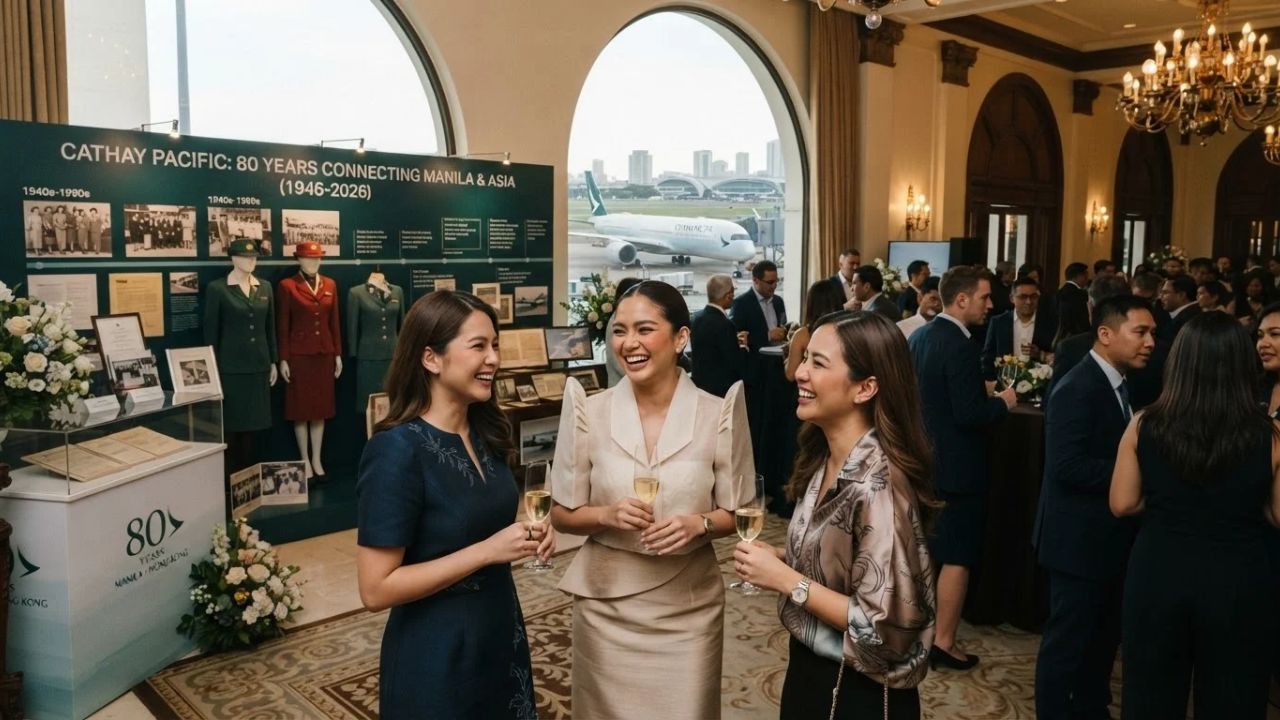
Marking eight decades of uninterrupted trans-regional connectivity, Cathay Pacific commemorated the 80th anniversary of its historic Manila route on 3 September 2026 with a gala celebration at The Manila Hotel, honoring the birthplace where the airline’s legendary name was coined in 1946. Entitled "80 Years Together," the milestone gathering brought together more than 200 government officials, aviation partners, and cultural figures to celebrate a commercial air corridor that began in November 1946 as Cathay’s inaugural international destination outside Hong Kong, permanently shaping travel, trade, and diaspora mobility across the Asia-Pacific.
The event illuminated a rare intersection of hospitality lore and civil aviation history. According to airline records, founders Roy Farrell and Sydney de Kantzow conceived the name "Cathay Pacific" inside The Manila Hotel’s iconic Tropicana Bar, dreaming of an airline that would cross the Pacific Ocean from ancient Cathay. Commemorated by a permanent historic plaque in the hotel, this 80-year partnership serves as a testament to the power of commercial aviation in linking the Philippines with Hong Kong, mainland China, and onward global networks across generations.
The Local Trend Revealed: Aviation Heritage as an Engine for Cultural Tourism
In an era dominated by sterile, algorithm-driven airport transfers, international travelers increasingly value aviation heritage—the living stories, historic terminal hubs, and grand hotels that transformed air travel from a perilous postwar adventure into global connectivity.
The Manila–Hong Kong route stands as one of the world's most enduring aviation arteries:
- The Postwar Genesis: In November 1946, just months after the airline's founding in September 1946, a Douglas DC-3 propeller aircraft touched down in Manila from Hong Kong, establishing scheduled commercial links amidst the ruins of postwar reconstruction. Manila became Cathay’s first international scheduled destination, cementing a relationship that predates modern jet corridors.
- The "80 Years Together" Commemoration: Staged in the grand lobby of The Manila Hotel, the celebration featured a shadow-play performance by Asia’s Got Talent winner El Gamma Penumbra portraying eight decades of flight, accompanied by the "Runway of Eras," a retrospective showcase displaying vintage flight attendant uniforms that traced the evolution of Asian cabin service from the late 1940s to the modern era.
- The Hong Kong Super-Hub Connection: For generations of Filipino professionals, overseas workers, and leisure explorers, the short two-hour flight to Hong Kong International Airport has served as the primary gateway to North America, Europe, Japan, and mainland China, anchoring cultural and economic bonds across the South China Sea.
Cultural & Environmental Value: Preserving Manila Bay’s Architectural Heritage
The enduring legacy of the Manila–Hong Kong air bridge is physically mirrored in the grand architectural landmarks that anchor Manila's historic waterfront:
The Manila Hotel: The Grand Dame of Philippine Hospitality
Opened in 1912 and designed by master architect William E. Parsons, The Manila Hotel represents an extraordinary fusion of American colonial elegance and indigenous Filipino craftsmanship:
- Living Cultural Treasure: Featuring soaring Doric columns, hand-carved Narra wood ceilings, capiz-shell chandeliers, and historic rattan furnishings, the hotel served as the pre-war headquarters of General Douglas MacArthur.
- The Tropicana Bar Heritage Plaque: Discerning travelers can visit the commemorative bronze plaque marking the exact site where Farrell and de Kantzow christened the airline, demonstrating how historic hotels serve as living archives of global commerce and cultural exchange.
Decarbonizing Regional Flight Corridors
As Cathay Pacific marks 80 years in the Philippines, the airline is aligning its historic route with modern environmental stewardship:
- Fleet Modernization: Operating fuel-efficient Airbus A350-900, A350-1000, and Boeing 777-300ER aircraft on the Manila–Hong Kong corridor reduces fuel burn and carbon emissions by up to 25% compared to previous-generation aircraft.
- Sustainable Aviation Fuel (SAF) Commitments: The carrier is expanding its corporate SAF procurement programs across Asian regional hubs, supporting the global aviation sector's goal of reaching net-zero carbon operations by 2050.
Visitor Insider Tips: Exploring Manila’s Historic Aviation and Colonial Enclaves
Travelers tracing the heritage of early commercial aviation can craft an enriching itinerary around historic Ermita and Intramuros:
Experiencing The Manila Hotel
- Step Inside the Historic Tap Room: Even if staying elsewhere in Metro Manila, reserve an evening for drinks at the hotel's historic Tap Room or Champagne Room. Savor a classic cocktail or the hotel's signature Mango Jubilee while admiring vintage archival photographs depicting 20th-century aviation pioneers and international dignitaries.
- Dress Code Etiquette: The Manila Hotel maintains a dignified smart-casual dress code in its main lobby and dining rooms. Avoid slippers, athletic tank tops, and beach attire when visiting public heritage lounges.
Navigating Intramuros and Rizal Park
- Padre Burgos Walking Tour: Located directly across the street from the hotel, cross into the historic Spanish walled city of Intramuros. Wander through the stone gates of Fort Santiago, visit the UNESCO World Heritage-listed San Agustin Church (built in 1607, surviving World War II bombings), and explore the colonial courtyard museum of Casa Manila.
- Sunset at Rizal Park (Luneta): Stroll through the 58-hectare park adjacent to the hotel to witness the ceremonial changing of the Marine guard at the monument of Philippine national hero Dr. José Rizal, followed by sunset vistas across Manila Bay.
Airport Transit Logistics
- Terminal Operations at NAIA: Cathay Pacific operates its international passenger departures and arrivals out of Terminal 3 at Ninoy Aquino International Airport (NAIA - MNL).
- Navigating Metro Traffic: Metro Manila traffic along Roxas Boulevard and the Skyway is notoriously congested during afternoon peak hours. When departing for an international flight, allow at least three to four hours from downtown Manila or Makati to clear airport security and immigration. Use ride-hailing apps like Grab or arrange hotel private car transfers rather than hailing unmetered street taxis.
Flavors of Manila: Heritage Dining and Classic Filipino Comforts
Experiencing Manila’s heritage is incomplete without indulging in traditional Philippine gastronomy that blends native Austronesian ingredients with Spanish, Chinese, and American influences:
Classic Philippine Delicacies
- Traditional Oxtail Kare-Kare: A luxurious celebratory stew composed of tender, slow-simmered beef oxtail, honeycomb tripe, and tender beef shank braised in a velvety, rich toasted rice and ground peanut sauce. Garnished with blanched string beans, sliced eggplant, and tender banana blossom hearts (puso ng saging), it is eaten with steamed white rice and savory sautéed fermented shrimp paste (bagoong alamang).
- Authentic Chicken and Pork Adobo: The unofficial national dish. Tender cuts of chicken and pork belly braised gently in natural cane vinegar, dark soy sauce, crushed garlic cloves, black peppercorns, and bay leaves until the sauce reduces into a rich, savory glaze.
- Crispy Pata: A pork lover's dream. A whole pork front knuckle is simmered with spices until fork-tender, chilled, and then deep-fried until the skin shatters with crispness while the interior meat stays juicy, accompanied by a dipping sauce of spiced coconut vinegar, soy sauce, garlic, and bird's eye chilies.
- The Grand Halo-Halo Supreme: The quintessential Philippine refresher. A towering glass filled with shaved ice, evaporated milk, and sweet layers of sweetened red mung beans, coconut gel (nata de coco), tender palm fruit (kaong), jackfruit strips, smooth leche flan custard, and fragrant purple yam paste (ube halaya), topped with a scoop of rich artisanal ube ice cream.
Tourism Outlook: Strengthening Asia-Pacific Connectivity for the Next Century
The 80-year milestone shared by Cathay Pacific and Manila provides a profound reminder that modern global travel rests on deep, generational relationships. In an era where new airline routes appear and disappear with changing market seasons, an eight-decade partnership represents extraordinary commercial resilience, cultural mutual respect, and shared history.
As the Philippines advances major airport modernizations—including the ongoing expansion and private rehabilitation of Manila’s airport terminals alongside new regional international gateways—strong aviation partnerships with global hubs like Hong Kong ensure that the country remains seamlessly connected to the world. For travelers boarding flights across the South China Sea, the journey is more than a routine commercial transit; it is an enduring bridge across eighty years of shared human history.
Related Travel Guides
- Feast of La Naval de Manila 2026: How Quezon City’s 380-Year Maritime Heritage Powers Faith Tourism
- Eastar Jet Launches Daily Busan-Hong Kong Route: Direct Flights Boost South Korea’s Coastal Tourism
- Thailand and Uzbekistan Lead Asian Tourism Realignment: Visa Liberalization, Transit Corridors, and Silk Road Connectivity
Disclaimer
This article is for informational and educational purposes only. It does not constitute legal, financial, or professional advice. While we strive to provide accurate and up-to-date information, travel policies, regulations, and conditions change rapidly. Always verify information with official sources before making travel decisions. Nomad Lawyer makes no representations about the accuracy, reliability, completeness, or suitability of the information provided. Readers should consult qualified professionals for advice specific to their circumstances. The views expressed in this article are those of the author and do not necessarily reflect the views of Nomad Lawyer.
Raushan Kumar
Founder & Lead Developer
Full-stack developer with 11+ years of experience and a passionate traveller. Raushan built Nomad Lawyer from the ground up with a vision to create the best travel and law experience on the web.
Learn more about our team →