
Canada Revises European Travel Advisories Amid Evolving Security and Border Updates
Canada Revises European Travel Advisories Amid Evolving Security and Border Updates

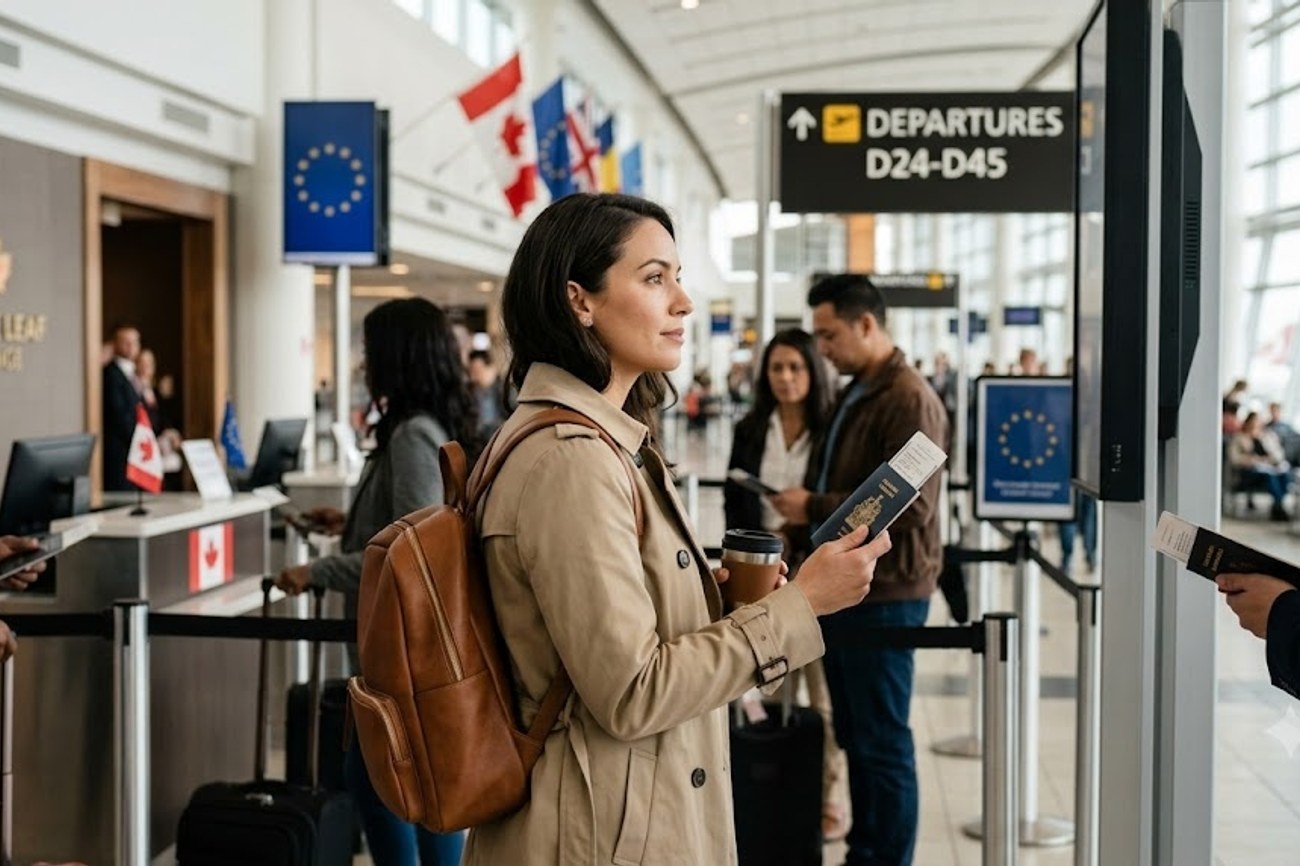
Image generated by AI
title: "The New European Risk Matrix: Analyzing Canada's Updated Travel Advisories" date: 2024-05-22 category: Regulatory Analysis
Zero tolerance for administrative error is the new baseline for Canadian travelers entering Europe, as the federal government integrates geopolitical volatility with new digital border mandates. The recent overhaul of travel advisories for several European nations signals a shift from simple safety warnings to a complex risk management framework. This update does not merely caution against pickpockets; it maps the intersection of active military conflict in Eastern Europe, organized crime surges in the Benelux region, and a fundamental restructuring of the Schengen Area's entry requirements.
The Geopolitical Pivot in European Transit
The Government of Canada has recalibrated its security assessments to account for the spillover effects of Russia's invasion of Ukraine. This is no longer a localized concern for those visiting Kyiv or Donetsk. The updated advisories now explicitly include Latvia, Estonia, Finland, Lithuania, and Slovakia. The risk here is not necessarily ground-level insurgency but systemic instability. Travelers to these regions are now facing a reality where airspace violations and the presence of stray military debris can trigger immediate flight cancellations or sudden border closures.
This represents a transition in how Global Affairs Canada communicates risk. Historically, advisories focused on "avoiding certain neighborhoods." Now, the warnings encompass entire national airspaces and transit corridors. For the nomadic professional or the frequent business traveler, this means that a flight itinerary through Northeastern Europe is now subject to the whims of military telemetry and regional defense alerts, creating a volatility index that did not exist in previous travel cycles.
Mapping the Security Fracture: From Petty Crime to Violent Conflict
While the East deals with military externalities, Western Europe is seeing a divergence in the types of threats facing visitors. The updated data suggests a bifurcated risk environment: sophisticated opportunistic crime in tourist hubs and systemic violent crime in logistics centers.
| Region/Country | Primary Threat Vector | Specific Risk Detail |
|---|---|---|
| Austria & Czechia | Organized Theft | Sophisticated distraction techniques; fake plainclothes police |
| Belgium | Violent Crime/Cartels | Stabbings/shootings in Brussels; drug wars in Antwerp & Ostend |
| France | State-Level Vigilance | Vigipirate plan active; high-frequency mobile phone theft |
| Baltics/Finland | Military Externalities | Airspace violations; stray debris; border restrictions |
In Belgium, the shift is particularly stark. The advisory moves beyond the typical "watch your wallet" narrative to warn of drug-trafficking turf wars affecting port cities like Antwerp and Ostend. This is a structural security issue, not a tourist-centric one, yet it directly impacts the safety of anyone transiting through these logistics hubs. Similarly, France's adherence to the Vigipirate plan indicates a permanent state of heightened alert, where the presence of security forces is a constant, and the risk of terrorism remains a baseline variable in every trip.
Expert Analysis: The Convergence of Security and Bureaucracy
For travelers booking routes into the Schengen Area, the direct consequence of these updates is the end of "frictionless" travel. We are witnessing the convergence of physical security risks and digital regulatory hurdles. The most significant looming shift is the implementation of the European Travel Information and Authorization System (ETIAS).
The pricing and logistical pressure created by ETIAS will be felt most by those who fail to distinguish between official portals and the surge of fraudulent "intermediary" sites. Because ETIAS modifies entry protocols for visa-exempt visitors, it creates a new point of failure at the border. A traveler may be physically safe from the risks mentioned in the advisories but legally barred from entry due to a digital authorization error.
Furthermore, the requirement to register with local emergency platforms—such as 112 Suomi in Finland, EE-Alarm in Estonia, or 112 Latvia—indicates that the Canadian government is shifting the burden of real-time monitoring onto the citizen. By encouraging the use of these specific national systems, the advisory acknowledges that federal updates are too slow for the current pace of geopolitical change. The "safety net" is no longer a static document from Ottawa; it is a series of active, local digital subscriptions.
The pricing impact here is indirect but real. As airlines and booking platforms are forced to integrate ETIAS compliance checks into their workflows, the overhead for travel agencies increases. This likely leads to higher service fees for "managed" travel, as the liability for a client being denied entry at the border increases for the agency.
Key Takeaways
- Digital Border Shift: Visa-exempt Canadians must prepare for ETIAS, as this digital authorization will become a mandatory prerequisite for Schengen Area entry.
- Northeastern Volatility: Travel to Finland, Estonia, Latvia, Lithuania, and Slovakia now carries risks of transit disruption due to military debris and airspace violations linked to the Ukraine conflict.
- Diversified Crime Profiles: Travelers should distinguish between the "distraction theft" common in Austria and Czechia and the "systemic violence" linked to port-city drug wars in Belgium.
- Local Notification Mandates: Relying on federal advisories is insufficient; travelers are urged to download destination-specific alerts like 112 Suomi or EE-Alarm.
- Verification Protocols: There is a heightened warning against "plainclothes" officers in Central Europe; travelers should never surrender passports or currency to unverified individuals.
FAQ: Canada-Europe Travel 2024
Do I need a visa for Europe if I am a Canadian citizen? Currently, Canadians are visa-exempt for short stays in the Schengen Area. However, the upcoming ETIAS system will require a digital pre-travel authorization. Check the European Union official portal for the exact rollout date.
What is the Vigipirate plan in France? Vigipirate is France's national security alert system designed to prevent terrorist attacks. For travelers, this means increased security checks at transit hubs, museums, and public landmarks, and a higher presence of armed security forces.
How do I handle a request for my passport from someone claiming to be police? In Austria and Czechia, reports of fake police are common. Always ask for official identification and insist on going to the nearest police station. Never hand over your passport or cash on the street.
Which emergency apps should I download for the Baltics? Depending on your destination, you should install 112 Latvia, Estonia’s EE-Alarm, or Finland’s 112 Suomi to receive real-time security and emergency notifications.
The era of the passive traveler is over; the modern journey now requires the mindset of a risk manager.
#CanadaTravelAdvisories #ETIAS2024 #SchengenSecurity #VigipirateFrance #BalticAirspace #EuropeanBorderControl
Related Travel Guides
Disclaimer
This article is for informational and educational purposes only. It does not constitute legal, financial, or professional advice. While we strive to provide accurate and up-to-date information, travel policies, regulations, and conditions change rapidly. Always verify information with official sources before making travel decisions. Nomad Lawyer makes no representations about the accuracy, reliability, completeness, or suitability of the information provided. Readers should consult qualified professionals for advice specific to their circumstances. The views expressed in this article are those of the author and do not necessarily reflect the views of Nomad Lawyer.
Naina Thakur
Contributor & Travel Specialist
Travel enthusiast and legal writer covering visa regulations, responsible tourism, and cultural journeys across global destinations.
Learn more about our team →