Cambodia Is Now Set To Unlock A Great New Cultural Tourism Opportunity As Crowds Gather At Angkor Equinox

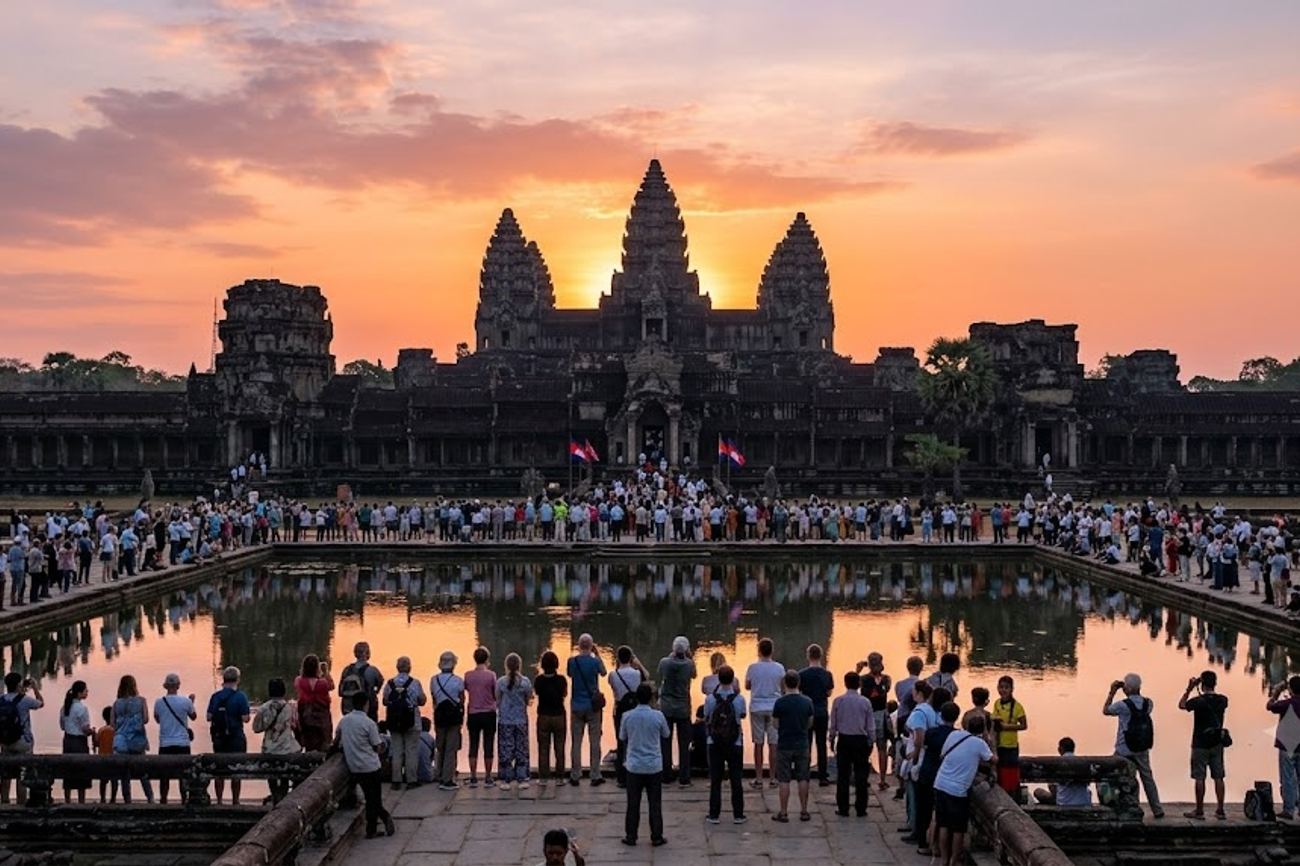
Image generated by AI
[Siem Reap, September 21, 2026] — Thousands of visitors are converging on the Angkor Archaeological Park this week as the autumn solar alignment brings the rising sun directly above the central tower of Angkor Wat from September 21 to 23.
The three-day event marks one of two annual windows—the other occurring in March—where the temple's architectural precision aligns with the celestial equinox. This phenomenon draws a massive concentration of crowds to the western side of the monument before dawn, transforming a standard heritage site visit into a time-sensitive astronomical event.
The Mechanics of the Solar Alignment
The surge is triggered by the specific astronomical positioning of the sun during the equinox, which allows it to rise in perfect symmetry with the temple's peak. While the alignment is a mathematical certainty, the visual experience for travelers is heavily dependent on local weather patterns. Because September falls within Cambodia's wet season, heavy cloud cover and rain frequently obscure the horizon. However, officials emphasize that the astronomical event occurs regardless of visibility, and the cultural significance of the gathering remains intact even if the sun is hidden by clouds.
To manage the influx of people, the APSARA National Authority, the body responsible for the management and protection of the park, oversees access to the site. The event highlights the intersection of Khmer architecture and ancient astronomy, positioning the temple not just as a religious site but as a sophisticated solar calendar.
Affected Travelers, Airlines and Logistics
The equinox creates a localized but intense spike in activity centered on the Angkor Wat monument, though the ripple effects extend across the broader Siem Reap hospitality sector.
| Group | Impact Level | Primary Concern |
|---|---|---|
| International Tourists | Moderate | Competition for viewing spots; weather-related visibility issues. |
| Domestic Travelers | High | Massive mobilization; historically the dominant visitor demographic. |
| Local Transport | Critical | Pre-dawn demand for tuk-tuks and private cars to reach the site. |
| Hospitality Sector | Moderate | Early-morning breakfast requests and modified checkout schedules. |
| Site Management | High | Crowd control on narrow paths and protection of the 40,100-hectare protected area. |
Historical data from the September 2024 event underscores the domestic nature of this surge. During that period, 38,236 people attended over three days. Domestic visitors accounted for 36,200 of those attendees (approximately 94.7%), while international tourists numbered 2,036 (approximately 5.3%). This creates a domestic-to-international ratio of roughly 17.8 to one, proving that the event is a major national pilgrimage rather than a purely foreign tourism draw.
Practical Traveler Advisory and Strategic Insights
For those currently in Siem Reap or planning a visit during this window, the corporate and official guidance translates into several practical realities:
1. Logistics and Timing: You cannot arrive at the temple at sunrise and expect a view. To secure a position on the western side, transport must be arranged for several hours before dawn. This puts immense pressure on local driver availability.
2. Gear and Clothing: Because this occurs during the rainy season, standard footwear is insufficient. Travelers should utilize waterproof gear and rain protection to navigate wet paths and muddy approaches.
3. Documentation: No special "Equinox Visa" exists. Travelers must possess standard Cambodian entry permits and a valid archaeological park pass. These should be purchased in advance to avoid queues at the ticket office during the surge.
4. Itinerary Expansion: To avoid the crushing crowds at the central tower, visitors are encouraged to explore the wider 400-square-kilometre archaeological landscape. Incorporating sites like Bayon, Preah Khan, and Ta Prohm into a full-day itinerary prevents the trip from becoming a one-dimensional experience centered solely on the sunrise.
Heritage Preservation and Future Management
The surge places significant stress on a site that has been on the UNESCO World Heritage List since 1992. The challenge for Cambodian authorities is balancing the economic benefits of "event-based" tourism with the physical preservation of the stone structures.
The protected area is not a museum but a living landscape where over 100,000 people reside across 112 historic settlements. The concentration of thousands of people in a small viewing area before sunrise creates bottlenecks on ancient paths and increases the risk of accidental damage to the site's infrastructure.
The Angkor Equinox in Cambodia is expected to draw large crowds, and to accommodate the influx of tourists, the Cambodian Ministry of Tourism has announced plans to enhance tourist infrastructure and services. This includes improving passenger logistics, such as transportation and accommodation options, to ensure a smooth and enjoyable experience for visitors. As a result, Cambodia is poised to unlock a great new cultural tourism opportunity, showcasing its rich heritage and history to a global audience.
Looking forward, the Ministry of Tourism aims to use these equinox events to shift the tourism curve. By creating a "seasonal reason" to visit during the rainy season, Cambodia can reduce the extreme overcrowding seen during the traditional dry-season peak. However, official data for the 2026 event is still being collected; as of September 21, final attendance figures are unavailable, and any claims of "record-breaking" numbers remain speculative until the three-day window closes.
FAQ: Angkor Wat Equinox 2026
Do I need a special permit for the equinox sunrise? No. You only need a standard Angkor Archaeological Park pass and valid Cambodian entry documents. There is no specific "equinox ticket," but early arrival is mandatory to secure a viewing spot.
What happens if it rains on the morning of the alignment? The solar alignment happens regardless of the weather. While clouds may block the visual "hit" of the sun over the tower, the event continues, and thousands of visitors still attend for the cultural experience.
How crowded does it get compared to a normal day? Significantly more crowded. While a normal day sees distributed traffic, the equinox concentrates thousands of people in one specific west-facing area at the same time, leading to congestion on approach paths.
Is it worth visiting Angkor Wat during the rainy season? Yes. The landscape is significantly greener and more lush during September than in the dry season. While weather is a risk, the equinox provides a unique architectural perspective not available during standard tours.
The sun aligns with the stone, but the crowds define the experience.
Related Travel Guides
This article is for informational purposes. Flight routes, passenger regulations, visa rules, and transit advisories are subject to change by airlines and aviation authorities. Readers are advised to verify schedules and travel documentation with relevant carriers and border agencies before departure.
Related Stories
Spain Expands Muslim-Friendly Tourism Routes Beyond Andalusia to Valencia and Aragon in 2026
UK Holidaymakers Shift to Alternative Christmas Breaks in Madeira, Lapland and Rural Wales as Festive Travel Spending Tops £3.3 Billion