California and New Mexico Drive US Nature Tourism Growth Through Redwood and White Sands National Parks

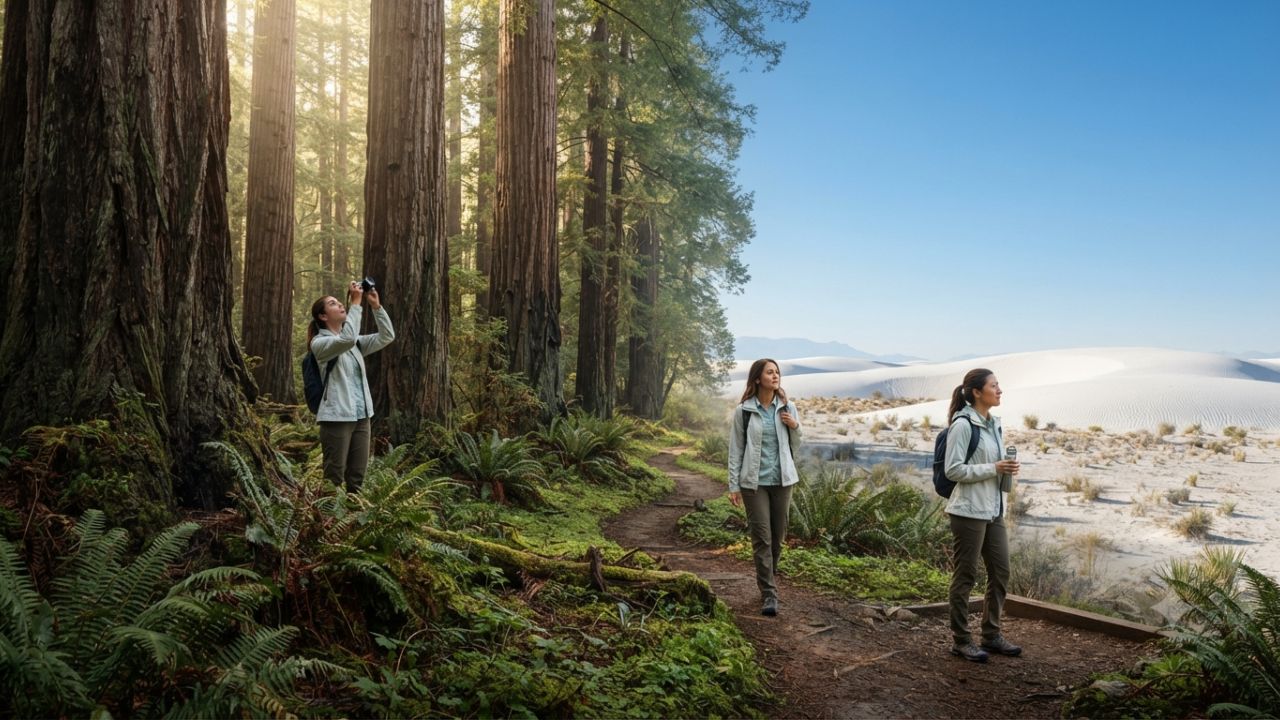
Image generated by AI
California and New Mexico are accelerating nature tourism initiatives in 2026, leveraging protected ecosystems including Redwood National and State Parks and White Sands National Park to meet growing global demand for eco-conscious travel, scenic road trips, and wilderness exploration. The strategic focus aligns public conservation funding with sustainable visitor management across federal and state park systems.
[SACRAMENTO, Calif.] — State tourism agencies in California and New Mexico are expanding collaborative nature tourism strategies in 2026, highlighting iconic national parks, protected forests, and desert landscapes to attract international and domestic travelers. Official conservation figures from the National Park Service (NPS) show increased visitor engagement centered on ancient coastal redwood ecosystems in Northern California and the world's largest gypsum dune fields in Southern New Mexico, complemented by coastal heritage corridors in Maryland.
Protected Landscape Management Across Key US Nature Destinations
Nature tourism growth across the United States relies on joint management models between federal agencies and state authorities. In Northern California, Redwood National and State Parks preserve ancient coastal redwood groves spanning more than 100,000 acres, managed co-equally by the National Park Service and California State Parks. In New Mexico, White Sands National Park protects rare geological formations while offering high-impact adventure photography and desert road trips.
Primary US Protected Nature Destinations and Management Frameworks
| Destination Area | Geographic Region | Principal Tourism Feature | Management Authority |
|---|---|---|---|
| Redwood National and State Parks | Northern California | Ancient coastal redwoods & Pacific coastline | National Park Service & California State Parks |
| White Sands National Park | Southern New Mexico | World's largest gypsum dune field | National Park Service |
| Chesapeake & Coastal Heritage Areas | Central Maryland | Maritime ecosystems & historic corridors | National Park Service & Maryland State Authorities |
California's Redwood National and State Parks Lead Forest Eco-Tourism
Redwood National and State Parks remain a primary anchor for West Coast eco-tourism. Situated in Northern California, the complex incorporates Redwood National Park along with Jedediah Smith Redwoods State Park, Del Norte Coast Redwoods State Park, and Prairie Creek Redwoods State Park.
Covering over 100,000 acres of combined protected land, the park system safeguards the tallest living trees on Earth alongside pristine river valleys, fern-filled canyons, and Pacific ocean bluffs. Joint park management strategies focus on habitat restoration, visitor trail maintenance, and controlled vehicle access to protect shallow redwood root systems while expanding low-impact hiking access.
Redwood National and State Parks Operational Specifications
| Resource Metric | Official Destination Specification |
|---|---|
| Geographic Location | Northern California, United States |
| Primary Ecosystem | Ancient coastal redwood forest & Pacific coastline |
| Key Attraction | Hyper-tall coastal redwoods (Sequoia sempervirens) |
| Protected Land Area | More than 100,000 acres under joint management |
| Tourism Classifications | Eco-tourism, wilderness hiking, scenic coastal road trips |
New Mexico Expands Desert Adventure Tourism and Heritage Corridors
New Mexico is building a distinct adventure travel profile by promoting its vast desert expanses, volcanic terrain, and cultural heritage routes. White Sands National Park, located in the Tularosa Basin, serves as the centerpiece of the state's outdoor tourism push. Visitors explore 275 square miles of brilliant white gypsum sand dunes, participating in hiking, backcountry camping, sandboarding, and sunset photography excursions.
Beyond White Sands, New Mexico's tourism network links desert wilderness areas with historic trade routes, supporting scenic drive itineraries that connect regional outdoor businesses, local lodging providers, and cultural centers.
New Mexico Adventure Tourism Attractions
| Destination Asset | Tourism Role and Visitor Appeal |
|---|---|
| White Sands National Park | Unique white gypsum dune landscape & photography tours |
| Chihuahuan Desert Corridors | Remote wilderness hiking & adventure travel routes |
| Historic Byways & Routes | Scenic drive road trips linking cultural heritage sites |
| State Conservation Zones | Wildlife viewing, night-sky astronomy, and outdoor recreation |
Comparative Analysis: Forest Eco-Tourism vs. Desert Adventure Travel
California and New Mexico present complementary approaches to US nature tourism. While California emphasizes dense, old-growth forest canopies and marine coastline experiences, New Mexico highlights wide-open desert vistas, geological anomalies, and high-altitude desert plateaus.
Structural Comparison: Redwood Eco-Tourism vs. New Mexico Desert Travel
| Travel Dimension | California Redwood Eco-Tourism | New Mexico Desert Tourism |
|---|---|---|
| Landscape Character | Old-growth forest canopy & Pacific bluffs | Desert basins, gypsum dunes & mountain plateaus |
| Primary Attraction | Giant coastal redwoods & fern canyons | White Sands gypsum dunes & volcanic fields |
| Visitor Activities | Forest hiking, river kayaking, wildlife viewing | Sandboarding, desert photography, scenic drives |
| Tourism Style | Temperate wilderness & forest conservation | Arid adventure travel & cultural heritage |
Maryland's Role Integrating Coastal and Historical Nature Tourism
Maryland complements Western forest and desert destinations by demonstrating how coastal eco-tourism intersects with historical preservation. Centered on the Chesapeake Bay, Maryland offers maritime trail networks, historic waterfront towns, and access to the Appalachian Mountains.
Park management strategies along the Chesapeake Bay watershed mirror Western conservation models, combining marshland habitat protection with regulated kayaking, birdwatching, and heritage tourism. Guidance from the U.S. Forest Service highlights the growing role of multi-state outdoor travel corridors in supporting regional economies.
Maryland Coastal and Heritage Tourism Features
| Destination Asset | Visitor Experience and Tourism Value |
|---|---|
| Chesapeake Bay Watershed | Maritime eco-tourism, kayaking, and wetland birdwatching |
| Historic Coastal Towns | Cultural heritage travel and waterfront dining |
| Appalachian Trail Corridors | Mountain hiking, trail running, and seasonal leaf-peeping |
| State Park Networks | Public camping, fishing, and outdoor family recreation |
Sustainable Visitor Management and Economic Impact
As nature tourism accelerates across California, New Mexico, and Maryland, park authorities prioritize sustainable infrastructure to handle rising visitor traffic without degrading natural resources. Strategic investments focus on shuttle transit networks, paved trail systems, educational signage, and leave-no-trace visitor campaigns.
These natural destinations generate substantial economic dividends for surrounding gateway communities, driving lodging bookings, equipment rentals, restaurant revenue, and local transport jobs.
Economic and Sustainability Impacts Across Key Destinations
| Destination Region | Conservation Priority | Economic and Local Community Impact |
|---|---|---|
| California Redwood Region | Old-growth forest restoration & trail care | Sustains North Coast lodging, tour guides, & coastal commerce |
| New Mexico Desert Zones | Gypsum dune protection & dark-sky preservation | Drives Southern New Mexico adventure travel & hospitality revenue |
| Maryland Coastal Watersheds | Bay ecosystem care & heritage preservation | Supports maritime tourism, local fisheries, & historic site visits |
Frequently Asked Questions
What makes Redwood National and State Parks unique?
Redwood National and State Parks in Northern California protect some of the tallest living trees on Earth across more than 100,000 acres of jointly managed federal and state land.
Where is White Sands National Park located?
White Sands National Park is located in Southern New Mexico's Tularosa Basin and protects the world's largest gypsum sand dune field.
How do federal and state agencies manage Redwood National and State Parks?
The park system operates under a co-equal management partnership between the National Park Service (NPS) and California State Parks, combining resources to manage conservation and public access.
Related Travel Guides
This article is for informational purposes. Flight routes, passenger regulations, visa rules, and transit advisories are subject to change by airlines and aviation authorities. Readers are advised to verify schedules and travel documentation with relevant carriers and border agencies before departure.
Related Stories

Madrid Expands Christmas Tourism for 2026–2027: 14 Million Lights, Giant Snowman, and International Visitor Growth from UK, US, and Mexico

Botswana Expands Luxury Safari Tourism with Kanana Nyana: Exclusive Eight-Guest Eco-Camp Opens in the Okavango Delta