
California High-Speed Rail Authority Weighs Fresno vs Hanford for Central Valley Heavy Maintenance Facility 2026
The California High-Speed Rail Authority is deciding between Fresno and Hanford for a critical Heavy Maintenance Facility, a move expected to create 2,100 long-term jobs and reshape Central Valley logistics.

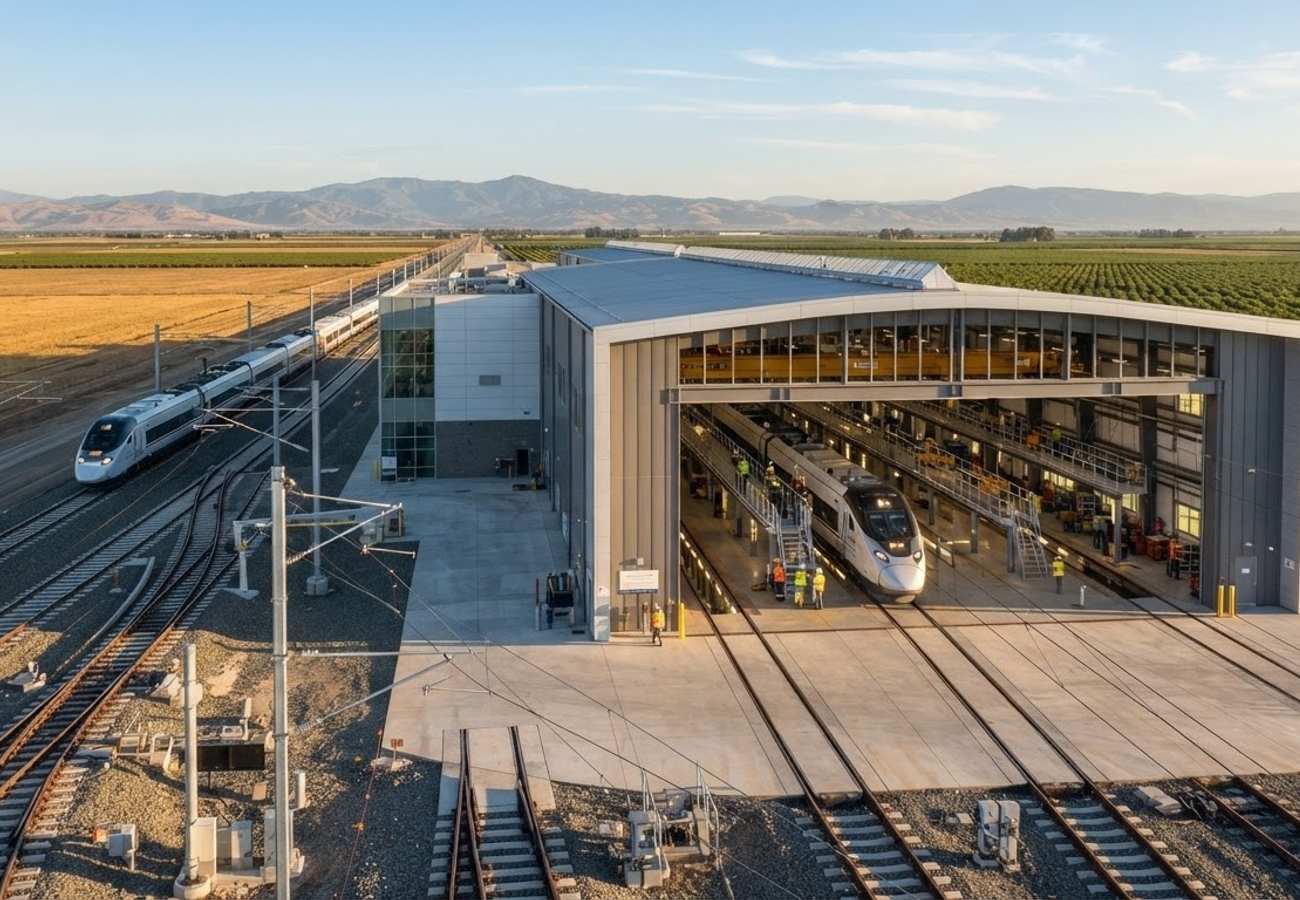
Image generated by AI
The California High-Speed Rail Authority is currently determining the location of its Central Valley Heavy Maintenance Facility (HMF), a decision that will dictate the operational reliability and economic trajectory of the region for decades.
The Authority is actively collecting public feedback between August 14 and September 14, 2026, to finalize the site for train inspections, retrofits, and major system repairs. While passenger stations garner the most headlines, the HMF serves as the technical backbone of the network, providing the capacity for large-scale component replacements and critical fleet performance management.
The selection process has narrowed from 11 initial sites down to two primary contenders: Fresno and Kings County (near Hanford). The decision hinges on operational requirements, land compatibility, environmental impact, and construction feasibility.
Critical Project Milestones and Public Engagement
The Authority has scheduled three primary public consultation events to gather stakeholder input on land use and environmental concerns:
- Fresno Public Meeting: August 25, 2026
- Hanford Public Meeting: August 26, 2026
- Virtual Public Meeting: August 27, 2026
Following this period, the Authority will prepare a Draft Environmental Impact Report/Environmental Impact Statement, slated for release in early 2027. The final environmental documentation is expected to reach the Board of Directors by mid to late 2027.
Comparative Analysis: Fresno vs. Hanford
The two shortlisted locations offer distinct strategic advantages for the California rail ecosystem.
| Category | Fresno Proposal | Hanford/Kings County Proposal |
|---|---|---|
| Location | Fresno, California | Near Hanford, Kings County |
| Role | Potential main heavy maintenance base | Potential regional infrastructure anchor |
| Employment Impact | Up to thousands of long-term positions | Up to thousands of long-term positions |
| Economic Opportunity | Expands existing urban workforce ecosystem | Could create new regional growth opportunities |
| Tourism Connection | Strengthens Fresno’s transport importance | Boosts Central Valley destination visibility |
| Decision Stage | Under environmental review | Under environmental review |
The Economic Catalyst: 2,100 Long-Term Jobs
A pivotal figure in this development is the projection of 2,100 potential long-term jobs. Our analysis suggests this represents more than mere employment; it is the foundation of a new industrial ecosystem.
A facility of this scale requires a concentrated workforce of engineers, technicians, and administrative staff, which invariably attracts a secondary layer of commercial investment. We expect to see a surge in demand for:
- Business-centric hospitality and hotels.
- Specialized technical suppliers and service providers.
- Local dining and retail infrastructure to support the daytime workforce.
For the Central Valley, this shifts the regional identity from a purely agricultural hub to a sophisticated transport and logistics corridor.
Why This Matters: The Logistics of Reliability
From a logistical perspective, the HMF is the most critical "unseen" component of the rail strategy. Many observers mistakenly believe that stations and track mileage are the primary drivers of success. However, for the end-user, reliability outweighs speed.
For travelers on these routes, the real impact is the reduction of operational risk. A strategically placed maintenance center ensures that technical checks and retrofits happen without disrupting the main line. Without this infrastructure, the system risks the same reliability issues that plague older rail networks, which would inevitably push passengers back toward road or air travel.
Furthermore, this development opens the Central Valley to a new demographic of domestic tourists. Faster, more reliable connections allow visitors from major urban centers to access agricultural regions and cultural attractions with predictability, transforming the region into a viable leisure destination.
Industry Outlook
The outcome of the Fresno-Hanford decision will serve as a blueprint for how California integrates heavy industrial support with passenger transit. As the project moves toward the 2027 final environmental review, expect a heightened focus on "transportation-oriented development" (TOD) around the winning site.
If the HMF successfully stabilizes the fleet's performance, we anticipate a measurable shift in short-haul travel patterns within California, as high-speed rail begins to compete directly with regional flights and interstate highway congestion.
The battle for the Central Valley's rail hub is as much about economic survival as it is about engineering.
Related Travel Guides
Disclaimer
This article is for informational and educational purposes only. It does not constitute legal, financial, or professional advice. While we strive to provide accurate and up-to-date information, travel policies, regulations, and conditions change rapidly. Always verify information with official sources before making travel decisions. Nomad Lawyer makes no representations about the accuracy, reliability, completeness, or suitability of the information provided. Readers should consult qualified professionals for advice specific to their circumstances. The views expressed in this article are those of the author and do not necessarily reflect the views of Nomad Lawyer.
Kunal K Choudhary
Co-Founder & Contributor
A passionate traveller and tech enthusiast. Kunal contributes to the vision and growth of Nomad Lawyer, bringing fresh perspectives and driving the community forward.
Learn more about our team →