
Air New Zealand Launches Revolutionary Skynest Bunk Beds on Economy Class, Reshaping Long-Haul Budget Travel
Breaking airline news and aviation industry updates for 2026.

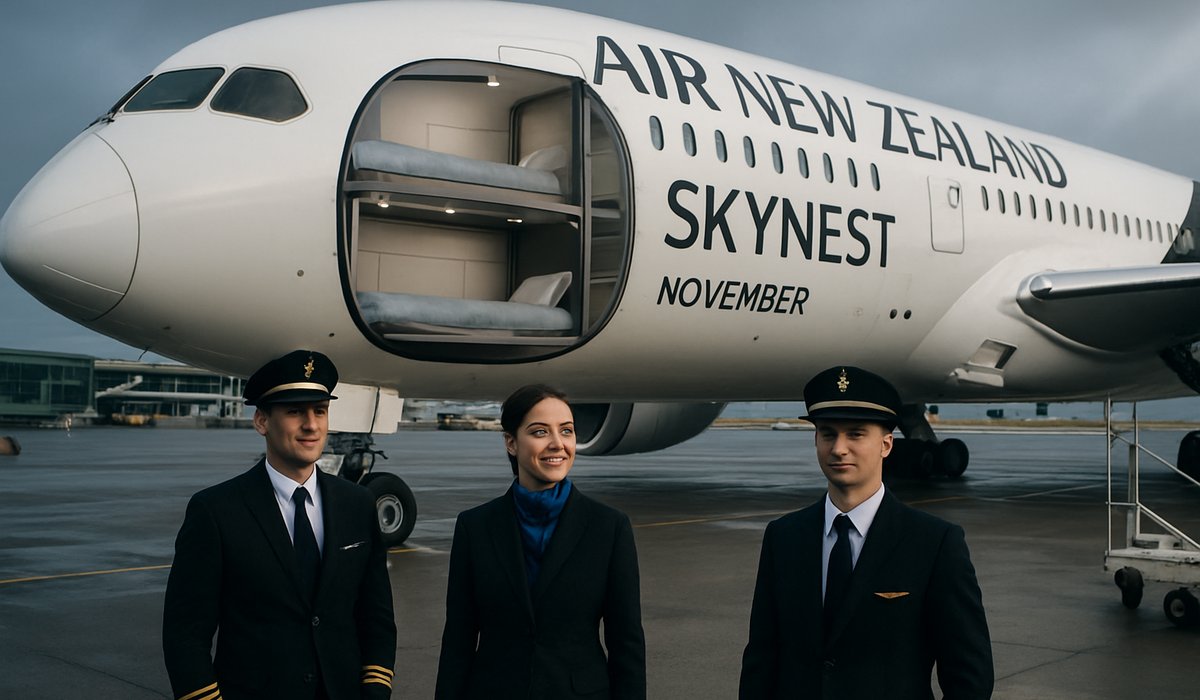
Image generated by AI
Air New Zealand Launches Revolutionary Skynest Bunk Beds on Economy Class, Reshaping Long-Haul Budget Travel
Star Alliance carrier introduces world-first sleeping pods for economy passengers starting November, disrupting traditional airline cabin configuration
Breaking: Economy Sleep Cabins Set to Revolutionize Long-Haul Air Travel
Air New Zealand has officially confirmed the commercial launch of its groundbreaking Skynest product, marking a watershed moment in aviation innovation. The New Zealand-based carrier will begin accepting bookings on May 18 for the revolutionary sleeping accommodation, with flights departing in November on its premium long-haul routes.
The initiative represents the airline industry's first serious attempt to introduce dedicated bunk-style sleeping facilities within economy class cabins, fundamentally challenging the traditional single-seat model that has dominated commercial aviation for decades. This development carries significant implications for how airlines approach passenger comfort on ultra-long-range flights, particularly in an increasingly competitive market where carriers seek differentiation beyond basic baggage charges and airline fees.
Skynest Deployment Strategy
Air New Zealand will initially deploy the Skynest product on its flagship Auckland-to-New York JFK service, one of the world's longest commercial routes spanning approximately 17 hours. This strategic placement positions the airline to capture demand from economy passengers seeking enhanced rest during extended flights without premium cabin pricing.
The introduction of stacked sleeping pods within economy cabin space represents a novel solution to a persistent industry challenge: balancing passenger comfort with aircraft revenue optimization. Rather than relegating sleep facilities exclusively to premium business class cabins—where jet fuel prices and operational costs already inflate pricing structures—Air New Zealand's approach democratizes the long-haul rest experience.
Industry Implications and Market Response
The Skynest launch signals shifting passenger expectations regarding value on intercontinental flights. As fuel costs continue impacting airline operating expenses and forcing carriers to reassess service offerings, innovations that enhance perceived value without dramatically escalating operational complexity gain strategic importance.
Competitors monitoring this development face pressure to evaluate cabin experimentation on their own fleet. The product's success could accelerate industry adoption of modular cabin solutions, particularly among carriers operating extended routes where passenger fatigue directly correlates with satisfaction metrics and loyalty.
Timeline and Availability
The May 18 booking date provides a six-month lead time for advance purchases, allowing Air New Zealand to gauge demand and potentially expand deployment across additional routes. The November launch aligns with peak southern hemisphere summer travel season, positioning the airline to capture international passengers undertaking extended journeys to New Zealand and Australian destinations.
Frequently Asked Questions
What exactly is the Skynest, and how does it work on long-haul flights? The Skynest consists of stacked bunk-style sleeping cabins integrated into economy cabin space, allowing passengers to reserve dedicated sleeping pods for ultra-long-haul flights rather than attempting rest in traditional narrow seats.
How much do Skynest bookings cost compared to standard economy fares? Pricing details remain under wraps pending the May 18 booking launch, though industry analysts expect premiums between economy and business class offerings rather than full business fares.
Which routes will offer Skynest accommodations? Initially, Skynest will be available exclusively on Air New Zealand's Auckland-New York JFK route beginning November 2024, with potential expansion pending demand assessment.
How does Skynest impact airline revenue models amid rising jet fuel prices? The product allows carriers to monetize previously underutilized cabin space while offering passengers premium rest experiences without constructing dedicated business-class suites, improving per-seat revenue efficiency.
Will other airlines implement similar bunk bed concepts? Multiple carriers are monitoring Air New Zealand's Skynest performance, suggesting potential industry adoption if customer satisfaction and revenue metrics prove favorable.
Related Travel Guides
Flight Delay Compensation Guide 2026
Understanding Airline Route Changes
Airport Security Process Updated (2026)
External Resources
Disclaimer
This article is for informational and educational purposes only. It does not constitute legal, financial, or professional advice. While we strive to provide accurate and up-to-date information, travel policies, regulations, and conditions change rapidly. Always verify information with official sources before making travel decisions. Nomad Lawyer makes no representations about the accuracy, reliability, completeness, or suitability of the information provided. Readers should consult qualified professionals for advice specific to their circumstances. The views expressed in this article are those of the author and do not necessarily reflect the views of Nomad Lawyer.
Raushan Kumar
Founder & Lead Developer
Full-stack developer with 11+ years of experience and a passionate traveller. Raushan built Nomad Lawyer from the ground up with a vision to create the best travel and law experience on the web.
Learn more about our team →