
Massive US Airport Expansions Set to Transform Air Travel in 2026; Multi-Billion Dollar Overhauls at Atlanta, JFK, LAX, and Denver Hubs Aim to End Travel Chaos and Airport Disruptions
The United States is witnessing a historic transformation of its aviation infrastructure. With billions of dollars being poured into Hartsfield-Jackson, JFK, LAX, and Denver, these massive expansion projects promise to redefine the passenger experience and eliminate systemic bottlenecks in 2026.

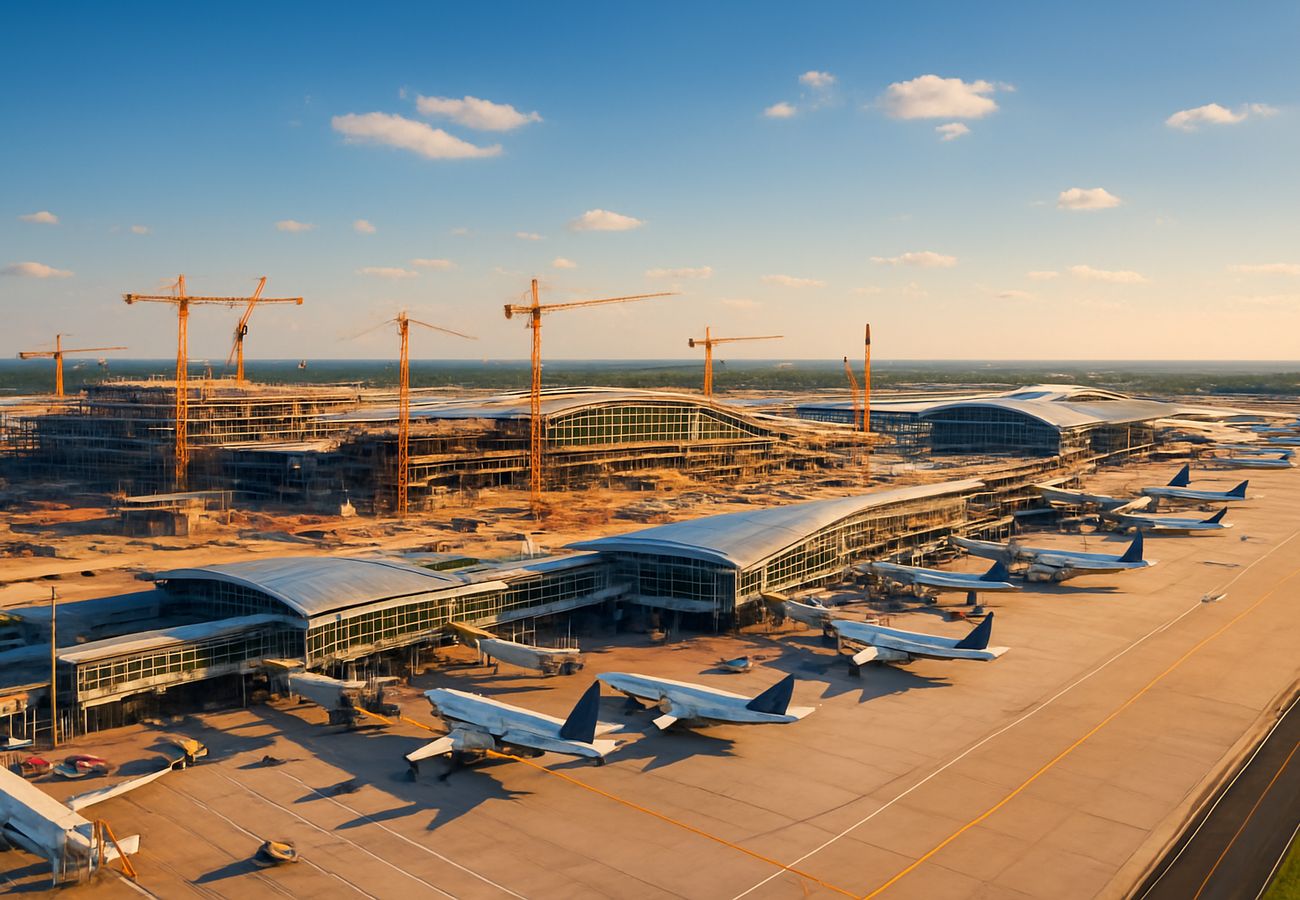
Reimagining the skies: US airports embark on a record-breaking multi-billion dollar expansion phase.
A New Era for American Aviation: Multi-Billion Dollar Airport Expansions at Atlanta, New York, and Los Angeles Hubs Set to Revolutionize the Passenger Experience and Curtail Travel Chaos
In a move that signals the most significant infrastructure shift in decades, the United States is currently executing a series of massive airport expansion projects designed to future-proof its aviation grid. Driven by a record-breaking surge in post-pandemic demand and the increasing complexity of global flight networks, major hubs including Hartsfield-Jackson Atlanta (KATL), New York JFK (KJFK), Los Angeles International (KLAX), and Denver (KDEN) are investing billions of dollars into terminal expansions, runway extensions, and integrated transport hubs. This airline news update confirms that these upgrades are not merely about size; they are about eliminating the systemic travel chaos and airport disruptions that have plagued the nation’s busiest gateways for years.
For the 2026 traveler, these transformations mean a definitive end to the "Congestion Era." By introducing automated security lanes, high-capacity international terminals, and seamless multi-modal connectivity, US airports are positioning themselves as world-class competitors in a rapidly evolving global market. As domestic and international travel continues to reach new heights, the focus has shifted toward efficiency, passenger comfort, and a bold commitment to sustainable aviation infrastructure.
Expanded Overview: The Post-Pandemic Infrastructure Surge
The rapid pace of expansion in 2026 is a direct response to a fundamental truth: the facilities that were sufficient a decade ago are now obsolete. Congestion during peak summer windows has reached a breaking point, forcing airports to accelerate their multi-year master plans. This aviation update highlights that the current wave of investment is focusing on "High-Throughput Architecture"—terminals designed to move millions of passengers with minimal friction.
Airlines are also playing a critical role in these transformations. By collaborating with airport authorities, carriers like Delta, American, and United are optimizing their terminal footprints to support larger aircraft and more frequent rotations. This reduction in per-passenger operational costs is often passed down to the consumer, making summer travel more accessible even as infrastructure quality reaches premium levels.
Section-Wise Breakdown: Hub-Centric Master Plans
Atlanta (KATL): Modernizing the World’s Busiest Terminal
Hartsfield-Jackson Atlanta International is cementing its status as the world’s primary transit point with a massive terminal modernization project. The addition of new gates and the complete overhaul of passenger concourses are designed to handle the "Centennial Surge" of travelers. By increasing the efficiency of its domestic-to-international transfer corridors, Atlanta is effectively reducing the likelihood of missed connections—a primary cause of passenger frustration during high-volume periods.
New York (KJFK): The Global International Gateway
At JFK International, the focus is on a complete reimagining of the international experience. Multi-billion dollar investments are being funneled into the expansion of international terminals to accommodate a record number of direct long-haul flights. The goal is to make JFK the premier global entrance to the United States, featuring state-of-the-art baggage handling systems and expansive premium lounges that reflect New York’s status as a world capital.
Los Angeles (KLAX): Seamless Multi-Modal Connectivity
LAX is undergoing a profound transformation with the development of an integrated transport hub. This project is designed to bridge the gap between the airport and the city center, offering passengers direct rail and shuttle links that bypass the notorious Southern California traffic. For the business traveler, this means a predictable, "Door-to-Gate" experience that eliminates the logistical travel chaos often associated with reaching one of the world’s busiest airports.
Denver (KDEN): Future-Proofing the Rocky Mountain Hub
Denver International is focusing on "Operational Resilience" by extending runways and significantly expanding its parking and terminal capacity. As a critical mid-continent hub, Denver must handle extreme weather and high volumes simultaneously. These expansions ensure that even during peak winter or summer seasons, the airport can maintain its high-frequency schedule without succumbing to the bottle-necks that cause systemic flight cancellations.
Key Expansion Projects: US Aviation Infrastructure 2026
The following table outlines the primary focus areas and investment targets for the nation's leading airports.
Major US Airport Expansion Profile 2026
| Airport Hub | Primary Project | Strategic Goal | Sustainability Focus |
|---|---|---|---|
| Atlanta (KATL) | Terminal Modernization | Hub Efficiency | Energy-Efficient HVAC |
| New York (KJFK) | Intl Terminal Expansion | Global Gateway Status | Solar-Integrated Facades |
| Los Angeles (KLAX) | Integrated Transport Hub | Multi-Modal Access | Electric Shuttle Fleet |
| Denver (KDEN) | Runway & Parking Ext | Winter/Peak Resilience | Green Materials/LEED |
| Miami (MIA) | Concourse Optimization | Latin American Feed | Waste Management Overhaul |
Passenger Impact: Shorter Lines and Richer Experiences
The primary beneficiary of the 2026 infrastructure boom is the passenger. Shorter waiting times at security and check-in are being achieved through the integration of biometric scanning and automated baggage drops. Beyond efficiency, the expanded airports are becoming "Destinations in Their Own Right," featuring curated dining, luxury shopping, and even cultural exhibits that celebrate the region’s heritage.
For the international tourist, these modern terminals create a positive first impression of the United States. For the business traveler, the expanded lounge networks and high-speed Wi-Fi mean that productivity is never interrupted. As airports evolve from mere transit points into sophisticated service hubs, the "Stress of Travel" is being replaced by an experience that is both rewarding and efficient.
Industry Analysis: Sustainability and Global Competitiveness
Aviation industry experts point out that the current expansion phase is uniquely focused on the environment. US airports are incorporating renewable energy sources, electric ground support vehicles, and green construction materials into their new terminals. This shift toward sustainable operations is not just about compliance; it is about future-proofing the industry against rising energy costs and evolving environmental standards.
Furthermore, these expansions are crucial for the United States to remain a competitive global aviation hub. As international airlines look for new ports of entry, the airports with the most modern facilities and the best connectivity will win the most lucrative routes. The multi-billion dollar investments we see today are the down payments on the nation’s economic and tourism growth for the next century.
Conclusion: Reimagining the Future of Flight
The massive airport expansions of 2026 represent a bold reimagining of what it means to fly in the United States. By combining sheer scale with sophisticated technology and a commitment to sustainability, hubs like Atlanta, JFK, and LAX are setting a new global standard for aviation excellence. For the traveler, the result is a journey that is faster, smoother, and more enjoyable than ever before. As these projects reach completion, the "Golden Age of Aviation" is being rebuilt on a foundation of world-class infrastructure.
Key Takeaways
- Billions of dollars in investments are transforming major US hubs like KATL, JFK, LAX, and Denver.
- Atlanta (KATL) is adding gates and modernizing terminals to handle record passenger volumes.
- JFK International is expanding international capacity to cement its status as a global gateway.
- LAX is developing an integrated transport hub to improve city-to-airport connectivity.
- Denver (KDEN) is extending runways to increase operational resilience during peak periods.
- Sustainability is a core focus, with energy-efficient systems and electric ground support being integrated.
- Passengers can expect shorter wait times, premium lounges, and more direct flight options.
/article-footer-standard
Related Travel Guides:
Disclaimer
This article is for informational and educational purposes only. It does not constitute legal, financial, or professional advice. While we strive to provide accurate and up-to-date information, travel policies, regulations, and conditions change rapidly. Always verify information with official sources before making travel decisions. Nomad Lawyer makes no representations about the accuracy, reliability, completeness, or suitability of the information provided. Readers should consult qualified professionals for advice specific to their circumstances. The views expressed in this article are those of the author and do not necessarily reflect the views of Nomad Lawyer.
Kunal K Choudhary
Co-Founder & Contributor
A passionate traveller and tech enthusiast. Kunal contributes to the vision and growth of Nomad Lawyer, bringing fresh perspectives and driving the community forward.
Learn more about our team →