Vietnam Airlines Expands Osaka–Hanoi Route: New Afternoon Flights, Europe Connections, and Bilateral Travel Guide 2026–2027

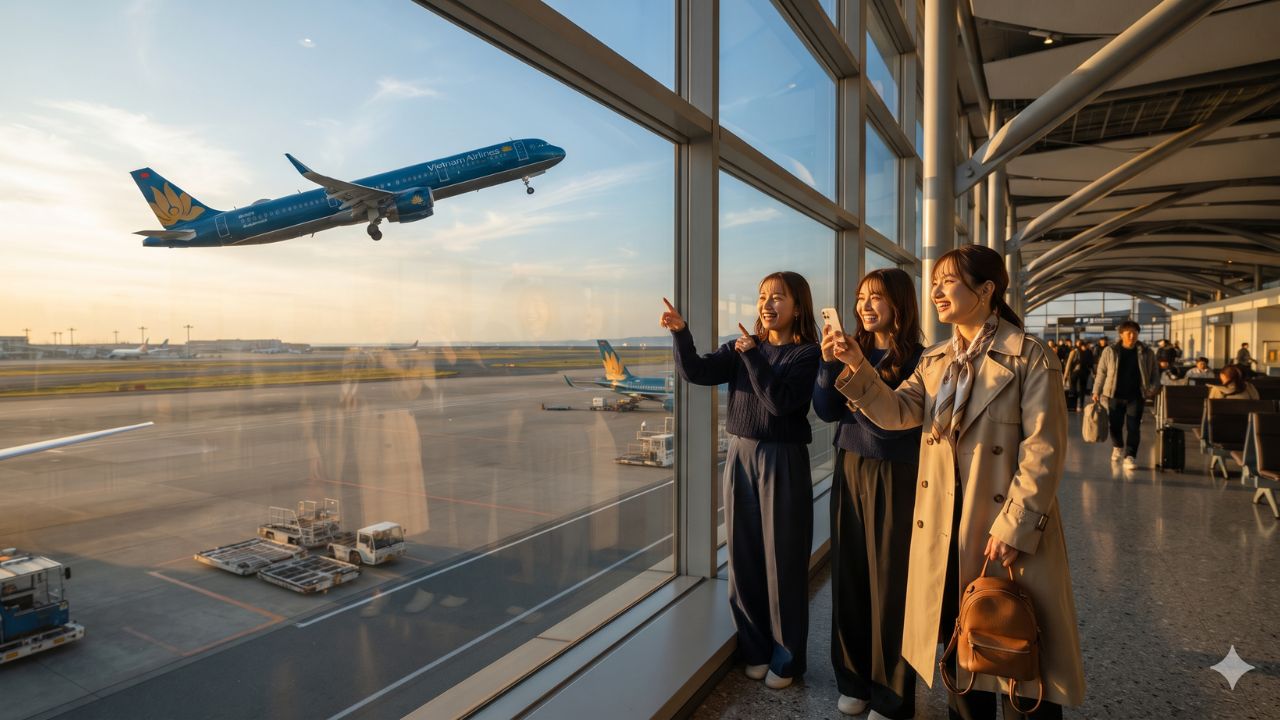
While travelers heading between western Japan and Europe often face expensive nonstop fares or congested Middle Eastern transfers, Vietnam Airlines' new afternoon service from Osaka to Hanoi unlocks a 19:15 evening arrival at Noi Bai that connects directly into midnight flight banks departing for Europe, Australia, and India. Launched on 26 October 2026, the four-times-weekly service boosts frequency on the Osaka–Hanoi route from seven to 11 return flights—a 57% capacity increase that expands to double-daily departures by 30 November 2026, supported by bilateral travel frameworks monitored by the Japan National Tourism Organization.
For international travelers based in Kansai or vacationing in Kyoto, the revised schedule transforms departure day logistics. Rather than rushing before dawn to catch early morning airport express trains, travelers can spend a relaxed morning exploring historic temples before boarding the afternoon departure. Concurrently, the schedule provides inbound visitors from Vietnam with a daylight flight into Osaka, creating new flexibility across two countries working toward a shared target to double two-way tourism arrivals by 2030.
The Winter Schedule Expansion: Moving from 11 Flights to Double-Daily Operations
The expansion between Kansai International Airport (KIX) and Noi Bai International Airport (HAN) follows an operational blueprint outlined by the Civil Aviation Authority of Vietnam on 9 July 2026. The initial phase debuted on Monday, 26 October 2026, operating on Mondays, Tuesdays, Thursdays, and Saturdays using single-aisle Airbus A321 aircraft.
Under this phased deployment, flight VN339 departs Kansai at 15:40 and touches down in Hanoi at 19:15 local time. With Japan operating two hours ahead of Vietnam, the scheduled flight duration is five hours and 35 minutes. In the reverse direction, flight VN338 departs Hanoi at 08:30 and reaches Osaka at 14:25 local time. These supplementary frequencies complement the established morning service, flight VN335, which departs Osaka at 10:00 and arrives in Hanoi at 13:35.
Starting 30 November 2026, Vietnam Airlines will introduce daily afternoon frequencies, with Wednesday departures commencing on 2 December. This transition establishes a permanent double-daily pattern—14 weekly return flights in each direction—extending throughout the northern winter schedule until 27 March 2027.
Connecting Through Noi Bai: International Transfers Versus Domestic Exits
The 19:15 evening touchdown in Hanoi creates contrasting travel itineraries depending on a passenger's ultimate destination:
International Transit to Europe, Australia, and India
For long-haul travelers utilizing Hanoi as a transfer hub, the 19:15 arrival fits smoothly ahead of Vietnam Airlines' late-night long-haul departure bank. Connecting flights to major European gateways—such as Paris Charles de Gaulle and Frankfurt—alongside services to Sydney, Melbourne, Perth, New Delhi, and Mumbai typically depart Noi Bai shortly after midnight.
International-to-international transit passengers holding onward boarding passes with luggage checked through remain entirely within Terminal 2. Following airport transfer signage, flyers report to the second-floor transfer desk before immigration, undergo dedicated transit security screening, and proceed upstairs to departure gates without entering Vietnam or handling customs declarations.
Entering Vietnam and Catching Domestic Connections
Travelers concluding their journey in the Vietnamese capital can step into central Hanoi quickly. The airport's public express Bus 86 departs outside Terminal 2, traveling directly to the Old Quarter and Hanoi Railway Station for a fixed fare of 50,000 Vietnamese dong (VND) per passenger.
However, travelers booking a domestic connection to Da Nang, Nha Trang, or Ho Chi Minh City face a multi-step transfer. Domestic flights operate out of Terminal 1. Arriving passengers must clear international immigration, collect checked luggage, clear customs, and board the complimentary outdoor airport shuttle bus to Terminal 1 to check in again. For this reason, a minimum connection buffer of three hours is strongly recommended for domestic transfers.
Osaka–Hanoi Flight Schedule and Operational Matrix: 2026–2027
| Flight Number & Segment | Departure & Arrival (Local Times) | Operating Days & Timeline | Aircraft Model | Key Route Utility & Transit Benefit |
|---|---|---|---|---|
| VN339: Osaka (KIX) to Hanoi (HAN) | 15:40 (Depart) -> 19:15 (Arrive) | Mon, Tue, Thu, Sat (from 26 Oct); Daily from 30 Nov 2026 | Airbus A321 | Connects into midnight flights to Europe, Australia, and India |
| VN338: Hanoi (HAN) to Osaka (KIX) | 08:30 (Depart) -> 14:25 (Arrive) | Mon, Tue, Thu, Sat (from 26 Oct); Daily from 30 Nov 2026 | Airbus A321 | Daylight arrival into Kansai; reach Kyoto or Osaka by late afternoon |
| VN335: Osaka (KIX) to Hanoi (HAN) | 10:00 (Depart) -> 13:35 (Arrive) | Daily year-round service | Wide-body / A321 rotation | Established morning flight for travelers needing afternoon Hanoi meetings |
| VN334: Hanoi (HAN) to Osaka (KIX) | 00:20 (Depart) -> 06:40 (Arrive) | Daily year-round service | Wide-body / A321 rotation | Red-eye flight maximizing full working days in Japan |
Bilateral Visitor Demand and Visa Regulations
The expansion reflects rapid growth in leisure and corporate travel between the two nations, supported by promotional initiatives from the Vietnam National Authority of Tourism.
Official data from Vietnam's Ministry of Culture, Sports and Tourism reveals that the country recorded approximately 757,500 visitor arrivals from Japan between January and October 2026. Japan ranked as Vietnam's seventh-largest inbound source market, representing roughly four out of every 100 foreign arrivals in a national total that reached 19.5 million travelers—a 13.8% surge over the same period in 2025.
In the opposite direction, records from the Japan National Tourism Organization documented 551,100 arrivals from Vietnam between January and September 2026, an increase of 4.0% year-on-year. While September arrivals saw a temporary dip to 45,800 travelers (down 9.2% compared to September 2025), two-way flows remain anchored by commercial partnerships, technical internships, and expanding cultural exchanges.
Entry regulations differ significantly between the two countries:
- Visiting Vietnam: Eligible Japanese citizens holding ordinary passports can enter Vietnam for up to 45 days without a visa under a multilateral waiver resolution valid through March 2028. Passports must maintain at least six months of validity beyond the arrival date.
- Visiting Japan: Vietnamese ordinary passport holders generally require a visa before travel. However, those participating in approved group package tours can obtain a 15-day single-entry tourist eVISA through registered travel agencies. The standard consular fee for a single-entry Japanese visa accepted in Vietnam between 1 July 2026 and 31 March 2027 is 2,590,000 VND.
Visitor Insider Tips: Managing Kansai Transfers and Hanoi Arrivals
Applying practical local knowledge ensures an unhurried journey on either side of the route:
- Take the Late Morning Haruka from Kyoto: Travelers concluding stays in Kyoto no longer need to check out before sunrise. Boarding the JR Kansai Airport Rapid or the limited-express Haruka train around 11:30 a.m. delivers you to Kansai Airport Station in approximately 75 minutes, leaving comfortable time to complete security and duty-free shopping before VN339's 15:40 departure. From Shin-Osaka, express trains require roughly 50 minutes.
- Verify Visa Waivers Against Extended Itineraries: If utilizing the 45-day visa exemption to enter Vietnam for a vacation before connecting onward to Cambodia or Thailand, ensure your departure ticket falls strictly within the 45-calendar-day window. Overstaying by even 24 hours results in administrative fines and immigration processing delays at Noi Bai.
- Utilize Hanoi Bus 86 for Affordable Old Town Access: Avoid aggressive taxi touts outside Noi Bai's international arrivals terminal. Walk to the second traffic island directly opposite the Terminal 2 exit to board the orange-and-yellow Express Bus 86. The bus is equipped with air conditioning, dedicated luggage racks, and provides direct transit to Hoan Kiem Lake for 50,000 VND.
- Keep eVISA Displays Active on Mobile Screens: If traveling on an eligible Vietnamese group eVISA into Japan, immigration officers at Kansai Airport require travelers to display the live electronic issuance notice on a connected smartphone or tablet. Static screenshots or printed PDF paper copies are rejected at customs counters.
Cultural and Environmental Context: Regional Trade and Heritage Preservations
The air corridor linking Kansai and Hanoi bridges two of Asia's most storied cultural heartlands. In western Japan, the historic capitals of Kyoto and Nara house World Heritage temples, bamboo groves, and traditional merchant quarters protected under strict national preservation laws, celebrated through the UNESCO World Heritage Centre. Across the Gulf of Tonkin, Hanoi's thousand-year-old Old Quarter, French colonial villas, and the ancient Imperial Citadel of Thang Long reflect layers of dynastic history and regional trade.
By introducing fuel-efficient Airbus A321 aircraft on point-to-point routes, Vietnam Airlines matches capacity directly to consumer demand without the excessive fuel burn associated with deploying half-empty wide-body airliners during shoulder seasons. Connecting secondary cultural hubs like Osaka directly with Southeast Asian capitals relieves air traffic pressure on Tokyo's saturated runways while distributing economic benefits to regional Japanese transit authorities and hospitality workers.
In addition, the growing exchange of independent travelers fosters community-level cultural understanding. When Japanese travelers venture into Hanoi to study traditional silk weaving in Van Phuc or sample street-side culinary traditions, and Vietnamese visitors travel across Kansai to experience traditional tea ceremonies and temple craftsmanship, tourism supports cultural preservation. Expanding direct flight options empowers travelers to build thoughtful, unhurried journeys that celebrate living heritage across East and Southeast Asia.
FAQ: Vietnam Airlines Osaka–Hanoi Flights 2026–2027
What is the flight schedule for the new Osaka to Hanoi afternoon departure?
Flight VN339 departs Kansai International Airport (KIX) at 15:40 and arrives at Hanoi's Noi Bai International Airport (HAN) at 19:15 local time, operating on an Airbus A321 with a flight duration of 5 hours and 35 minutes.
When do the afternoon Osaka–Hanoi flights become daily?
The service launched four times weekly on 26 October 2026 and transitions to daily operations on 30 November 2026, creating a double-daily schedule across the route through 27 March 2027.
Can Japanese citizens travel to Vietnam without a visa?
Yes. Japanese ordinary passport holders can enter Vietnam for tourism or business for up to 45 days without a visa, provided their passport has at least six months of remaining validity.
How do passengers transfer between international and domestic terminals at Hanoi Airport?
Passengers connecting to domestic flights must clear immigration, collect checked luggage, clear customs at Terminal 2, and take the free airport shuttle bus to Terminal 1 to check in again.
Strategic flight choices transform long airport layovers into rich, unhurried journeys connecting ancient capitals across Asia.
Related Travel Guides
- British Airways Resumes Dubai Flights: Unlocking Heritage Tourism, Licensed Guides, and Al Fahidi Hidden Treasures
- Delta's Austin–Arkansas Flights Reshape Regional Tourism Economics: Day Trips, Late Arrivals, and Visitor Spending 2027
- Hanoi Cultural Guide: Walking the 36 Guild Streets, French Quarter, and West Lake 2027 (Upcoming)
This article is for informational purposes. Flight routes, passenger regulations, visa rules, and transit advisories are subject to change by airlines and aviation authorities. Readers are advised to verify schedules and travel documentation with relevant carriers and border agencies before departure.
Related Stories

British Airways Resumes Dubai Flights: Unlocking Heritage Tourism, Licensed Guides, and Al Fahidi Hidden Treasures
Japan Overhauls Duty-Free Shopping: New Airport Tax Refund Rules at Narita, Haneda, and Kansai 2026