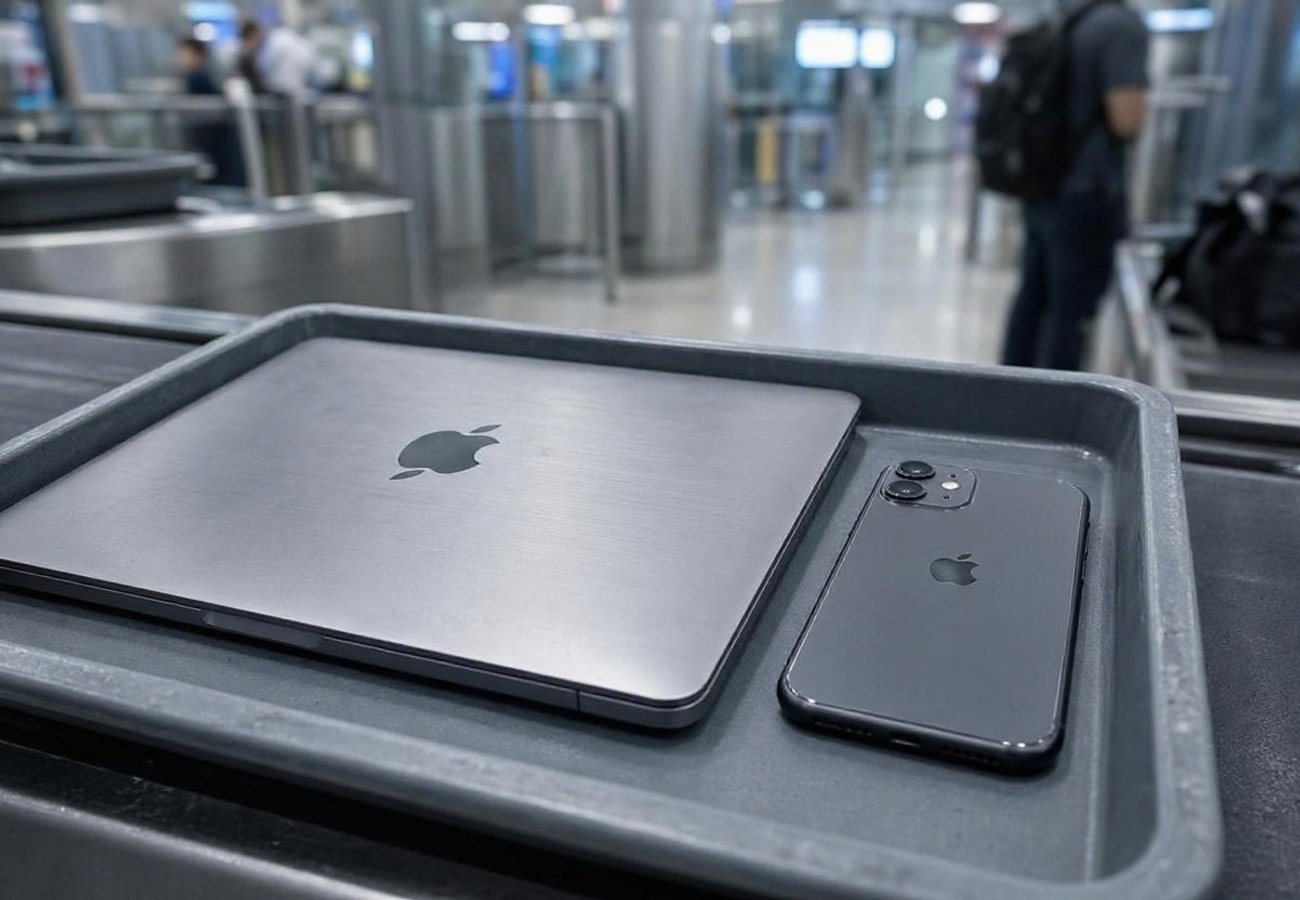
British Airways A380 Gate Delay at Miami: Lithium Battery Safety and Carry-On Rules Guide

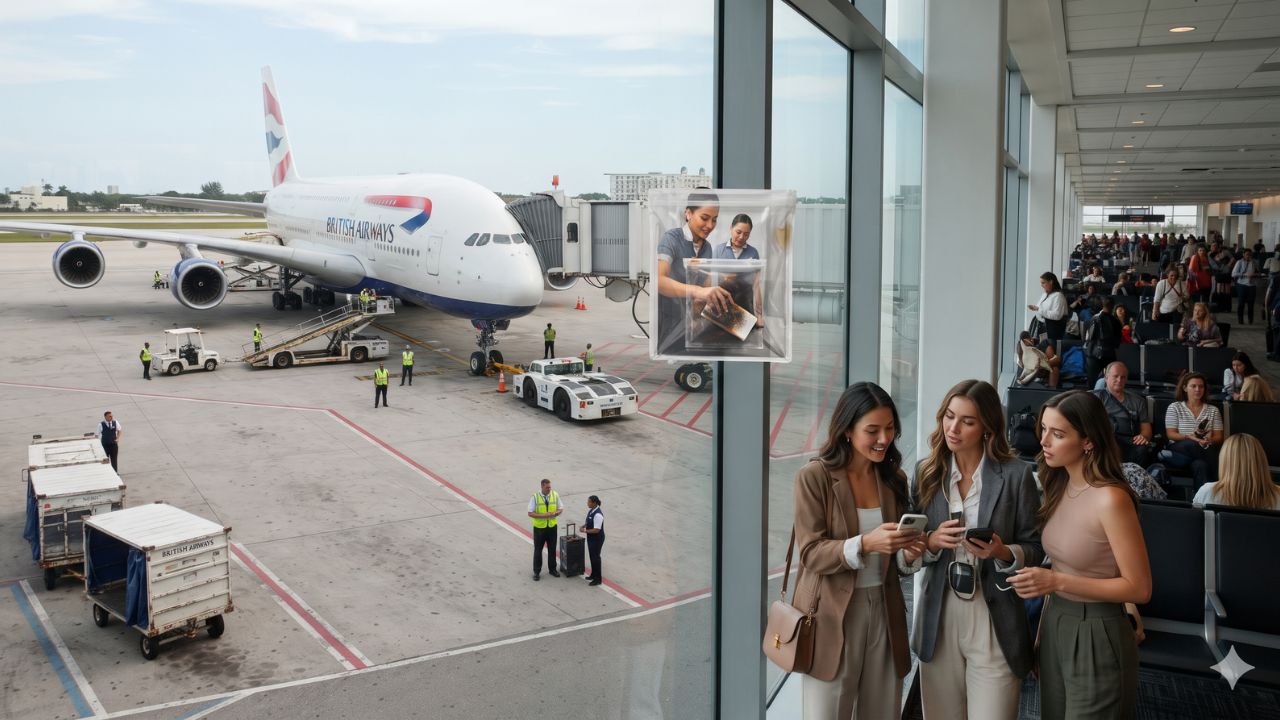
With hundreds of passengers boarded aboard an Airbus A380 superjumbo bound for London, British Airways flight BA026 was halted at the departure gate when a passenger's pocket power bank began radiating intense heat. The incident, which unfolded on 12 November 2026 at Miami International Airport (MIA), forced the flight crew to halt their 5:10 pm scheduled departure, request ground crews to reconnect the jet bridge, reopen the aircraft door, and safely remove the malfunctioning lithium-ion device from the cabin.
Thanks to swift crew coordination, the double-decker aircraft (registration G-XLEI) took off from Runway 27 at 5:41 pm—just 31 minutes behind schedule—and recovered the lost time across the Atlantic, touching down at London Heathrow (LHR) at 6:40 am on 13 November exactly on schedule, with zero reported injuries or airframe damage.
The close call serves as a timely reminder for international travelers: as portable electronics expand in capacity, understanding global civil aviation battery mandates is not merely a technicality, but an essential flight safety discipline.
Anatomy of the Incident: Why Thermal Runaway Matters
Portable power banks rely on high-density lithium-ion cells that store large quantities of energy in compact packages. When internal micro-defects, drop damage, or short-circuits compromise the separator membrane inside a cell, an electrochemical phenomenon called thermal runaway can trigger within seconds. The temperature within the battery spikes rapidly, generating toxic gases, smoke, and self-sustaining flames that standard fire extinguishers cannot easily extinguish.
On British Airways flight BA026, the alert occurred before the aircraft pushed back from the gate. Had the device begun smoking over the mid-Atlantic, the cabin crew would have been forced to deploy specialized thermal containment burn-bags, potentially initiating an unscheduled emergency diversion into Halifax or Gander.
By keeping the aircraft attached to the gate, the pilots enabled ground personnel to safely remove the device into an exterior open-air environment. This protocol illustrates why international bodies such as the Federal Aviation Administration (FAA), the International Air Transport Association (IATA), and the UK Civil Aviation Authority (CAA) strictly forbid spare lithium batteries and power banks in checked baggage.
| Battery Type & Capacity | Watt-Hour (Wh) Rating | Checked Baggage Policy | Carry-on Cabin Baggage Policy | Airline Approval Requirement |
|---|---|---|---|---|
| Standard Power Banks | Up to 100 Wh (~27,000 mAh) | STRICTLY PROHIBITED | Permitted in carry-on bag only | No prior airline approval needed |
| Medium Capacity Units | 100 Wh to 160 Wh | STRICTLY PROHIBITED | Permitted in carry-on (Limit 2 spares) | Mandatory airline approval |
| Large Industrial Batteries | Over 160 Wh | STRICTLY PROHIBITED | STRICTLY PROHIBITED | Transported only as declared cargo |
| Installed Device Batteries | Inside laptops/phones (<100Wh) | Discouraged (must be turned OFF) | Permitted in cabin baggage | Standard carry-on permission |
Calculating Your Battery's Capacity: The Math Every Traveler Must Know
Aviation regulations measure battery legality in Watt-hours (Wh), yet consumer battery manufacturers almost universally label power banks in milliamp-hours (mAh). Carrying a non-compliant battery can result in confiscation at airport security checkpoints or flight boarding denial.
To determine whether your portable charger is flight-legal:
- Locate the voltage (V) and capacity rating (mAh) printed on the battery casing. Most standard power banks operate at a nominal cell voltage of 3.7 Volts.
- Apply the international conversion formula: $$\text{Watt-hours (Wh)} = \frac{\text{Milliamp-hours (mAh)} \times \text{Voltage (V)}}{1000}$$
- Example: A standard 20,000 mAh power bank operates at 3.7V: $$\frac{20000 \times 3.7}{1000} = 74\text{ Wh}$$ Because 74 Wh is well under the 100 Wh threshold, it is fully permitted in cabin luggage without airline pre-approval.
Any power bank missing its factory specification label or showing worn-off text will be confiscated by airport screening officers, as screeners cannot verify the underlying cell capacity.
Visitor Insider Tips: In-Flight Electronics Safety Protocols
Navigating international security checks and long-haul flights with multiple electronic devices requires following these field-tested precautions:
Protecting Battery Terminals
- Prevent Short-Circuits in Transit: Keep portable power banks inside individual neoprene pouches or place electrical insulating tape over exposed USB ports. Loose metal objects in your daypack—such as house keys, coins, or metal pens—can slide into open charging ports and cause an instantaneous short-circuit.
The Motorized Seat Trap in Premium Cabins
- Never Adjust Your Seat if Your Phone Drops: On long-haul flights featuring lie-flat business or first-class suites, dropping a smartphone, tablet, or power bank into the seat mechanism is one of commercial aviation's leading cabin fire hazards. If your device slips between the cushions, do not press the seat adjustment buttons. Crushing the battery within the motorized metal tracks will puncture the lithium cells and ignite a fire. Immediately summon a flight attendant, who will retrieve the device using specialized tools.
Identifying Defective Units Early
- Watch for Physical Swelling: Inspect your power banks before packing. If the battery casing displays slight warping, bulging, hairline cracks, or feels hot to the touch while idle, dispose of it at a certified municipal hazardous waste depot immediately. Never bring a swollen battery through an airport terminal.
Regulatory Consistency and Passenger Cooperation
The safe resolution of the Miami Airbus A380 incident underlines the reliance of modern aviation on passenger compliance. Airlines cannot physically inspect every personal carry-on bag for damaged batteries; safety relies on travelers being transparent about their equipment.
Airport operators globally are modernizing security screening checkpoints with computed tomography (CT) scanners that generate 3D volumetric images of cabin baggage, allowing screeners to identify uncertified battery packs instantly. By following civil aviation guidelines, keeping batteries in the cabin, and promptly alerting flight attendants whenever a device overheats, passengers play an active role in maintaining flight safety across global airspace.
FAQ: Flying with Power Banks and Lithium Batteries
Are portable power banks allowed in checked luggage?
No. International aviation safety regulations strictly prohibit loose power banks and spare lithium-ion batteries in checked baggage due to the risk of undetected cargo fires.
What is the maximum power bank capacity allowed on commercial flights?
Passengers can carry power banks up to 100 Watt-hours (approximately 27,000 mAh at 3.7V) in carry-on luggage without airline approval. Units between 100 Wh and 160 Wh require airline authorization.
What happened to British Airways flight BA026 in Miami?
An overheating passenger power bank was detected before departure. The crew reconnected the jet bridge, removed the device safely, and departed 31 minutes late, arriving at London Heathrow on time.
What should I do if my power bank gets hot during a flight?
Notify a flight attendant immediately. Do not attempt to cool the device with ice or cover it with blankets; cabin crew are trained to submerge overheating batteries in specialized fire-containment bags.
Related Travel Guides
- American Airlines Boosts Miami to St. Thomas Flights: Two-Island USVI Winter Travel Guide
- Asia Aviation Crisis: Over 4,200 Flights Delayed as Fog, Cyclones, and Airspace Rules Strike Hubs
- Air France AF702 Declares Emergency Over France: 263-Tonne Overweight Landing and Passenger Guide
Check your battery ratings before departure, pack all power banks in your carry-on, and keep international flights safe for everyone on board.
This article is for informational purposes. Flight routes, passenger regulations, visa rules, and transit advisories are subject to change by airlines and aviation authorities. Readers are advised to verify schedules and travel documentation with relevant carriers and border agencies before departure.
Related Stories
British Airways Boeing 787 Dreamliner Stranded on Muddy Grass Verge During Heathrow Departure to Lagos

British Airways Revives Long-Haul Meal Pre-Orders on Las Vegas Flights: Inside the World Traveller Plus Dining Trial