Air France AF702 Declares Emergency Over France: 263-Tonne Overweight Landing and Passenger Guide

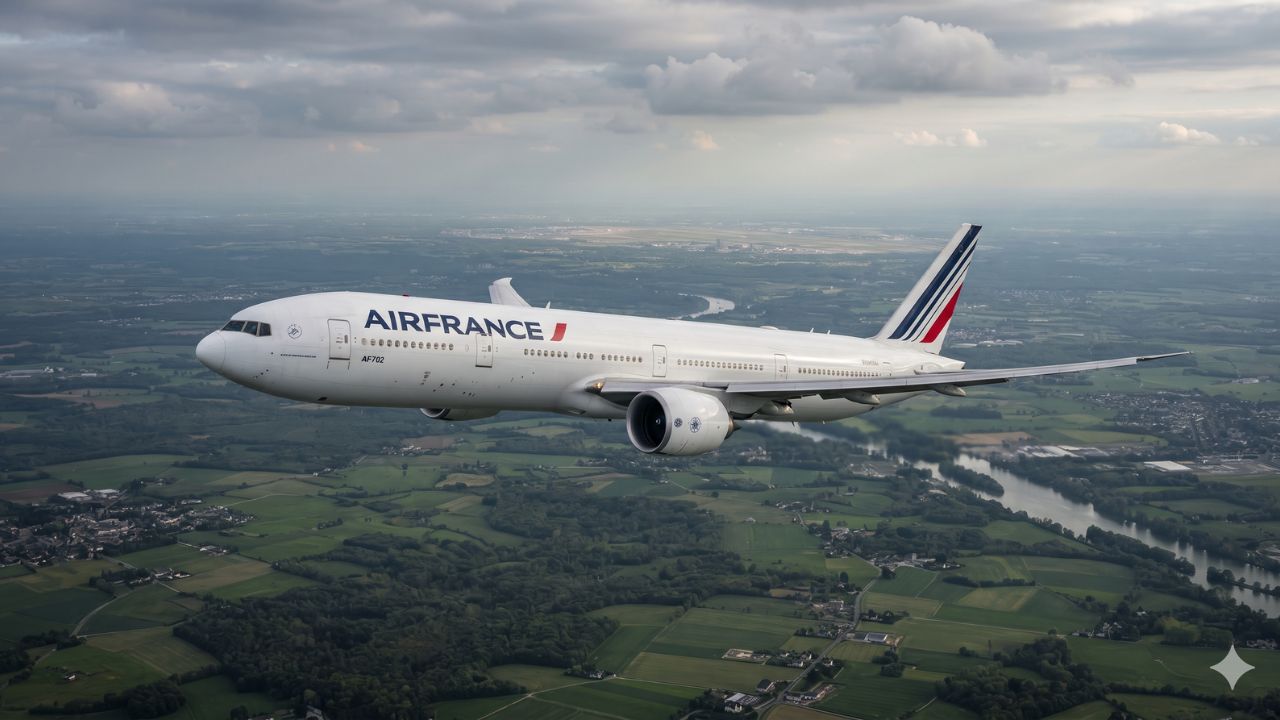
Carrying a staggering 263 tonnes of aircraft, passengers, and heavy transcontinental jet fuel, Air France flight AF702 was cruising at 32,000 feet when its flight crew transmitted transponder emergency code 7700 and executed an immediate overweight landing without dumping fuel. The widebody Boeing 777-300ER, operating a scheduled long-haul flight from Paris Charles de Gaulle (CDG) to Félix-Houphouët-Boigny International Airport in Abidjan, Côte d'Ivoire, had departed the French capital on Tuesday, 17 November 2026, at 14:32 Central European Time. While crossing the skies over the Centre-Val de Loire region, an urgent operational issue prompted the flight crew to halt their climb toward West Africa, reverse course to the northwest, and head back toward the Paris region.
The emergency diversion highlights one of commercial aviation's most demanding maneuvers: landing a fully fueled widebody airliner tens of tonnes above its maximum certified structural landing weight, requiring delicate aerodynamic handling and emergency ground coordination.
The Flight Timeline: From Transcontinental Climb to Squawk 7700
Flight AF702 represents a vital air corridor linking France with West Africa's leading economic center. The aircraft assigned to the route, an extended-range Boeing 777-300ER bearing French civil registration F-GSQB, took off from Paris Charles de Gaulle's northern runway complex at 14:32 CET. As the widebody climbed through 32,000 feet over central France, telemetry monitored by air traffic control recorded the pilots selecting transponder code 7700—the universal international squawk code indicating an in-flight emergency that grants immediate routing priority over all surrounding traffic.
Instead of holding over rural airspace to jettison fuel through wingtip jettison nozzles, the captain informed air traffic controllers of an estimated landing weight of 263 tonnes and requested direct vectoring for an overweight landing. Air traffic controllers cleared surrounding departure corridors, positioning emergency response vehicles along the runway perimeter at Paris Aéroport Charles de Gaulle as standard operating procedure while the aircraft made its descending approach from the northwest.
While the technical nature of the emergency was not formally specified in preliminary reports, the decision to return immediately without dumping fuel suggests an urgent operational requirement to get the aircraft on the ground rather than spending 20 to 30 minutes burning or releasing fuel over designated offshore or high-altitude dumping corridors.
| Flight Metric / Parameter | Official Recorded Data | Aeronautical & Safety Context |
|---|---|---|
| Flight Number & Route | Air France AF702 (CDG → ABJ) | Paris Charles de Gaulle to Abidjan, Côte d'Ivoire |
| Aircraft Model & Registration | Boeing 777-300ER (F-GSQB) | High-capacity long-haul twin-engine airliner |
| Departure Time (CET) | 14:32 Central European Time | Scheduled afternoon departure from Terminal 2E |
| Peak Cruise Altitude | Approximately 32,000 feet | Cruising above Centre-Val de Loire before turnaround |
| Emergency Code Selected | Squawk 7700 | Universal beacon code granting immediate ATC priority |
| Reported Landing Weight | 263 metric tonnes | Overweight landing executed without fuel dumping |
| Regulatory Framework | DGAC / EASA Safety Protocols | Strict post-landing brake & structural airframe checks |
The Mechanics of an Overweight Landing: Why Pilots Skip Fuel Jettison
For passengers aboard a long-haul twin-jet, turning around shortly after departure presents a fundamental physics challenge. Airplanes are engineered with a maximum takeoff weight (MTOW) significantly higher than their maximum landing weight (MLW). The extra margin accounts for the heavy fuel load needed to traverse thousands of miles across the Sahara Desert and Gulf of Guinea.
When a sudden emergency occurs, pilots face a tactical decision governed by safety standards overseen by the European Union Aviation Safety Agency (EASA):
- Fuel Dumping: Opening jettison valves to spray thousands of gallons of kerosene into the atmosphere at high altitude to bring the jet down to its certified structural landing weight.
- Immediate Overweight Landing: Flying directly to the nearest suitable runway at heavy gross weight when the operational issue makes remaining aloft unsafe.
The Boeing 777-300ER airframe is designed to safely execute overweight landings up to its maximum takeoff structural limits, provided the pilots adhere to reduced sink-rate flare techniques. Touching down at 263 tonnes places tremendous kinetic strain on the aircraft's multi-disc carbon brake assemblies. As the aircraft decelerates, brakes absorb extreme thermal energy, requiring airport fire and rescue crews to inspect the landing gear with thermal imaging cameras to ensure tire fuse plugs do not blow or ignite hydraulic fluid.
Passenger Rights and Rebooking on the West African Corridor
A long-haul diversion creates immediate logistical complications for travelers connecting between Europe and West Africa. For passengers aboard AF702, statutory consumer protections governed by the Direction Générale de l'Aviation Civile (DGAC) and European Union Regulation EU261 mandate specific carrier responsibilities:
Mandatory Duty of Care
Upon returning to Paris Charles de Gaulle, Air France is legally obligated to provide passengers with complimentary meals and refreshments proportionate to their wait time, access to communications, and hotel accommodation if replacement flights are scheduled for the following day.
Rebooking Routing Options
The Paris-to-Abidjan route is heavily booked by business travelers, diplomats, and diaspora families. If Air France cannot provide a replacement Boeing 777 within several hours, passengers can request rebooking onto partner SkyTeam carriers or alternative airlines serving West Africa, including connections through Brussels, Casablanca, or Istanbul.
Financial Compensation Thresholds
Under EU261 regulations, flights exceeding 3,500 kilometers delayed by more than four hours qualify for €600 per passenger in statutory cash compensation, provided the underlying issue was within the airline's technical control (e.g., standard component malfunction) rather than an unpreventable external emergency (such as a bird strike or severe air traffic closure).
Visitor Insider Tips: Navigating Unexpected Long-Haul Layaways at CDG
When a long-haul intercontinental flight turns back to Paris Charles de Gaulle, travelers face Europe's most complex terminal layout. Use these localized transit strategies:
Managing Terminal 2E Logistics
- Target Central Rebooking Desks: Air France long-haul flights operate primarily from Terminal 2E (spanning Gates K, L, and M). In a diversion, lines at gate service counters quickly back up. Exit the gate concourse and head to the primary customer service center near the central departure hall, or access the Air France mobile app to re-select seats on replacement flights before customer service queues form.
- In-Terminal Transit Lodging: If you are a non-EU passport holder without a Schengen transit visa, you cannot exit immigration into landside airport hotels. Head to YOTELAIR, located inside the international transit lounge of Terminal 2E (Gate L), which offers airside cabins with private showers bookable by the hour.
Baggage and Document Handling
- Do Not Reclaim Checked Bags on Same-Day Replacements: If the airline substitutes another Boeing 777 for a same-day departure, checked luggage is transferred airside between aircraft holds by baggage handlers. Attempting to retrieve luggage will forfeit your boarding pass and trigger lengthy customs re-screening.
- Preserve Digital Boarding Passes: Keep offline screenshots of your original AF702 boarding passes and baggage claim tags. Flight-tracking screenshots showing the squawk 7700 emergency code provide vital documentation when submitting EU261 care expense claims.
Environmental Considerations: Fuel Jettison vs. Runway Safety
The choice to execute a 263-tonne overweight landing reflects an evolving environmental calculation in modern aviation. Fuel dumping—while aerodynamically safe at high altitudes where kerosene atomizes into vapor—inevitably releases hydrocarbons into the upper troposphere.
By utilizing advanced carbon-matrix brakes and precise instrument landing systems (ILS), modern long-haul aircraft like the Boeing 777-300ER can safely land heavy on long runways like CDG's 4,215-meter northern strips, sparing rural regions like Centre-Val de Loire from fuel dumping. While the aircraft must subsequently undergo mandatory non-destructive structural inspections before returning to commercial flight, prioritizing an immediate safe return protects passengers and minimizes environmental disruption.
FAQ: Air France AF702 Emergency Diversion
What caused Air France flight AF702 to divert back to Paris?
The flight declared an in-flight emergency by squawking code 7700 while climbing through 32,000 feet over central France, prompting the flight crew to execute a precautionary return to Paris CDG.
What is an overweight landing in commercial aviation?
An overweight landing occurs when an aircraft touches down at a weight exceeding its certified maximum landing weight, requiring reduced landing speeds, gentle flare angles, and post-landing thermal brake checks.
Did AF702 dump fuel before landing?
No. Pilots reported an estimated landing weight of 263 tonnes and landed directly at Paris Charles de Gaulle without jettisoning fuel.
What passenger compensation applies to long-haul diversions under EU261?
If the delay exceeds four hours and results from a technical issue within airline control, passengers on flights over 3,500 km are entitled to up to €600 in cash compensation alongside hotel and meal care.
Related Travel Guides
- US Aviation Expansion 2027: Nonstop Routes Reshape Seattle, San Francisco, and Regional Hubs
- Hyatt and Delta Loyalty Alliance Goes Live: Double-Dipping Points, Free Nights, and Sky Club Access
- Istanbul and Madrid Reshape European Aviation: ACI Rankings and Traveler Hub Guide 2026
Know your passenger entitlements, keep your digital documents accessible, and trust the proven engineering that keeps transcontinental aviation safe.
This article is for informational purposes. Flight routes, passenger regulations, visa rules, and transit advisories are subject to change by airlines and aviation authorities. Readers are advised to verify schedules and travel documentation with relevant carriers and border agencies before departure.
Related Stories

Air France AF702 Declares Inflight Emergency and Diverts to Paris: Overweight Landing and Passenger Rights
Europe Faces Aviation Gridlock: Over 1,600 Flight Delays Across Heathrow, Madrid, and Schiphol