
Brazil Wellness Travel Beyond the Beach: From Chapada Diamantina to Caldas Novas, Six Restorative Escapes for 2026
Brazil's record 9.28 million international visitors in 2025 are driving a massive wellness revival across thermal springs, karst rivers, and rainforest sanctuaries.

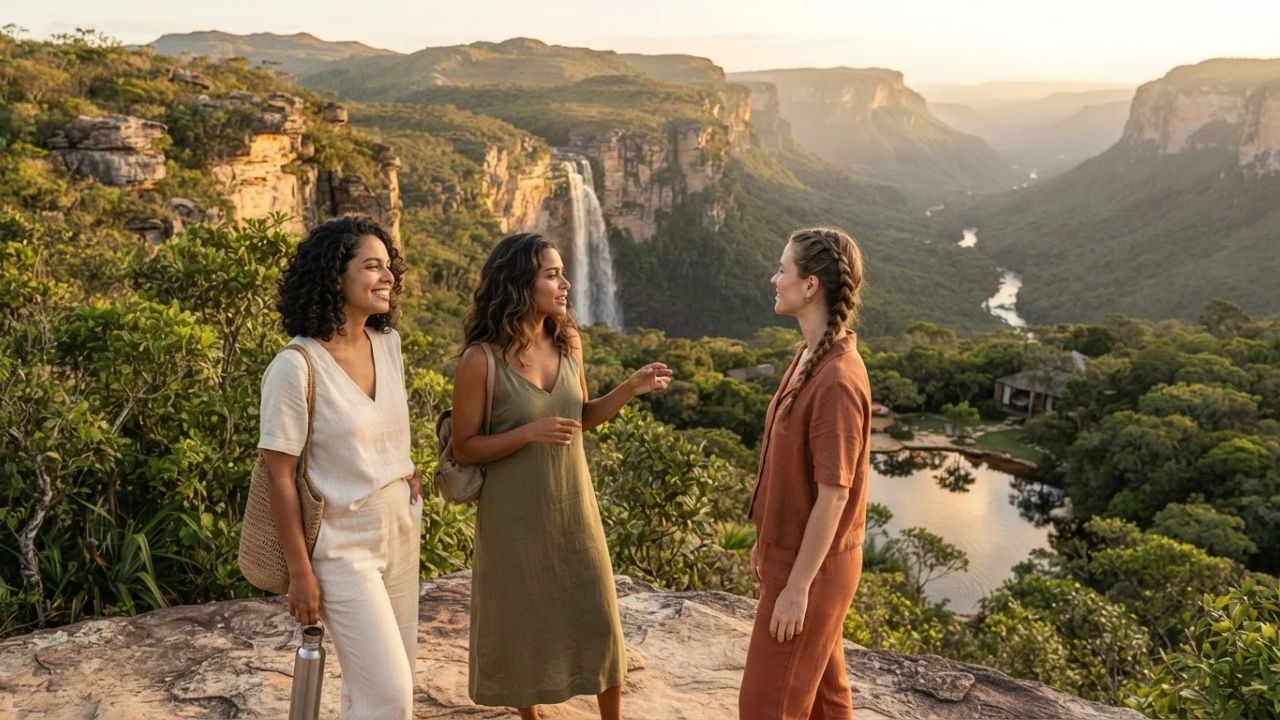
Image generated by AI
While Brazil celebrated an all-time record of 9,287,196 international arrivals in 2025—surging 37.1% over the prior year—the country's most compelling travel transformation is taking place far from urban coastal sands. Discerning global travelers are bypassing crowded Atlantic beach strips to head inland toward geothermal hydrothermal basins that welcome two million annual bathers in Caldas Novas, and subterranean limestone grottos like Bonito's Gruta do Lago Azul, where 75,376 eco-travelers descended to swim beside sapphire waters in 2025. This surge signals a fundamental realignment toward slow, restorative exploration rooted in ancient mineral springs, protected river corridors, and pristine mountain tablelands.
The Rise of Brazil's Restorative Travel Circuits
Official figures compiled by Brazil's Ministry of Tourism, the national promotion agency Embratur, and the Federal Police trace an extraordinary five-year resurgence across the country. Following pandemic disruptions that suppressed foreign arrivals to 745,871 in 2021, overseas visitation rebounded 386.4% to 3,630,031 in 2022, climbing another 62.8% to 5,908,341 in 2023, and reaching 6,773,619 in 2024. The leap to 9,287,196 visitors in 2025 marked the strongest statistical performance in the nation's recorded history.
Regional demand patterns demonstrate that travelers seek deeper restorative journeys rather than quick sightseeing stops. South American neighbors generated 64.48% of that record volume with nearly six million travelers, European source markets contributed 1.77 million, North America supplied 984,684 visitors, and Asian nations sent 312,438 arrivals. Commercial aviation carried approximately 66% of these international guests, while cross-border overland routes handled 31%. As flight frequencies into state capitals expand, travelers are using regional transit connections to design multi-day itineraries that balance thermal recovery with untouched wilderness.
Instead of confining themselves to sterile spa lobbies, visitors are discovering that Brazilian wellness is inherently pluralistic. It encompasses mountain walking among the quartz-laden cliffs of Chapada Diamantina, drifting down subterranean karst rivers in Mato Grosso do Sul, and soaking in natural sulfur waters throughout São Paulo and Minas Gerais.
What Makes Brazil's Wellness Geography Different
The geographical variety of Brazil's interior creates six distinct wellness environments, each shaped by unique geology and cultural traditions:
1. Caldas Novas, Goiás: The Hydrothermal Powerhouse
Caldas Novas anchors the world's largest hydrothermal pocket, where subterranean rainwater heats deep within the earth before rising to the surface at temperatures between 95°F and 122°F. State authorities report that the municipality welcomes approximately two million tourists annually. In national search interest monitored by the Ministry of Tourism, Caldas Novas ranked as Brazil's second most-queried travel attraction, logging 137,133 searches in 2024 and 121,413 in 2025 despite an 11.5% cooling in online volume. Beyond the thermal pools, the adjoining Parque Estadual da Serra de Caldas Novas protects rugged savanna ridges where hikers sweat along forest paths before soaking in natural waterfalls.
2. Águas de São Pedro, São Paulo: Compact Spa Heritage
Smaller and markedly more contemplative than Caldas Novas, Águas de São Pedro centers on its public SPA Thermal facility, renowned for sulfurous immersion baths, therapeutic clays, and twenty distinct massage therapies. In 2026, the town joined forces with neighboring São Pedro and Brotas to establish the integrated Águas e Aventuras Tourist District. Spanning 177 attractions, the territory recorded roughly 1.5 million visitors in 2025, with an ambitious regional target of three million annual travelers supported by over R$1 billion in projected infrastructure investment. The regional economy currently sustains 5,000 direct tourism positions and over 8,000 total jobs at an average 60% hotel occupancy rate.
3. Poços de Caldas, Minas Gerais: Belle Époque Mineral Baths
Cradled within an ancient volcanic caldera in the Serra da Mantiqueira, Poços de Caldas pairs mineral-water hydrotherapy with grand twentieth-century architecture at the historic Thermas Antônio Carlos complex. Municipal forecasts projected nearly two million visitors in 2025, generating up to R$1.2 billion in economic output following more than R$1 billion in tourism-driven revenue during 2024. Municipal hotel services tax (ISS) generated R$10 million in 2024 and was budgeted to reach R$11.5 million in 2025, driven by a 24% year-on-year surge in accommodation demand during the first half of 2025.
4. Águas de Lindóia, São Paulo: Historic Thermal Springs
Situated in São Paulo's cool mountain belt, Águas de Lindóia hosts the Balneário Municipal, celebrated as Latin America's largest public thermal complex. Offering over twenty specialized hydrotherapy and skin treatments, the facility hosted its inaugural Simpósio das Águas in 2026 to examine clinical mineral properties. Travelers wander between quiet municipal parks, hillside coffee estates, and therapeutic mineral pools that have comforted travelers across generations.
5. Bonito, Mato Grosso do Sul: Pristine Karst Immersion
Bonito redefines wellness through physical immersion in crystal-pure rivers where high calcium bicarbonate levels filter the water to absolute transparency. Official records tracking the Gruta do Lago Azul highlight this steady growth: 30,056 visitors in 2021, 72,951 in 2022, 71,282 in 2023, 68,755 in 2024, and a record 75,376 in 2025. Between January and October 2025, total municipal visitation hit 247,049 travelers, a 3.28% rise over the 239,201 recorded during the same period in 2024. Regional airport entries surged 25.07%, jumping from 23,161 to 28,967 arriving passengers.
6. Amazonas: Deep Rainforest Regeneration
In the northern basin, wellness means complete acoustic and mental separation from modern industrial noise. State tourism board Amazonastur recorded 28,400 international visitors in 2024, up 18.2% from the 24,000 recorded in 2023. Between January and October 2025, the state welcomed 379,662 travelers, expanding 14.15% over the previous year. Manaus's Eduardo Gomes International Airport handled over 2.35 million transit passengers in the first nine months of 2025, decisively beating its 2019 pre-crisis benchmark of 2.16 million.
Visitor Insider Tips
Maximizing a wellness journey across Brazil requires understanding regional rhythms, conservation logistics, and local dining customs:
- Book Bonito activities through authorized digital vouchers well in advance: Bonito operates a mandatory single-voucher environmental system (Voucher Único). All river snorkeling, cave excursions, and waterfall tours have strict daily visitor quotas to protect riverbeds from sediment disturbance. Never arrive hoping to buy same-day tickets at park gates; book through certified local operators months ahead.
- Embrace regional culinary nourishment: In Goiás, fuel morning walks with warm pamonha (savory fresh-corn parcels filled with local cheese) and traditional empadão goiano. In Minas Gerais, enjoy freshly baked pão de queijo paired with wood-fired Queijo Minas Artesanal and slow-dripped mountain coffee. In the Amazon, feast on grilled tambaqui ribs and pirarucu fillets accompanied by yellow manioc farinha and wild açaí unsweetened with sugar.
- Time your plateau hikes for clear seasonal windows: For Chapada Diamantina, visit between May and October when trail footing is dry, river crossings in the Vale do Pati are stable, and humidity is lowest. Conversely, if dramatic waterfall volume is your priority, visit between November and March.
- Structure thermal days around temperature gradients: In Caldas Novas and Poços de Caldas, begin with 20-minute immersions in warmer mineral pools, followed by cool showers and quiet rest in shaded colonnades. Oversoaking in mineral waters above 100°F causes fatigue rather than revitalization.
- Combine tranquil spa towns with active outdoor hubs: Pair three quiet days in Águas de São Pedro with whitewater rafting and canyoning in neighboring Brotas, or balance thermal relaxation in Poços de Caldas with strenuous cycling routes along the Serra da Mantiqueira escarpment.
Cultural and Environmental Context
The long-term survival of Brazil's wellness corridors hinges upon delicate ecological preservation governed by the ICMBio federal environmental agency alongside the international frameworks of the UNESCO World Heritage Centre. In Bonito, strict zoning laws prohibit motorized boats on river headwaters, requiring snorkelers to float passively using neoprene vests to prevent foot contact with fragile aquatic mosses and submerged limestone shelves.
In the highlands of Bahia's Chapada Diamantina, rural community cooperatives in the Vale do Pati have replaced former diamond prospecting and slash-and-burn farming with community-based ecotourism. Local families host hikers in remote off-grid farmsteads, serving homegrown organic vegetables and operating on solar power. This community stewardship ensures that tourist spending stays inside remote valleys while preventing destructive industrial encroachment into protected habitats.
Similarly, thermal towns face ongoing responsibilities regarding aquifer replenishment. In Goiás and São Paulo, municipal water authorities continually monitor geothermal extraction rates to ensure thermal wells do not deplete the ancient subterranean reservoirs that sustain regional vegetation. By choosing licensed accommodations that recycle gray water and respect regional environmental baselines, international travelers help guarantee that these historic mineral sanctuaries remain pristine for generations to come.
FAQ: Visiting Brazil Wellness Destinations in 2026
What is the best time of year for a wellness journey in Brazil?
For southeastern thermal destinations like Caldas Novas, Poços de Caldas, and São Paulo, April through September offers mild weather and minimal rainfall. For Chapada Diamantina and Bonito, the dry season between May and October provides optimal trail conditions and unmatched water clarity.
Do international travelers need specialized permits for protected nature sites?
Major national parks require entrance fees, but Bonito specifically requires pre-paid reservations through its centralized municipal voucher platform. Remote trekking circuits like Vale do Pati in Chapada Diamantina strongly recommend registered local guides to ensure visitor safety and community respect.
How accessible are interior wellness destinations from São Paulo and Rio?
Poços de Caldas and Águas de São Pedro sit within a comfortable two- to three-hour drive from São Paulo. Caldas Novas, Bonito, and Chapada Diamantina have regional airports with direct connections to major hubs, making multi-destination domestic transfers straightforward.
Is Brazil safe for independent solo travelers seeking quiet wellness escapes?
Interior spa towns and eco-tourism hubs rank among the safest destinations in Brazil. Small towns like Bonito, Lençóis, and Águas de São Pedro maintain low crime rates, welcoming local cultures, and reliable regional transportation networks tailored for independent exploration.
True restoration is not bought in a packaged spa treatment, but found along the silent rivers and warm mineral springs of Brazil's vast interior.
Related Travel Guides
Brazil International Tourist Spending Hits US$6.5 Billion in 2026 Following US, Canada, and Mexico
Celebrities and Cultural Renaissance: Why Rio, São Paulo, and Salvador are Brazil's 2026 Hotspots
10 Best Eco-Lodges and Nature Retreats in Brazil, According To Reddit
Disclaimer
This article is for informational and educational purposes only. It does not constitute legal, financial, or professional advice. While we strive to provide accurate and up-to-date information, travel policies, regulations, and conditions change rapidly. Always verify information with official sources before making travel decisions. Nomad Lawyer makes no representations about the accuracy, reliability, completeness, or suitability of the information provided. Readers should consult qualified professionals for advice specific to their circumstances. The views expressed in this article are those of the author and do not necessarily reflect the views of Nomad Lawyer.
Naina Thakur
Contributor & Travel Specialist
Travel enthusiast and legal writer covering visa regulations, responsible tourism, and cultural journeys across global destinations.
Learn more about our team →