
Boston Logan Airport Taxi to Downtown Guide: 2026 Fares, Routes, and Terminal Tips
Navigate Boston Logan Airport taxi ranks and downtown fares with this comprehensive 2026 guide covering costs, terminal locations, and the best hotel zones for easy access.

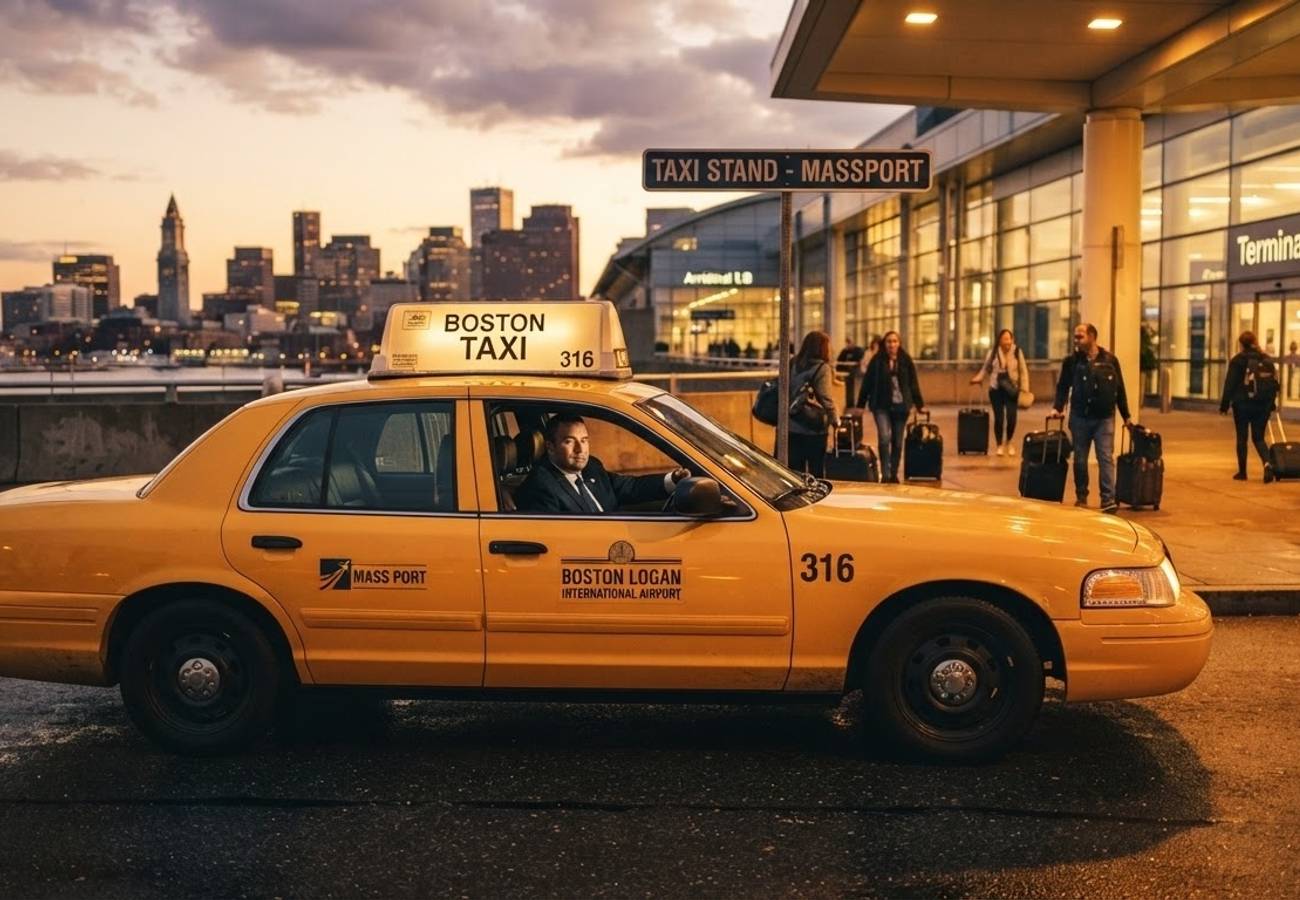
Image generated by AI
Landing at Boston Logan International Airport often leaves travelers facing a choice: navigate the MBTA subway system or secure a direct ride. For those arriving late at night or managing heavy luggage, official taxis remain the most efficient path to downtown Boston.
For many international and domestic arrivals, the priority is reaching a hotel without the stress of deciphering transit maps. While Boston offers several public transport alternatives, the licensed taxi system provides a door-to-door service that is particularly valuable for jet-lagged passengers or families. Understanding how the regulated fare system works and where to find official dispatchers can prevent overpaying and ensure a seamless transition from the tarmac to the city center.
Locating Official Taxi Stands Across Logan Terminals
All licensed airport taxis at Boston Logan operate through a structured queue system managed by Massport. To avoid unauthorized solicitors, travelers should exclusively use the designated taxi ranks located on the arrivals level of every terminal. These areas are clearly marked with green "Ground Transportation" and "Taxi" signage.
At Terminal A, which primarily serves Delta and its partners, the taxi rank is situated on the lower arrivals level. Passengers exiting baggage claim should follow the signage toward the traffic island, where dispatchers in reflective vests manage the line of yellow cabs. Terminal B, serving American, United, and various domestic carriers, utilizes two separate arrival zones; both follow the same Ground Transportation routing to reach the official stands.
Terminal C (JetBlue and other domestic flights) and Terminal E (the international hub) also feature ranks immediately outside the arrivals doors. For those arriving on overnight flights from Europe via Terminal E, the taxi stand is positioned just across the service road from the main exit. It is highly recommended to ignore any individuals offering rides inside the terminal, as licensed cabs are legally required to wait at the official stands.
Breakdown of Boston Taxi Fares and Surcharges
Taxi pricing in Boston is strictly regulated by city ordinances, meaning all licensed vehicles utilize a standardized meter. The cost is comprised of a base "drop" fee, distance and time increments, and specific airport-related additions.
The meter typically begins with a base charge ranging from 2.60 to 3.80 dollars. From that point, the fare increases by approximately 2.8 dollars per mile, with additional costs added for waiting time during traffic stops. When departing from Logan, passengers will see an additional 4 to 5 dollars added to the final meter total to cover the Massport taxi pool fee and applicable tunnel or bridge tolls.
| Destination Zone | Estimated Meter Fare (Excl. Tip) | Estimated Total (Incl. Tolls & Tip) |
|---|---|---|
| Financial District / North End | 22.00 – 28.00 USD | 35.00 – 40.00 USD |
| Government Center / Faneuil Hall | 22.00 – 28.00 USD | 35.00 – 40.00 USD |
| Back Bay / Copley Square | 28.00 – 35.00 USD | 35.00 – 50.00 USD |
| Fenway / South End | 30.00 – 40.00 USD | 40.00 – 55.00 USD |
| Cambridge (Kendall/Harvard Sq) | 35.00 – 45.00 USD | 40.00 – 50.00 USD |
For a typical trip from Terminal E to a hotel near Faneuil Hall (roughly 4 miles), the meter may read between 22 and 28 dollars, with tolls and fees adding another 4.50 to 4.90 dollars. Including a standard 15% to 20% tip, the final cost usually lands between 35 and 40 dollars.
It is important to note that Boston taxi regulations do not allow for additional luggage fees; suitcases are included in the standard fare. Travelers should be wary of any driver suggesting a "flat rate" or lump sum; passengers have the right to insist that the meter be used for the duration of the trip.
Strategic Hotel Selection for Easy Airport Access
The choice of accommodation can significantly impact the duration and cost of the airport transfer. The most accessible areas from Logan are those utilizing the Ted Williams Tunnel, which provides a direct artery into the city.
The Seaport District is one of the most convenient zones, especially for those staying near the Boston Convention and Exhibition Center. A ride to Seaport Boulevard typically takes 10 to 20 minutes outside of peak hours and costs between 30 and 40 dollars including tip. Similarly, the Financial District and Government Center are only a few miles from the airport, ensuring that even during heavy traffic, the journey rarely exceeds 30 minutes.
Leisure travelers often prefer Back Bay or the South End. While these areas are relatively close, the route often requires navigating downtown congestion or Copley Square traffic, which can inflate fares into the high 30s or mid-40s. Those staying in Cambridge near MIT or Harvard Square should budget for a longer journey of 25 to 35 minutes and a total cost of 40 to 50 dollars.
When to Choose a Taxi Over Public Transit
Boston provides several transit options, including the MBTA Blue Line (via free shuttle), the Silver Line to South Station, and Logan Express. However, specific scenarios make the taxi a superior choice.
Late-night arrivals, particularly those landing after 22:00, benefit from taxis due to reduced MBTA frequency and the inconvenience of navigating platforms with luggage. For a family of four with multiple suitcases and a stroller, the cost of a 35 to 45 dollar taxi is often comparable to multiple transit fares when the convenience of a direct door-to-door ride is factored in.
Early morning departures also favor taxis. For a 07:00 flight requiring a 05:00 arrival at the terminal, a pre-arranged cab at 04:15 provides a predictable timeline that avoids the uncertainty of early-morning public transport schedules.
Why This Matters: The Traveler's Perspective From a logistical standpoint, the "hidden" cost of using public transit at Logan isn't the fare, but the "transfer friction." For a solo traveler, the Blue Line is efficient. However, for business travelers or families, the physical toll of moving luggage through shuttle buses and subway transfers can be significant. By using the official taxi ranks, passengers trade a modest premium for a guaranteed, regulated experience. The critical takeaway for 2026 is to stick to the Massport-managed queues; the risk of overpaying is almost entirely eliminated when the meter is used, making the taxi a reliable hedge against the chaos of airport arrivals.
Always confirm the meter is running before the vehicle leaves the terminal island to ensure city-regulated pricing.
Related Travel Guides
Disclaimer
This article is for informational and educational purposes only. It does not constitute legal, financial, or professional advice. While we strive to provide accurate and up-to-date information, travel policies, regulations, and conditions change rapidly. Always verify information with official sources before making travel decisions. Nomad Lawyer makes no representations about the accuracy, reliability, completeness, or suitability of the information provided. Readers should consult qualified professionals for advice specific to their circumstances. The views expressed in this article are those of the author and do not necessarily reflect the views of Nomad Lawyer.
Raushan Kumar
Founder & Lead Developer
Full-stack developer with 11+ years of experience and a passionate traveller. Raushan built Nomad Lawyer from the ground up with a vision to create the best travel and law experience on the web.
Learn more about our team →