Bangladesh and Philippines Explore Direct Air Links to Boost Tourism and Bilateral Trade

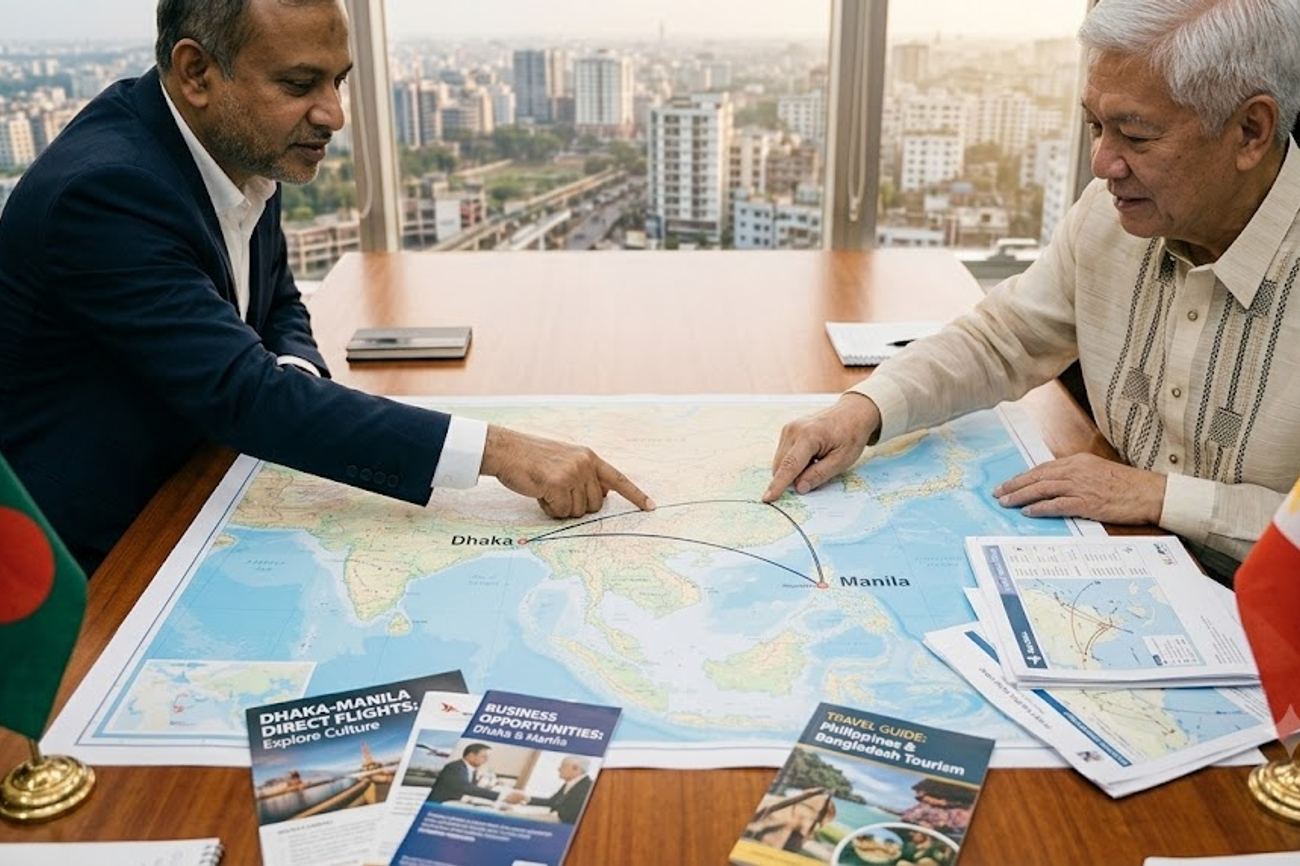
Image generated by AI
Zero direct flights currently exist between Dhaka and Manila, forcing every passenger and every kilogram of cargo to navigate fragmented, multi-stop itineraries through regional hubs. This structural vacuum is the primary target of new high-level diplomatic dialogues initiated as of September 13, 2026, as Bangladesh and the Philippines move to establish direct air connectivity. The objective is to eliminate the logistical friction that has historically stifled bilateral trade and tourism between South and Southeast Asia. By bypassing the traditional reliance on third-country transit points, both nations aim to compress travel durations and reduce the systemic fatigue associated with indirect routing.
The Structural Vacuum of Dhaka-Manila Transit
For decades, the diplomatic relationship between Bangladesh and the Philippines has been characterized by a paradox: strong mutual cooperation in theory, but an underdeveloped physical infrastructure for movement. The current state of travel between these two nations is defined by "logistical friction." Passengers traveling from Dhaka to Manila—or vice versa—must currently secure tickets through intermediary hubs, often involving multiple carriers and extended layovers. This dependency on indirect routes does more than just add hours to a journey; it creates a financial and psychological barrier that discourages spontaneous leisure travel and slows the pace of corporate engagement.
The shift toward direct air links is not merely a convenience for the traveler but a strategic geopolitical move. By establishing dedicated flight paths, both governments are attempting to bridge a geographical gap that has left their economic ties underdeveloped compared to their respective relationships with other regional powers. The current dialogues are focused on transforming these "fragmented transit arrangements" into a streamlined aviation corridor.
Regulatory Hurdles and Operational Requirements
Moving from diplomatic intent to an actual flight schedule requires a rigorous overhaul of existing legal frameworks. The primary responsibility now falls upon the Civil Aviation Authority of Bangladesh and its Philippine counterpart to modernize bilateral air service agreements. These documents, many of which are outdated, must be rewritten to align with contemporary aviation standards and specific traffic rights.
The operationalization of a Dhaka-Manila route involves several technical bottlenecks that must be resolved before a carrier can launch service:
| Requirement | Operational Focus | Impact on Implementation |
|---|---|---|
| Air Service Agreements | Legal traffic rights and frequency | Determines how many flights per week are permitted. |
| Slot Allocation | Airport timing at primary hubs | Dictates departure/arrival windows at congested airports. |
| Safety Compliance | Regulatory audits and certification | Ensures aircraft meet the safety standards of both nations. |
| Customs Harmonization | Passenger and cargo clearance | Reduces border friction for high-volume trade. |
To ensure these routes are not just launched but sustained, airline operators are currently conducting viability assessments. These studies focus on the "optimal frequency" and "pricing structures" necessary to maintain profitability. Because the route involves a significant distance, the choice of aircraft model—likely long-range wide-body jets—will be a deciding factor in the ticket pricing for the end consumer.
Expert Analysis: The Economics of Direct Connectivity
For travelers and businesses booking this route, the direct consequence of this shift is a drastic reduction in "transit fatigue" and total travel cost. When a traveler moves from a two-stop itinerary to a non-stop flight, the elimination of layover fees, additional baggage handling risks, and lost time creates a massive incentive for increased volume.
The pricing pressure this creates is twofold. First, the introduction of direct competition will likely force regional hub carriers—who currently monopolize the Dhaka-Manila flow—to lower their prices to remain competitive. Second, the ability to move cargo directly between the two nations will lower the landed cost of goods, potentially sparking a surge in bilateral trade.
From a macro-economic perspective, this is a play for "hospitality diversification." The Philippines is actively encouraging its financial stakeholders to invest in Bangladesh's expanding tourism ecosystem. By removing the barrier of difficult travel, Bangladesh becomes a viable destination for Filipino investors and tourists. Conversely, the Philippines can market its scenic landscapes and urban centers to a previously untapped Bangladeshi middle class.
The most critical shift here is the move away from "outmoded bilateral aviation frameworks." In previous years, these discussions were often sidelined by competing regulatory priorities. The current urgency suggests that both nations now view aviation as a primary engine for economic diplomacy rather than a secondary administrative task. For the industry, this means a likely increase in hotel infrastructure investment and a push for local service standards to meet the International Air Transport Association (IATA) benchmarks to accommodate a new influx of international visitors.
Key Takeaways
- Elimination of Hub Dependency: The initiative aims to replace multi-stop, indirect flights with non-stop routing, drastically reducing travel time and logistical friction.
- Regulatory Overhaul: The Civil Aviation Authority of Bangladesh and Philippine authorities must update outdated air service agreements and synchronize customs procedures.
- Investment Catalyst: Direct flights are expected to trigger increased Filipino investment in Bangladesh's tourism and hotel infrastructure.
- Economic Shift: The strategy integrates cargo capacity and trade considerations, moving beyond simple passenger transport to a broader economic partnership.
- Market Competition: The arrival of direct carriers will likely disrupt the pricing models of regional airlines that currently facilitate these journeys via hubs.
FAQ: Dhaka-Manila Air Links 2026
When will direct flights between Bangladesh and Philippines start? While diplomatic discussions and viability assessments are currently underway as of September 2026, no specific start date has been announced. Travelers should monitor official updates from the respective civil aviation ministries.
Will direct flights make travel cheaper? Typically, direct routes reduce total costs by eliminating multiple ticket segments and layover expenses. Additionally, increased competition may force existing indirect carriers to lower their fares.
How will this affect business travel and trade? Direct links will allow for "more agile decision-making" by removing the logistical bottlenecks of connecting flights, while streamlined cargo procedures will likely increase the volume of bilateral trade.
What are the main obstacles to launching these flights? The primary hurdles are the modernization of bilateral air service agreements, the allocation of airport slots, and the harmonization of safety and customs compliance between the two nations.
The transition from diplomatic dialogue to takeoff depends entirely on whether the regulatory paperwork can keep pace with economic ambition.
Tags: Dhaka-Manila Route, Civil Aviation Authority of Bangladesh, Philippines Tourism 2026, South-Southeast Asia Aviation, Bilateral Air Service Agreements
Related Travel Guides
- Middle East Airports Face 836 Delays and 28 Cancellations as Travel is Disrupted at Dubai, Jeddah and Others
- Flights Cancelled Throughout Asia As Singapore, Delhi, and 20 Other Airports Face 106 Cancellations And 1,578 Delays, Impacting Travel
- Nevada Alongside New York and More Facing Major Winter Schedule Shakeup as Delta Cuts 5 Domestic Routes Affecting US Travellers
This article is for informational purposes. Flight routes, passenger regulations, visa rules, and transit advisories are subject to change by airlines and aviation authorities. Readers are advised to verify schedules and travel documentation with relevant carriers and border agencies before departure.
Related Stories

Jet Airways vs. Boeing NCLAT Battle: Why Manufacturer Litigation Offers No Quick Ticket Refunds for Indian Travel Agents

easyJet Launches Direct Liverpool to Reykjavik Flights: Inside the North West's New Winter Gateway to Iceland