
Flights Cancelled Throughout Asia As Singapore, Delhi, and 20 Other Airports Face 106 Cancellations And 1,578 Delays, Impacting Travel
Flights Cancelled Throughout Asia As Singapore, Delhi, and 20 Other Airports Face 106 Cancellations And 1,578 Delays, Impacting Travel

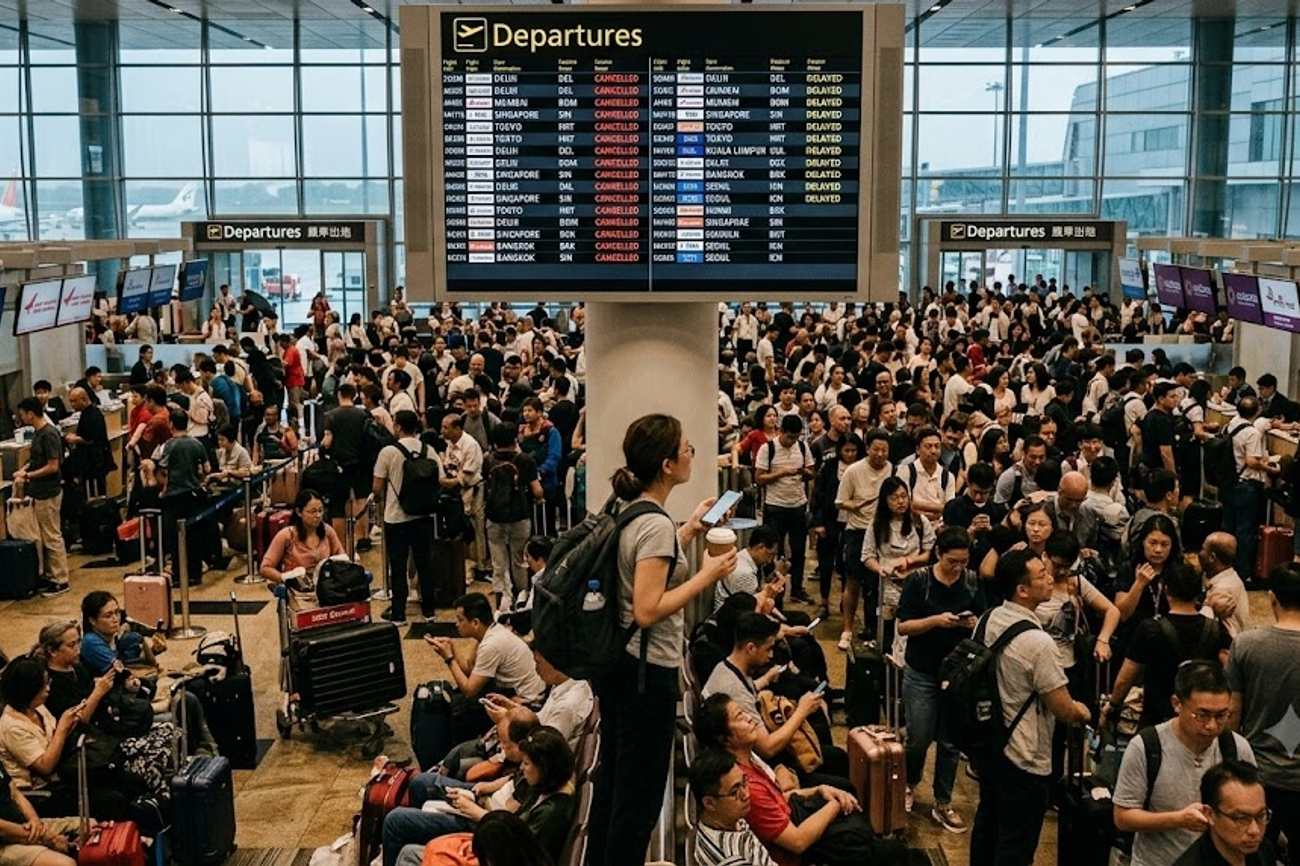
Image generated by AI
Are you currently routing through major Asian hubs like Delhi, Singapore, or Jakarta? If so, you need to immediately audit your itinerary, as a massive wave of 1,578 delays and 106 cancellations is currently destabilizing air travel across 22 regional airports.
The Asian Aviation Gridlock of September 2026
As of September 13, 2026, a systemic disruption has paralyzed flight operations across six countries: India, Singapore, China, Malaysia, Indonesia, and the Philippines. This is not a localized weather event but a widespread operational failure impacting 22 different airports. The scale of the disruption is significant, with a combined 1,684 flight changes recorded.
The crisis is concentrated in high-traffic transit hubs. Delhi has emerged as the primary bottleneck, recording the highest volume of delays at 276. Meanwhile, Jakarta has become the most volatile airport for total cancellations, recording 21 scrubbed flights. This volatility is being driven by a combination of crew scheduling failures, aircraft maintenance backlogs, and air traffic management constraints. When an incoming aircraft is delayed, it creates a "knock-on" effect, where subsequent flights assigned to that same hull or crew are pushed back, leading to the cascading delays currently seen across the region.
For the frequent traveler, the risk is highest when flying with carriers that are heavily exposed to these hubs. China Eastern is currently the most impacted airline by volume, with 164 delays and 12 cancellations. Batik Air and SpiceJet are also showing high volatility, with SpiceJet reporting a staggering 38% delay rate and a 12% cancellation rate.
Route and Schedule Details
The following table breaks down the operational status of the most affected hubs based on the latest aviation data.
| Airport | Delays | Cancellations | Origin Delay Rate | Destination Delay Rate | Status |
|---|---|---|---|---|---|
| Delhi | 276 | 8 | 23% | 19% | Critical |
| Kuala Lumpur | 192 | 3 | 16% | 18% | High Risk |
| Shanghai Pudong | 172 | 3 | 8% | 12% | High Risk |
| Jakarta | 159 | 21 | 13% | 13% | Volatile |
| Singapore Changi | 101 | 4 | 9% | 9% | Moderate |
| Guangzhou | 80 | 9 | 4% | 5% | Moderate |
| Shanghai Hongqiao | 44 | 8 | N/A | N/A | Moderate |
Traveler Logistics Guide
Navigating a systemic collapse of this scale requires a proactive strategy. If you are currently in transit or planning a departure through these hubs, follow these specific logistics steps.
1. Pre-Departure Verification Do not rely on the initial booking confirmation. Check your flight status via the official airline app or the airport's live flight board. For those traveling through India, utilizing Digi Yatra can help streamline your movement through the terminal, but it will not prevent flight delays. Always verify the "incoming flight" status of your aircraft; if the plane arriving from its previous destination is delayed, your departure will almost certainly be pushed back.
2. Connection Buffer Strategy The current delay rates—particularly the 23% origin delay rate in Delhi—mean that "minimum connection times" are no longer reliable. If you have a self-transfer or a tight connection (under 3 hours) in Kuala Lumpur or Singapore, you are at high risk of missing your onward flight. I recommend contacting your airline to move to an earlier flight if possible or ensuring you have comprehensive travel insurance that covers "missed connections" due to carrier delays.
3. Rebooking and Documentation If your flight is among the 106 cancellations, immediately seek a rebooking. Do not wait in the physical queue at the airport; use the airline's digital chat or phone lines simultaneously.
- Keep a Paper Trail: Save every boarding pass, digital notification, and receipt for food or hotels.
- Expense Tracking: If you are stranded in Jakarta or Shanghai, keep all receipts for "eligible expenses" to claim reimbursement from the airline or your insurance provider.
4. Baggage Management Cancellations often lead to baggage misalignment. If your flight is cancelled or rerouted, explicitly confirm with the ground staff whether your checked luggage is being held at the current airport or forwarded to your new destination. For those transiting through Singapore, check the Changi Airport baggage status portals to ensure your bags have cleared the transfer.
5. Ground Transport Adjustments With 1,578 delays, airport arrivals will be staggered and unpredictable. If you have pre-booked private transfers or timed hotel shuttles in cities like Manila or Cebu, notify them of the potential for delay. In China, ensure your transport apps are updated to handle the shifting arrival times at Pudong and Hongqiao.
Regional Connectivity Impact
This disruption is reshaping the short-term transit logic for Southeast Asia and East Asia. The concentration of delays in the "Golden Triangle" of Delhi, Kuala Lumpur, and Shanghai means that travelers may find more reliability by routing through secondary hubs or utilizing different carriers.
The heavy impact on China Eastern and Air China suggests that flights within the mainland and connecting to the West via China are currently the most unstable. Travelers who typically rely on the efficiency of Singapore Changi should note that while it is performing better than Delhi, a 9% delay rate still creates significant friction for those on tight schedules.
Furthermore, the volatility in Jakarta—which saw the highest number of cancellations—indicates a breakdown in local operational capacity. Passengers traveling to or from Indonesia should consider alternative regional carriers or allow for a 24-hour buffer in their itinerary to account for the 1% cancellation rate affecting both origin and destination flights.
FAQ: Asia Flight Disruptions 2026
Do I need a transit visa if my flight is delayed or cancelled? If a delay forces you to leave the transit area (airside) to stay in a hotel, you may need a transit visa. This is particularly relevant in China and India. Check with the embassy or the airline's ground staff before exiting the secure zone.
How long should my layover be during this disruption? Given the current delay rates in Delhi (up to 23%) and Kuala Lumpur (up to 18%), I recommend a minimum layover of 5 to 6 hours. This provides a necessary cushion for the "knock-on" effects currently impacting the region.
Can I check my bags through to the final destination? Yes, but only if your flights are on a single ticket. If you have separate bookings (self-transfer) and your first flight is delayed, you will have to collect and re-check your bags, which is high-risk during this period of volatility.
Which airlines are most affected right now? China Eastern is the most impacted by volume (164 delays). SpiceJet is the most unstable proportionally, with a 38% delay rate. Batik Air also shows high volatility with 15 cancellations.
Stay vigilant, document every change, and always have a secondary route planned.
Tags: Delhi-Airport-2026, Changi-Airport-Logistics, China-Eastern-Disruptions, Asia-Transit-Alert-2026, Jakarta-Flight-Cancellations
Related Travel Guides
- Nevada Alongside New York and More Facing Major Winter Schedule Shakeup as Delta Cuts 5 Domestic Routes Affecting US Travellers
- Air Canada Introduces A321XLR on Montréal Lyon Route as Future of Transatlantic Travel Takes Off
- US Airports May Allow Full Bottles as Heathrow-Style Security Changes Expand With TSA Security Rule Modernisation
Disclaimer
This article is for informational and educational purposes only. It does not constitute legal, financial, or professional advice. While we strive to provide accurate and up-to-date information, travel policies, regulations, and conditions change rapidly. Always verify information with official sources before making travel decisions. Nomad Lawyer makes no representations about the accuracy, reliability, completeness, or suitability of the information provided. Readers should consult qualified professionals for advice specific to their circumstances. The views expressed in this article are those of the author and do not necessarily reflect the views of Nomad Lawyer.
Raushan Kumar
Founder & Lead Developer
Full-stack developer with 11+ years of experience and a passionate traveller. Raushan built Nomad Lawyer from the ground up with a vision to create the best travel and law experience on the web.
Learn more about our team →