
Middle East Airports Face 836 Delays and 28 Cancellations as Travel is Disrupted at Dubai, Jeddah and Others
Middle East Airports Face 836 Delays and 28 Cancellations as Travel is Disrupted at Dubai, Jeddah and Others

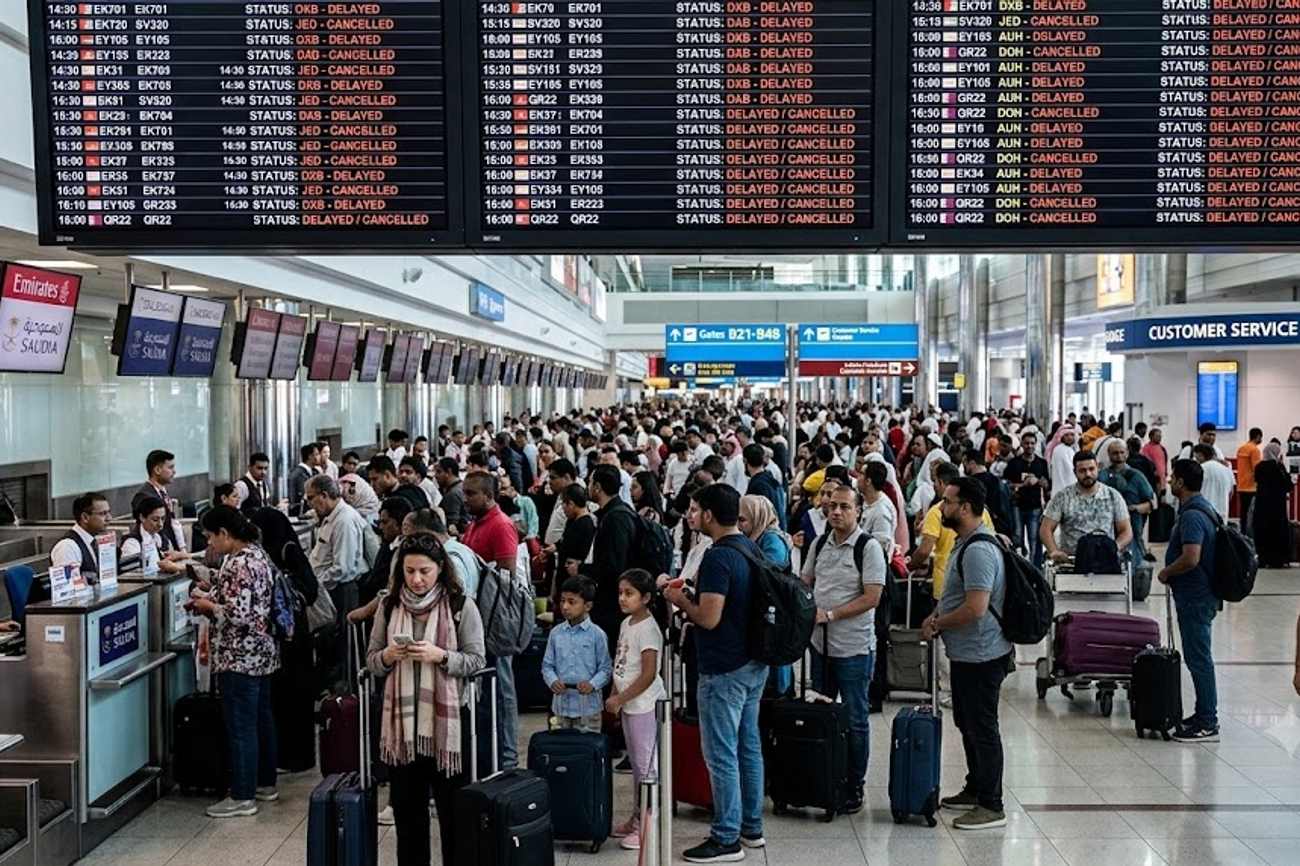
Image generated by AI
[Dubai, September 13, 2026] — Aviation operations across the Middle East have entered a state of significant disruption, with 836 flight delays and 28 cancellations reported across 12 major regional airports. The instability is concentrated at primary transit hubs connecting Europe, Asia, and Africa, creating a ripple effect across the global aviation network.
The disruptions are widespread, impacting critical gateways in the UAE, Saudi Arabia, Türkiye, Qatar, Jordan, Israel, Kuwait, Bahrain, and Oman. While the exact catalyst is attributed to a combination of network pressures, shifting flight schedules, and regional operational caution, the scale of the impact has forced airlines and airport authorities to implement emergency operational adjustments to manage passenger flow and aircraft rotations.
Network Pressures and Operational Shifts
The current volatility is not isolated to a single carrier or city but represents a systemic pressure across the Middle East's aviation infrastructure. Industry data indicates that the region's role as a global crossroads makes it hypersensitive to schedule changes. When a primary hub experiences a bottleneck, the resulting impact on crew availability and aircraft positioning creates a domino effect that extends far beyond the initial point of failure.
Airlines are currently reviewing routes and adjusting schedules in real-time as regional conditions evolve. This "operational caution" suggests that carriers are prioritizing safety and stability over strict adherence to timetables, leading to the high volume of delays. The reliance on connecting traffic at these hubs means that a single delayed arrival can jeopardize dozens of onward connections, compounding the total number of affected passengers.
Who Is Affected
The disruption is distributed across several countries, with Türkiye and Saudi Arabia seeing the highest volume of delays. Dubai International Airport has emerged as the epicenter for cancellations.
Airport Disruption Breakdown:
| Airport | Country | Delays | Cancellations |
|---|---|---|---|
| Istanbul Airport | Türkiye | 225 | 3 |
| King Abdulaziz International (Jeddah) | Saudi Arabia | 114 | 1 |
| Dubai International (DXB) | UAE | 105 | 10 |
| King Khalid International (Riyadh) | Saudi Arabia | 94 | 1 |
| Hamad International (Doha) | Qatar | 67 | 1 |
| Ben Gurion International | Israel | 56 | 2 |
| Sharjah International | UAE | 49 | 1 |
| King Fahd International | Saudi Arabia | 36 | 1 |
| Kuwait International | Kuwait | 34 | 1 |
| Seeb International | Oman | 22 | 1 |
| Queen Alia International | Jordan | 19 | 2 |
| Bahrain International | Bahrain | 15 | 4 |
Airline Performance Impact:
The disruption has hit regional flag carriers and low-cost operators differently. While some saw high volumes of delays, others experienced severe cancellation percentages.
- Saudia: Recorded the highest total volume of delays with 64 flights impacted.
- Qatar Airways: Reported 60 delays and 1 cancellation.
- Air Arabia: While only recording 1 cancellation, it suffered the highest delay rate among all carriers at 18%, with 43 total delayed flights.
- Flydubai: Experienced the most significant cancellation volume among UAE carriers with 6 cancelled flights and 30 delays.
- Oman Air: Reported a 15% delay rate with 18 flights delayed.
- El Al: Recorded a stark 50% cancellation rate, with 2 flights cancelled.
- Royal Jordanian: Reported 6 delays and 2 cancellations.
- Syrian Arab Airlines: Logged 1 cancellation with an 8% cancellation rate.
What This Means for Travelers
For passengers currently booking or traveling through the region, these statistics translate into immediate logistical hurdles. The high concentration of delays at Istanbul Airport and Dubai International Airport means that transit windows are currently unreliable.
Immediate Passenger Impacts:
- Missed Connections: With over 800 delays, the probability of missing a connecting flight is high. Passengers should not rely on minimum connection times.
- Airport Congestion: Increased dwell times at terminals in Jeddah, Riyadh, and Dubai are expected as delayed passengers accumulate in departure lounges.
- Rebooking Stress: With carriers like Flydubai and El Al seeing notable cancellation rates, rebooking queues are likely to be longer than usual.
- Schedule Fluidity: Flight times are currently volatile. A "confirmed" departure time may change within hours of the scheduled takeoff.
Travelers are strongly urged to maintain active notifications via airline mobile apps and email. If traveling through a major hub, passengers should verify the status of their onward sector immediately upon landing to ensure their seat is still secured.
Operational Outlook and Recovery
Aviation authorities and airlines are currently in a phase of "operational adjustment." This involves rescheduling flights to alleviate pressure on the most congested hubs and rearranging crew rotations to ensure flights can depart. The focus is currently on clearing the backlog at Istanbul and Dubai to prevent the disruption from bleeding into the following travel cycle.
The situation remains fluid. Because the Middle East serves as the primary link between the International Air Transport Association (IATA) member airlines in Asia and Europe, any prolonged instability in these 12 airports will likely lead to delays in distant cities like London, Singapore, and New York. Recovery will depend on the ability of the major hubs to synchronize their schedules and the willingness of regional carriers to maintain flexible routing.
FAQ: Middle East Aviation Disruptions 2026
What should I do if my flight from Dubai or Jeddah is cancelled? Contact your airline immediately via their official app or customer service line to request rebooking. Check your travel insurance policy for "trip delay" or "trip cancellation" coverage to recoup costs for hotels or meals.
Are all flights in the Middle East delayed? No, but 12 major airports are seeing pressure. The highest impacts are at Istanbul, Jeddah, and Dubai. Check your specific flight status with the carrier before leaving for the airport.
Will these delays affect my connecting flight to Europe or Asia? Yes. Because hubs like Hamad International and Dubai International rely on connecting traffic, a delay in the first leg frequently results in a missed connection. Contact your airline to confirm your onward booking.
Which airline has the highest risk of delay right now? Based on current data, Air Arabia has the highest delay rate at 18%, while Saudia has the highest total number of delayed flights at 64.
Travelers are advised to monitor official airport channels for real-time updates as the regional network stabilizes.
#DXB2026 #JED2026 #IST2026 #Saudia #QatarAirways #MiddleEastAviation
Related Travel Guides
- Flights Cancelled Throughout Asia As Singapore, Delhi, and 20 Other Airports Face 106 Cancellations And 1,578 Delays, Impacting Travel
- Nevada Alongside New York and More Facing Major Winter Schedule Shakeup as Delta Cuts 5 Domestic Routes Affecting US Travellers
- Air Canada Introduces A321XLR on Montréal Lyon Route as Future of Transatlantic Travel Takes Off
Disclaimer
This article is for informational and educational purposes only. It does not constitute legal, financial, or professional advice. While we strive to provide accurate and up-to-date information, travel policies, regulations, and conditions change rapidly. Always verify information with official sources before making travel decisions. Nomad Lawyer makes no representations about the accuracy, reliability, completeness, or suitability of the information provided. Readers should consult qualified professionals for advice specific to their circumstances. The views expressed in this article are those of the author and do not necessarily reflect the views of Nomad Lawyer.
Kunal K Choudhary
Co-Founder & Contributor
A passionate traveller and tech enthusiast. Kunal contributes to the vision and growth of Nomad Lawyer, bringing fresh perspectives and driving the community forward.
Learn more about our team →