
Dual Tire Failures at Chicago O'Hare Trigger Runway Closures and Massive Flight Disruptions in 2026
Back-to-back tire incidents involving American and United Airlines at Chicago O'Hare International Airport caused significant runway closures and cascading delays for thousands of passengers.

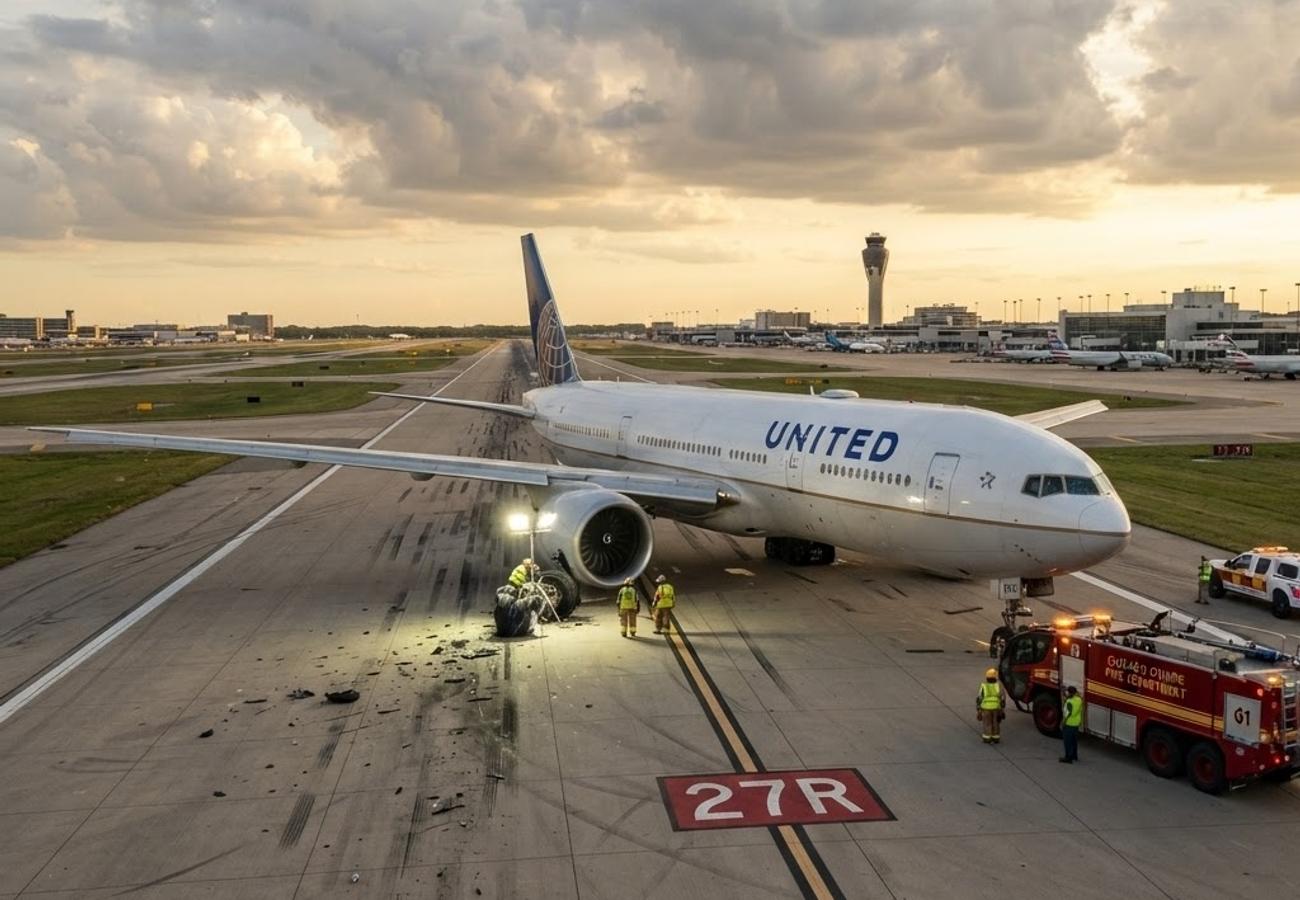
Image generated by AI
Two separate tire-related emergencies involving American Airlines and United Airlines at Chicago O’Hare International Airport triggered immediate runway closures and systemic delays across one of the world's busiest aviation hubs.
The Operational Breakdown at O'Hare
Chicago O’Hare experienced a rare sequence of mechanical failures on August 18, 2026, when two unrelated aircraft suffered significant landing gear issues within a narrow time window. The disruptions began with an American Airlines flight that declared an emergency approach after reporting a landing gear malfunction. While the aircraft landed safely, passengers reported a firm touchdown followed by an extended period stationary on the runway. Visual evidence from the scene indicated deflated or heavily damaged main landing gear tires, requiring the Federal Aviation Administration (FAA) to temporarily shutter the affected runway for recovery and inspection.
Shortly after the first incident, United Flight 739 encountered a similar crisis. Passengers described a routine touchdown that resulted in both tires on one of the main gear assemblies being shredded during the landing rollout. The aircraft remained on the paved surface, and no injuries were reported, but the jet remained immobilized on the runway until emergency responders could secure the aircraft and organize bus transfers for the passengers.
Cultural & Environmental Value: The Impact of Hub Disruptions
For the visitor, the real impact of these incidents is the "ripple effect" inherent to hub-and-spoke aviation. Because O'Hare serves as a primary fortress hub for both American and United, a closure of a single runway does not just affect the aircraft on the ground; it creates a vacuum in scheduling that impacts flights across the entire North American network.
From an operational standpoint, these events highlight the critical nature of "FOD walks"—the manual inspection of runways for Foreign Object Debris. When two aircraft suffer tire damage in quick succession, the focus shifts to the environmental integrity of the runway surface. Ensuring that runways are clear of loose materials is not just a safety requirement but a sustainable operational practice that prevents aircraft downtime and reduces the waste associated with premature tire replacement.
The efficiency of the emergency response—utilizing ground buses to clear passengers quickly and floodlighting for rapid assessment—demonstrates the high-level coordination between the Chicago Department of Aviation and airline ground crews to minimize the window of disruption.
Visitor Insider Tips for Navigating O'Hare Disruptions
When facing systemic delays at O'Hare, experienced travelers can utilize these strategies to mitigate stress:
- Monitor the "Taxi-Out" Time: If you notice a significant backlog on the taxiways, check the FAA's real-time airport status. If a runway is closed, your departure may be delayed by 60-120 minutes regardless of your boarding time.
- The Terminal Transfer Hack: During ground emergencies, terminal congestion spikes. Use the Airport Transit System (ATS) early to move between Terminals 1, 2, and 3, as pedestrian walkways become bottlenecks during mass re-bookings.
- Dining Off-Peak: When flights are grounded, airport lounges and food courts become overcrowded. Seek out the smaller kiosks in the satellite concourses, which often have shorter lines than the main terminal hubs.
- Digital Documentation: Always keep a PDF of your boarding pass and a screenshot of your flight status. During hub-wide disruptions, airport Wi-Fi can slow down due to the volume of passengers refreshing flight trackers simultaneously.
Tourism and Aviation Outlook
The long-term outlook for O'Hare involves an increased emphasis on predictive maintenance and runway surface technology. While tire failures are anticipated and crews are trained to manage them via fuse plugs—which release pressure to prevent structural explosions—the occurrence of two events in one evening prompts a review of braking performance and tire inspection regimes.
For the broader travel industry, this serves as a reminder that mechanical resilience is as important as schedule efficiency. As O'Hare continues to expand its capacity, the ability to pivot operations to alternative runways without causing a total network collapse will be the primary metric of success for regional aviation authorities.
Safety protocols ensured that despite the dramatic imagery of shredded rubber, passenger risk remained low throughout both incidents.
Related Travel Guides
Disclaimer
This article is for informational and educational purposes only. It does not constitute legal, financial, or professional advice. While we strive to provide accurate and up-to-date information, travel policies, regulations, and conditions change rapidly. Always verify information with official sources before making travel decisions. Nomad Lawyer makes no representations about the accuracy, reliability, completeness, or suitability of the information provided. Readers should consult qualified professionals for advice specific to their circumstances. The views expressed in this article are those of the author and do not necessarily reflect the views of Nomad Lawyer.
Kunal K Choudhary
Co-Founder & Contributor
A passionate traveller and tech enthusiast. Kunal contributes to the vision and growth of Nomad Lawyer, bringing fresh perspectives and driving the community forward.
Learn more about our team →