
Austria Stands Alongside Germany and Europe’s Major Tourism Hubs as Rail Versus Air Travel Expands

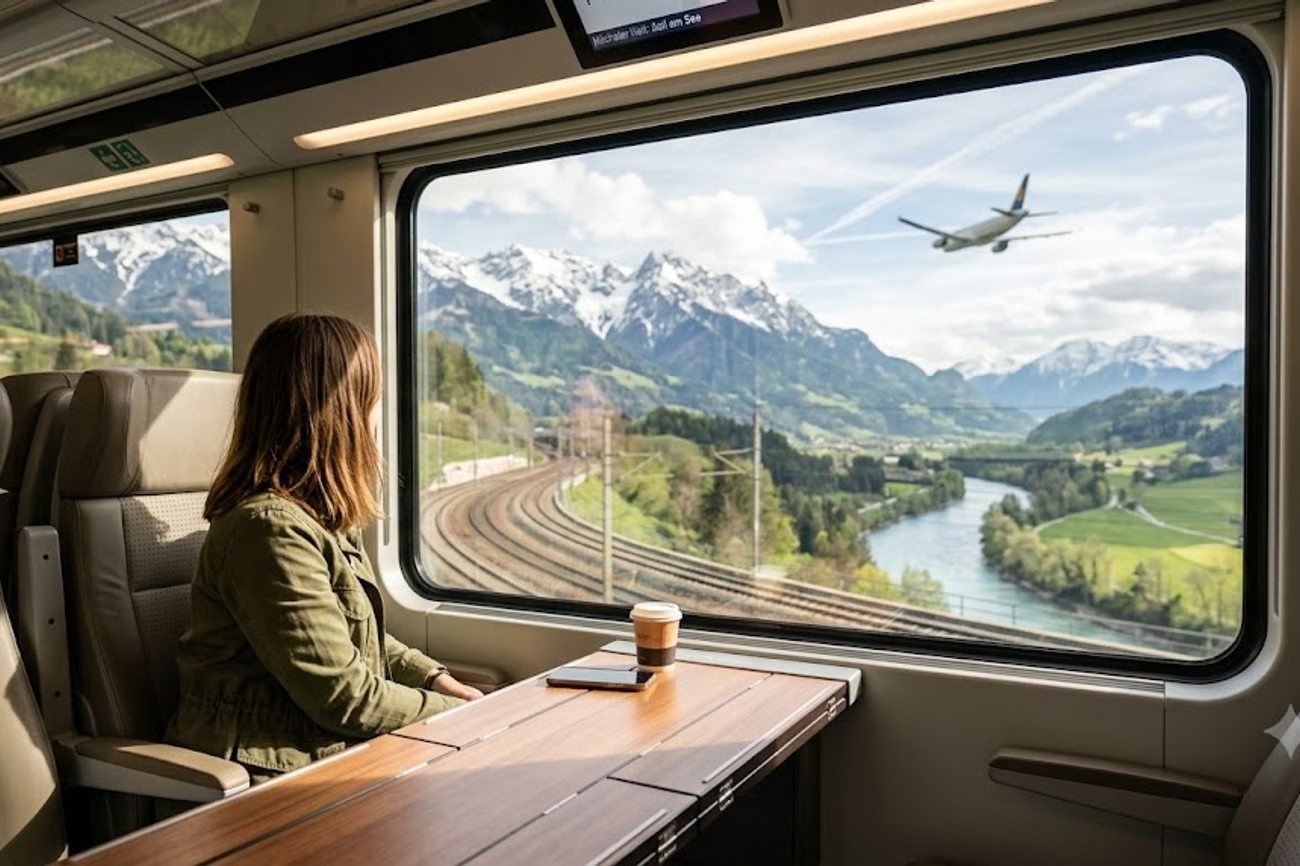
Image generated by AI
Rail-to-air integration in Vienna has surged by 70% since 2014, with 10.5 million passengers utilizing ÖBB services to access the airport in 2025. This shift signals a fundamental transition in European transit, where rail is no longer a competitor to aviation but a primary distribution engine for airport traffic, now accounting for 40% of all Vienna Airport passengers.
The Intermodal Equation in Numbers
The data from Vienna serves as a primary case study for the "integrated gateway" model. In 2025, Vienna Airport handled a total of 32.56 million passengers, representing a 2.6% increase over 2024 figures. Of this total, 25.74 million were local passengers and 6.56 million were transfer travelers. The efficiency of the rail link is quantified not just in passenger volume, but in economic and environmental impact: the connection generated €15.7 million in annual added value and prevented approximately 29,000 tonnes of CO₂ emissions.
This integration supports a massive operational scale, with the airport serving 203 destinations via 76 different airlines. When viewed alongside Austria's broader tourism data, the rail link acts as a funnel. Austria recorded a record-breaking 48.17 million tourist arrivals and 157.29 million overnight stays in 2025. The distribution of these stays highlights the rail network's role in regional dispersal; while Vienna crossed a historic threshold with 20.09 million nights, the Alpine regions of Tyrol and Salzburg combined for over 80.9 million nights.
The scale of rail reliance in Austria is further validated by Eurostat, which recorded 1,493 rail passenger-kilometres per inhabitant in 2024, placing Austria among the highest-ranking nations in the European Union for rail utilization.
Regional Mobility Benchmarks: Central Europe
The movement toward rail-centric tourism is not isolated to Austria. When comparing the "Big Four" of Central European transit—Austria, Germany, Switzerland, and Italy—distinct patterns of volume and growth emerge. Germany provides the highest raw volume, with its railways carrying 2.89 billion passengers in 2024. However, its aviation sector is recovering more slowly; despite 207.2 million passengers at main airports in 2025 (a 3.9% year-on-year increase), figures remain 8.6% below the 2019 peak.
Italy demonstrates the most aggressive growth in international rail connectivity. The FS Group reported 577 million passengers in 2025, with international passengers alone rising 15% year-over-year to 253 million. This is backed by massive capital expenditure, with €18 billion invested in 2025 and a projected €177 billion investment pipeline through 2034.
The following table breaks down the 2024-2025 performance metrics across these key markets:
| Market | Key Metric | 2024/2025 Value | Trend/Growth |
|---|---|---|---|
| Austria | Overnight Stays | 157.29 Million | +1.9% YoY |
| Austria | Rail-to-Airport Users | 10.5 Million | +70% since 2014 |
| Germany | Long-Distance Rail Pax | 146 Million | +3% YoY |
| Germany | Main Airport Pax | 207.2 Million | +3.9% YoY |
| Italy | FS Group Total Pax | 577 Million | +15% Int'l Pax |
| Italy | EU Tourism Share | 15.4% | Historical Record |
| Switzerland | Hotel Overnight Stays | 43.9 Million | Stable |
Practical Traveler Advisory and Strategic Insights
The data indicates a shift away from the "rental car" model for European exploration. For the modern traveler, the integration of high-speed rail and airport hubs means that the most efficient way to reach secondary cities or Alpine resorts is now through integrated ticketing and transit hubs.
Actionable Booking Strategies:
- Avoid Domestic Flights in Germany: With domestic aviation remaining significantly below pre-pandemic levels and long-distance rail growing by 3%, rail is now the primary and most reliable method for inter-city travel within Germany.
- Leverage the Vienna Gateway: Given that 40% of airport users now utilize ÖBB, travelers should book rail connections to the Alps (Tyrol and Salzburg) simultaneously with their flight to Vienna to avoid the congestion of airport car rentals.
- Plan for Italian Urban Hubs: With Rome (42.7 million nights), Milan (14.1 million), and Venice (13.3 million) seeing record arrivals, the 15% increase in international rail traffic suggests that "open-jaw" rail tickets (arriving in one city and departing from another) are more viable than ever due to the €177 billion infrastructure upgrade.
- Swiss Precision Planning: With Zermatt (1.7 million nights) and Lucerne (1.5 million nights) relying heavily on rail distribution from Zurich and Geneva, travelers should prioritize rail-pass integration over private transport to access these high-demand Alpine zones.
The Trajectory of the European Corridor
Based on the current investment trajectories—specifically Italy's €177 billion plan and Austria's record-breaking overnight stay growth—we are moving toward a "Single Mobility Zone." The data suggests that the distinction between "flying to a country" and "traveling within a country" is blurring.
We can project that by 2030, the "airport-as-a-rail-hub" model seen in Vienna will become the standard for all major European gateways. As IATA and UNWTO track the shift toward sustainable aviation and transport, the reduction of 29,000 tonnes of CO₂ in Vienna is a precursor to wider regulatory pressures that will likely penalize short-haul flights in favor of the high-speed rail corridors currently expanding in Italy and Germany. The growth of international rail passengers in Italy (up 15%) suggests that the "Grand Tour" of Europe is being digitized and streamlined through integrated rail-air networks.
FAQ: Central European Transit Trends 2025
Will rail prices increase as demand grows? While demand is rising—evidenced by Italy's 577 million passengers—the massive infrastructure investments (€177 billion in Italy) are designed to increase capacity. Prices may fluctuate, but competition between high-speed operators typically stabilizes costs for early bookers.
Is it faster to fly or take the train between major EU cities? In the Central European corridor (Vienna, Munich, Zurich, Milan), the "door-to-door" time is converging. With 40% of Vienna Airport users choosing rail, the efficiency of city-center-to-airport rail often outweighs the time spent in airport security and transit.
Which region is currently the most accessible for rail-only tourism? Austria and Italy. Austria’s 1,493 rail passenger-kilometres per inhabitant and Italy's 15% growth in international rail traffic make them the current leaders in rail-integrated tourism infrastructure.
Should I book hotels in gateway cities or regional hubs? The data suggests regional hubs are booming. With Tyrol and Salzburg generating over 80.9 million nights compared to Vienna's 20.09 million, travelers should use gateway cities for transit and prioritize bookings in regional centers.
The era of the isolated airport is over; the era of the integrated mobility hub has arrived.
Related Travel Guides
- Vietnam and China Boost Border Tourism as Lang Son and Guangxi Create New Cross Border Travel Experiences
- Puerto Rico Steps Up With Barbados And Caribbean Nations To Protect Island Tourism As Beach Crowds, Cruises And Housing Pressures Rise
- Lightweight Hiking Shoes For Travellers Key Buying Tips For Comfort And Safer Outdoor Adventures
This article is for informational purposes. Flight routes, passenger regulations, visa rules, and transit advisories are subject to change by airlines and aviation authorities. Readers are advised to verify schedules and travel documentation with relevant carriers and border agencies before departure.
Related Stories

Spain and France Lead Global Winter Tourism Rankings 2026 as Seasonal Travel Shifts

Austria Simplifies Digital Receipt Rules for Businesses and Travelers Starting October 2026
