
Amalfi Coast Wildfire Sweeps Italy’s Tourism Jewel as Positano Battles Flames and Road Closures
Amalfi Coast Wildfire Sweeps Italy’s Tourism Jewel as Positano Battles Flames and Road Closures

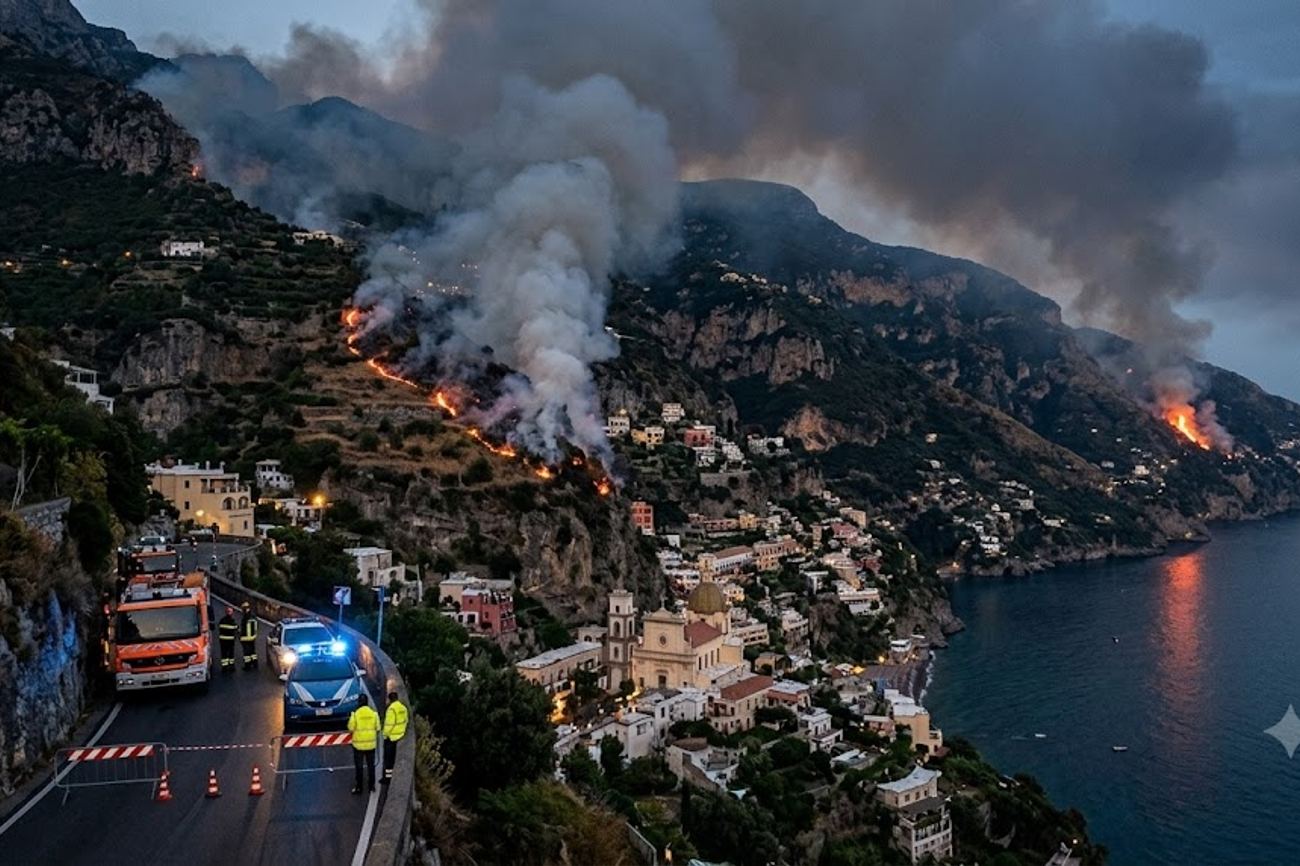
Image generated by AI
Seven ground teams and three aircraft were deployed to combat a series of wildfires that tore through the Amalfi Coast and Sorrento Peninsula, signaling a volatile intersection of environmental vulnerability and high-density tourism. The fires, which ignited on the evening of September 14, 2026, forced precautionary evacuations and disrupted critical transit arteries, highlighting how quickly a Mediterranean paradise can transition into a hazardous zone.
Topographical Traps and Tactical Hurdles
The fires did not manifest as a single blaze but rather as multiple active fronts that swept across scrubland and woodland. The geographic scope was extensive, impacting the settlements of Amalfi, Positano, Agerola, and Vico Equense, while also extending into Conca dei Marini and the areas surrounding Tovere and Pogerola.
The operational response was hampered by the region's signature geography. The Amalfi Coast is characterized by mountains that rise precipitously from the Mediterranean, creating a vertical battlefield for the Italian National Fire Corps. Ground crews faced severe limitations due to the steepness of the slopes and the narrowness of the available access roads. Initial efforts were further complicated by strong winds, which not only pushed the flames through dry vegetation but also restricted the early deployment of helicopters.
Once weather conditions permitted, the response scaled up to include three aircraft, with Canadair water bombers providing the necessary aerial suppression to protect the coastal settlements. The impact on infrastructure was immediate; the SS163 Amalfitana, the primary road linking the region's towns, faced significant traffic restrictions as firefighting teams worked to secure the slopes adjacent to the asphalt.
Operational Data: September 2026 Fire Event
The following data outlines the scale of the emergency response and the specific areas under threat during the September 14 outbreak.
| Metric | Detail |
|---|---|
| Incident Start Date | September 14, 2026 (Evening) |
| Primary Zones Affected | Amalfi Coast and Sorrento Peninsula |
| Specific Localities | Positano, Amalfi, Agerola, Vico Equense, Conca dei Marini, Tovere, Pogerola |
| Ground Force Deployment | 7 Specialized Firefighting Teams |
| Aerial Asset Deployment | 3 Aircraft (including Canadair water bombers) |
| Critical Infrastructure Impact | Traffic restrictions on SS163 Amalfitana |
| Casualties/Residential Loss | 0 deaths, 0 injuries, 0 homes destroyed |
| Primary Operational Barriers | High wind speeds and steep vertical terrain |
| Official Suspected Cause | Deliberate ignition (Arson) |
Expert Analysis: The "Accessibility Gap" in Tourism Safety
For the modern traveler, this incident exposes a critical misconception: that safety is only compromised when flames reach a hotel or a town center. In the Amalfi Coast, the real danger is the "accessibility gap." Because the region relies almost exclusively on the SS163 Amalfitana for movement, any fire on the surrounding slopes creates a logistical choke point. When this road is restricted, the entire destination becomes a series of isolated islands.
The direct consequence for travelers booking this route is a heightened risk of "strandedness." Even if a resort in Positano remains untouched by fire, a closure of the SS163 means guests cannot reach their destination or evacuate efficiently. The pricing pressure this creates is often seen in the immediate aftermath of such events, where private transfer costs spike due to limited route options and increased demand for alternative transport.
Furthermore, the allegations of arson raised by Positano Mayor Gabriella Guida introduce a geopolitical and security layer to the travel experience. If these fires were indeed deliberate, it suggests a vulnerability in land management that transcends mere climate risk. For the high-end tourism market that sustains this UNESCO World Heritage site, the perception of instability—whether environmental or criminal—can lead to a rapid shift in booking patterns.
The most enduring risk, however, is the "secondary disaster." The loss of mature vegetation on these steep slopes removes the natural anchors holding the soil in place. As the region enters the autumn rainy season, the burned areas become prime candidates for landslides. Travelers should understand that the danger does not vanish when the smoke clears; the structural integrity of the hillsides is now compromised, increasing the likelihood of road closures due to mudslides in the coming months.
Key Takeaways
- Logistical Fragility: The reliance on the SS163 Amalfitana means that wildfires on adjacent slopes can effectively paralyze regional transport even without direct damage to towns.
- Aerial Dependency: Due to the vertical terrain, ground teams are insufficient; the European Civil Protection and Humanitarian Aid Operations framework emphasizes that aircraft are the only viable means of containment for high-slope fires.
- Post-Fire Risk: The destruction of vegetation increases the probability of soil instability and landslides during the autumn rains, extending the danger period beyond the fire itself.
- Strategic Window: Italy's national wildfire campaign runs from June 15 to October 15, meaning travelers visiting during this window should maintain flexible itineraries and monitor local alerts.
FAQ: Amalfi Coast Wildfires 2026
Are the hotels in Positano and Amalfi currently closed? No. While some facilities conducted precautionary evacuations, there were no reports of residential destruction or injuries. Most tourism operations continue, though local access may be restricted by traffic controls on the SS163.
How do these fires affect travel on the SS163 Amalfitana? The road experienced temporary restrictions to allow firefighting equipment access and to protect drivers from falling debris. Travelers should expect delays and check local traffic reports before attempting to transit between coastal towns.
Is it safe to visit the Amalfi Coast during the autumn rainy season? Generally yes, but there is an increased risk of landslides in areas where vegetation was lost to the September fires. Visitors should stay informed via local authorities regarding road closures and hiking trail safety.
What is the "national wildfire campaign" in Italy? It is a coordinated effort by the Civil Protection Department from June 15 to October 15. It involves a fleet of 15 Canadair CL-415 aircraft and four Erickson S-64F helicopters to prevent and combat fires during the peak dry season.
When the geography of a destination is its greatest asset, it simultaneously becomes its most dangerous liability.
Tags: Amalfi Coast 2026, Positano Fire, SS163 Amalfitana, Italian National Fire Corps, Sorrento Peninsula Wildfires
Related Travel Guides
- New Zealand Winter Travel Is Now the Key to Unlock More and Better Escapes in Christchurch and Kaikōura
- New Zealand Unlocks Cultural Tourism Growth as Wellington Gains Landmark WOW Exhibition
- Dark Tourism Trend: How Netflix and Ryan Murphy’s Monster Series Turn Real Crime Scenes into Global Tourist Traps
Disclaimer
This article is for informational and educational purposes only. It does not constitute legal, financial, or professional advice. While we strive to provide accurate and up-to-date information, travel policies, regulations, and conditions change rapidly. Always verify information with official sources before making travel decisions. Nomad Lawyer makes no representations about the accuracy, reliability, completeness, or suitability of the information provided. Readers should consult qualified professionals for advice specific to their circumstances. The views expressed in this article are those of the author and do not necessarily reflect the views of Nomad Lawyer.
Kunal K Choudhary
Co-Founder & Contributor
A passionate traveller and tech enthusiast. Kunal contributes to the vision and growth of Nomad Lawyer, bringing fresh perspectives and driving the community forward.
Learn more about our team →