
Australia Issues Travel Warning for Qatar and UAE as Doha Security Alerts Impact Gulf Transit Hubs in 2026
Australia has advised travelers to reconsider trips to Qatar and the UAE following escalated security alerts in Doha and rising Middle East tensions affecting Emirates, Qatar Airways, and Etihad passengers.

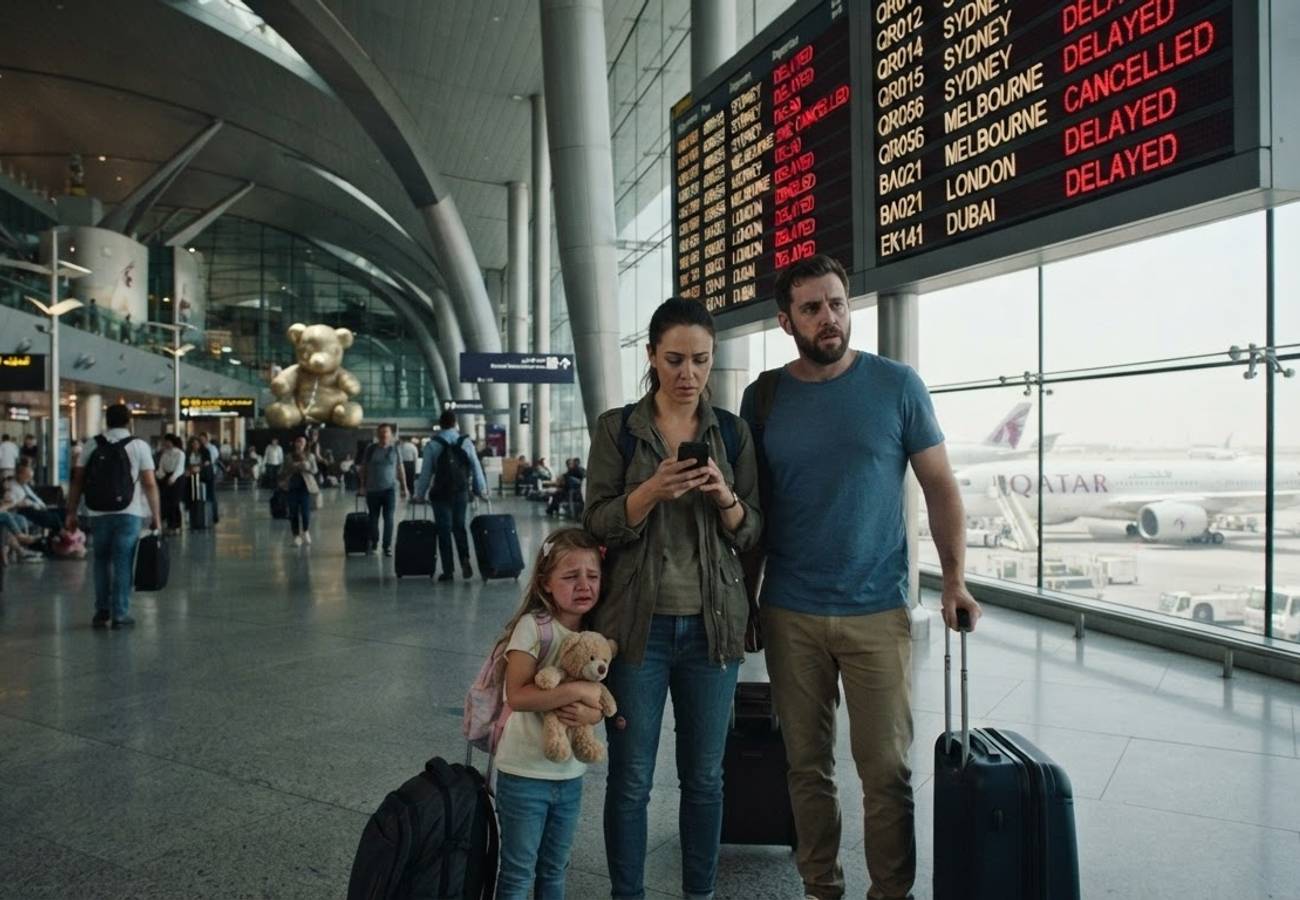
Image generated by AI
The Australian government has issued a formal travel advisory on July 13, 2026, urging citizens to reconsider travel to and through Qatar and the United Arab Emirates (UAE). This warning comes amid escalating security alerts in Doha and a volatile regional climate in the Middle East, placing millions of international transit passengers on high alert.
Because Doha, Dubai, and Abu Dhabi serve as the primary connective tissue for global aviation, the advisory extends beyond tourists. It specifically impacts passengers utilizing Emirates, Qatar Airways, and Etihad Airways, who face increased risks of flight delays, sudden route changes, and operational disruptions.
Escalation of the Doha Security Alert
The heightened alert in Doha follows reports of missile interception activity and intensifying regional tensions. In response to the volatility, Qatar authorities have ramped up security protocols. Australia has taken the preemptive step of temporarily closing public services at its embassy in Doha to ensure staff safety.
For the aviation sector, the primary concern is the unpredictability of airspace access. When regional conflicts escalate, airlines often avoid specific corridors, leading to longer flight paths, increased fuel consumption, and delayed arrivals.
Impact on Gulf Transit Hubs and Major Carriers
A critical point of the Australian government's guidance is that "transit is also travel." Even passengers who do not intend to leave the airport terminal are susceptible to the regional instability.
Operational Risks for Transit Passengers:
- Airspace Restrictions: Sudden closures of flight corridors can force immediate rerouting.
- Schedule Volatility: Increased likelihood of flight delays or abrupt cancellations.
- Insurance Complications: Some travel insurance policies may be voided or limited if a traveler enters a region under an official government "reconsider travel" warning.
- Connection Pressure: Reduced flexibility for passengers with tight layovers in the Gulf.
Qatar Travel Impact Analysis
| Category | Current Status |
|---|---|
| Travel Advisory | Australia advises reconsidering travel to Qatar |
| Primary Concern | Unpredictable security environment and potential military escalation |
| Key Aviation Hub | Hamad International Airport (Doha) |
| Primary Airline | Qatar Airways |
| Passenger Risk | Transit delays and operational disruptions |
UAE Travel Impact Analysis
| Category | Current Status |
|---|---|
| Travel Advisory | Australia advises reconsidering travel to the UAE |
| Primary Concern | Regional security uncertainty |
| Key Aviation Hubs | Dubai International Airport and Abu Dhabi International Airport |
| Primary Airlines | Emirates and Etihad Airways |
| Passenger Risk | Potential changes to Gulf transit operations |
Strategic Importance of Gulf Carriers
The stability of the Gulf region is paramount to global connectivity. Emirates, Qatar Airways, and Etihad Airways act as bridges between Europe, Asia, Africa, and Australia. Any disruption to these "super-hubs" creates a ripple effect across the entire global flight network.
| Airline | Base Country | Global Connectivity Role |
|---|---|---|
| Emirates | UAE | Major long-haul connector for Europe, Asia, Africa, and Australia |
| Qatar Airways | Qatar | Doha-based carrier serving critical international markets |
| Etihad Airways | UAE | Abu Dhabi-based connector for global destinations |
Regional Security Overview: Affected Countries
While the focus is on Qatar and the UAE, the security concerns extend across the wider Middle East, affecting various aviation and business markets.
| Country | Strategic Importance | Primary Concern |
|---|---|---|
| Qatar | Doha aviation hub | Security alerts and transit uncertainty |
| UAE | Dubai/Abu Dhabi hubs | Airport and airspace monitoring |
| Bahrain | Gulf aviation region | Regional security risks |
| Kuwait | Business/aviation market | Security developments |
| Oman | Regional connection | Wider Middle East tensions |
| Iran | Conflict center | Military escalation affecting flight routes |
Essential Pre-Flight Checklist for Travelers
Given the unpredictable nature of the current security environment, passengers flying through the Gulf should adopt a proactive strategy.
Flight and Route Management
- Verify flight status directly with the airline before departing for the airport.
- Confirm connection windows; if possible, opt for longer layovers to mitigate the risk of missed connections due to rerouting.
- Monitor official airport announcements rather than relying solely on social media.
Insurance and Documentation
- Review travel insurance policy wording regarding "government travel advisories."
- Confirm if the policy covers disruptions caused by regional military activity.
- Ensure all travel documents are up to date and accessible digitally.
Alternative Planning
- Identify alternative routing options (e.g., bypassing the Gulf) if the security situation deteriorates.
- Maintain a flexible itinerary to allow for rebooking.
The European Union Aviation Safety Agency (EASA) has also issued guidance regarding certain Middle Eastern airspaces, signaling that aviation authorities worldwide are maintaining a posture of high caution.
Travelers are urged to prioritize official government advisories and direct airline communications over unofficial sources during this period of instability.
Related Travel Guides
Disclaimer
This article is for informational and educational purposes only. It does not constitute legal, financial, or professional advice. While we strive to provide accurate and up-to-date information, travel policies, regulations, and conditions change rapidly. Always verify information with official sources before making travel decisions. Nomad Lawyer makes no representations about the accuracy, reliability, completeness, or suitability of the information provided. Readers should consult qualified professionals for advice specific to their circumstances. The views expressed in this article are those of the author and do not necessarily reflect the views of Nomad Lawyer.
Kunal K Choudhary
Co-Founder & Contributor
A passionate traveller and tech enthusiast. Kunal contributes to the vision and growth of Nomad Lawyer, bringing fresh perspectives and driving the community forward.
Learn more about our team →