
Public Transport Operators in the Netherlands, Belgium, and France Face Staggered Labor Strikes Disrupting Regional Rail and Bus Corridors in October 2026
Staggered public transport walkouts disrupt rail, bus, and metro corridors across the Netherlands, Belgium, and Lyon in October 2026 amid ongoing labor disputes.

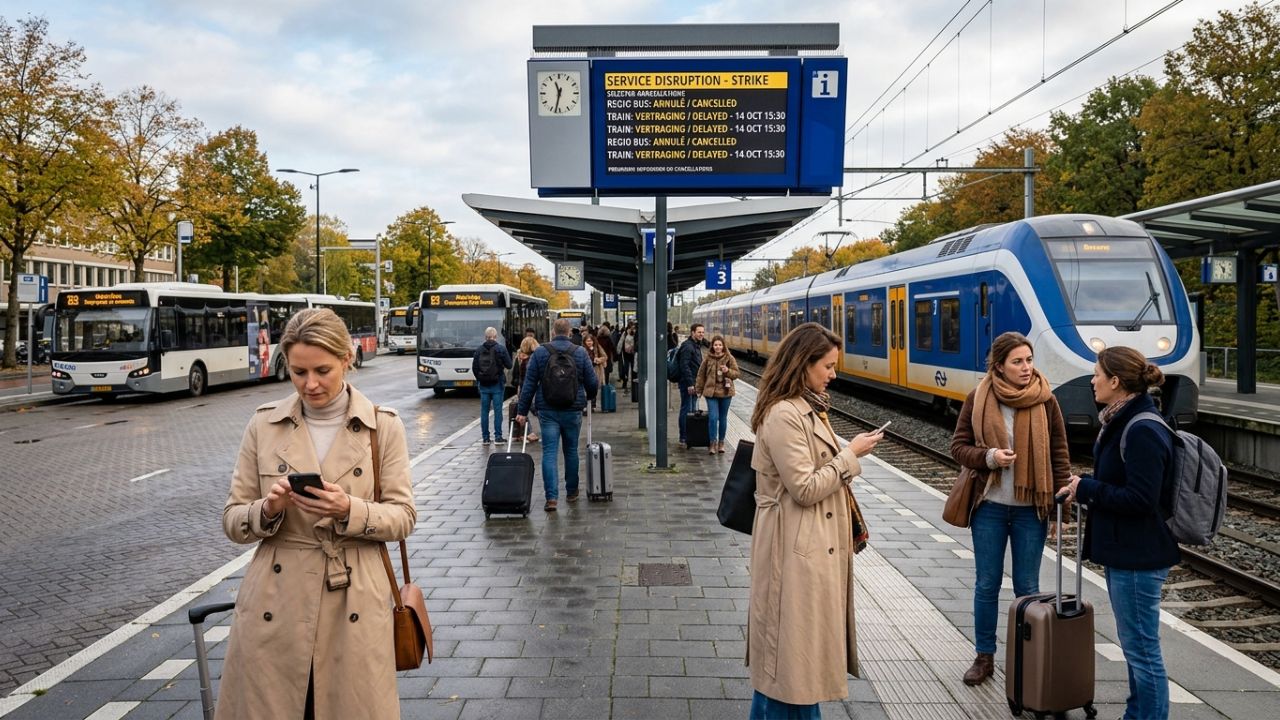
Transit networks across the Netherlands, Belgium, and France are experiencing widespread operational disruption throughout mid-October 2026 as uncoordinated, staggered labor strikes and service reductions impact regional rail, commuter buses, and urban transit corridors.
Independent trade union walkouts, stalled collective bargaining negotiations, and national policy demonstrations have converged across Western Europe over an eight-day window. Rather than a single coordinated continental shutdown, cross-border travelers face three distinct disputes: a 24-hour Dutch regional transit stoppage on 14 October, a sequence of Belgian public-sector actions spanning 8 to 12 October, and localized municipal bus walkouts in Lyon on 15 October.
Understanding the specific jurisdictional boundaries, operator contracts, and route exceptions is essential for commuters and international visitors navigating these corridors. A blanket strike warning obscures critical operational nuances, such as national rail lines running regular schedules while connecting regional bus routes remain suspended.
The Core Transit Update: Uncoordinated Rail and Bus Walkouts Across Western Europe
Cross-border transit across the Benelux region and neighboring France is coping with separate labor actions, each with distinct causes, participating labor unions, and geographic scopes.
| Disruption Parameter | The Netherlands | Belgium | France |
|---|---|---|---|
| Primary Dates | 14 October 2026 (00:00–24:00) | 8–12 October 2026 (Staggered) | 15 October 2026 (04:30–01:30) |
| Lead Trade Unions | FNV, CNV | CGSP, FGTB, CSC/ACV | Local TCL syndicates |
| Core Dispute Driver | Expired CAO, roster notice, pay | Pension reforms, indexation, funds | Working conditions, local staffing |
| Primary Transit Modes | Regional buses, provincial rail | SNCB rail, metros, trams, buses | Lyon municipal buses (Zones 1 & 2) |
| Unaffected Services | NS mainline rail, GVB, HTM | Core metro lines (reduced) | SNCF mainline TGV, Paris metro |
The Netherlands: 24-Hour Regional Transit Stoppage
In the Netherlands, public transport trade unions FNV and CNV issued an official call for a 24-hour nationwide regional transit walkout starting at midnight on Wednesday, 14 October, and concluding at midnight on Thursday, 15 October 2026. The action was initiated after eight negotiating rounds failed to produce a new collective labor agreement (CAO Openbaar Vervoer) to replace the previous accord that expired on 30 June 2026.
Union leaders set an early October deadline for the employers' association VWOV (Vereniging Werkgevers Openbaar Vervoer). When transport management rejected the unions' demands, labor representatives called on regional bus drivers, tram operators, and provincial rail conductors to withdraw their services.
The primary points of contention in the Dutch dispute include:
- Wage Adjustments: FNV is seeking a 6% salary increase to protect purchasing power against cumulative inflation.
- Roster Notification Windows: Employers requested contract flexibility allowing shift announcements with as little as 24 hours of advance notice under specific scheduling conditions.
- Unpaid Shift Splits: Disagreements regarding the duration and compensation of unpaid breaks during extended split-shift rosters.
- Senior Worker Protections: Union resistance against management proposals seeking to alter workload protections and early retirement provisions for older personnel.
The nationwide journey planner 9292 confirmed that regional bus operations would be heavily curtailed across most provinces. However, the action is confined to private concessionaires operating regional networks under provincial authority, leaving the national passenger rail network largely intact.
Belgium: Three Distinct Transit Actions Across Five Days
Belgium experienced a sequence of three separate transport disputes between 8 and 12 October 2026, driven by depot-level contract expirations and national protests against proposed federal socioeconomic policies:
- 8 October (Spontaneous Walloon Depot Walkouts): Bus drivers at several depots of Walloon regional operator TEC (Opérateur de Transport de Wallonie) initiated unannounced walkouts. Public-sector union CGSP stated that negotiations had been underway since February regarding four collective labor agreements. Management's intention to end a retirement-related agreement after December prompted depot-level staff to halt services.
- 9 October (Brussels National Demonstration): Trade union confederations staged a mass mobilization in central Brussels opposing federal proposals concerning automatic wage indexation, value-added tax adjustments, pension eligibility, and public spending cutbacks. Urban operator STIB-MIVB was forced to restrict operations to metro lines 1 and 5, while canceling night bus routes. Flemish transit operator De Lijn reported severe network disruption. At Brussels Airport, walkouts by ground handling personnel from Alyzia caused multiple flight cancellations.
- 11–12 October (Nationwide Public-Sector Strike): A broader public-sector stoppage commenced at 22:00 on Sunday, 11 October, running through Monday, 12 October. Belgian national railway operator SNCB (NMBS) and infrastructure authority Infrabel implemented an alternative skeleton timetable based on registered staff declarations. Eurostar cancelled multiple high-speed services connecting Brussels-Midi with London, Paris, and Amsterdam due to signal box and dispatch staffing constraints. An official travel advisory issued by Poland's Ministry of Foreign Affairs warned travelers of widespread rail, urban transit, and airport transfer delays across the kingdom.
France: Lyon Municipal Bus Walkouts and Regional Protests
France's primary service disruption during this timeframe is centered on Lyon, with secondary impacts from civic demonstrations in other metropolitan centers:
- Lyon TCL Stoppage (15 October): Public transit operator TCL (Transports en Commun Lyonnais) issued operational advisories confirming that bus services across metropolitan Zones 1 and 2 will experience severe cutbacks from 04:30 on Thursday, 15 October, until 01:30 on Friday, 16 October 2026. Feeder lines C26 and 116 are suspended entirely, while route 126 runs at reduced frequency.
- Houilles Suburban Stoppage (9 October): Keolis bus personnel servicing the Argenteuil Boucles de Seine network in the western suburbs of Paris cancelled approximately one-third of scheduled trips following local depot disputes.
- Urban Demonstrations: Transit operator RATP implemented temporary metro station closures and surface route diversions in Paris on 13 October in response to scheduled street protests. Municipal transport operators in Grenoble (M réso) and Angers (Irigo) likewise altered selected tram and bus schedules around civic gatherings.
- Aviation Stoppage Resolutions: Air Corsica settled its pilot contract dispute with normal operations resuming 13 October, while cabin crew union SNPNC-FO suspended its planned 17–21 October strike notice following negotiations. Travelers should note that Eurostar schedule adjustments on French lines in October represent planned engineering and track maintenance works, not industrial action.
Transit Schedule & Route Specifications
The following tables outline the operational status across affected operators in the Netherlands, Belgium, and France to assist travelers in identifying operating corridors and alternative links.
Dutch Regional Transport Concessions (14 October 2026)
| Transport Operator | Concession Territory | Operating Status | Traveler Advisory |
|---|---|---|---|
| NS (Mainline Rail) | National Intercity & Sprinter Lines | Normal Scheduled Timetable | Safe for intercity corridor travel |
| GVB Amsterdam | Amsterdam Municipal Transit | Normal Scheduled Timetable | Independent municipal labor agreement |
| HTM The Hague | Den Haag Municipal Transit | Normal Scheduled Timetable | Independent municipal labor agreement |
| RET Rotterdam | Rotterdam Municipal Transit | Metro & Trams Run; Buses Halted | No RET city or neighbourhood buses |
| Arriva Buses | Noord-Brabant Concessions | Fully Suspended | Zero regional bus departures |
| Arriva Buses | Achterhoek Concessions | Limited Service Running | Select school and trunk routes open |
| Arriva Rail | Limburg Regional Lines | Fully Suspended | Regional train corridors closed |
| EBS Haaglanden | South Holland Regional Routes | 8 Specified Routes Only | Routes 30, 31, 43, 45, 455, 456, 826, 827 |
| Keolis / Blauwnet | Almere, Utrecht, Overijssel | Heavily Curtailed | Reduced frequencies on bus and rail |
| Qbuzz | Groningen, Drenthe, Utrecht | Significant Cancellations | Severe rural bus connectivity loss |
| Transdev (Connexxion) | North Holland, Zeeland | Broad Route Reductions | Airport shuttles and feeders thinned |
| U-OV Utrecht | Utrecht Regional Transit | Trams 20 & 22 Suspended | Tram 21 conditional on driver turnout |
Belgian Transit Systems Operation Levels (8–12 October 2026)
| Network Authority | Operating Entity | Service Availability | Specific Line Disruptions |
|---|---|---|---|
| SNCB Rail Network | InterCity (IC) Services | ~70% of Timetable | Priority given to main Brussels trunk lines |
| SNCB Rail Network | Local & Suburban (L/S) | ~50% of Timetable | Extensive cancellations on rural branches |
| SNCB Rail Network | Peak Rush-Hour (P) Trains | ~20% of Timetable | Severe commuter crowding during peak hours |
| STIB-MIVB Brussels | Brussels Metro System | 100% of Lines (12 Oct) | Reduced frequency; only L1 & L5 ran 9 Oct |
| STIB-MIVB Brussels | Brussels Tramway Lines | Heavily Disrupted | Lines 18, 35, 39, 44, 51, and 93 suspended |
| De Lijn Flanders | Flemish Buses & Trams | Severely Thinned | Dynamic cancellations based on attendance |
| TEC Wallonia | Walloon Regional Buses | Depot-Dependent | Spontaneous walkouts from 8 October onward |
| Eurostar Rail | International High-Speed | Selected Cancellations | Brussels-Midi to London/Paris services cut |
| Brussels Airport | Ground Handling (Alyzia) | Local Flight Disruptions | Selected flight cancellations on 9 October |
French Metropolitan Transit Stoppages (15 October 2026)
| Authority / Operator | Geographic Zone | Operational Impact | Impacted Routes & Guidance |
|---|---|---|---|
| TCL Lyon (04:30–01:30) | Lyon Metropolitan Zone 1 | Severe Bus Disruption | Route C26 suspended; Route 126 thinned |
| TCL Lyon (04:30–01:30) | Lyon Metropolitan Zone 2 | Severe Bus Disruption | Route 116 suspended; outer feeders halted |
| Keolis Houilles (9 Oct) | Argenteuil Boucles de Seine | ~33% Scheduled Trips Cut | Local suburban passenger delays |
| RATP Paris (13 Oct) | Central Paris Network | Temporary Station Closures | Demonstration diversions along surface lines |
| M réso Grenoble | Grenoble Metropolitan Area | Schedule Diversions | Service rerouted during civic demonstrations |
| Irigo Angers | Angers Urban Transit | Surface Route Diversions | Selected street alterations around rallies |
Traveler Logistics Guide: Navigating Multi-Country European Strikes
Successfully navigating overlapping transport strikes across Western Europe requires defensive itinerary planning, reliable digital tracking, and alternative transit arrangements.
===================================================================================
             PASSENGER ACTION CHECKLIST: CROSS-BORDER TRANSIT STRIKES
===================================================================================
 [BEFORE DEPARTURE]
  * Download live operator tools: 9292.nl (NL), SNCB App (BE), TCL App (Lyon).
  * Do not rely on printed timetables or cached digital journey plans.
  * Verify whether municipal networks (GVB, HTM) operate under separate agreements.

 [CONNECTION WINDOWS]
  * Mainline Rail to Regional Bus: Allow a minimum 45-to-60-minute buffer.
  * International Rail (Eurostar): Reconfirm seat reservations 12 hours prior.
  * Airport Transfers: Allow 3.5 hours before departure at AMS and BRU.

 [LAST-MILE STRATEGIES]
  * Netherlands: Rent an OV-fiets bicycle at NS railway stations.
  * Brussels: Use Villo! bike share or central metro corridors (Lines 1 & 5).
  * Lyon: Rely on Vélo'v shared bikes or the Rhônexpress airport tram.
===================================================================================
Digital Journey Verification and Real-Time Tracking
Passengers should never rely on standard timetables or third-party ticketing platforms during active industrial action. Instead, verify service statuses via official operator platforms:
- The Netherlands: Consult the national multi-modal journey planner 9292.nl or the official Nederlandse Spoorwegen (NS) mobile application. Regional operators Arriva, EBS, and Keolis update individual route cancellation feeds directly to 9292 every 15 minutes.
- Belgium: Monitor the national rail portal SNCB / NMBS, which publishes alternative strike timetables 24 hours in advance. For Brussels urban travel, use the STIB-MIVB app; for Flanders, consult De Lijn; and for Wallonia, check the official TEC portal.
- France: Passengers in Lyon must check the TCL application or the official TCL website for real-time line cancellations in Zones 1 and 2. For national rail travel, consult SNCF Connect to distinguish regular schedules from planned civil engineering adjustments.
The Regional "Last-Mile" Bottleneck
The primary vulnerability during the Dutch regional walkout is the disconnect between national railway trunks and provincial road transport:
- Intercity Trains Function: Mainline NS services connecting Amsterdam Centraal, Utrecht Centraal, Rotterdam Centraal, Den Haag Centraal, and Eindhoven operate on standard timetables.
- Station Stranding Risk: Commuters arriving at secondary rail stations such as Den Bosch, Zwolle, or Breda face severe challenges reaching outlying villages, industrial parks, or tourist accommodations without connecting buses.
- Municipal Transit Boundaries: While Amsterdam (GVB) and The Hague (HTM) city trams and metros run normally, crossing into suburban concession territories managed by Connexxion or EBS leads to abrupt service cancellations.
- Rotterdam Bus Disconnection: In Rotterdam, RET metro and tram services continue running, but RET municipal and neighbourhood buses are grounded on 14 October, leaving passengers dependent on light rail or rideshare options for eastern suburban transfers.
Cross-Border Rail and Airport Connection Buffers
Travelers planning cross-border rail journeys or airport departures must adjust transit windows:
- Brussels Airport (BRU) Transit: When De Lijn buses and SNCB rail links operate at reduced frequency, road traffic on the Brussels Ring (R0) increases significantly. Travelers should plan private airport transfers or taxis at least 3.5 hours prior to scheduled flight departures.
- Amsterdam Airport Schiphol (AMS): While direct NS trains between Amsterdam Centraal and Schiphol operate on normal schedules, regional feeder buses from Noord-Holland and Zuid-Holland are severely thinned. Travelers should route exclusively via NS rail stations.
- Eurostar Rescheduling: When high-speed departures between Brussels, London St Pancras, and Paris Gare du Nord are cancelled, Eurostar allows passengers to exchange tickets free of charge or request full digital refunds through their booking portal.
European Union Passenger Compensation Entitlements
Passengers facing strike cancellations are protected under European Union consumer transit frameworks:
| Transit Classification | Regulatory Framework | Delay Threshold | Statutory Passenger Entitlement |
|---|---|---|---|
| Rail Transport | Regulation (EC) No 1371/2007 | Exceeding 60 Minutes | Choice of full ticket refund or rerouting |
| Long-Distance Coach | Regulation (EU) No 181/2011 | Exceeding 120 Minutes | Rerouting or refund plus 50% compensation |
| Regional Bus & Tram | National Concession Rules | Route Cancellation | Operator refund; exempt from EU delay payouts |
- Rail Passenger Rights (EU 1371/2007): If an SNCB or cross-border high-speed service is cancelled or delayed by more than 60 minutes, travelers are entitled to a full ticket reimbursement or alternative transport to their destination at the earliest opportunity under comparable conditions.
- Regional Bus Limitations: Urban and regional bus services covering distances under 250 kilometres are exempt from the delay compensation provisions of EU Regulation 181/2011. Passengers must file reimbursement claims directly with the respective concessionaire (e.g., Arriva, Keolis, Qbuzz) utilizing their registered travel card or contactless payment records.
Infrastructure Impact Assessment: Regional Mobility Under Economic Pressure
The October transit disruptions expose structural vulnerabilities across European public transport models, where budget constraints, labor shortages, and evolving regulatory expectations collide.
The Northern Dutch Autumn Holiday Bottleneck
The timing of the Dutch regional transport strike coincided directly with the official autumn school break (Herfstvakantie) in the northern region of the Netherlands, scheduled from 10 to 18 October 2026. This period generates peak domestic leisure travel, with thousands of families relying on regional bus connections to reach vacation parks in Drenthe, nature reserves across the Veluwe, and coastal resorts in Zeeland.
With regional bus fleets halted, holidaymakers without private vehicles were forced to rely on expensive regional taxis or cancel recreational excursions, creating commercial losses for regional hospitality and retail operators.
The €300 Million Dutch Accessibility Program
The regional bus dispute aligns with broader policy concerns regarding the financial viability of private concession models. On 5 October 2026, the Dutch government released an official public transport evaluation outlining a structural investment of €300 million dedicated to preserving regional accessibility.
The government assessment highlighted three persistent structural challenges:
- Rural Route Contraction: Post-pandemic shifts in commuting patterns have reduced passenger revenue on peripheral rural routes.
- Workforce Shortages: High driver turnover and an aging operator workforce have strained operators' ability to fulfill concession schedules.
- Budgetary Constraints: Concession operators face escalating operational costs that exceed local municipal subsidy allocations.
Government officials clarified that the €300 million allocation is earmarked for long-term physical infrastructure upgrades, accessibility enhancements, and intermodal transport hubs, rather than subsidizing wage disputes under private concession contracts. This division between public capital spending and operational wage negotiations remains a core factor driving union walkouts.
Wallonia's Guaranteed Minimum Service Framework
In Belgium, recurrent transit walkouts have accelerated legislative debates regarding passenger reliability during industrial disputes. In April 2026, the Walloon regional government proposed a modern public service contract for TEC designed to introduce guaranteed minimum service levels during strikes.
The proposed reform package incorporates:
- 48-Hour Advance Notice: Requiring transport staff to submit individual strike declarations at least 48 hours prior to industrial action.
- Guaranteed Core Skeleton Timetables: Ensuring dependable bus corridors connecting major hospitals, academic institutions, and central employment zones during walkouts.
- Final Union Accord by 2027: Negotiating an updated operating framework with representative trade unions before the conclusion of 2027.
Because these statutory minimum service rules remain under legislative formulation, Belgian commuters and international visitors in October 2026 remained exposed to unannounced depot walkouts and irregular service intervals.
With FNV and CNV warning of potential follow-up actions across the Netherlands, and Belgian trade union federations discussing further national mobilizations for November, European transit passengers must incorporate flexibility and verified operator data into their upcoming travel plans.
Frequently Asked Questions
Are Dutch national railway (NS) trains running during the regional bus strike?
Yes. National rail operator NS operates its standard timetable on 14 October 2026. The 24-hour strike affects private regional bus concessionaires, regional rail corridors like Arriva Limburg, and selected municipal tram lines in Utrecht.
Which city transport networks in the Netherlands remain unaffected on 14 October?
Municipal transport systems in Amsterdam (GVB) and The Hague (HTM) operate standard schedules under separate municipal agreements. In Rotterdam, RET trams and metros operate normally, though RET municipal buses are suspended.
What services were disrupted in Belgium between 8 and 12 October?
Disruptions included Walloon TEC depot stoppages, restricted Brussels STIB-MIVB metro and tram operations, severe De Lijn route cuts, and an SNCB rail skeleton timetable running 70% of InterCity and 20% of peak-hour trains.
What lines are affected by the Lyon TCL bus strike on 15 October?
The Lyon TCL bus strike impacts Zones 1 and 2 from 04:30 on 15 October to 01:30 on 16 October 2026. Lines C26 and 116 are suspended, while route 126 runs at reduced frequency.
Related Travel Guides
Disclaimer
This article is for informational and educational purposes only. It does not constitute legal, financial, or professional advice. While we strive to provide accurate and up-to-date information, travel policies, regulations, and conditions change rapidly. Always verify information with official sources before making travel decisions. Nomad Lawyer makes no representations about the accuracy, reliability, completeness, or suitability of the information provided. Readers should consult qualified professionals for advice specific to their circumstances. The views expressed in this article are those of the author and do not necessarily reflect the views of Nomad Lawyer.
Kunal K Choudhary
Co-Founder & Contributor
A passionate traveller and tech enthusiast. Kunal contributes to the vision and growth of Nomad Lawyer, bringing fresh perspectives and driving the community forward.
Learn more about our team →