
Australia Airports Restore E Gates After 14 Hour Outage Disrupts Sydney, Brisbane and Melbourne Travel, New Update
Australia Airports Restore E Gates After 14 Hour Outage Disrupts Sydney, Brisbane and Melbourne Travel, New Update

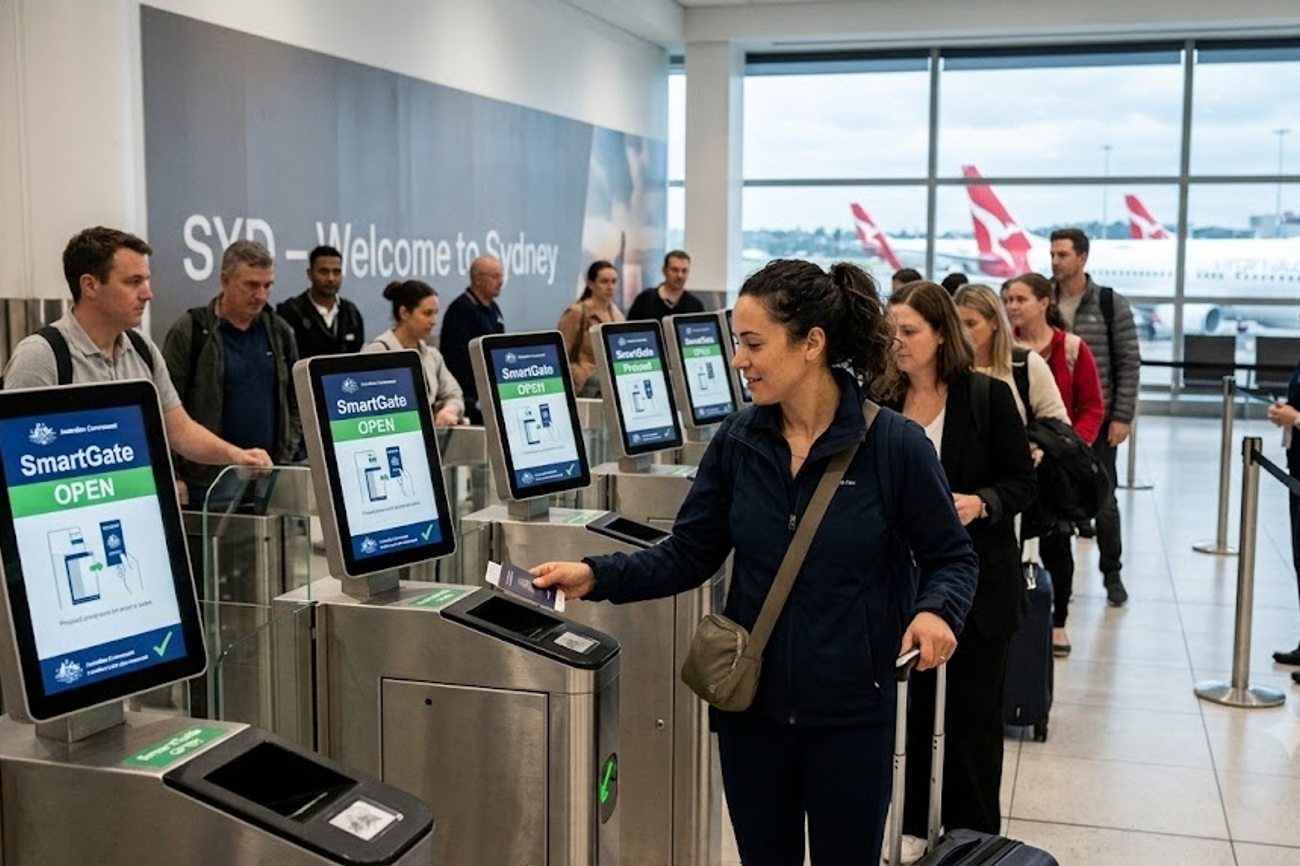
Image generated by AI
[Brisbane, October 2024] — A massive 14-hour electronic gate failure paralyzed border processing across Australia’s three largest international gateways, forcing the manual processing of thousands of passengers during the onset of the school holiday rush.
The technical blackout began at approximately 9:00 PM on Thursday and persisted until shortly after 11:00 AM on Friday. The outage stripped the Australian Border Force of its automated processing capabilities at Sydney Airport, Brisbane Airport, and Melbourne Airport, creating significant bottlenecks for both arriving and departing international travelers.
Systemic Technical Collapse
The disruption was triggered by a widespread failure of the e-gate network, the primary mechanism for automated passport verification and border clearance. Because the failure affected the centralized electronic infrastructure, automated kiosks and gates became entirely non-functional across the three major hubs simultaneously.
Technicians worked through the night to restore the system, while the Australian Border Force shifted to emergency manual processing protocols. This required every traveler to be vetted individually by an officer, a process significantly slower than the automated alternative. While the systems returned to full operational status by Friday morning, the specific root cause of the failure remains under investigation.
Infrastructure and Passenger Impact
The outage hit during a period of peak vulnerability for Australian aviation infrastructure. The collapse occurred exactly as school holidays commenced in Victoria and Queensland, a window characterized by a surge in international departures and arrivals.
The scale of the disruption is highlighted by the following affected hubs:
- Brisbane Airport (BNE): Faced the highest relative pressure due to a forecast 6.1 per cent increase in international travel between September 18 and October 12 compared to the previous year.
- Sydney Airport (SYD): Experienced significant queuing for both inbound and outbound international flights.
- Melbourne Airport (MEL): Required emergency staffing deployments to manage manual border checks for all international passengers.
The timing of the failure was particularly ironic for Brisbane Airport, which had just inaugurated a new 12-lane passport control area in its International Terminal. This facility was specifically designed to streamline passenger flow and reduce stress ahead of the holiday surge, yet its efficiency was neutralized by the broader system failure.
What This Means for Travelers
For passengers currently flying into or out of Australia, the immediate crisis has passed, but the incident reveals critical vulnerabilities in the border processing chain.
Current Status: Automated e-gates are now fully operational. Queues at SYD, MEL, and BNE have returned to baseline levels.
The "Real World" Impact: When e-gates fail, the "fast track" experience disappears. Travelers who typically breeze through border control in minutes may face wait times extending into hours. For those with tight connections or limited layover windows, a manual processing requirement can lead to missed flights.
Traveler Advice: If you are traveling during the remainder of the school holiday period, allow an additional 60 to 90 minutes for international departures. While the systems are back online, the backlog created by such failures often ripples through airport logistics for several days. Ensure all travel documents are physically accessible, as manual checks require officer verification of passports and visas.
Border Resilience and Future Outlook
This incident is not an isolated event; reports indicate it follows a series of previous, smaller disruptions to Australia’s passport-processing systems. The recurrence of these failures suggests a systemic instability in the digital infrastructure managing the nation's borders.
The Australian government and airport operators are now under pressure to ensure that "fail-safe" mechanisms are more robust. The deployment of additional officers on Friday proved to be an effective stop-gap, but the reliance on manual labor during a 6.1 per cent traffic increase is unsustainable for long-term operations.
The investigation into the cause of the 14-hour blackout will likely focus on whether the failure was a software glitch, a hardware malfunction at a central data hub, or a wider network connectivity issue. Until a formal cause is released by the Department of Home Affairs, the aviation industry remains on high alert for similar outages during the upcoming peak December travel window.
FAQ: Australia Airport Outages 2024
Are the e-gates currently working at Sydney, Melbourne, and Brisbane airports? Yes. All electronic gates were restored shortly after 11:00 AM on Friday. Automated processing is now available for all eligible passengers at these three international gateways.
What should I do if I encounter a border processing delay? Follow the directions of the Australian Border Force officers. If you have a connecting flight and are delayed by manual processing, notify your airline immediately to see if your connection can be held or rebooked.
Why did the queues become so long during the outage? The outage forced a shift from automated processing to manual officer checks. This transition, combined with a forecasted 6.1 per cent increase in holiday traffic at Brisbane, created a volume of passengers that exceeded manual processing capacity.
Who is responsible for the e-gate systems? The electronic border processing systems are managed by the Australian Border Force and the Department of Home Affairs, rather than the individual airport operators.
Border security is only as strong as the code it runs on.
#SYD-MEL-BNE-2024 #AustralianBorderForce #BrisbaneAirport #SydneyAirport #MelbourneAirport #BorderProcessingFailure
Related Travel Guides
Disclaimer
This article is for informational and educational purposes only. It does not constitute legal, financial, or professional advice. While we strive to provide accurate and up-to-date information, travel policies, regulations, and conditions change rapidly. Always verify information with official sources before making travel decisions. Nomad Lawyer makes no representations about the accuracy, reliability, completeness, or suitability of the information provided. Readers should consult qualified professionals for advice specific to their circumstances. The views expressed in this article are those of the author and do not necessarily reflect the views of Nomad Lawyer.
Kunal K Choudhary
Co-Founder & Contributor
A passionate traveller and tech enthusiast. Kunal contributes to the vision and growth of Nomad Lawyer, bringing fresh perspectives and driving the community forward.
Learn more about our team →