
Asia Air Travel Disruption: 136 Flights Cancelled and 4,153 Delayed Across Delhi, Shenzhen, Tokyo, and Jakarta

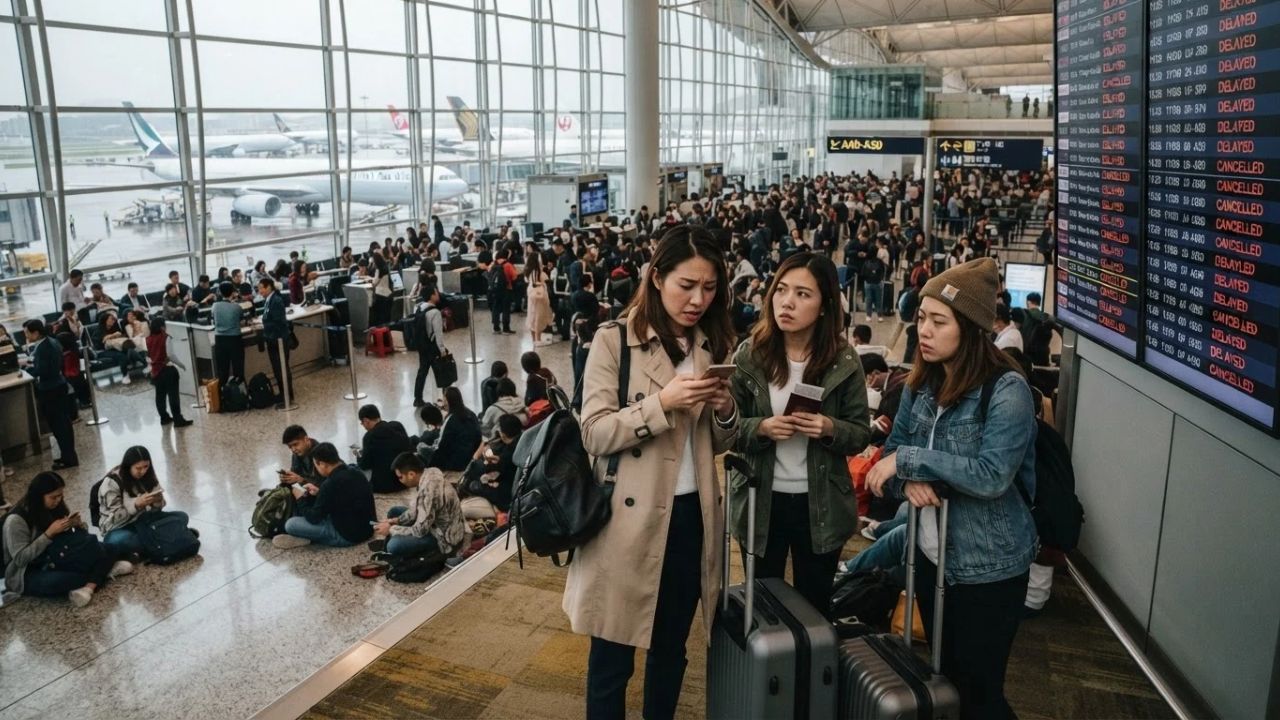
Intense operational congestion and cascading schedule friction disrupted international air travel across Asia on September 14, 2026, as verified flight-tracking data recorded 136 flight cancellations and 4,153 delays across major transit gateways. Compounded by compressed aircraft turnarounds, weather challenges, and air traffic control slot restrictions, the wave of delays impacted major international hubs spanning Tokyo, Shenzhen, Delhi, Jakarta, Kuala Lumpur, and the Gulf, stranding passengers and fracturing connection windows across four global subregions.
According to real-time flight tracking data logged on 13 September 2026 at 2:20 pm ET USA (14 September 2026, 2:22 am China Time / GMT+8) via FlightAware, the disruption was led by intense airport congestion in India and China, alongside significant operational cancellations across Indonesian and Saudi Arabian carrier networks. The regional bottleneck demonstrates the fragile balance of Asia’s commercial aviation corridors, where localized ground delays trigger cross-border ripples across intercontinental flight schedules.
India and China: The Epicenters of Airport Schedule Pressure
India recorded some of the most concentrated delay metrics across the Asian continent, with the national capital facing unprecedented gate and runway backlogs.
Indira Gandhi International Airport (DEL) in Delhi recorded 596 delayed flights and 5 cancellations, making it the single most impacted airport in Asia by delay volume. The capital hub’s delays created compounding pressures across domestic feeder routes. Mumbai’s Chhatrapati Shivaji Maharaj International Airport (BOM) also weathered heavy friction, registering 203 delays and 2 cancellations. Elsewhere across the country, Bengaluru International Airport (BLR) logged 92 delays and 2 cancellations, while Pune Lohegaon Airport (PNQ) reported 42 delays alongside 3 cancellations.
Indian airlines absorbed heavy schedule impacts:
- IndiGo: The country's largest carrier recorded 449 delayed flights—representing a 22% delay rate across its daily operations—paired with 4 cancellations, making it the most delayed airline across Asia.
- Air India Express: Logged 121 delays, reflecting a 26% operational delay rate, alongside 1 cancellation.
- Akasa Air: Reported 31 delayed services, marking a 17% delay rate, with 4 cancellations.
- SpiceJet: Experienced the highest relative rate of disruption, recording 37 delays—a staggering 58% delay rate across its scheduled flights—alongside 7 cancellations.
Across China, major economic and industrial centers experienced corresponding flight delays. Shenzhen Bao’an International Airport (SZX) emerged as the second-most delayed hub in Asia, logging 406 delays and 1 cancellation.
Other key Chinese air hubs faced severe schedule strain:
- Beijing Capital International Airport (PEK): Recorded 174 delays and 2 cancellations.
- Shanghai Pudong International Airport (PVG): Logged 144 delays and 2 cancellations.
- Shanghai Hongqiao International Airport (SHA): Reported 102 delays and 3 cancellations.
- Chengdu Shuangliu International Airport (CTU): Logged 71 delays and 3 cancellations.
- Chengdu Tianfu International Airport (TFU): Reported 63 delays and 5 cancellations.
Chinese network carriers experienced widespread fleet rotation friction. China Southern Airlines recorded 267 delays (an 11% delay rate) and 2 cancellations. China Eastern Airlines reported 207 delays (an 8% delay rate) and 8 cancellations, while flag carrier Air China recorded 158 delays (an 8% delay rate) alongside 5 cancellations.
Southeast Asia: High Cancellation Volumes Across Regional Gateways
Southeast Asian aviation corridors experienced severe operational strain, impacting key tourism gateways and trunk business corridors:
- Jakarta (Soekarno-Hatta International Airport - CGK): Reported 193 delays and 20 cancellations—the highest cancellation total recorded at any single airport in the regional dataset.
- Tan Son Nhat International Airport (SGN - Ho Chi Minh City): Vietnam's busiest commercial hub registered 197 delays and 1 cancellation, while capital gateway Noi Bai International Airport (HAN - Hanoi) logged 150 delays and 1 cancellation. Vietnam Airlines weathered 98 delays (a 25% delay rate) and 1 cancellation.
- Kuala Lumpur International Airport (KUL): Handled 211 delays and 2 cancellations. Among Malaysian operators, AirAsia recorded 64 delays (a 13% delay rate) and 2 cancellations; Malindo Air recorded 59 delays, representing a 42% delay rate; and Malaysia Airlines reported 42 delays alongside 1 cancellation.
- Manila (Ninoy Aquino International Airport - MNL): The Philippine gateway logged 128 delays and 2 cancellations.
Indonesian airlines recorded substantial operational cancellations. Batik Air recorded 57 delays (a 17% delay rate) and 16 cancellations, Citilink reported 17 delays and 6 cancellations, and national carrier Garuda Indonesia recorded 19 delays and 1 cancellation.
East Asia and Middle East Hubs Absorb Cascading Shocks
The disruption wave extended across East Asian transit terminals and Middle Eastern transfer hubs:
- Tokyo Haneda International Airport (HND): Japan's premier domestic and international gateway logged 210 delays and 1 cancellation. Japan Airlines recorded 106 delays (a 13% delay rate) and 1 cancellation, while regional subsidiary Hokkaido Air System recorded 2 cancellations with zero delays.
- Seoul Incheon International Airport (ICN): South Korea's main international hub handled 114 delays and 3 cancellations.
- Hong Kong International Airport (HKG): Logged 149 delays and 1 cancellation.
- Dubai International Airport (DXB): The world’s busiest international airport registered 167 delays and 2 cancellations.
In Saudi Arabia, scheduled operations saw concentrated cancellations. King Abdulaziz International Airport (JED) in Jeddah reported 84 delays and 10 cancellations. King Khalid International Airport (RUH) in Riyadh logged 70 delays and 9 cancellations. Regional facilities also absorbed ground stops: Abha Regional Airport (AHB) recorded 18 delays and 6 cancellations, while Gizan Regional Airport (GIZ) and Najran Domestic Airport (EAM) recorded zero delays but 4 cancellations each.
Flag carrier Saudia recorded 47 delays (an 8% delay rate) and 18 cancellations, representing the single highest cancellation tally among all Asian and Middle Eastern airlines included in the operational dataset.
The Mechanics of Multi-Hub Delays: Aircraft Rotations and Congestion
Commercial aviation in Asia relies heavily on high-utilization aircraft scheduling. Narrow-body aircraft such as the Airbus A320 and Boeing 737 families frequently operate between six and eight flight sectors per day with scheduled ground turnarounds as brief as 30 to 45 minutes.
When an initial morning flight experiences gate holds or air traffic control flow control at a megahub like Delhi, Shenzhen, or Jakarta, the operating aircraft falls behind schedule for every subsequent flight leg. Crew duty-time limitations (Flight Duty Periods) further restrict recovery options; if a flight crew reaches maximum legal operating hours while waiting out a ground delay, the aircraft cannot depart until a reserve relief crew is mobilized.
Coupled with convective autumn weather systems and tight airspace corridors over the South China Sea and the Bay of Bengal, even minor ground friction generates exponential schedule unraveling across regional networks.
Passenger Rights and Protection Frameworks Across Asian Jurisdictions
Travelers caught in multi-hour delays or abrupt cancellations possess clear statutory protections, though enforcement depends heavily on jurisdiction:
1. India (DGCA Civil Aviation Requirements)
Under DGCA CAR Section 3, Series M, Part IV, airlines must provide complimentary meals and refreshments for delays exceeding two hours on flights with block times under two hours, or three hours for longer domestic sectors. For cancellations announced with less than 24 hours' notice, carriers must offer an alternate flight or a 100% refund, alongside hotel accommodations if the rescheduled flight departs the following day.
2. Southeast Asia (Indonesia & Malaysia)
- In Indonesia, Ministry of Transportation Regulation PM 89/2015 establishes strict compensation tiers: delays exceeding 4 hours require financial compensation of IDR 300,000, while flight cancellations mandate a full cash refund or immediate rebooking on the next available service.
- In Malaysia, the Malaysian Aviation Consumer Protection Code (MACPC) enforces mandatory meals, telephone calls, internet access, and hotel accommodations for delays exceeding two hours, alongside full ticket reimbursement for flights delayed beyond five hours if the traveler declines re-routing.
3. Saudi Arabia (GACA Regulations)
Under the General Authority of Civil Aviation (GACA) consumer regulations, passengers facing cancellations without at least 14 days' advance notice are entitled to compensation ranging from 50% to 100% of the ticket value, in addition to full rerouting, immediate hotel accommodation, and ground transit support.
Local Traveler Insider Advice for Managing Flight Disruptions
To safeguard your journey when navigating congested Asian airports, apply these field-tested operational strategies:
- Buffer Connecting Flights: When self-connecting between different airlines or booking split-ticket itineraries across mega-hubs (such as Delhi, Jakarta, or Kuala Lumpur), maintain a minimum layover buffer of at least 3.5 to 4 hours. Dedicated international-to-domestic transfers at Delhi (transferring between Terminal 1 and Terminal 3) or Jakarta (transferring between Terminal 2 and Terminal 3 via the Skytrain) require exiting security and re-checking luggage.
- Monitor Live Aircraft Positioning: Rather than relying solely on airline departure boards, use flight tracking platforms (like FlightAware or Flightradar24) to track the inbound registration number of your assigned aircraft. Identifying where your plane is arriving from alerts you to impending delays hours before gate agents post official notifications.
- High-Speed Rail Alternatives: For domestic regional travel during major aviation disruptions, pivot to high-speed rail networks:
- Japan: If flights between Tokyo Haneda and Osaka/Nagoya face delays, board the Tokaido Shinkansen from Tokyo or Shinagawa Station for guaranteed, weather-resilient 2.5-hour city-center to city-center transit.
- India: For routes between Delhi and Jaipur, Agra, or Chandigarh, book express Vande Bharat or Shatabdi rail services, which run punctually and bypass runway congestion entirely.
- Lounge and Transit Rest Strategies: If trapped during extended holding delays, leverage airport lounges to access reliable Wi-Fi, charging points, and complimentary dining. Key transit sanctuaries include the Encalm Lounges at Delhi (T3), the Plaza Premium Lounge network across Kuala Lumpur, and the TIAT Lounges at Tokyo Haneda.
- Preserve Documentation: Retain all physical boarding passes, digital booking confirmation emails, SMS delay alerts, and dated receipts for airport meals or hotel rooms. These records are required when filing compensation claims under statutory passenger charters or claiming travel insurance reimbursements.
Aviation Outlook: The Challenge of Managing Asia’s Air Mobility
The 4,153 delays and 136 cancellations recorded across Asia reflect the immense growing pains of the world's most dynamic aviation market. As passenger demand continues to outpace ground infrastructure and airspace management modernization, operational resilience will define airline competitiveness.
For travelers, navigating modern Asian skies requires proactive planning, constant monitoring of flight schedules, and a clear understanding of regulatory rights. In an era of interconnected global air travel, being prepared for disruptions is just as important as booking the ticket.
Related Travel Guides
- South Africa Launches Digital ETA System: How Visa Modernization Across Africa Is Reshaping Safari Travel
- Spain and EU Join Luzon Economic Corridor: Infrastructure Leap to Transform Philippines Travel Across Subic, Clark, Manila, and Batangas
- Malaysia Airlines Signs Seven Asia-Pacific Tourism Pacts at MATTA Fair 2026 to Boost Regional Travel
Disclaimer
This article is for informational and educational purposes only. It does not constitute legal, financial, or professional advice. While we strive to provide accurate and up-to-date information, travel policies, regulations, and conditions change rapidly. Always verify information with official sources before making travel decisions. Nomad Lawyer makes no representations about the accuracy, reliability, completeness, or suitability of the information provided. Readers should consult qualified professionals for advice specific to their circumstances. The views expressed in this article are those of the author and do not necessarily reflect the views of Nomad Lawyer.
Raushan Kumar
Founder & Lead Developer
Full-stack developer with 11+ years of experience and a passionate traveller. Raushan built Nomad Lawyer from the ground up with a vision to create the best travel and law experience on the web.
Learn more about our team →