
Asia Flight Disruptions: 1,578 Delays and 106 Cancellations Impact Delhi, Singapore, Jakarta, and 22 Airports
Over 1,578 flight delays and 106 cancellations hit 22 Asian airports on September 12, 2026. View airport data, airline impact, and transit advice.

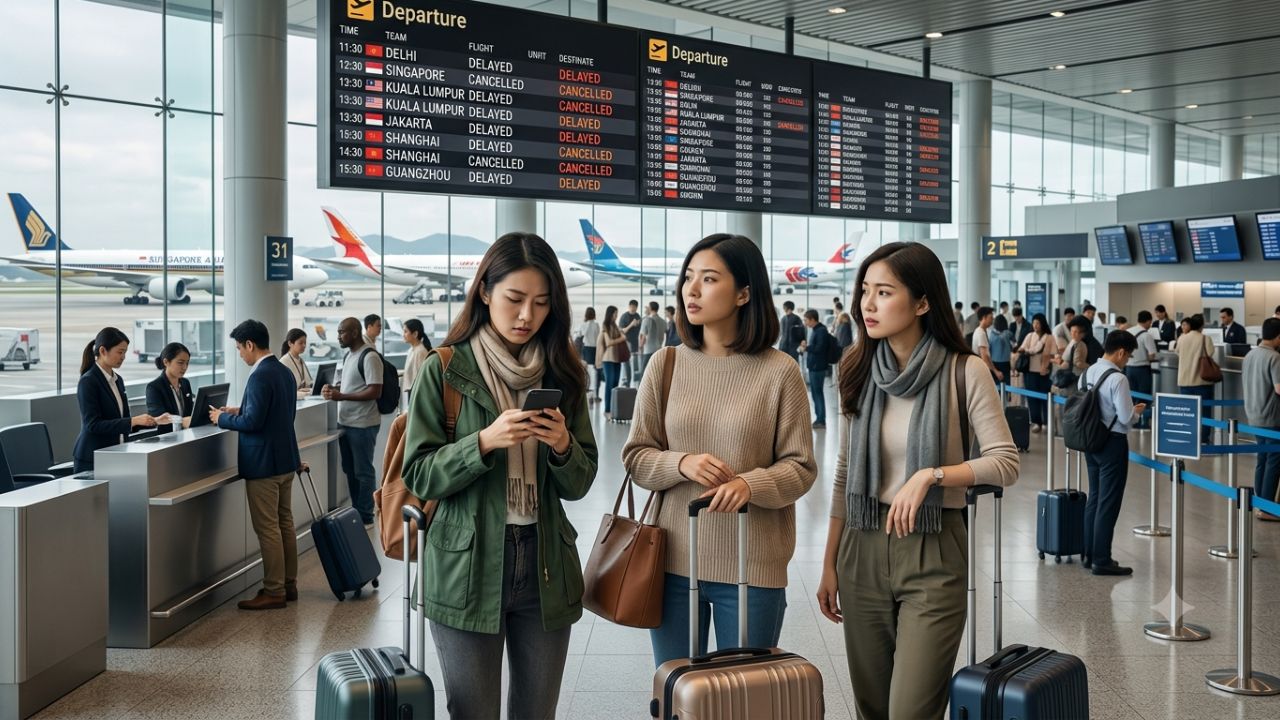
Image credit – Changi Airport
Air travel across South, Southeast, and East Asia experienced major disruption as 1,578 flight delays and 106 cancellations hit 22 major airports across six countries.
SINGAPORE — Commercial aviation across the Asia-Pacific region recorded 1,684 combined schedule modifications (1,578 delays and 106 cancellations) across 22 airports in Malaysia, Indonesia, the Philippines, India, China, and Singapore. According to real-time flight tracking data recorded by FlightAware on September 12, 2026, at 2:03 PM ET USA (11:33 PM IST), aircraft rotation delays and air traffic pacing created connection bottlenecks at major regional hubs.
Indira Gandhi International Airport (DEL) in Delhi recorded the highest number of delayed flights nationwide, while Soekarno-Hatta International Airport (CGK) in Jakarta recorded the highest cancellation total across the region.
Regional Disruption Summary by Major Asian Airport Hubs
Schedule modifications impacted major transfer hubs and regional gateways, with heavy delay volumes concentrated at Delhi, Kuala Lumpur, Shanghai Pudong, Jakarta, and Singapore Changi.
| Airport Name (Code) | Country | Flight Delays | Flight Cancellations | Origin Delay % | Destination Delay % |
|---|---|---|---|---|---|
| Indira Gandhi Intl (DEL) | India | 276 | 8 | 23% | 19% |
| Kuala Lumpur Intl (KUL) | Malaysia | 192 | 3 | 16% | 18% |
| Shanghai Pudong (PVG) | China | 172 | 3 | 8% | 12% |
| Soekarno-Hatta Intl (CGK) | Indonesia | 159 | 21 | 13% | 13% |
| Singapore Changi (SIN) | Singapore | 101 | 4 | 9% | 9% |
| Guangzhou Baiyun (CAN) | China | 80 | 9 | 4% | 5% |
| Shanghai Hongqiao (SHA) | China | 44 | 8 | — | — |
| 15 Other Asian Hubs* | Multi-country | 554 | 50 | Varied | Varied |
*Other affected airports include Penang, Kuala Namu, Cebu, Manila, Kochi, Chennai, Wuhan, Nanjing, Chongqing, Xi'an, Beijing, Chengdu, Haikou, and Kunming.
Airline Performance Breakdown across Asia-Pacific
Major flag carriers and low-cost operators absorbed significant operational friction during the disruption window.
| Airline Carrier | Country of Origin | Flight Delays | Flight Cancellations | Operational Metrics |
|---|---|---|---|---|
| China Eastern Airlines | China | 164 | 12 | Highest delay total among regional carriers |
| Air China | China | 84 | 11 | Combined long-haul & domestic schedule impact |
| Batik Air | Indonesia | 34 | 15 | Highest cancellation total among regional airlines |
| SpiceJet | India | 28 | 9 | 38% delay rate & 12% cancellation rate |
| Hainan Airlines | China | 15 | 10 | High cancellation percentage relative to delay volume |
Primary Operational Causes of Airspace Gridlock
Airline operations across Asia are heavily interconnected through multi-leg aircraft turnarounds. Disruption factors include:
- Inbound Aircraft Propagation: Late-arriving aircraft from long-haul flights delay subsequent domestic and regional departures, cascading schedule delays throughout the operating day.
- Air Traffic Management (ATM) Pacing: High-density airspace corridors over Eastern China, the Bay of Bengal, and the Malacca Strait enforce departure spacing intervals during peak traffic hours.
- Crew Duty Limit Regulations: Mandatory aircrew rest cycles prevent delayed flights from departing immediately without crew replacements, leading to flight cancellations.
Traveler Logistics Guide: Navigating Asian Airport Delays and Cancellations
For travelers flying through or transiting major Asian hubs like Delhi (DEL), Singapore (SIN), Kuala Lumpur (KUL), or Jakarta (CGK), key steps help mitigate travel friction.
1. Monitor Real-Time Flight Status Before Terminal Departure
- Check Carrier Apps: Verify flight operational status on your airline's official app before heading to the airport.
- Airport Departure Boards: Review airport websites such as Singapore Changi Airport for updated gate assignments and boarding delay timestamps.
2. Connection Buffers at Major Transfer Gateways
- Allow 2 to 3 Hour Layovers: When booking itineraries involving transfers at Delhi (DEL), Kuala Lumpur (KUL), or Shanghai Pudong (PVG), ensure layover windows are at least 2 to 3 hours to absorb inbound flight delays.
- Airside Baggage Re-tagging: If a connection is missed due to an airline delay, visit the operating carrier's transfer desk airside to arrange rebooking and baggage transfer.
3. Passenger Rights Regulations in Asia
- India DGCA Regulations: Under Indian Directorate General of Civil Aviation (DGCA) rules, if a flight is delayed by more than 2 to 4 hours (depending on flight distance), airlines must provide free meals and refreshments. For cancellations notified less than 24 hours prior, passengers are entitled to alternative flights or full refunds.
- Southeast Asian Carrier Policies: Major full-service carriers in Malaysia, Singapore, and Indonesia provide hotel accommodation for overnight delays caused by operational failures.
FAQ: Asia Flight Disruptions
How many total flight delays and cancellations occurred across Asia?
Real-time tracking recorded 1,578 flight delays and 106 cancellations across 22 Asian airports, totaling 1,684 schedule modifications.
Which Asian airport recorded the highest number of flight delays?
Indira Gandhi International Airport (DEL) in Delhi recorded the highest delay total, with 276 delayed flights.
Which airport experienced the highest number of flight cancellations?
Soekarno-Hatta International Airport (CGK) in Jakarta recorded the highest number of cancellations, with 21 canceled flights.
Which airlines experienced the most disruptions?
China Eastern recorded the highest delay total (164 delays), while Batik Air recorded the highest cancellation total (15 cancellations).
Related Travel Guides
Disclaimer
This article is for informational and educational purposes only. It does not constitute legal, financial, or professional advice. While we strive to provide accurate and up-to-date information, travel policies, regulations, and conditions change rapidly. Always verify information with official sources before making travel decisions. Nomad Lawyer makes no representations about the accuracy, reliability, completeness, or suitability of the information provided. Readers should consult qualified professionals for advice specific to their circumstances. The views expressed in this article are those of the author and do not necessarily reflect the views of Nomad Lawyer.
Raushan Kumar
Founder & Lead Developer
Full-stack developer with 11+ years of experience and a passionate traveller. Raushan built Nomad Lawyer from the ground up with a vision to create the best travel and law experience on the web.
Learn more about our team →