Aviation Gridlock Sweeps Asia with 320 Cancellations and 2,010 Delays Across Mumbai, Jakarta, and Delhi

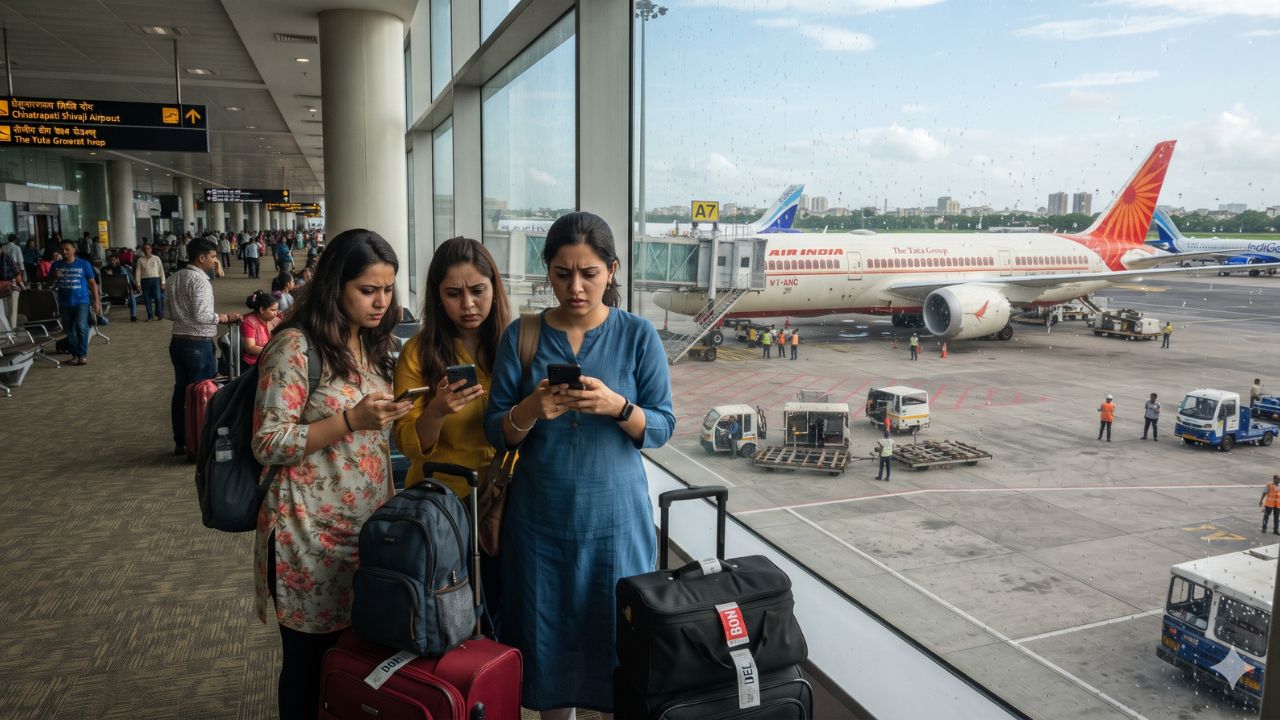
Image generated by AI
Few events demonstrate the interconnected fragility of modern global travel quite like a three-pronged crisis shutting down air corridors from the Arabian desert to the Java Sea on the exact same morning. On 29 October 2026, a cascading wave of aviation disruptions triggered 2,010 flight delays and 320 cancellations across twenty primary Asian airport hubs, according to real-time FlightAware data compiled from 28 October at 4:24 pm ET (29 October at 1:54 am IST). Rather than stemming from a single localized breakdown, the day's gridlock was driven by an extraordinary convergence: a comprehensive digital network crash at Mumbai’s Chhatrapati Shivaji Maharaj International Airport, the destructive coastal landfall of Cyclonic Storm Arnab across eastern India, and heightened geopolitical security tensions prompting aerial missile and drone alerts across Saudi airspace.
The Convergence of Three Regional Crises Across Asian Corridors
The primary epicenter of delay friction centered on Mumbai (BOM), where a sudden IT and telecommunications outage crippled automated check-in kiosks, baggage-tagging machinery, and digital boarding gates. Airline ground handlers were forced into manual pen-and-paper document processing, causing departure delays to spike to 41% and arrival delays to reach 38%. Chhatrapati Shivaji Maharaj Airport logged 378 flight delays—the single highest delay count recorded at any airport across Asia.
Simultaneously, severe monsoonal weather pummeled the eastern Indian seaboard. Cyclonic Storm Arnab made landfall across coastal Andhra Pradesh and southern Odisha, dumping torrential rain and driving coastal gusts that severely disrupted operations at Visakhapatnam, Vijayawada, and Bhogapuram airports. Visakhapatnam’s newly integrated Bhogapuram Airport recorded 21 cancellations against just one delay, while Vijayawada logged 15 cancellations. Carriers including IndiGo, Air India, and Akasa Air were forced to ground regional rotations, preventing aircraft from repositioning to primary metro hubs in Delhi, Hyderabad, and Bengaluru. Weather updates issued by the India Meteorological Department indicated strong gale winds that grounded turboprops and single-aisle narrowbodies throughout the Bay of Bengal corridor.
To the west, Middle Eastern transit routes experienced severe friction. Reported aerial threats and security alerts in the Arabian Peninsula disrupted flight corridors surrounding Riyadh’s King Khaled Airport (17 cancellations, 21 delays) and Dammam’s King Fahd Airport (7 cancellations, 49 delays). Jeddah’s King Abdulaziz Airport, the prime gateway for religious and commercial travel, suffered 26 cancellations and 161 delays, as carriers rerouted flight paths away from regional friction zones. Meanwhile, in Southeast Asia, Jakarta’s Soekarno-Hatta Airport (CGK) recorded 27 cancellations—the highest cancellation total among all Asian airports—alongside 235 delays, registering a 20% departure delay rate and an 18% arrival delay rate.
Dissecting the Contrasts: Megacity Gateways Under Operational Duress
Experiencing travel bottlenecks in Mumbai, Jakarta, or Delhi reveals how deeply distinct each metropolis is when its transit arteries freeze.
In Mumbai, Terminal 2 is celebrated for its multi-story art walls and grand peacock-inspired roof, representing the commercial heart of western India. When digital check-in systems collapse, the terminal’s vast atrium converts into an echo chamber of manual queues. Outside, the monsoonal humidity of coastal Maharashtra and notorious traffic bottlenecks along the Western Express Highway trap travelers between suburban congestion and gridlocked gates. Yet, Mumbai’s legendary resilience shows through: airport hospitality staff and local chaiwallahs step forward with hot cardamom tea, while travelers exchange transit updates in Hindi, Marathi, and English, capturing the indomitable spirit celebrated by Incredible India.
Jakarta presents an entirely different tropical urban rhythm. Soekarno-Hatta Airport sits northwest of the capital in Banten province, surrounded by reclaimed wetlands and coastal canals. When airline cancellations spike—led by domestic carriers like Batik Air (28 cancellations) and Citilink (17 cancellations)—the concourses fill with multi-generational families navigating regional island connections across the Indonesian archipelago. The warm, polite cadence of Javanese hospitality softens long waits, with travelers gathering around warung stalls for steaming bowls of soto ayam (spiced chicken turmeric broth) while monitoring terminal screens supported by Wonderful Indonesia.
Delhi’s Indira Gandhi International Airport (DEL) operates on vast, continental dimensions. Suffering 21 cancellations and 264 delays (with 20% departure delays and 16% arrival delays), the capital's Terminal 3 becomes a bottleneck for international transit passengers caught between Himalayan domestic hops and transatlantic long-haul connections. With broad carpeted corridors stretching for kilometers, Delhi requires immense physical transit times, making gate changes during flight disruptions especially demanding for passengers navigating customs and inter-terminal shuttles overseen by the Directorate General of Civil Aviation India.
Airport and Airline Cancellation and Delay Metrics Across Asian Hubs
The scale of the 29 October 2026 aviation disruption is detailed in the verified data tables below, detailing the most heavily impacted airports and airline operators:
| Airport Facility | City & Country | Cancellations | Delays | Key Impact Factor |
|---|---|---|---|---|
| Soekarno-Hatta (CGK) | Jakarta, Indonesia | 27 | 235 | Highest cancellations across Asia |
| King Abdulaziz (JED) | Jeddah, Saudi Arabia | 26 | 161 | Security rerouting & transit friction |
| Kempegowda (BLR) | Bengaluru, India | 24 | 127 | Cascading aircraft rotation delays |
| Kunming Changshui (KMG) | Kunming, China | 23 | 52 | Regional weather & domestic delays |
| Chhatrapati Shivaji (BOM) | Mumbai, India | 22 | 378 | Network IT outage & manual check-in |
| Indira Gandhi (DEL) | Delhi, India | 21 | 264 | Metro hub congestion & delays |
| Bhogapuram (BHI) | Visakhapatnam, India | 21 | 1 | Cyclonic Storm Arnab direct impact |
| King Khaled (RUH) | Riyadh, Saudi Arabia | 17 | 21 | Gulf airspace security protocols |
| Rajiv Gandhi (HYD) | Hyderabad, India | 15 | 94 | Aircraft repositioning hold-ups |
| Vijayawada (VGA) | Vijayawada, India | 15 | 4 | Cyclonic Storm Arnab grounding |
| Haikou Meilan (HAK) | Haikou, China | 18 | 14 | South China island connections |
| Xi’an Xianyang (XIY) | Xi’an, China | 18 | 43 | Northern domestic trunk delays |
| Dubai International (DXB) | Dubai, UAE | 11 | 169 | Gulf corridor rerouting delays |
| Beijing Capital (PEK) | Beijing, China | 11 | 85 | Regional capital scheduling holds |
| Shenzhen Bao’an (SZX) | Shenzhen, China | 11 | 83 | Pearl River Delta congestion |
| Navi Mumbai (NMI) | Navi Mumbai, India | 10 | 20 | Satellite hub secondary delays |
| Pune Airport (PNQ) | Pune, India | 9 | 46 | Regional slot limitations |
| Guangzhou Baiyun (CAN) | Guangzhou, China | 7 | 100 | Southern China departures hold |
| King Fahd (DMM) | Dammam, Saudi Arabia | 7 | 49 | Eastern Province airspace caution |
| Bali Ngurah Rai (DPS) | Denpasar, Indonesia | 7 | 64 | Island leisure feeder delays |
Among commercial airlines, Chinese and Indian carriers bore the heaviest operational burden:
| Airline Operator | Flight Cancellations | Flight Delays | Operational Nature |
|---|---|---|---|
| China Eastern | 46 | 171 | Highest cancellations among all airlines |
| Akasa Air | 44 | 33 | Severe domestic fleet grounding |
| IndiGo | 42 | 474 | Highest delay count across Asia |
| Hainan Airlines | 37 | 28 | Domestic schedule restructuring |
| Batik Air | 28 | 49 | Indonesian regional route disruption |
| Saudia | 25 | 116 | Middle East airspace schedule shifts |
| Air China | 19 | 74 | Domestic network adjustments |
| Citilink | 17 | 41 | Low-cost domestic route cancellations |
| XiamenAir | 13 | 25 | Coastal feeder schedule holds |
| SpiceJet | 11 | 41 | Regional aircraft rotational delays |
| Air India | 10 | 134 | Trunk route delays and IT ripple impact |
Visitor Insider Tips for Navigating Mumbai, Jakarta, and Delhi During Gridlock
Seasoned travelers know that enduring an Asian aviation breakdown requires strategy rather than passive waiting at departure gates:
- Mumbai Airport IT Failure Protocols: When Terminal 2 experiences network outages, do not remain in the central atrium waiting for public announcements. If your domestic flight is delayed past three hours, exit security and take a pre-paid black-and-yellow taxi or auto-rickshaw into nearby Vile Parle East. Head straight to local family-run eateries on Nehru Road to enjoy authentic Maharashtrian misal pav and freshly squeezed sugarcane juice. If overnight stays are needed, avoid inflated airport hotel rates by booking boutique heritage properties in Bandra West, accessible in twenty minutes via the Western Express Highway when off-peak.
- Escaping Jakarta Airport Delays: If stranded at Soekarno-Hatta (CGK), skip the notorious toll-road gridlock of the Prof. Dr. Ir. Sedyatmo Highway. Instead, take the automated Skytrain between terminals to the integrated airport railway station and board the Railink express train directly into Sudirman Baru (BNI City) in central Jakarta for 70,000 Indonesian rupiah. You will bypass hours of bumper-to-bumper rain traffic and reach heritage neighborhoods like Menteng, where you can sip rich Sumatran Mandheling coffee in historic Dutch colonial villas.
- Delhi Terminal Transit Tactics: If your connection at Delhi’s Terminal 3 is cancelled, do not wait in airline customer service lines that stretch for hundreds of meters. Use the direct underground pedestrian tunnel to access the Delhi Airport Express Metro line. Within fifteen minutes, you can reach the Aerocity hotel enclave for quiet workspace and international dining, or continue directly to Connaught Place in twenty-five minutes for roughly 60 Indian rupees.
- Documentation Protocol: Collect written disruption slips from airline station managers at boarding gates. Digital app notifications frequently vanish once a flight status resets; physical stamps or signed delay certificates are essential when claiming statutory refunds under DGCA civil aviation requirements or filing international travel insurance claims.
Cultural and Environmental Context: Monsoonal Cyclones and Digital Fragility
The events of 29 October underline two critical structural realities shaping modern travel across Asia: escalating environmental volatility and extreme digital dependency.
Cyclonic Storm Arnab is symptomatic of the warming waters of the Bay of Bengal, where late-season tropical depressions intensify with unprecedented speed. Coastal communities in Andhra Pradesh and Odisha possess deep generational knowledge of storm rhythms, but modern aviation infrastructure remains inherently vulnerable to sudden pressure drops, gale crosswinds, and microbursts. Investing in resilient regional airports like Bhogapuram requires balancing rapid tourism and trade expansion with ecological coastal wetland preservation, ensuring natural mangrove buffers are not destroyed for tarmac expansion.
Concurrently, the outage at Mumbai highlights the systemic fragility of cloud-dependent passenger terminals. As airports race toward biometrics, paperless boarding, and automated baggage drops, a single server disconnection halts tens of thousands of travelers. In developing megacities, preserving manual operational redundancies and training ground crews in traditional dispatch methods is essential to national resilience.
FAQ: Managing Flight Disruptions Across Asia 2026
What compensation rights do passengers have for delayed flights in India? Under DGCA passenger charter rules, airlines must provide free meals and refreshments for delays exceeding two to four hours depending on flight distance. For cancellations notified without adequate notice, alternate flights or full ticket refunds are legally mandated.
How can travelers verify flight status during airport IT outages? Do not rely exclusively on airport terminal monitors during network crashes. Check the airline’s primary mobile web portal via cellular data, inspect live transponder movements on global flight trackers, or contact airline reservations desks directly.
Are Indonesian carriers required to provide hotel accommodation for cancellations? Yes. Indonesian aviation regulations stipulate that if a carrier cancels a flight due to operational factors, it must provide passenger rerouting, full refunds, or complimentary hotel accommodations with ground transport for overnight delays.
What precautions should travelers take when cyclones threaten coastal routes? Monitor official national meteorological bulletins 48 hours prior to domestic coastal travel. If severe cyclonic warnings are issued, proactively request voluntary rebooking or credit shell vouchers before arriving at vulnerable coastal airstrips.
When digital departure screens go dark across the Indian Ocean and the Java Sea, local resourcefulness and ground-level mobility remain a traveler's most reliable compass.
Related Travel Guides
Berlin Brandenburg Airport Unlocks 140 Winter Destinations Across 50 Countries for 2026–2027
Kuwait Airways Connects Gulf Travelers Directly to Phuket and Tbilisi in 2026 Route Expansion
The 10 Best Street Food Stalls in Mumbai, According To Reddit
This article is for informational purposes. Flight routes, passenger regulations, visa rules, and transit advisories are subject to change by airlines and aviation authorities. Readers are advised to verify schedules and travel documentation with relevant carriers and border agencies before departure.
Related Stories

Mumbai's Dual-Airport Era: Airlines Prepare to Shift 5 Million International Passengers to Navi Mumbai

American Airlines Issues Profit Warning as Fuel Costs Surge: What It Means for 2027 International Travelers