
Asia Flight Cancellations Crisis: 1,463 Grounded Flights and 4,221 Delays Disrupt Saudi Arabia, Dubai, India, and Southeast Asia

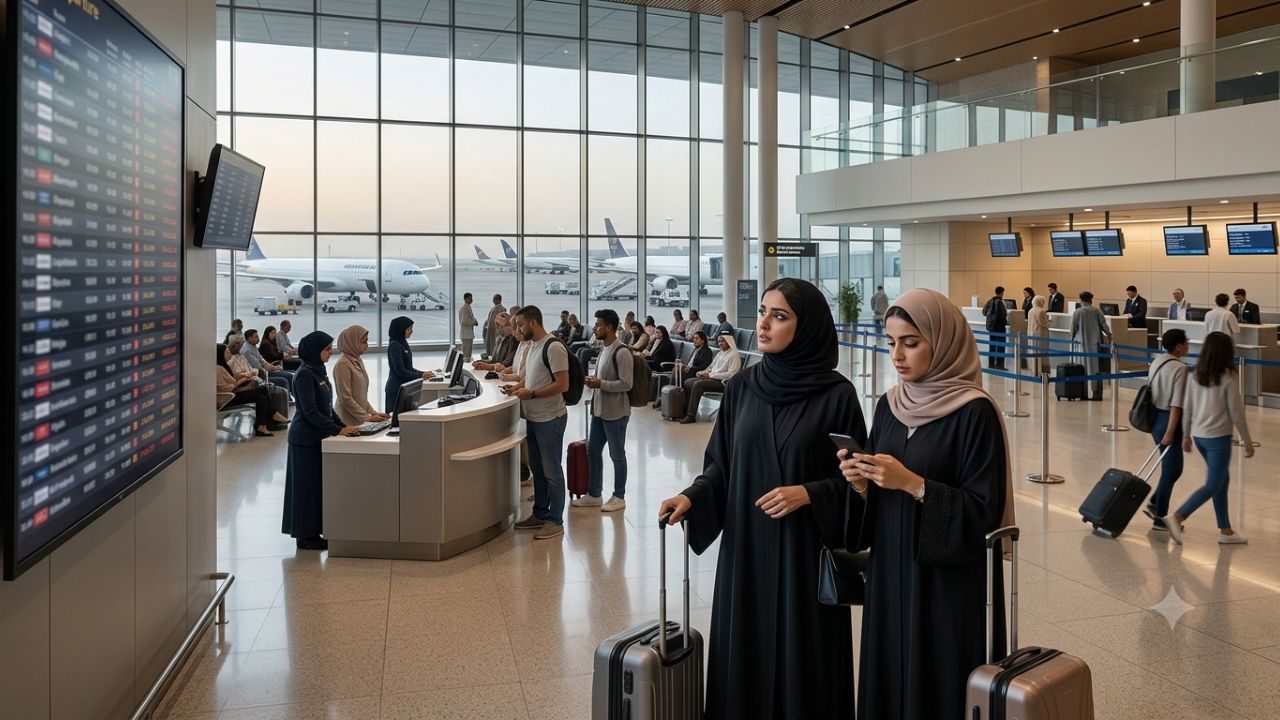
A massive wave of aviation disruptions swept across Asia and the Middle East, with 1,463 flights cancelled and 4,221 flights delayed across interconnected air corridors spanning Saudi Arabia, the United Arab Emirates, India, Southeast Asia, and China.
Commercial air transport between Europe, the Middle East, and the Asia-Pacific region experienced extraordinary operational friction as widespread airspace closures, security-mandated groundings, adverse weather systems, and air traffic control metering converged. Saudi Arabian airports absorbed the brunt of outright flight cancellations, with capital hub Riyadh and major pilgrimage gateways Jeddah and Medina reporting catastrophic schedule disruptions. Simultaneously, Gulf connecting super-connectors in Dubai, Doha, and Abu Dhabi faced mounting delays as aircraft circumnavigated restricted airspace corridors.
Further east, high-density hubs in India, Southeast Asia, and East Asia absorbed severe secondary operational shocks. Flight crews exceeded duty-rest thresholds, airframes were displaced thousands of miles from scheduled rotations, and international transit terminals filled with stranded passengers facing missed long-haul connections.
Cross-Continent Disruption Data: Most Impacted Asian and Gulf Airports
Aviation tracking data recorded during peak operational movements revealed sharp contrasts between airports experiencing systematic flight groundings and those battling severe air traffic flow congestion.
The table below illustrates the scale of flight cancellations and departure/arrival delays across primary Asian and Middle Eastern aviation centers:
| Airport & Location | IATA Code | Scheduled Delays | Total Cancellations | Origin Cancellation Rate (%) | Destination Cancellation Rate (%) | Primary Operational Factor |
|---|---|---|---|---|---|---|
| King Khalid International (Riyadh, Saudi Arabia) | RUH | 6 | 550 | 76% | 79% | Airspace security closures, regional defense alerts |
| King Abdulaziz International (Jeddah, Saudi Arabia) | JED | 193 | 168 | 20% | 22% | Airspace holding, precautionary schedule cuts |
| King Fahd International (Dammam, Saudi Arabia) | DMM | 52 | 85 | 36% | 31% | Persian Gulf corridor restrictions, military flight holds |
| Prince Mohammad Bin Abdulaziz (Medina, Saudi Arabia) | MED | 27 | 36 | 20% | 18% | Western Saudi airspace metering, Umrah route diversions |
| Dubai International (Dubai, UAE) | DXB | 202 | 55 | 5% | 4% | Western routing diversions, flight bank delays |
| Indira Gandhi International (Delhi, India) | DEL | 387 | 18 | 1% | 1% | Westbound routing delays, airspace flow metering |
| Soekarno-Hatta International (Jakarta, Indonesia) | CGK | 251 | 29 | 2% | 1% | Middle East connector cancellations, domestic slot congestion |
| Suvarnabhumi International (Bangkok, Thailand) | BKK | 226 | 4 | — | 0% | Air traffic flow restrictions, long-haul arrival holds |
| Chhatrapati Shivaji Maharaj (Mumbai, India) | BOM | 190 | 28 | 3% | 2% | Gulf flight turnarounds, runway maintenance sequencing |
| Tan Son Nhat International (Ho Chi Minh City, Vietnam) | SGN | 168 | 6 | 0% | 0% | Airspace transit congestion, regional feeder delays |
| Singapore Changi (Singapore) | SIN | 162 | 2 | 0% | — | Long-haul flight arrival delays, slot metering |
| Zayed International (Abu Dhabi, UAE) | AUH | 114 | 8 | 1% | 1% | Airspace rerouting around western Saudi corridors |
| Noi Bai International (Hanoi, Vietnam) | HAN | 119 | 8 | 1% | 1% | Regional aircraft displacement, weather holding |
| Hong Kong International (Hong Kong) | HKG | 118 | 3 | — | 0% | Transcontinental corridor delays, slot sequencing |
| Kempegowda International (Bengaluru, India) | BLR | 108 | 9 | 1% | 1% | Domestic turnaround delays, Middle East feed disruption |
| Hamad International (Doha, Qatar) | DOH | 103 | 20 | 2% | 3% | Airspace circumvention, northern corridor holding |
The Crisis Epicenter: Saudi Arabian Airspace and Regional Airport Shutdowns
The most severe operational paralysis occurred within the Kingdom of Saudi Arabia. Heightened security protocols and precautionary airspace restrictions following regional missile and drone activity over strategic corridors triggered sweeping domestic and international groundings.
Riyadh, Jeddah, and Medina Under Siege
Riyadh's King Khalid International Airport (RUH) recorded the single largest volume of grounded flights in the global aviation system, with 550 cancellations and an astonishing 76% origin cancellation rate and 79% destination cancellation rate. Terminal gates stood empty as national authorities halted inbound and outbound commercial movements over central Saudi flight routes.
In the western province, Jeddah's King Abdulaziz International Airport (JED)—the primary commercial gateway for pilgrimages and Red Sea international traffic—logged 168 flight cancellations alongside 193 delayed services. Flights that managed to operate were subjected to extended air traffic holds and revised flight paths over Egypt and the Red Sea.
To the north, Medina's Prince Mohammad Bin Abdulaziz International Airport (MED) recorded 36 cancellations (20% origin cancellation rate) and 27 delays, severely disrupting scheduled Umrah pilgrimage flights connecting to South Asia, North Africa, and Southeast Asia.
Widespread Grounding of Saudi Regional Airfields
The disruption within Saudi Arabia extended far beyond major metropolitan hubs. Regional and domestic airports experienced near-total cessation of commercial airline service, with flight cancellation rates exceeding 60% to 80% across secondary provinces:
| Saudi Regional Airport | IATA Code | Origin Cancellation Rate (%) | Destination Cancellation Rate (%) | Impacted Passenger Flows |
|---|---|---|---|---|
| Bisha Domestic Airport | BHH | 80% | 75% | Asir Province feeder flights halted |
| Al Qaisumah International | AQI | 75% | 75% | Northern border business and commuter routes |
| Guriat Domestic Airport | URY | 75% | 75% | Al Jawf northern regional connectivity suspended |
| Prince Abdulmohsin Bin Abdulaziz (Yanbu) | YNB | 75% | 75% | Red Sea industrial and energy commuter routes |
| Al Jouf Domestic Airport | AJF | 66% | 75% | Northern agricultural center domestic flights cut |
| Arar Domestic Airport | RAE | 66% | 60% | Northern border provincial services grounded |
| Hail Regional Airport | HAS | 60% | 54% | Central-north regional trunk flights cancelled |
| Taif International Airport | TIF | 58% | 61% | Western province pilgrimage feeder routes suspended |
| Prince Sultan Bin Abdulaziz (Tabuk) | TUU | 33% | 39% | Northwest regional military and commercial feed |
| Abha Regional Airport | AHB | 35% | 34% | Southern highland domestic connections disrupted |
These localized shutdowns immobilized regional connectivity, stranding thousands of domestic commuters, international contractors, and religious pilgrims unable to transition through Riyadh or Jeddah to reach onward long-haul flights.
Gulf Super-Connector Ripple: Dubai, Doha, and Abu Dhabi
While Saudi airports faced outright flight cancellations, the mega-hubs of the Arabian Gulf absorbed immense schedule delays as intercontinental operations adjusted to restricted navigation corridors.
Dubai International (DXB)
Dubai International Airport, the world's busiest airport for international passenger traffic, recorded 202 delayed flights and 55 cancellations. Operating as the central connecting nexus between Europe, Asia, and Australasia, DXB's tightly synchronized flight banks rely on precise aircraft arrivals to facilitate rapid 60-to-90-minute passenger transfers.
When Saudi airspace sectors were closed or restricted, long-haul flights departing Dubai for Western Europe, the Mediterranean, and North Africa were forced onto alternative southern or northern bypass routes. The resulting flight extensions—often requiring 30 to 75 minutes of additional airborne time—disrupted turnaround schedules for arriving widebody Boeing 777 and Airbus A380 fleets, triggering widespread departure delays across evening flight banks bound for India, Southeast Asia, and Australia.
Doha and Abu Dhabi
At Doha's Hamad International Airport (DOH), Qatar Airways absorbed 103 delays and 20 cancellations, with aircraft navigating narrow flight paths across the Persian Gulf. In Abu Dhabi, Zayed International Airport (AUH) recorded 114 delays and 8 cancellations, as Etihad Airways rerouted flights departing for European capitals around western airspace restrictions.
Across the UAE, Sharjah International Airport (SHJ) registered 47 delays and 8 cancellations, primarily affecting low-cost regional services operated by Air Arabia into South Asia and the Levant.
South Asian Corridors: Massive Delays Across India and Pakistan
South Asia experienced the highest raw volume of flight delays on the continent. The heavy concentration of delays across India and Pakistan stemmed from two interrelated factors: extensive labor-migration corridors linking South Asia to the Gulf, and the logistical challenges facing Indian carriers whose westbound European flights transit through Middle Eastern airspace.
The Indian Subcontinent Hotspots
- Indira Gandhi International Airport (Delhi - DEL): Logged 387 delayed flights and 18 cancellations. Delhi served as the primary bottleneck for transcontinental departures. Aircraft awaiting revised air traffic clearances to circumvent closed airspace sectors queued on taxiways, causing cascading schedule slippage across domestic feeder routes.
- Chhatrapati Shivaji Maharaj International (Mumbai - BOM): Recorded 190 delays and 28 cancellations. Mumbai's high-frequency flight connections to Dubai, Jeddah, Riyadh, and Dammam experienced significant cancellations, leaving thousands of expatriate workers stranded at terminal gates.
- Kempegowda International (Bengaluru - BLR): Registered 108 delays and 9 cancellations.
- Calicut International (CCJ): Recorded a significant 16% origin cancellation rate and 12% destination cancellation rate. Calicut serves as a primary regional exit point for non-resident Indian workers traveling to Saudi Arabia and the UAE; cancellations across Saudia, Air India Express, and flydubai severely affected regional travel.
- Cochin International (COK): Reported 4% origin and 5% destination cancellations, alongside dozens of delayed Gulf turns.
- Lucknow (LKO) and Navi Mumbai (NMI): Recorded cancellation rates between 5% and 9% on Gulf-bound scheduled operations.
In neighboring Pakistan, Islamabad International Airport (ISB) reported an 8% origin and 9% destination cancellation rate, while Lahore's Allama Iqbal International Airport (LHE) experienced a 7% origin cancellation rate, as scheduled flights operated by Pakistan International Airlines and Gulf carriers faced routing constraints. In Bangladesh, Dhaka's Hazrat Shahjalal International Airport (DAC) logged delays on westbound departures connecting migrant workers to Middle Eastern industrial hubs.
Southeast and East Asia: Congestion Spreads Downstream
In Southeast Asia, major aviation hubs contended with the downstream consequences of delayed long-haul flights arriving from Europe and the Gulf.
- Jakarta Soekarno-Hatta (CGK): Registered 251 delays and 29 cancellations. Indonesia's heavy outbound pilgrimage traffic to Saudi Arabia faced substantial disruption, while regional carriers dealt with domestic schedule slippage. Regional Indonesian airfields including Iskandar Airport (50% origin / 57% destination cancellations) and Tjilik Riwut Airport (60% origin cancellations) faced localized schedule cutbacks.
- Bangkok Suvarnabhumi (BKK): Recorded 226 delays and 4 cancellations. As a major tourism hub connecting European holidaymakers to regional beach destinations, Bangkok absorbed late-arriving European and Middle Eastern widebody flights, causing aircraft rotation bottlenecks across regional flights into Phuket and Chiang Mai.
- Ho Chi Minh City Tan Son Nhat (SGN) & Hanoi Noi Bai (HAN): Logged 168 delays and 119 delays respectively, as Vietnam Airlines and regional low-cost carriers absorbed delays on international connecting routes.
- Singapore Changi (SIN): Recorded 162 delays and 2 cancellations, managing holding patterns and gate realignments for ultra-long-haul services arriving behind schedule.
- Hong Kong International (HKG): Logged 118 delays and 3 cancellations, with transcontinental cargo and passenger services navigating congested southern airways.
- Chinese Domestic Corridors: While mega-hubs like Beijing Capital and Guangzhou Baiyun maintained low overall cancellation rates, secondary hubs recorded notable anomalies, such as Hanzhong Chenggu Airport (37% destination cancellations) and Yulin Yuyang Airport (14% destination cancellations), as domestic schedules were trimmed to accommodate airspace management priorities.
Carrier Impact: Saudi Airlines Grounded, Asian Operators Strained
The operational crisis created deep divisions across airline financial and operational structures. Carriers based in Saudi Arabia suffered historic cancellation rates, while Indian and East Asian airlines absorbed massive delay tallies.
The table below breaks down the operational impact across major airlines operating across Asia and the Middle East:
| Airline | Scheduled Delays | Delay Rate (%) | Scheduled Cancellations | Cancellation Rate (%) | Primary Operational Disruption Factor |
|---|---|---|---|---|---|
| Saudia (Saudi Arabian Airlines) | 106 | 20% | 274 | 53% | Airspace security closures, widespread domestic fleet grounding |
| Flynas | 37 | 15% | 132 | 55% | Low-cost domestic network cutbacks, regional Saudi airport closures |
| Riyadh Air | 0 | 0% | 28 | 96% | Comprehensive precautionary grounding of commercial schedule |
| flyadeal | 25 | 14% | 64 | 37% | Fleet groundings across secondary Saudi point-to-point routes |
| IndiGo | 496 | 22% | 28 | 1% | Highest raw delay total; West Asia corridor delays ripple across India |
| China Eastern Airlines | 199 | 9% | 25 | 1% | Trans-Asian routing adjustments, domestic slot constraints |
| Emirates | 125 | 23% | 15 | 2% | Flight path rerouting around restricted airspace, connecting bank slippage |
| Air India | 105 | 18% | 14 | 2% | Westbound widebody flight extensions, crew duty hour limits |
| Qatar Airways | 99 | 15% | 14 | 2% | Gulf airspace corridor metering, European arrival holding |
| Etihad Airways | 96 | 29% | 4 | 1% | Westbound routing diversions, arrival gate holds |
| Air China | 96 | 5% | 15 | 0% | Domestic slot management, European flight path deviations |
| Batik Air (Indonesia) | 75 | 25% | 27 | 9% | Regional fleet displacement, domestic turnaround delays |
| flydubai | 72 | 25% | 16 | 5% | Regional Middle East flight suspensions, aircraft ground turns |
| Garuda Indonesia | 50 | 20% | 3 | 1% | Long-haul pilgrimage route adjustments, widebody delays |
| Vietnam Airlines | 44 | 11% | 14 | 3% | Southeast Asian feeder misconnects, international slot holds |
| SpiceJet | 34 | 41% | 4 | 4% | High delay percentage due to thin fleet reserves and Gulf turns |
| Akasa Air | 22 | 9% | 32 | 13% | Precautionary international cancellations, aircraft reallocations |
| US-Bangla Airlines | 26 | 32% | 4 | 5% | Dhaka-Gulf route timing disruptions, regional turnarounds |
| SriLankan Airlines | 25 | 33% | 4 | 5% | Colombo hub transit delays, Middle East connector friction |
Saudi Airlines: Systemic Fleet Groundings
National carrier Saudia cancelled 274 flights (53% of its entire scheduled operation) while delaying an additional 106 services. The airline's widebody fleet at Riyadh and Jeddah was largely held on the ground as civil aviation regulators restricted movements over sensitive military and civilian flight corridors.
Low-cost carrier Flynas cancelled 132 flights (55% of its daily schedule), reflecting the total vulnerability of regional point-to-point networks when secondary airfields are closed. New entrant Riyadh Air grounded 28 of its 29 recorded operations (96% cancellation rate), while budget carrier flyadeal grounded 64 flights (37%).
IndiGo and Indian Operators: Network-Wide Delay Cascades
In India, budget powerhouse IndiGo recorded the highest delay count of any airline in Asia, with 496 delayed flights (22% of its daily schedule) and 28 cancellations. IndiGo operates dozens of daily narrowbody Airbus A320neo and A321neo flights connecting Indian metros to Dubai, Abu Dhabi, Doha, Dammam, and Jeddah.
When westbound flights encountered airspace holds or were forced into holding patterns over the Arabian Sea, aircraft returned to Indian airports hours behind schedule. In a high-utilization operating model where aircraft fly six to eight sectors per day with 30-minute turns, a single morning delay cascaded into five subsequent delayed domestic flights across Kolkata, Bengaluru, Hyderabad, and Chennai.
Flag carrier Air India recorded 105 delays and 14 cancellations, with ultra-long-haul North American and European flights burning thousands of gallons of additional fuel to navigate around closed sectors, leading to crew duty-hour timeouts at transit gates.
The Geopolitics and Geometry of Airspace Closures
Modern international aviation relies on narrow, highly optimized airways. When geopolitical crises or military tensions shut down civil airspace sectors across the Middle East, the entire Eurasian aviation geometry fractures.
+-----------------------------------------------------------------------------------+
|                        EURASIAN AIRSPACE BOTTLENECK ROUTINGS                      |
+-----------------------------------------------------------------------------------+

     [WESTERN EUROPE / UK]
              |
              +---------------------------+
              |                           |
              v                           v
     [NORTHERN CAUCASUS ROUTE]   [MEDITERRANEAN / EGYPT]
     (Turkey -> Caspian ->       (Sinai -> Red Sea ->
      Central Asia -> India)      Oman -> Arabian Sea)
              |                           |
              +-------------+-------------+
                            |
                     [AVOIDANCE ZONE]
               (Central & Western Saudi Arabia)
                            |
                            v
               [SOUTHERN ARABIAN SEA / GULF]
              (Dubai / Doha / Mumbai Corridor)
                            |
                            v
                  [SOUTHEAST ASIA / FAR EAST]
When central and western Saudi airspace is restricted:
- The Northern Bypass: Carriers routing between Europe and South/Southeast Asia must divert northward through Turkish airspace, the Caucasus, and Central Asia (Turkmenistan, Uzbekistan, Pakistan). This route is heavily congested and adds between 45 and 90 minutes of flight time.
- The Southern Bypass: Flights must route through Egyptian airspace, track south along the Red Sea coast, and exit through Omani airspace into the Arabian Sea. This adds substantial fuel burn and strains air traffic control sectors in Cairo and Muscat.
- Payload and Range Penalties: For twin-engine narrowbody aircraft (such as Airbus A321LR/XLR or Boeing 737 MAX) operating near their maximum range limits between India and the Gulf, detours force airlines to carry additional reserve fuel, which can require offloading commercial cargo or capping passenger ticket sales to comply with maximum takeoff weight limits.
Passenger Rights, Rebooking Rules, and Legal Frameworks
Navigating multi-day flight disruptions across international jurisdictions requires understanding applicable passenger protection regulations, which differ dramatically between Saudi Arabia, India, and the Gulf.
Saudi Arabia: GACA Passenger Rights Protection Regulations
Under the General Authority of Civil Aviation (GACA) regulations in Saudi Arabia, passenger rights during cancellations and delays are strictly codified:
- Security & Extraordinary Circumstances: While airlines are generally exempted from paying punitive cash compensation when cancellations stem from verified security threats or civil aviation authority closure directives (force majeure), carriers remain legally obligated to provide basic care:
- Delays Exceeding 2 Hours: Airlines must provide complimentary refreshments and cold drinks.
- Delays Exceeding 4 Hours: Airlines must provide complimentary hot meals.
- Delays Exceeding 6 Hours / Overnight: Airlines must provide complimentary hotel accommodation, ground transportation to and from the terminal, and luggage assistance.
- Full Ticket Refunds: If a flight is cancelled and the passenger declines an alternative flight scheduled more than six hours from the original departure time, the operating carrier must issue a full refund of the ticket value within 14 business days.
India: DGCA Civil Aviation Requirements (CAR Section 3)
India's Directorate General of Civil Aviation (DGCA) enforces clear carrier obligations:
- Notification and Alternate Routing: If an airline cancels a flight, it must notify passengers and offer either an alternate flight or a full cash refund.
- Terminal Amenities: For domestic delays exceeding two to four hours (depending on flight block time), airlines must provide free meals and refreshments.
- No Compensation for External Airspace Closures: Delays or cancellations caused by air traffic control directives, foreign airspace closures, or meteorological conditions are categorized as beyond carrier control, exempting airlines from statutory cash delay compensation.
United Arab Emirates and Gulf Hubs
In Dubai and Doha, airport transit hotels inside the terminal areas quickly reach capacity during widespread disruption events. Passengers on connecting itineraries are governed by individual carrier conditions of carriage:
- When an international connecting flight is missed due to inbound delays, the operating carrier (e.g., Emirates, Qatar Airways, Etihad) is responsible for rebooking the traveler onto the next available departure and providing hotel accommodation if the transit layover exceeds 8 to 12 hours, subject to local visa entry requirements.
| Jurisdiction / Authority | Delay Threshold for Meals | Overnight Accommodation Mandate | Cash Refund Legal Window | Exemptions for Security Closures? |
|---|---|---|---|---|
| Saudi Arabia (GACA) | 2 hours (refreshments) / 4 hours (meals) | Mandatory if delay exceeds 6 hours or requires overnight stay | Full refund within 14 business days | Yes (care required; cash compensation waived) |
| India (DGCA) | 2 to 4 hours based on sector length | Mandatory for cancellations/delays with overnight misconnects | Full refund within 7 to 14 days | Yes (ATC and foreign airspace holds exempt) |
| UAE / Gulf (Carrier Tariff) | 3 to 4 hours depending on booking class | Provided for scheduled transit layovers >8-12 hours | Refundable based on fare basis and cancellation terms | Yes (force majeure provisions apply) |
| European Union (EC 261/2004)* | 2 hours (short haul) to 4 hours (long haul) | Mandatory for overnight delays, including transport | Full refund within 7 days if travel cancelled | Care mandatory; cash compensation exempt for war/security |
*Applies to EU carriers flying to Asia or any flight departing from an EU airport.
Essential Guidance for Impacted Travelers Across Asia
Travelers currently holding reservations or transiting through Middle Eastern and Asian hubs should adopt several proactive measures:
1. Verify Flight Status Before Airport Departure
Do not travel to airport terminals without verified electronic confirmation that the flight is operating. During widespread groundings, terminal departures halls become severely congested, and airport security at hubs like Riyadh, Jeddah, and Delhi often restrict terminal entry to passengers whose flights are confirmed for departure within three to four hours.
2. Prioritize Self-Service Digital Rebooking
Avoid physical customer service lines that snake through concourses. Use the operating airline's mobile app or official website. Many carriers (including Saudia, Emirates, and IndiGo) activate automated disruption waivers during regional emergencies, allowing passengers to rebook onto alternative dates or request automatic refunds with all change fees waived.
3. Manage Separate Ticket Connecting Risks
Travelers who booked separate tickets across different carriers (such as an IndiGo flight into Dubai connecting to an Emirates flight to London) face extreme financial exposure. If the inbound flight is delayed and the connection is missed, the downstream carrier is legally entitled to mark the passenger as a no-show. In such circumstances:
- Immediately inform the secondary carrier before scheduled departure to request a flight change.
- Contact travel insurance providers to initiate claim files under travel disruption and missed connection clauses.
4. Umrah and Pilgrimage Travel Coordination
Pilgrims traveling to or from Jeddah and Medina should maintain close communication with their licensed travel agents and Umrah tour operators. Saudi authorities and the Ministry of Hajj and Umrah frequently coordinate with regional hotels to extend pilgrim accommodation during airport flow halts.
Aviation Resilience and Long-Term Outlook
The unprecedented scale of flight disruptions across Asia—grounding 1,463 flights and delaying more than 4,200 operations in a single day—reveals the fragility of the contemporary global aviation transit grid. As geopolitical instability intersects with rigid flight scheduling, air traffic controllers and commercial airline dispatchers face compounding hurdles to keep global supply chains and passenger networks moving safely.
Airlines are progressively re-evaluating route structures, investing in advanced satellite tracking to safely narrow separation corridors, and deploying long-range widebody aircraft capable of flying non-stop around vulnerable geographic choke points. Until diplomatic stabilization and modernized airspace coordination are restored across sensitive transit corridors, passengers traveling across the Eurasian-Gulf axis must build generous buffer windows into their itineraries, secure comprehensive international travel insurance, and monitor live aviation feeds vigilantly.
Related Travel Guides
Disclaimer
This article is for informational and educational purposes only. It does not constitute legal, financial, or professional advice. While we strive to provide accurate and up-to-date information, travel policies, regulations, and conditions change rapidly. Always verify information with official sources before making travel decisions. Nomad Lawyer makes no representations about the accuracy, reliability, completeness, or suitability of the information provided. Readers should consult qualified professionals for advice specific to their circumstances. The views expressed in this article are those of the author and do not necessarily reflect the views of Nomad Lawyer.
Kunal K Choudhary
Co-Founder & Contributor
A passionate traveller and tech enthusiast. Kunal contributes to the vision and growth of Nomad Lawyer, bringing fresh perspectives and driving the community forward.
Learn more about our team →