
US Airlines Phone-Booking Fees Scrutiny: American, United, JetBlue, and Allegiant Charge Travelers Extra for Reservations

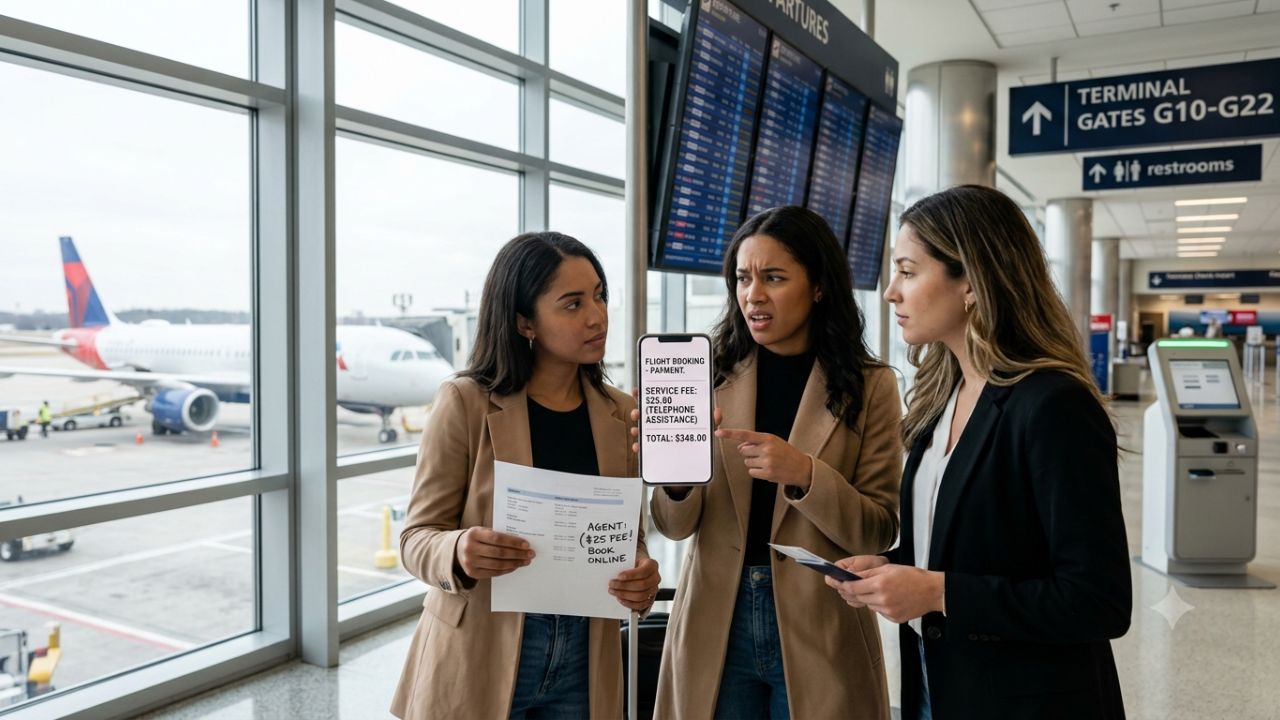
As commercial air carriers accelerate their push toward automated customer service and artificial intelligence booking portals, telephone reservation fees charged by major US airlines—ranging from $15 to $50 per transaction—are facing renewed scrutiny from consumer advocates, lawmakers, and traveling families.
The modern airline distribution model has undergone a generational transformation. Over the past two decades, commercial carriers have invested billions of dollars into proprietary smartphone applications, direct-to-consumer websites, and automated conversational tools to divert passenger transactions away from human call centers. However, for millions of air travelers who require human assistance—whether managing complex multi-city itineraries, traveling with infants, booking accessibility services, or simply lacking internet access—picking up the telephone can trigger substantial, unexpected surcharges.
Airlines including American Airlines, United Airlines, JetBlue Airways, Alaska Airlines, Hawaiian Airlines, Spirit Airlines, and Allegiant Air maintain published policies that impose fees on reservations completed through customer service agents. Conversely, network competitors such as Delta Air Lines and Southwest Airlines have pointedly avoided broad telephone booking fees, highlighting a sharp commercial divide across the American aviation marketplace.
The Cost of Human Assistance: Comparing US Airline Phone-Booking Charges
A comprehensive review of published optional-service fee tables and carrier reservation tariffs reveals significant discrepancies in how US airlines price telephone assistance. While some charges represent flat, one-time fees applied per reservation, others are assessed on a per-person or per-flight-segment basis, multiplying the out-of-pocket expense for groups and traveling families.
The table below outlines the current structure of telephone reservation fees across major US passenger airlines:
| US Operating Airline | Domestic Phone-Booking Fee | International Phone-Booking Fee | Assessment Basis | Documented Exemption Categories |
|---|---|---|---|---|
| American Airlines | Up to $50 | Up to $50 | Per ticket / Market-dependent | Select elite frequent flyers, bookings unable to be completed online |
| United Airlines | $25 | $25 | Per ticket | Premier elite members, technical website error waivers |
| JetBlue Airways | $25 | $25 | Per person | Qualifying disabilities, Mosaic elite status members |
| Allegiant Air | $19.99 | Not Applicable (Domestic Only) | Per passenger, per flight segment | All-Ways Rewards elite promotions, qualifying accessibility needs |
| Hawaiian Airlines | $25 | $35 | Per ticket | Pualani elite members, partner award tickets unavailable online |
| Spirit Airlines | $25 | $25 | Per reservation / agent turn | Free Spirit Gold/Silver tiers, unresolvable digital errors |
| Alaska Airlines | $15 | $15 | Per ticket | MVP elite members, complex schedule changes, special needs |
| Delta Air Lines | $0 | $0 (General policy) | No standard telephone fee | Standard customer service calls remain free |
| Southwest Airlines | $0 | $0 | No standard telephone fee | All reservations completed by phone carry zero booking fee |
Legacy Carriers and Telephone Ticketing: American and United
The presence of reservation service charges at legacy network carriers reflects a long-standing corporate effort to lower commercial distribution expenses. However, the exact rules governing these charges are frequently misunderstood by travelers.
American Airlines: Market-Dependent Charges and Ticketing Desks
American Airlines has frequently drawn public attention due to published reports associating the carrier with an assisted-booking charge of up to $50. In practice, American’s reservation fee policies are nuanced:
- Airport and Travel Center Ticketing: American levies ticketing service charges—historically ranging from $35 to $50—primarily when travelers purchase tickets in person at airport ticket counters or international city ticket offices where online purchase options exist.
- Telephone Reservation Centers: When customers call American Airlines reservations to book standard domestic or international flights, phone ticketing fees are applied selectively based on the country of issue and the complexity of the itinerary. In many international foreign sales offices, an explicit $50 ticketing fee remains standard practice.
- Waiver Thresholds: American explicitly waives telephone ticketing fees if the customer is booking an itinerary that cannot be technically processed through
AA.com—such as complex open-jaw routings involving multiple international partner airlines, military discount fares, or reservations requiring specialized medical clearance. AAdvantage Executive Platinum and Platinum Pro elite members are also routinely shielded from administrative booking charges.
United Airlines: The $25 Reservation Service Charge
United Airlines maintains an established policy under which customer service representatives may assess a $25 per-ticket fee for reservations booked through its telephone contact centers:
- Routine Bookings vs. General Inquiries: United clarifies that simply calling customer service to check flight times, verify baggage allowances, or inquire about flight policies incurs no fee. The $25 charge is triggered strictly at the point of ticket issuance when an agent completes a transaction that the passenger could have completed autonomously via the United mobile application or website.
- MileagePlus Exemptions: Premier status holders (Premier Silver, Gold, Platinum, and 1K) are exempt from telephone ticketing surcharges.
- Technical Failures: If a traveler attempts to book a flight online and encounters a verified system error, United phone agents possess the authority to waive the $25 ticketing fee upon confirmation of the technical malfunction.
Value Carriers and Low-Cost Models: JetBlue, Alaska, and Hawaiian
Mid-sized and low-cost network carriers approach telephone booking fees from differing operational perspectives:
JetBlue Airways: Per-Person Surcharges and Disability Protections
JetBlue Airways maintains one of the most transparently published telephone booking policies in the industry. The airline assesses a $25 per-person service fee for bookings, changes, and cancellations completed through customer support representatives over the phone or via live chat.
Because JetBlue assesses the fee on a per-passenger basis, costs escalate rapidly for families:
- A single solo traveler pays an additional $25.
- A family of four booking a vacation flight pays $100 in booking surcharges on top of airfare, taxes, and baggage expenses.
Critically, JetBlue includes explicit accessibility exemptions. Under its published consumer protection guidelines, travelers who cannot reasonably navigate or complete transactions through the airline’s digital platforms due to qualifying visual, auditory, cognitive, or physical limitations are granted a complete waiver of the $25 phone fee. Mosaic elite members and TrueBlue customers redeeming specific complex partner award flights are also exempt.
Alaska Airlines and Hawaiian Airlines: Post-Merger Alignment
Alaska Airlines has historically maintained a modest $15 call-center booking charge, designed primarily as a token deterrent to discourage routine calls. Hawaiian Airlines has historically published a $25 domestic and $35 international phone ticketing fee.
As both carriers advance through corporate integration following their commercial combination, standardizing these fee schedules represents an important operational step. Currently, elite members of both Alaska’s Mileage Plan and Hawaiian’s HawaiianMiles enjoy fee-free phone support, but non-status travelers booking cross-Pacific or island-hopper routes through telephone agents continue to face distinct fee structures depending on the ticketing plate used.
The Compounding Math of Ultra-Low-Cost Carriers: Allegiant and Spirit
Nowhere do telephone booking fees exert a heavier financial impact than in the ultra-low-cost carrier (ULCC) sector, where unbundled business models price every element of customer contact separately.
Allegiant Air: The $19.99 Per-Segment Multiplier
Allegiant Air provides the most striking example of how telephone reservation fees can inflate total travel expenses. Allegiant lists a call-center booking fee of $19.99 per passenger, per flight segment.
Unlike a flat charge per transaction, a segment-based assessment penalizes connecting flights and traveling groups:
+-----------------------------------------------------------------------------------+
|               ALLEGIANT AIR TELEPHONE BOOKING FEE COST ACCUMULATION               |
+-----------------------------------------------------------------------------------+
  Solo Traveler, Non-stop One-Way:
  1 passenger × 1 flight segment × $19.99 = $19.99

  Couple, Round-Trip Non-stop:
  2 passengers × 2 flight segments × $19.99 = $79.96

  Family of Four, Round-Trip Non-stop:
  4 passengers × 2 flight segments × $19.99 = $159.92

  Family of Four, Round-Trip with 1 Connection (4 Segments Total):
  4 passengers × 4 flight segments × $19.99 = $319.84 in Booking Fees Alone!
+-----------------------------------------------------------------------------------+
For budget-conscious families purchasing discounted $49 base fares, a $159.92 or $319.84 call-center fee can easily exceed the actual price of the underlying air transport. This pricing architecture makes direct digital booking virtually mandatory for Allegiant customers seeking to preserve low-fare economics.
Spirit Airlines: Unbundled Phone Reservations
Spirit Airlines charges a standard $25 fee for reservations created through its call center or airport ticket counters. Spirit positions this charge as part of its unbundled "Bare Fare" philosophy: passengers who do not use call-center resources do not subsidize the labor costs of operating phone banks. Members of the Free Spirit loyalty program who achieve elite status are granted waivers, but general consumers must navigate Spirit’s digital website to avoid the surcharge.
The Free Reservation Champions: Delta Air Lines and Southwest Airlines
In stark contrast to their competitors, two of America’s largest carriers have rejected broad telephone booking charges:
Southwest Airlines and "Transfarency"
Southwest Airlines has long built its brand identity around the elimination of ancillary "gotcha" fees. Southwest charges:
- $0 for telephone reservations
- $0 for ticket cancellations and itinerary changes
- $0 for two checked bags per passenger
Whether a traveler books via the Southwest app or spends 45 minutes on the telephone with a customer service agent coordinating a complex multi-passenger itinerary, the ticket price remains identical. This approach has generated substantial brand loyalty among seniors, non-digital natives, and family travelers who value human customer support.
Delta Air Lines: Service as a Commercial Differentiator
Delta Air Lines has similarly refrained from imposing a blanket nationwide telephone booking fee for domestic reservations. While Delta encourages online booking through its Fly Delta mobile app, the carrier treats telephone access as a core element of its premium brand positioning.
While certain specialized international ticketing desks or foreign currency transactions may carry handling fees, general American travelers calling Delta's primary reservation lines are not assessed a $25 or $50 penalty for completing their reservations through a human representative.
Why Airlines Push Digital: Economics, Ancillaries, and Artificial Intelligence
The economic motivation behind airline telephone fees extends beyond simply covering call-center payroll. Directing consumers into digital channels yields profound financial advantages for commercial airlines:
- Distribution Cost Reduction: Servicing a phone reservation with a live unionized or contracted customer service representative costs an airline between $15 and $30 per call in labor, telecommunications, and facility overhead. By contrast, processing an automated reservation through an app or website costs the carrier less than $0.50.
- Aggressive Ancillary Merchandising: Digital booking funnels are precision-engineered to drive high-margin ancillary sales. As passengers progress through an online booking flow, visual prompts encourage the purchase of seat upgrades, extra legroom (e.g., Delta Comfort+, American Main Cabin Extra), priority boarding, checked baggage allowances, in-flight Wi-Fi passes, and travel insurance. Statistical studies consistently indicate that consumers spend 20% to 35% more on ancillary add-ons when booking through digital interfaces than when speaking to phone agents.
- The Expansion of Generative AI and Voice Automation: Throughout 2026, major US airlines have accelerated investments in conversational artificial intelligence tools. Automated virtual assistants now handle routine flight changes, flight status inquiries, and baggage tracking. By applying fees to human telephone interactions, airlines create a powerful financial incentive for travelers to interact with automated AI agents first.
+-----------------------------------------------------------------------------------+
|                     AIRLINE RESERVATION COST & MARGIN PROFILE                     |
+-----------------------------------------------------------------------------------+
  RESERVATION CHANNEL        TRANSACTION COST TO AIRLINE     ANCILLARY CONVERSION RATE
  ---------------------------------------------------------------------------------
  Airline Smartphone App     < $0.50 per booking             High (25% - 35%)
  Carrier Website (Direct)   < $1.00 per booking             High (20% - 30%)
  Third-Party OTA (Expedia)  $5.00 - $12.00 GDS / API fee    Moderate (10% - 15%)
  Live Telephone Agent       $15.00 - $30.00 labor cost      Low (5% - 10%)
+-----------------------------------------------------------------------------------+
Consumer Protection, Accessibility, and Legal Frameworks
The imposition of telephone booking fees operates within a complex regulatory framework overseen by the US Department of Transportation (DOT).
The Air Carrier Access Act (ACAA) Mandates
Federal law strictly protects passengers with disabilities under Title 14 of the Code of Federal Regulations, Part 382. Under the Air Carrier Access Act:
- Commercial airlines cannot impose surcharges on passengers with disabilities for accommodations or services required by federal law.
- If an airline’s website or digital booking portal is not fully accessible to screen readers, or if a passenger’s physical, sensory, or cognitive disability prevents them from completing a reservation online, the airline must waive any telephone reservation fee.
- Carriers that fail to grant fee waivers to disabled passengers who require telephone assistance risk civil enforcement penalties from the DOT.
DOT Fee Transparency Regulations
The Department of Transportation enforces stringent rules regarding full-fare advertising (14 CFR § 399.84). Airlines are legally required to disclose the entire mandatory cost of a ticket—including government taxes and mandatory carrier fees—in the initial advertised price.
Because telephone booking fees are classified as optional service charges (since the consumer technically has the option to purchase the ticket online without the fee), airlines are permitted to assess them, provided the fee is clearly disclosed to the customer before payment is collected. An agent who fails to verbally inform a caller that a $25 or $50 ticketing fee will be added to their credit card charge violates federal consumer transparency guidelines.
The Complex Booking Dilemma: When Digital Portals Fail
While airlines argue that telephone fees encourage digital self-service, real-world travel frequently involves scenarios that digital platforms cannot accommodate:
- Multi-City and Open-Jaw Routing Failures: Online search engines frequently error out when attempting to assemble itineraries involving multi-city layovers or codeshare connections across differing airline alliances.
- Unaccompanied Minors (UMNR): Most major airlines legally require that unaccompanied minor reservations be booked directly through phone agents to ensure that child escort documentation, emergency contact forms, and mandatory supervision fees are correctly processed. In many instances, carriers waive the general phone fee for UMNR bookings, but policies vary.
- Traveling with Pets in Cabin: Because aircraft types carry strict limits on the number of pet carriers allowed in passenger cabins (often capped at 4 to 6 pets per flight), pet reservations often require manual agent confirmation.
- Bereavement and Military Fares: Discounted bereavement fares or specialized active-duty military itineraries frequently require agent verification of military credentials or medical documentation, precluding automated online booking.
- Name Corrections and Ticket Exchanges: Rectifying minor typographical errors on existing reservations or applying complex credit vouchers often triggers website errors, forcing passengers onto telephone lines.
How Travelers Can Avoid Phone-Booking Surcharges
Consumers who require assistance can utilize several actionable strategies to avoid paying administrative booking surcharges:
1. Demand a Technical Fee Waiver
If an airline's website or mobile app crashes, errors out, or fails to price an itinerary that you attempted to book online, document the issue (take a smartphone screenshot or note the error code). When calling customer service, immediately inform the agent:
"I attempted to complete this booking on your website, but your system generated an error code. Under your company's policy, I am requesting that the telephone booking fee be waived due to website malfunction."
Agents across American, United, and JetBlue possess documented internal overrides to waive booking fees under technical failure conditions.
2. Utilize Digital Social and Messaging Desks
Airlines have expanded customer support operations across social media and digital messaging platforms (including Apple Messages for Business, WhatsApp, and official direct messaging channels on X).
Interacting with an airline agent via digital text chat often provides the personalized assistance of a human representative without triggering the automated telephone reservation fee.
3. Leverage Airline Loyalty Elite Status
If traveling with a companion or family member who holds elite status in an airline's frequent flyer program, ensure the booking is initiated through their account. Elite status tiers across American (AAdvantage), United (MileagePlus), JetBlue (Mosaic), and Alaska (Mileage Plan) automatically eliminate phone booking charges for all passengers included on the same reservation locator.
4. Cross-Shop With Fee-Free Competitors
When evaluating competing flight options on identical routes, factor booking fees into the final ticket price. On a contested route like Chicago to Denver or Boston to Orlando:
- A $25 per-person fee on JetBlue or United can negate a $20 airfare price advantage over Delta or Southwest.
- For family groups, booking through carriers that provide free telephone support guarantees accessible human assistance throughout the journey without hidden service markups.
The Future of Human Customer Service in US Aviation
The debate surrounding airline telephone booking fees encapsulates a wider dilemma across consumer services: the commodification of human interaction. As airlines deploy sophisticated AI algorithms and digital self-service tools, human customer service representatives are increasingly treated as a premium, separately billed luxury rather than a standard operational baseline.
While commercial airlines will continue seeking digital distribution efficiencies, preserving affordable, non-discriminatory access to human customer support remains essential. For traveling families, passengers with accessibility needs, and consumers managing disrupted journeys, transparency and fairness in booking policies will remain a primary benchmark of airline quality and consumer trust across America's commercial skies.
Related Travel Guides
Disclaimer
This article is for informational and educational purposes only. It does not constitute legal, financial, or professional advice. While we strive to provide accurate and up-to-date information, travel policies, regulations, and conditions change rapidly. Always verify information with official sources before making travel decisions. Nomad Lawyer makes no representations about the accuracy, reliability, completeness, or suitability of the information provided. Readers should consult qualified professionals for advice specific to their circumstances. The views expressed in this article are those of the author and do not necessarily reflect the views of Nomad Lawyer.
Preeti Gunjan
Contributor & Community Manager
A passionate traveller and community builder. Preeti helps grow the Nomad Lawyer community, fostering engagement and bringing the reader experience to life.
Learn more about our team →