
Oman Airports Report 7.1% Passenger Drop in First Eight Months of 2026: Traffic Contraction at Muscat, Salalah, Sohar, and Duqm

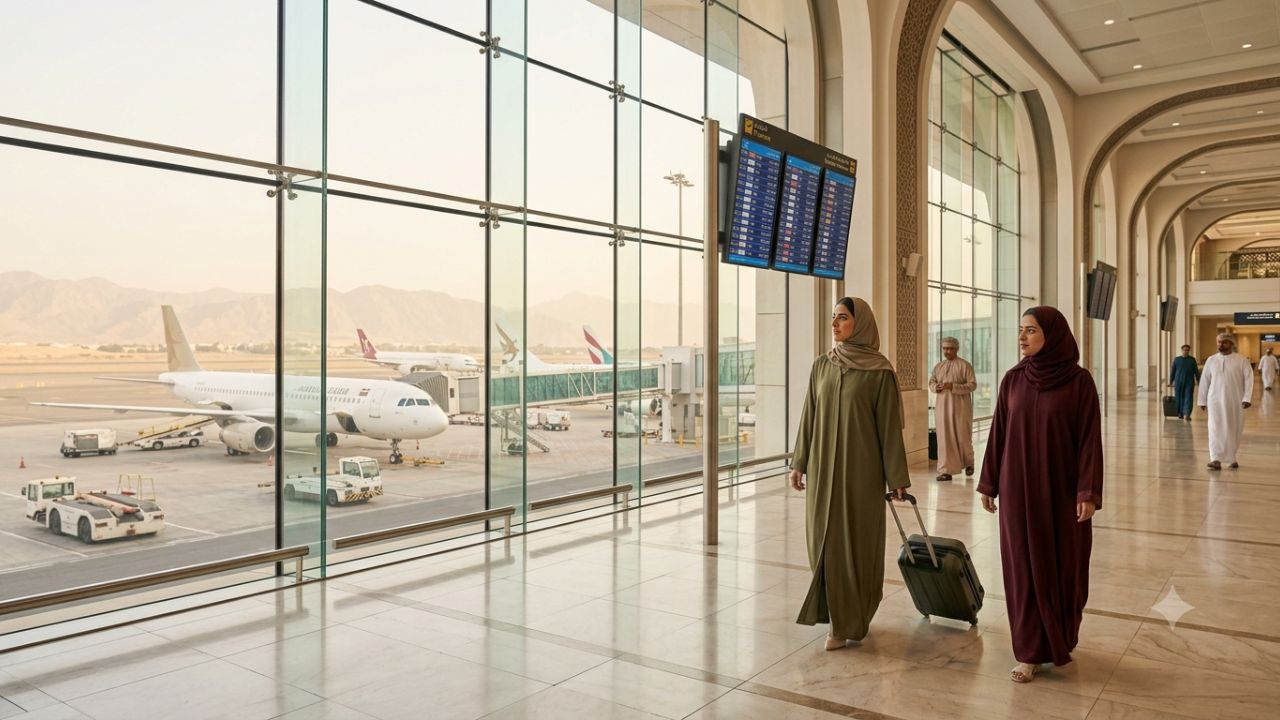
Official aviation statistics published for the Sultanate of Oman reveal a notable deceleration in passenger movement and commercial aircraft activity during the first eight months of 2026, with nationwide airport passenger throughput sliding 7.1 percent year-on-year to 9.3 million travelers.
The contraction, documented across the Sultanate's primary aviation gateways between January and the end of August 2026, marks a clear cooling phase following the robust post-pandemic recovery wave of preceding years. During the comparative eight-month window in 2025, civil aviation facilities across Oman processed 10.02 million passengers. The downward trajectory extended across scheduled commercial frequencies, with Muscat, Salalah, and Sohar collectively recording an 8.8 percent decline in cross-border international flight movements, handling 53,716 services compared to 58,890 international movements logged across the identical period in 2025.
Commercial performance varied across individual airport assets, reflecting differing degrees of exposure to international point-to-point traffic, transfer flows, seasonal tourist demand, and industrial corporate travel. Muscat International Airport, which anchors the vast majority of the Sultanate’s scheduled aviation network, generated the largest absolute passenger deficit. Meanwhile, regional facilities in Sohar and the industrial maritime hub of Duqm endured the steepest percentage contractions, even as Salalah demonstrated relative operational stability driven by the southern Dhofar region's seasonal monsoon tourism.
Nationwide Aviation Performance: Analyzing the 7.1 Percent Contraction
The performance figures recorded by Oman’s civil aviation sector highlight the dual challenges of shifting Middle Eastern route economics and calibrated fleet rationalizations among regional carriers. Total passenger volume through all operating airports reached 9,300,000 between January 1 and August 31, 2026. This compares with 10,020,000 passengers logged during the first eight months of 2025, representing an absolute drop of approximately 720,000 travelers.
The retreat was mirrored in aircraft movements, particularly on international corridors that link Oman to the wider Gulf Cooperation Council (GCC), Europe, Africa, and the Indian subcontinent. The three international-certified airports of Muscat, Salalah, and Sohar processed 53,716 international arrivals and departures combined through August 2026, dropping by 5,174 scheduled movements from the 58,890 international flights recorded in 2025.
Industry observers attribute this contraction to several interconnected market pressures:
- Capacity rationalization by flag carrier Oman Air as part of its ongoing operational transformation program, which prioritized financial yield and seat occupancy over unconstrained network expansion.
- Heightened airspace congestion and route reroutings across adjacent Middle Eastern jurisdictions, which increased block hours and operating expenditures on specific long-haul trajectories.
- Fierce transfer competition from neighboring mega-hubs in Dubai, Doha, Abu Dhabi, and Riyadh, which captured an increased share of long-haul transit passengers moving between Western Europe and South Asia.
- Shifting holiday booking cycles and macroeconomic adjustments within key European source markets.
Muscat International Airport: The Core Engine of Omani Air Connectivity
Muscat International Airport (MCT) continues to serve as the dominant backbone of commercial air transport in Oman, accounting for approximately 87 percent of all passenger journeys across the country. However, because of its commanding scale, the capital gateway absorbed the heaviest numerical downturn.
Between January and August 2026, Muscat processed roughly 8.1 million air passengers, falling 7.5 percent compared to the approximately 8.76 million travelers handled over the corresponding eight months of 2025. The absolute shortfall of roughly 660,000 passengers at Muscat accounted for more than 90 percent of the nationwide passenger decline.
Aircraft movements at Muscat followed a similar pattern. The airport recorded 57,870 commercial flight movements across domestic and international sectors combined, down 6.7 percent from the 62,007 flight operations conducted in the same timeframe during 2025. This equates to an operational reduction of 4,137 aircraft movements.
Key Nationality Demographics in August 2026
Detailed passenger nationality data recorded at Muscat International Airport during August 2026 highlights the demographic corridors underpinning the facility’s traffic base. August represents a critical operational month, capturing both the tail end of summer holidays, family reunions, and the commencement of the academic return cycle.
- Omani Citizens: National travelers formed the largest passenger cohort in August, registering 202,033 individual movements. Inbound arrivals of Omani citizens stood at 111,360, while outbound citizen departures totaled 90,673. This disparity reflects residents returning home from international summer holidays ahead of the September school and corporate schedules.
- Indian Nationals: Highlighting the historic trade, expatriate workforce, and family ties connecting Oman and the Indian subcontinent, Indian nationals represented the second-largest passenger demographic at Muscat. The airport processed 145,720 Indian passengers during August, comprising 77,001 inbound arrivals and 68,719 outbound departures.
These two demographics alone represented nearly 350,000 passenger movements through Muscat in a single month, reinforcing the airport's position as an indispensable civic conduit for national mobility and a primary gateway for South Asian transit.
Salalah Airport: Khareef Season Sustains Regional Tourism Footprint
Located in the southern Dhofar Governorate, Salalah Airport (SLL) experienced a far more modest contraction than the capital, demonstrating the unique resilience of its seasonal tourism ecosystem.
Salalah processed approximately 1.16 million air passengers through August 2026, reflecting a 4.4 percent year-on-year drop compared to the roughly 1.21 million passengers handled in the first eight months of 2025. In terms of commercial operations, Salalah recorded 7,657 domestic and international flight movements, registering a marginal reduction of just 1.4 percent compared to the 7,769 movements logged in the same period of 2025.
The primary stabilizer for Salalah remains the annual Khareef season. Running from late June through early September, the southwest Indian Ocean monsoon brings cooler temperatures, intermittent drizzle, and mist-shrouded green hills to Dhofar, creating a stark contrast with the high summer heat across the rest of the Arabian Peninsula.
During this period:
- Regional airlines, including low-cost operator SalamAir, Flyadeal, Flynas, and Air Arabia, operate direct seasonal flights from Riyadh, Jeddah, Kuwait, Abu Dhabi, and Dubai into Salalah.
- Point-to-point domestic capacity between Muscat and Salalah is substantially augmented to support internal tourism.
- The steady demand from regional GCC vacationers shielded Salalah from the steeper commercial dips observed at other regional stations.
Sharp Contractions at Sohar and Duqm: Industrial and Regional Air Links
While Muscat and Salalah handle the vast bulk of commercial volume, Oman's specialized regional airports at Sohar and Duqm recorded the sharpest percentage contractions across the eight-month period, demonstrating how sensitive non-hub airports are to schedule adjustments.
Sohar Airport (OHS)
Situated in the northern Al Batinah Governorate, Sohar Airport serves as a regional conduit for the country's northern industrial and port corridor.
- Passenger Volume: Sohar recorded 15,292 passengers between January and August 2026, down 17.4 percent compared to the 18,522 passengers reported during the equivalent 2025 period. This marked the steepest relative percentage drop among all Omani airports.
- Flight Movements: Total aircraft operations at Sohar declined by 6.9 percent, with the airport logging 188 flights compared to 202 flights in the first eight months of 2025.
Given its geographic proximity to Muscat (approximately a two-hour drive via the modern Al Batinah Expressway) and direct road connections to the United Arab Emirates, travelers and logistics operators frequently opt for surface transit when regional flight schedules are adjusted or reduced.
Duqm Airport (DQM)
Duqm Airport plays an essential logistical role for the Special Economic Zone at Duqm (SEZAD), supporting engineers, corporate executives, oil and gas specialists, and maritime personnel servicing the dry dock and petrochemical complexes.
- Passenger Throughput: Passenger volume at Duqm decreased 9.3 percent, falling from 40,173 passengers in January–August 2025 to 36,443 passengers in 2026.
- Flight Operations: Domestic commercial flight movements slipped 7.3 percent, handling 380 operations compared to 410 flights during the first eight months of the previous year.
Because Duqm’s aviation volume is primarily domestic and linked to industrial and infrastructure project cycles, fluctuations in on-site construction schedules and corporate travel budgets directly impact scheduled flight load factors.
Airport Traffic Data: Eight-Month Comparative Overview (2025 vs. 2026)
The following tables synthesize official aviation performance indicators across Oman’s airport network for the January through August monitoring periods.
National Airport Passenger and Flight Movement Metrics
| Aviation Metric | Jan–Aug 2025 | Jan–Aug 2026 | Absolute Difference | Percentage Change |
|---|---|---|---|---|
| Total Nationwide Passengers | 10.02 million | 9.30 million | -720,000 | -7.1% |
| Combined International Flights (MCT, SLL, OHS) | 58,890 | 53,716 | -5,174 | -8.8% |
| Muscat Passenger Throughput | ~8.76 million | ~8.10 million | -660,000 | -7.5% |
| Muscat Total Flight Movements | 62,007 | 57,870 | -4,137 | -6.7% |
| Salalah Passenger Throughput | ~1.21 million | ~1.16 million | -50,000 | -4.4% |
| Salalah Total Flight Movements | 7,769 | 7,657 | -112 | -1.4% |
| Sohar Passenger Throughput | 18,522 | 15,292 | -3,230 | -17.4% |
| Sohar Total Flight Movements | 202 | 188 | -14 | -6.9% |
| Duqm Passenger Throughput | 40,173 | 36,443 | -3,730 | -9.3% |
| Duqm Domestic Flight Movements | 410 | 380 | -30 | -7.3% |
Muscat International Airport Nationality Breakdown (August 2026)
| Passenger Nationality | Inbound Arrivals | Outbound Departures | Total Monthly Movements | Primary Travel Purpose |
|---|---|---|---|---|
| Omani Nationals | 111,360 | 90,673 | 202,033 | Summer vacation return, domestic business |
| Indian Nationals | 77,001 | 68,719 | 145,720 | Expatriate employment, trade, family visits |
| Combined Top Two Groups | 188,361 | 159,392 | 347,753 | Core bilateral and civic traffic flow |
Industry Context: Structural Transformations in Omani Aviation
To evaluate the reasons behind Oman’s cooling aviation figures, it is helpful to place the data in the context of broader strategic developments within the Sultanate's civil aviation and tourism planning.
1. Carrier Network Realignment and Financial Restructuring
A major structural driver behind the reduction in flight frequencies and passenger numbers at Muscat has been the comprehensive financial restructuring of Oman Air. Initiated under the guidance of the Ministry of Transport, Communications and Information Technology, the national airline has moved away from pursuit of market share and unviable transfer corridors, prioritizing route profitability, debt reduction, and seat load factors.
As part of this strategy:
- Unprofitable long-haul links to select Asian and European destinations were suspended or rationalized.
- Frequencies on secondary routes were consolidated.
- Fleet modernization focused on optimizing Boeing 787 Dreamliners and Boeing 737 MAX aircraft rather than operating oversized capacity.
- Oman Air’s impending integration into the oneworld alliance is designed to focus traffic on high-yield international passenger feeder arrangements rather than low-margin transit volume.
2. The Rise of Low-Cost Domestic and Regional Travel
While the full-service national carrier consolidated its schedule, home-grown budget carrier SalamAir expanded its point-to-point network across the GCC, the Indian subcontinent, and Central Asia. However, low-cost capacity has not entirely offset the withdrawal of high-frequency widebody capacity on international connecting routes, resulting in a net decrease in total transfer passengers moving through Muscat.
3. Intense Regional Hub Competition
Oman operates in one of the most competitive airspace regions in the world. Dubai International (DXB) and Hamad International (DOH) have continued to post record-breaking transfer volumes, while King Khalid International in Riyadh (RUH) and King Abdulaziz International in Jeddah (JED) have experienced accelerated growth driven by Saudi Arabia's Vision 2030 investments.
For European and North American travelers flying toward East Asia or Australia, Muscat often faces stiff fare competition from these neighboring giants, prompting Omani authorities to refocus their airport strategy on high-value destination tourism rather than bulk transit.
Practical Logistics Guide for Travelers Using Omani Airports
Travelers planning journeys to or through Oman can take advantage of practical steps to navigate the country's aviation system smoothly:
Navigating Muscat International Airport (MCT)
Muscat’s passenger terminal, opened in 2018, offers an efficient and modern transit experience:
- Minimum Connection Time (MCT): For international-to-international transfers, 45 to 60 minutes is sufficient under normal conditions, as all flights operate within a single, integrated terminal building. However, travelers booking separate tickets with checked baggage should allow a minimum of 2.5 to 3 hours to clear passport control, collect baggage, and re-check at the departures counter.
- Transit Facilities: The airside zone features the Aerotel Transit Hotel, offering hourly sleeping rooms without requiring travelers to pass through immigration.
- Biometric e-Gates: Eligible GCC citizens and registered international travelers can use automated smart gates to expedite arrival and departure procedures.
- Baggage and Customs: Oman enforces strict baggage regulations. Electronic cigarettes, specific medications containing restricted active ingredients, and drones require prior official permits. Travelers carrying prescription medications should bring an original medical prescription in English or Arabic.
Connecting to Salalah and Dhofar
- Flight Frequency: Oman Air and SalamAir operate frequent daily domestic flights linking Muscat and Salalah, with flight times averaging approximately 1 hour and 35 minutes.
- Seasonal Timing: The Khareef season peaks between July and August. Travelers heading to Dhofar during this period should secure hotel bookings, car rentals, and flight seats several months in advance.
- Winter Sun Travel: From November through March, Dhofar shifts into a warm, dry winter escape popular among European leisure travelers, with direct seasonal charter services arriving from Germany, Italy, Poland, and the Czech Republic.
Accessing Sohar and Duqm
- Ground Alternatives to Sohar: Given the shorter flight schedules at Sohar Airport, travelers landing in Muscat can take Mwasalat intercity buses or private taxis via Route 1 (Batinah Highway), completing the trip in approximately 2 hours.
- Duqm Corporate Access: Flights to Duqm (DQM) operate from Muscat on specific weekdays tailored to corporate and industrial shift rotations. Early reservation is recommended, as flights fill up quickly with engineering personnel.
Strategic Outlook: Rebuilding Aviation Momentum Ahead of 2027
While the January-to-August 2026 data reflects a temporary plateau in passenger numbers, aviation stakeholders in Oman are executing strategic initiatives aimed at revitalizing demand through the final quarter of 2026 and into 2027:
- GCC Unified Tourist Visa Implementation: The anticipated introduction of the GCC Grand Tours unified visa will enable international tourists to explore Oman alongside the UAE, Saudi Arabia, Qatar, Bahrain, and Kuwait under a single travel authorization, encouraging multi-destination itineraries that could lift international arrival figures.
- Expansion of Winter Charter Programs: The Ministry of Heritage and Tourism has expanded cooperative agreements with European tour operators to operate direct seasonal charters into Salalah and Muscat, supporting arrivals during the cooler autumn and winter months.
- Heritage and Eco-Tourism Focus: Rather than competing exclusively as a transit hub, Oman is positioning its international airports as gateways to distinct cultural, adventure, and eco-tourism offerings—from the historic forts of Nizwa and the dunes of Wahiba Sands to world-class diving off the Daymaniyat Islands.
As the Sultanate concludes the final quarter of 2026, passenger demand trends, bilateral air service agreements, and airline network alignments will determine how quickly Oman’s commercial airport system regains positive upward growth.
Related Travel Guides
Disclaimer
This article is for informational and educational purposes only. It does not constitute legal, financial, or professional advice. While we strive to provide accurate and up-to-date information, travel policies, regulations, and conditions change rapidly. Always verify information with official sources before making travel decisions. Nomad Lawyer makes no representations about the accuracy, reliability, completeness, or suitability of the information provided. Readers should consult qualified professionals for advice specific to their circumstances. The views expressed in this article are those of the author and do not necessarily reflect the views of Nomad Lawyer.
Raushan Kumar
Founder & Lead Developer
Full-stack developer with 11+ years of experience and a passionate traveller. Raushan built Nomad Lawyer from the ground up with a vision to create the best travel and law experience on the web.
Learn more about our team →