
US Airport Charges Debate: Atlanta, Dallas, Chicago, and Denver Face Scrutiny Over Rising Airline Fees

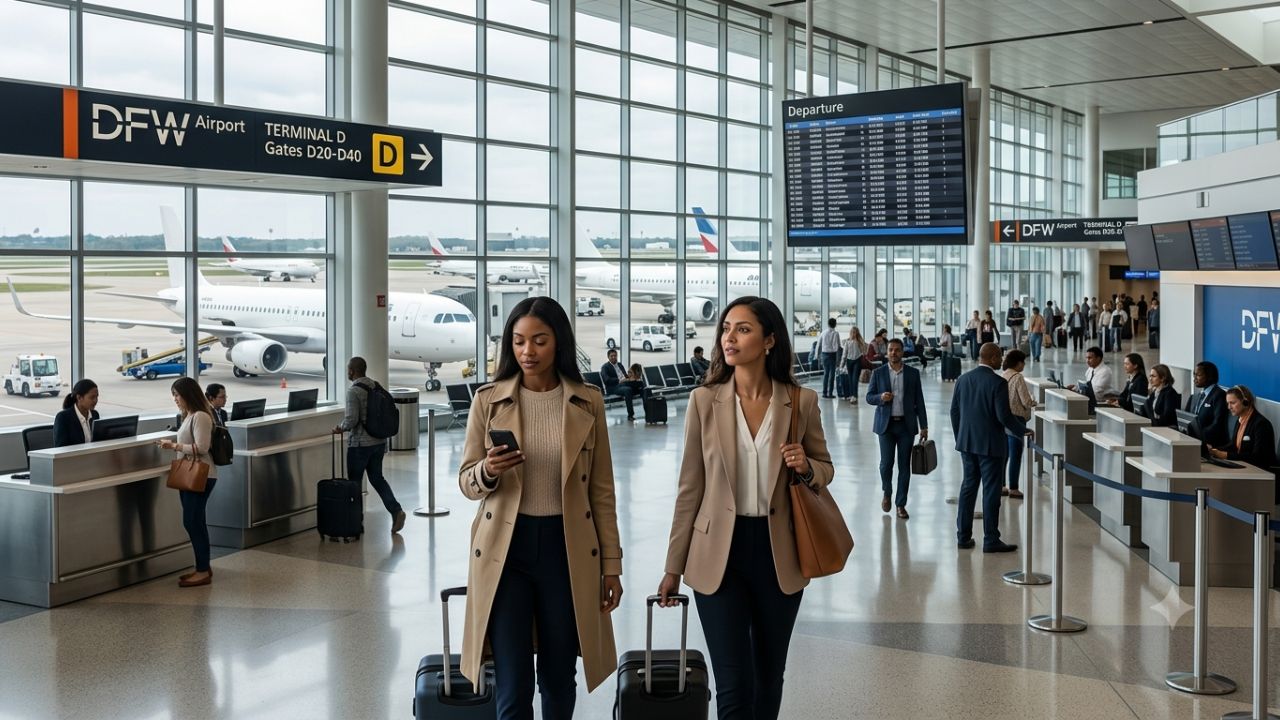
As multi-billion-dollar terminal modernization programs accelerate across the United States, commercial aviation hubs including Hartsfield-Jackson Atlanta, Dallas-Fort Worth, Chicago O'Hare, and Denver face escalating debates regarding aeronautical fees, landing charges, and long-term cost allocation between airport authorities, major airlines, and air travelers.
Commercial aviation infrastructure across North America stands at an unprecedented financial crossroads. With passenger traffic surging and aged facilities requiring generational capital overhauls, airport operators must finance runways, modernized concourses, automated baggage handling systems, and digital passenger screening gates. Yet financing these colossal improvements creates contentious commercial choices. Major US network carriers—principally American Airlines, Delta Air Lines, United Airlines, and Southwest Airlines—depend on predictable, reasonable operating tariffs to preserve flight frequencies, maintain low-fare options, and protect thin operational margins. When municipal operators raise landing fees, terminal square-foot rents, and passenger facility assessments, the resulting overhead ripples through carrier balance sheets and eventually confronts traveling consumers.
Existing federal statutes enforce rigorous safeguards to prevent public airport sponsors from levying monopolistic or unreasonable aeronautical charges. Nevertheless, massive capital expenditure programs have reignited scrutiny over whether regulatory oversight can maintain an equitable equilibrium between modernized infrastructure, carrier solvency, and affordable domestic air travel.
The Economics of US Airport Rates and Aeronautical Charges
Commercial airports operate through complex financial arrangements governed by federal grant assurances and municipal debt structures. While airfields operate as public utilities, airlines function as commercial tenants that lease airfield capacity, concourse gates, apron parking stands, and maintenance hangars. Every commercial departure incurs direct fees that airports rely upon to service municipal bonds, pay maintenance personnel, and fund security operations.
Airport operators recover capital and operating expenditures through several primary mechanisms:
- Airfield Landing Fees: Assessed per thousand pounds of maximum gross landed weight (MGLW), landing fees directly fund runway maintenance, taxiway paving, de-icing facilities, and aeronautical safety zones.
- Terminal Rents and Gate Usage Fees: Airlines pay lease rates per square foot for ticket counters, baggage makeup areas, operations offices, passenger holdrooms, and jet bridges.
- Apron and Aircraft Parking Charges: Levied on aircraft occupying remote stands, hardstands, or gate positions beyond allotted turnaround schedules.
- Joint-Use and Baggage Handling Fees: Shared operational costs distributed among participating airlines for common baggage claim carousels, security checkpoints, and inline explosive detection screening networks.
- Passenger Facility Charges (PFC): A federally authorized passenger assessment dedicated strictly to FAA-approved airport capital development projects.
The table below details how aeronautical fees, facility rentals, and passenger assessments are structured across commercial aviation gateways:
| Fee Category | Assessment Structure | Primary Payor | Intended Infrastructure Purpose |
|---|---|---|---|
| Passenger Facility Charge (PFC) | Up to $4.50 per eligible flight segment | Ticketed Passenger | FAA-approved capital improvements, safety, and competition enhancement |
| Maximum One-Way PFC Assessment | Capped at $9.00 (maximum 2 flight segments) | Ticketed Passenger | Terminal development and airfield infrastructure |
| Maximum Round-Trip PFC Assessment | Capped at $18.00 (maximum 4 flight segments) | Ticketed Passenger | Multimodal connections and airfield expansion debt service |
| TSA September 11 Security Fee | $5.60 per one-way itinerary | Ticketed Passenger | Direct federal aviation security and passenger screening funding |
| Airfield Landing Fees | Airport-specific rate per 1,000 lbs MGLW | Operating Airline | Runways, taxiways, navigational lighting, and airfield operations |
| Terminal Rents & Gate Leases | Square-foot annual leases or per-turn gate charges | Operating Airline | Passenger concourses, jet bridges, gate holdrooms, and airline lounges |
| Aircraft Apron Parking Fees | Hourly or daily rate based on aircraft size | Operating Airline | Aircraft hardstands, overnight ramp parking, and remote staging |
| Baggage System Rents | Shared cost allocation per enplaned passenger | Operating Airline | Automated baggage sorting systems, inbound carousels, and inline EDS |
| Concession Revenue & Concessionaire Rents | Percentage of gross sales plus minimum guarantees | Airport Retailers & Dining | General airport operating revenue and terminal operational offset |
Major US Aviation Hubs Most Exposed to Fee Scrutiny
Operating costs vary substantially across airports depending on regional construction expenses, existing municipal bond debt, and the specific rate-making methodology adopted by the airport authority—whether residual, compensatory, or hybrid. Large connection hubs that handle tens of millions of passengers annually represent the primary friction points between carriers and airport governing boards.
| Airport Name & Code | Primary Metro Area | Major Carrier Exposure | Key Infrastructure and Cost Pressures |
|---|---|---|---|
| Hartsfield-Jackson Atlanta International (ATL) | Atlanta, Georgia | Delta Air Lines | Multi-billion Concourse D widening, cargo modernization, and terminal ground access |
| Dallas-Fort Worth International (DFW) | Dallas-Fort Worth, Texas | American Airlines | Terminal F construction, Terminal C comprehensive overhaul, and central airfield taxiways |
| Chicago O'Hare International (ORD) | Chicago, Illinois | United Airlines, American Airlines | Multi-billion O'Hare 21 terminal expansion, global terminal redevelopment, and gate realignment |
| Denver International (DEN) | Denver, Colorado | United Airlines, Southwest Airlines, Frontier Airlines | Great Hall renovation, gate expansion debt retirement, and baggage system upgrades |
| Los Angeles International (LAX) | Los Angeles, California | Delta, American, United, Southwest, Alaska | Landside access modernization (Automated People Mover), Terminal 9, and Concourse 0 |
| John F. Kennedy International (JFK) | New York, New York | Delta Air Lines, JetBlue, American Airlines | Comprehensive multi-terminal redevelopment, New Terminal One, and Terminal 6 construction |
| Newark Liberty International (EWR) | Newark, New Jersey | United Airlines | Terminal A redevelopment financing, airside taxiway reconfigurations, and monorail replacement |
| Miami International (MIA) | Miami, Florida | American Airlines | Multi-billion modernization plan, passenger conveyance retrofits, and cargo facility upgrades |
| San Francisco International (SFO) | San Francisco, California | United Airlines | Harvey Milk Terminal 1 completion, shoreline protection, and runway rehabilitation |
| Seattle-Tacoma International (SEA) | Seattle, Washington | Alaska Airlines, Delta Air Lines | SEA Gateway terminal upgrades, C Concourse expansion, and baggage handling enhancements |
Hartsfield-Jackson Atlanta International Airport: Mega-Hub Scale and Delta's Footprint
Hartsfield-Jackson Atlanta International Airport operates as the world's premier passenger connecting hub, serving as the central operational fortress for Delta Air Lines. Delta operates hundreds of daily departures from Atlanta, utilizing dozens of contiguous gates across domestic and international concourses. Consequently, even fractional revisions to landing fees or square-foot terminal rentals generate millions of dollars in recurring financial variance for the carrier.
Atlanta's ongoing capital program, known as ATL Next, entails substantial multi-billion-dollar investments. Key initiatives include the ambitious widening of Concourse D—an engineering feat that expands one of the airport's narrowest domestic concourses while maintaining continuous daily aircraft operations—alongside parking deck reconstructions, airside pavement renewals, and cargo area expansions.
For Delta and other tenant airlines, the primary objective is ensuring that capital projects remain strictly cost-effective and do not artificially inflate cost-per-enplaned-passenger (CPE) metrics. While modernized holdrooms and wider boarding gates enhance passenger flows, escalating debt-service costs passed directly into airline lease rates can exert upward pressure on route development and regional aircraft operations.
Dallas-Fort Worth International Airport: American Airlines and the DFW Capital Push
Covering more than 27 square miles, Dallas-Fort Worth International Airport represents American Airlines' largest global hub and connecting node. DFW serves as the geographic keystone of American's domestic network, routing travelers between North America, Latin America, Europe, and Asia.
DFW and American Airlines have navigated complex negotiations regarding long-term lease and use agreements, culminating in commitments to construct the brand-new Terminal F and execute a comprehensive multi-billion-dollar overhaul of historical Terminal C. These massive capital expenditures modernize aging facilities that have accommodated intense passenger loads for half a century.
However, financing such sweeping construction requires substantial municipal bond issuances. For American Airlines, safeguarding operating predictability means ensuring that construction outlays yield tangible operational efficiencies—such as faster aircraft pushbacks, reduced ramp congestion, and expanded widebody gate capacity—without burdening the carrier with unmanageable debt-service amortization.
Chicago O'Hare International Airport: Dual-Hub Competition and Terminal Realignment
Chicago O'Hare presents one of the most commercially intricate aeronautical environments in global aviation because it functions as an essential primary hub for two competing legacy network giants: United Airlines and American Airlines.
O'Hare's generational modernization initiative, O'Hare 21, encompasses the construction of an expansive Global Terminal designed to integrate domestic and international arrivals, alongside two new satellite concourses. Because both United and American maintain extensive hub complexes at ORD, negotiating cost-sharing frameworks, gate allocations, and budget ceilings has required intense commercial dialogue.
Both carriers share an acute commercial interest in ensuring that project costs remain disciplined. If terminal redevelopment costs expand unchecked, the resulting cost-per-enplaned-passenger could make O'Hare significantly more expensive to operate than peer Midwest hubs, potentially disadvantaging local flight banks and prompting carriers to reallocate marginal connecting traffic through alternative transit cities.
Denver International Airport: Reconciling Legacy and Low-Cost Airline Models
Denver International Airport stands as one of the fastest-growing aviation complexes in the Western Hemisphere, functioning as a high-volume fortress hub for United Airlines, a massive operational base for Southwest Airlines, and the corporate headquarters hub for Frontier Airlines.
This diverse airline tenant mix introduces distinct commercial viewpoints into airport rate discussions:
- United Airlines evaluates airport investments through the lens of premium international connectivity, regional feeder integration, and high-yielding connecting banks.
- Southwest Airlines prioritizes point-to-point operational velocity, fast aircraft gate turnarounds, and minimal ground ground-handling friction.
- Frontier Airlines, operating under an ultra-low-cost carrier (ULCC) economic model, depends upon rigorous cost discipline and low airport station rents to sustain unbundled ticket pricing.
Denver's recent terminal expansions—which added dozens of new gates across Concourses A, B, and C alongside the extensive Great Hall renovation—have substantially increased airport capacity. However, the associated capital costs require equitable allocation across carriers that operate under radically disparate yield profiles and passenger revenue models.
Federal Safeguards and the FAA Rate Dispute Framework
To prevent local airport sponsors from exploiting geographic monopolies, the federal government established robust statutory protections governing aeronautical pricing. Federally obligated airports—those that accept federal grants through the Airport Improvement Program (AIP) or receive federal property transfers—must comply with binding federal grant assurances.
The regulatory bedrock protecting airlines against arbitrary, excessive, or discriminatory airport charges is codified under federal law:
Title 49, United States Code, Section 47129
Enacted by Congress to provide an expeditious administrative forum, 49 U.S.C. § 47129 establishes formal statutory procedures enabling commercial airlines to challenge airport fees:
- Strict Filing Timelines: An operating air carrier must file a formal complaint with the Secretary of Transportation within 60 days after receiving written notice that an airport sponsor has established or increased a disputed aeronautical fee.
- Expedited Federal Determinations: Federal regulators are bound by strict statutory deadlines. The Department of Transportation and the Federal Aviation Administration must issue a final administrative determination regarding the reasonableness of the fee within 120 days of receiving a qualifying complaint.
- Protection Against Retaliation: During the pendency of a fee dispute proceeding under Section 47129, airport operators are legally prohibited from denying airline access, terminating gate leases, or restricting aircraft operating privileges in retaliation for the challenge.
- Escrow and Payment Under Protest: Airlines challenging a fee increase typically pay the disputed increment under protest or into an escrow account, ensuring that airport operational continuity is preserved while legal review proceeds.
The FAA Rates and Charges Policy and Anti-Diversion Rules
Beyond Section 47129, the FAA enforces its formal Policy Regarding Airport Rates and Charges. This framework mandates that fees levied on aeronautical users must be:
- Fair and Reasonable: Rates must directly reflect the actual cost of providing facilities and services utilized by aeronautical tenants.
- Non-Discriminatory: Airport sponsors cannot grant preferential fee structures to favored carriers while imposing higher rates on competing airlines operating comparable aircraft in similar aeronautical service.
- Transparent and Cost-Allocated: Airports must implement transparent cost-accounting practices that clearly separate aeronautical facilities (runways, taxiways, ramps) from non-aeronautical commercial ventures (parking garages, hotels, retail stores).
- Strict Revenue Protection (Anti-Diversion): Under federal law (49 U.S.C. §§ 47107(b) and 47133), revenue generated by a public airport cannot be diverted to municipal general funds, city budgets, or unrelated civic infrastructure. All airport revenue must remain dedicated strictly to the capital and operating expenses of the airport itself.
| Federal Policy / Legal Mechanism | Statutory Authority | Primary Objective | Airline Protection Level |
|---|---|---|---|
| Formal Fee Dispute Resolution | 49 U.S.C. § 47129 | Provides administrative challenge forum with 120-day ruling deadline | High (Prevents unlawful fees and shields carriers from operational retaliation) |
| Fair and Reasonable Rate Standard | 49 U.S.C. § 47107(a)(1) | Mandates that landing and facility charges reflect actual operational costs | High (Prohibits monopolistic and arbitrary rate-making) |
| Prohibition on Revenue Diversion | 49 U.S.C. §§ 47107(b), 47133 | Prevents cities and states from draining airport revenue into civic coffers | High (Ensures airline fees remain invested exclusively in aeronautical safety) |
| Passenger Facility Charge Ceilings | 49 U.S.C. § 40117 | Caps passenger-funded capital assessments at $4.50 per flight segment | Moderate (Limits direct passenger tax burdens while funding eligible projects) |
| FAA Airport Compliance Audits | 14 CFR Part 16 | Formal administrative process for investigating grant assurance violations | Formal (Rigorous evidentiary review of airport financial compliance) |
Carrier Exposure Across Business Models
Commercial airlines possess distinct sensitivities to airport operating expenses based on their network architecture, fleet composition, and pricing strategies:
| US Carrier | Operating Model | Primary Hubs & Focus Cities | Sensitivity to Airport Fees |
|---|---|---|---|
| American Airlines | Legacy Network Carrier | DFW, CLT, MIA, ORD, PHX, PHL | High: Extensive hub infrastructure, massive connecting operations, multi-terminal gate leases |
| Delta Air Lines | Legacy Network Carrier | ATL, DTW, MSP, SLC, JFK, LAX | High: Fortress hub scale at Atlanta, extensive international gateway terminal investments |
| United Airlines | Legacy Network Carrier | ORD, DEN, EWR, IAH, SFO, IAD | High: Major multi-hub redevelopments at O'Hare, Denver, and Newark |
| Southwest Airlines | Low-Cost Network Carrier | MDW, DAL, DEN, BWI, LAS, PHX | Moderate-High: High flight frequencies amplify per-departure airfield and turn fees |
| JetBlue Airways | Hybrid Value Carrier | JFK, BOS, FLL, MCO | High: Heavy concentration in high-cost northeastern terminals and JFK redevelopment |
| Alaska Airlines | Network Carrier | SEA, PDX, SFO, LAX, ANC | Moderate: Essential Pacific Northwest gateway infrastructure and regional feeder networks |
| Hawaiian Airlines | Long-Haul & Island Brand | HNL, OGG, KOA | Moderate: Island airport operating dependencies and inter-island runway turnaround fees |
| Spirit Airlines | Ultra-Low-Cost Carrier | FLL, MCO, LAS, DTW | Very High: Unbundled low-fare model vulnerable to rising fixed terminal rents and airport station fees |
| Frontier Airlines | Ultra-Low-Cost Carrier | DEN, MCO, LAS, PHX | Very High: Rigorous station cost targets require minimal landing and gate overhead |
While industry trade groups and individual carriers routinely negotiate with airport operators during annual budget cycles and master lease renewals, carriers evaluate proposed expansions carefully to ensure that every dollar committed translates into enhanced operational reliability.
Passenger Affordability: Do Airport Charges Increase Airfares?
A central question for American travelers is whether rising airport operating charges translate directly into more expensive airline tickets. The relationship between airport operational costs and consumer airfares is indirect and shaped by intense market dynamics.
Airlines do not establish ticket prices strictly on a cost-plus accounting basis. Instead, dynamic revenue management systems price seats based on forward consumer demand, competitor seat capacity, route competition, and seasonal travel patterns.
- Highly Competitive Routes: On popular routes contested by multiple carriers (such as Chicago to New York or Atlanta to Orlando), airlines generally absorb higher airport operating costs to maintain competitive market share and stimulate passenger volume.
- Monopoly or Feeder Routes: On smaller regional routes with limited or single-carrier service, airlines may adjust schedules or increase baseline fares if station operating fees render the route economically marginal.
- Flight Frequency and Fleet Allocations: When a specific airport increases station fees substantially, airlines often respond not by raising fares unilaterally, but by upgauging aircraft to spread fixed landing costs over more seats, or by reallocating flight frequencies toward more cost-efficient alternate airports.
Direct Ticket Taxes vs. Airline Operating Costs
Consumers must distinguish between charges levied directly on their passenger ticket and the operating expenses incurred by airlines:
- Direct Passenger Assessments: When booking a domestic flight, consumers see government-mandated taxes and fees itemized separately. These include the September 11 Security Fee ($5.60 per one-way trip) and the Passenger Facility Charge (up to $4.50 per segment, capped at $9.00 one-way and $18.00 round-trip). These assessments flow directly to security screening and authorized local airport capital projects.
- Airline Station Operating Costs: Landing fees, terminal gate square-footage rents, and ramp fees are not billed separately on a passenger's itinerary. They represent general operating expenses that carriers incorporate into their overarching network cost structures alongside aviation fuel, pilot salaries, and airframe maintenance.
Legislative Developments: The SAFEGUARDS Act of 2026
A distinct yet closely aligned debate in Washington centers on how federal aviation fees collected from passengers are utilized by the federal government. On May 12, lawmakers introduced the SAFEGUARDS Act of 2026 in the US House of Representatives.
The legislation focuses specifically on the September 11 Passenger Security Fee ($5.60 per one-way journey), which was created to fund Transportation Security Administration (TSA) aviation checkpoint screening and security personnel.
- The Redirection Concern: According to findings from the Congressional Budget Office (CBO), the TSA collected approximately $4.5 billion through the security fee in 2025. However, since the passage of the Bipartisan Budget Act of 2013, billions of dollars in passenger security fee revenue have been redirected into general federal revenue accounts rather than being reinvested directly into airport security technology, explosive detection equipment, and checkpoint staffing.
- Legislative Remedy: The SAFEGUARDS Act seeks to end this revenue diversion, mandating that 100 percent of passenger-funded security fees be returned to front-line aviation security operations.
- Policy Parallel: While the SAFEGUARDS Act focuses on federal security fees rather than municipal airport landing charges, it reinforces the foundational aeronautical principle championed by airlines and travel advocates: fees assessed on the traveling public and aviation users must be dedicated transparently and exclusively to authorized aviation infrastructure and security.
The Broader North American Context: Canada's Airport Governance Debates
The tension between airport capital investment and airline operating charges is not confined to the United States. In neighboring Canada, a parallel discussion has unfolded across the country's four largest international gateways:
- Toronto Pearson International Airport (YYZ)
- Montréal-Trudeau International Airport (YUL)
- Vancouver International Airport (YVR)
- Calgary International Airport (YYC)
Canadian carriers, including Air Canada and WestJet, have voiced substantial concerns regarding proposed shifts in airport operating models and potential private-sector participation. Under Canada's national airport system, major airports operate as non-profit authorities that pay substantial ground rent to the federal government—costs that carriers argue inflate airport improvement fees (AIF) and landing charges.
Canadian airlines have advocated for robust regulatory mechanisms to ensure that potential governance reforms or private capital infusions do not trigger unchecked fee escalations. Because major US network carriers operate extensive transborder schedules connecting American hubs with Canadian commercial centers, airport cost structures across both sides of the border directly influence North American air connectivity and bilateral travel economics.
The Path Forward: Balancing Modernization, Competition, and Consumer Protection
The modernization of America's aviation gateways is indispensable to national economic vitality. Safe runways, modern concourses, streamlined security screening, and efficient automated baggage systems benefit carriers and travelers alike. However, achieving sustainable infrastructure requires disciplined capital planning, transparent cost allocation, and strict adherence to federal pricing standards.
Moving forward, several core principles will shape the evolution of US airport rates:
- Enhanced Transparency in Capital Budgeting: Airport authorities and airline technical committees must collaborate closely to ensure that capital expansions are phased in alignment with demonstrated passenger demand, avoiding overbuilt facilities that inflate debt burdens.
- Preservation of Low-Cost Carrier Access: Airport rate-making structures must preserve fair, non-discriminatory gate access for ultra-low-cost and new-entrant carriers, ensuring that competitive fare pressure is not extinguished by excessive fixed station rents.
- Protecting Regional Airport Connectivity: Keeping landing fees and apron charges reasonable at regional spokes ensures that major network carriers can sustain feeder connections between smaller communities and primary hubs like Atlanta, Dallas, Chicago, and Denver.
- Vigilant Regulatory Oversight: The Department of Transportation and the FAA must maintain strict enforcement of 49 U.S.C. § 47129 and grant assurance rules, providing a swift, predictable dispute resolution mechanism whenever airport rate proposals exceed reasonable statutory parameters.
By balancing the imperative for state-of-the-art airport infrastructure with rigorous economic oversight, the US commercial aviation ecosystem can modernize its premier hubs while preserving affordable, highly competitive air travel for millions of passengers nationwide.
Related Travel Guides
Disclaimer
This article is for informational and educational purposes only. It does not constitute legal, financial, or professional advice. While we strive to provide accurate and up-to-date information, travel policies, regulations, and conditions change rapidly. Always verify information with official sources before making travel decisions. Nomad Lawyer makes no representations about the accuracy, reliability, completeness, or suitability of the information provided. Readers should consult qualified professionals for advice specific to their circumstances. The views expressed in this article are those of the author and do not necessarily reflect the views of Nomad Lawyer.
Naina Thakur
Contributor & Travel Specialist
Travel enthusiast and legal writer covering visa regulations, responsible tourism, and cultural journeys across global destinations.
Learn more about our team →