
Global Airline Rerouting Crisis: Lufthansa, British Airways, and Air France-KLM Suspend Middle East Routes Amid Expanding Airspace Bans

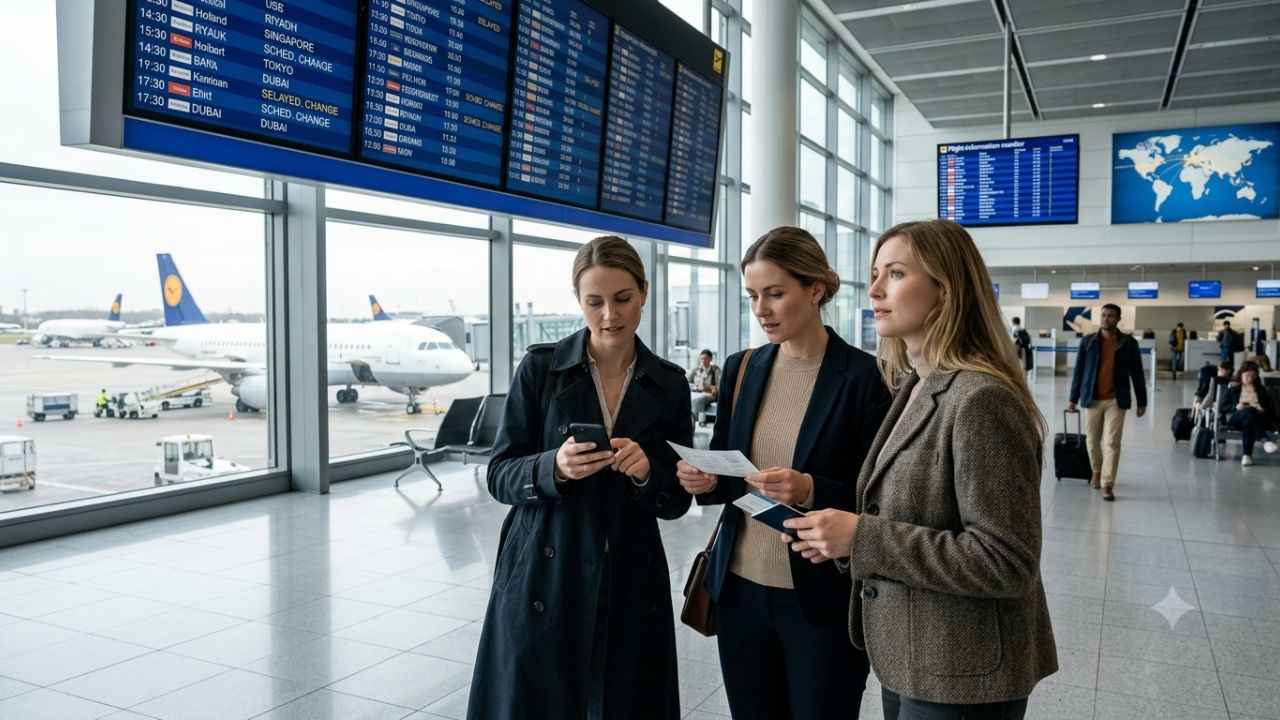
International commercial aviation is experiencing a structural realignment as Lufthansa Group, British Airways, Air France-KLM, and major global airlines suspend scheduled services across the Middle East, postpone intercontinental route launches, and divert long-haul aircraft around restricted flight corridors spanning from Eastern Europe to the Persian Gulf.
The convergence of escalating armed conflicts across the Middle East and the persistent closure of Russian airspace has fractured commercial air transport. The immediate catalyst centers on military strikes targeting infrastructure surrounding Riyadh's King Khalid International Airport (RUH), prompting an emergency wave of airline suspensions that has severed direct air links between European capitals, the Arabian Peninsula, and the Indian subcontinent.
Beyond immediate tactical cancellations, legacy network carriers are executing long-term strategic adjustments. Flight frequencies to major Gulf transit hubs—including Dubai, Doha, and Abu Dhabi—have been trimmed, seasonal services to Bahrain and Tel Aviv postponed deep into 2027, and planned transcontinental route launches deferred. For international passengers, corporate travel departments, and global tourism operators, the resulting operational environment brings extended flight times, widespread schedule revisions, and diminished seat availability across the Eurasian aviation corridor.
The Global Route Disruption Matrix: Airline-by-Airline Suspensions
Commercial airlines have responded to escalating security risks with decisions ranging from temporary tactical cancellations to multi-year route postponements and permanent commercial withdrawals.
The table below outlines the comprehensive network adjustments implemented by international airlines operating between Europe, North America, the Middle East, and Asia:
| Operating Airline | Routes & Gateways Impacted | Nature of Operational Change | Current Duration / Suspension Window |
|---|---|---|---|
| Lufthansa Group | Frankfurt, Munich, Vienna, Zurich – Riyadh | Full flight cancellation | Suspended through 16 October 2026 |
| Air France | Paris Charles de Gaulle (CDG) – Riyadh | Complete schedule suspension | Suspended through late October 2026 |
| KLM Royal Dutch Airlines | Amsterdam (AMS) – Riyadh, Dammam, Dubai | Extended route cancellations | Riyadh through end of October; Dubai & Dammam through 24 October 2026 |
| British Airways | London Heathrow (LHR) – Jeddah | Permanent route withdrawal | Service completely discontinued |
| British Airways | London Heathrow (LHR) – Bahrain | Extended multi-month suspension | Suspended through March 2027 |
| British Airways | London Heathrow (LHR) – Abu Dhabi | Route resumption postponed | Deferred to Winter 2027–2028 operating season |
| British Airways | London Heathrow (LHR) – Doha & Riyadh | Daily capacity reduction | Frequencies curtailed across winter schedule |
| Finnair | Helsinki (HEL) – Dubai & Doha | Long-term operational freeze | Suspended through 27 March 2027 |
| Singapore Airlines | Singapore (SIN) – Dubai (DXB) | Cancellation of flights SQ494 / SQ495 | Suspended through 1 December 2026 |
| Scoot | Singapore (SIN) – Jeddah (JED) | Cancellation of flights TR796 / TR797 | Suspended through 2 December 2026 |
| Cathay Pacific | Hong Kong (HKG) – Dubai & Riyadh | Resumption delayed | Postponed through 31 January 2027 |
| Delta Air Lines | Atlanta (ATL) – Riyadh | Inaugural route launch postponed | Service launch deferred to March 2027 |
| Delta Air Lines | Atlanta / Boston – Tel Aviv | Service suspension & postponed debut | Atlanta suspended through 18 Dec 2026; Boston postponed indefinitely |
| Virgin Atlantic | London Heathrow (LHR) – Dubai | Comprehensive commercial suspension | Suspended through October 2027 |
| Philippine Airlines | Manila (MNL) – Riyadh | Direct long-haul route suspension | Suspended through 29 November 2026 |
| Air Canada | Toronto / Montreal – Dubai & Tel Aviv | Seasonal flight suspension | Suspended through March 2027 |
| Etihad Airways | Abu Dhabi (AUH) – Saudi Arabian gateways | Operational precautionary suspension | Suspended through 13 October 2026 |
| Gulf Air | Bahrain (BAH) – Riyadh | Regional shuttle flight grounding | Cancelled through 17 October 2026 |
| IndiGo | Indian gateways – Riyadh & Dammam | High-frequency flights cancelled | Suspended through 15 October 2026 |
| Air India | Delhi / Mumbai – Riyadh | Scheduled services grounded | Suspended through 15 October 2026 |
| Akasa Air | Indian gateways – Riyadh & Jeddah | International services halted | Suspended through 13 October 2026 |
| Korean Air | Seoul Incheon (ICN) – Dubai | Nonstop service frozen | Suspended until further notice |
| ITA Airways | Rome Fiumicino (FCO) – Dubai | Medium-haul schedule suspension | Suspended through 24 October 2026 |
| airBaltic | Riga (RIX) – Dubai | Winter route suspension | Suspended through 24 October 2026 |
| Wizz Air | European bases – Dubai & Abu Dhabi | Seasonal capacity withdrawal | Multiple winter-season flights cancelled |
| Turkish Airlines | Istanbul (IST) – Tehran | Bordering airspace suspension | Precautionary regional suspension |
European Flagship Carriers: Navigating Escalating Middle East Risks
European airlines occupy the most vulnerable operational position in the current geopolitical environment. Connecting Europe to the fast-growing economies of South Asia, the Far East, and the Gulf requires transit through narrow navigational corridors that are increasingly contested.
Lufthansa Group: Immediate Riyadh Freeze
The Lufthansa Group—encompassing Lufthansa, Swiss International Air Lines, Austrian Airlines, and Brussels Airlines—enacted immediate cancellations on all passenger services bound for Riyadh following strikes near King Khalid International Airport. German aviation safety planners halted operations through October 16, 2026, pending technical reviews of airport ground safety and approach radar integrity.
Because Frankfurt and Munich operate as central connecting nodes for corporate travelers across North America and Europe, Lufthansa's Riyadh cancellations severed transit links for thousands of business travelers, conference attendees, and government personnel. While transatlantic connections to destinations such as San Francisco, New York, and Chicago continue operating on normal timetables, passengers attempting to transit onward to Saudi Arabia have been forced to rebook onto alternative carriers or postpone travel entirely.
Air France-KLM: Extending the Gulf Perimeter
The Air France-KLM group has taken an even more conservative operational stance. Air France extended its complete suspension of flights to and from Riyadh through the end of October 2026. Sister carrier KLM Royal Dutch Airlines suspended operations linking Amsterdam Schiphol to Riyadh, Dammam, and Dubai through late October.
Beyond direct station cancellations, KLM implemented significant flight path revisions to keep its aircraft clear of Iranian, Iraqi, and Israeli airspace, alongside specific high-risk sectors over the Persian Gulf. To maintain service to Tel Aviv safely without requiring crew layovers in conflict zones, KLM established an operational technical stop in Larnaca, Cyprus. Aircraft land at Larnaca to rotate flight crews and refuel, enabling the airline to maintain essential transport links while safeguarding flight personnel under European Union Aviation Safety Agency (EASA) duty guidelines.
British Airways: Permanent Network Pruning and Long-Term Deferrals
British Airways' response demonstrates how geopolitical volatility can accelerate permanent route restructuring:
- London–Jeddah Discontinuation: British Airways formally discontinued its scheduled service between London Heathrow and Jeddah. Rather than treating the halt as a temporary operational pause, the airline elected to withdraw the route from its long-term commercial catalog, reallocating valuable widebody aircraft capacity to North American and transatlantic leisure routes.
- Bahrain Suspended Through Spring 2027: Operations to Bahrain International Airport have been suspended through March 2027, cutting one of the carrier's oldest historical routes in the Gulf.
- Abu Dhabi Deferred to Winter 2027–2028: The planned commercial resumption of London Heathrow to Abu Dhabi has been pushed back by more than a year.
- Doha and Riyadh Frequency Trims: British Airways reduced weekly frequencies to both Doha and Riyadh, acknowledging subdued corporate travel demand and heightened operational insurance premiums.
Finnair: The Squeeze Between Russian Airspace and Middle East Volatility
No European airline has experienced greater operational upheaval than Finland’s flag carrier, Finnair. Since the European Union imposed sanctions closing Russian airspace in February 2022, Finnair lost its historic geographic advantage of offering the fastest, shortest great-circle connections between Northern Europe and East Asia.
Now, secondary instability across the Middle East has created a dual crisis for the carrier:
- Gulf Suspensions: Finnair has extended its complete suspension of flights to Dubai and Doha through 27 March 2027, effectively abandoning its Middle East point-to-point and codeshare feeder operations for the entire winter season.
- Extreme Eurasian Detours: To connect Helsinki with Tokyo, Seoul, Shanghai, Bangkok, Singapore, and Delhi without overflying Russia or entering volatile Middle Eastern sectors, Finnair must route aircraft either over the North Pole or via a southern detour through Central Asia. These alternative flight paths add two to four flight hours per journey, dramatically escalating fuel burn, requiring extra relief pilots, and reducing overall aircraft utilization rates across its Airbus A350 fleet.
+-----------------------------------------------------------------------------------+
|                        FINNAIR ROUTING IMPACT COMPARISON                          |
+-----------------------------------------------------------------------------------+
  ROUTE                PRE-RESTRICTION FLIGHT TIME     CURRENT DETOUR FLIGHT TIME
  ---------------------------------------------------------------------------------
  Helsinki -> Tokyo    ~9 hours (Siberian corridor)    13 to 13.5 hours (Polar route)
  Helsinki -> Seoul    ~8.5 hours (Russian airspace)   12 to 12.5 hours (Central Asia)
  Helsinki -> Shanghai ~9 hours (Trans-Russia)         12 to 12.5 hours (South detour)
  Helsinki -> Delhi    ~6.5 hours (Direct airway)       8.5 to 9 hours (Avoidance track)
+-----------------------------------------------------------------------------------+
Global Network Pullback: Asian and North American Airlines Respond
The ripple effects of Middle Eastern airspace closures extend far beyond European flag carriers, influencing major aviation hubs across East Asia, Southeast Asia, South Asia, and North America.
Southeast and East Asia: Cathay Pacific, Singapore Airlines, and Scoot
- Singapore Airlines & Scoot: Singapore Airlines cancelled its flagship daily service between Singapore and Dubai (SQ494 and SQ495) through December 1, 2026. Its low-cost subsidiary, Scoot, suspended services between Singapore and Jeddah (TR796 and TR797) through December 2, 2026, cutting essential pilgrimage routes connecting Southeast Asian Muslim travelers to western Saudi Arabia.
- Cathay Pacific: Hong Kong's flagship airline postponed the resumption of its nonstop routes to both Dubai and Riyadh through January 31, 2027. The postponement disrupts corporate travelers seeking direct links between Greater China and the Gulf Cooperation Council.
- Korean Air: South Korea's premier carrier suspended its nonstop Seoul Incheon to Dubai service indefinitely, directing passengers to interline codeshare alternatives.
South Asian Labor Corridors: High-Frequency Route Freezes
The air corridor linking India with Saudi Arabia represents one of the highest-volume commercial aviation flows in the world, carrying millions of expatriate workers, business travelers, and religious pilgrims annually. The sudden closure of Riyadh airport and regional security alerts caused severe disruption:
- IndiGo: India's largest carrier cancelled all flights into Riyadh and Dammam through October 15, 2026, stranding thousands of migrant workers across Delhi, Mumbai, Hyderabad, and Kerala.
- Air India & Air India Express: Suspended flights into Riyadh through October 15, while adjusting schedules for flights into Jeddah and Dammam.
- Akasa Air: The rapidly expanding Indian budget airline halted scheduled services to both Riyadh and Jeddah through October 13.
North American Carriers: Deferring Middle East Expansion
In the United States and Canada, airlines are scaling back planned commercial expansions into the Middle East:
- Delta Air Lines: Delta postponed the launch of its highly publicized nonstop route between Atlanta Hartsfield-Jackson and Riyadh until March 2027. In addition, Delta extended its suspension of flights between Atlanta and Tel Aviv through December 18, 2026, and postponed the debut of its planned Boston-Tel Aviv route indefinitely.
- Air Canada: Canada's national carrier suspended all flights to Dubai and Tel Aviv through March 2027, focusing international widebody assets on European and transatlantic corridors.
- Virgin Atlantic: Virgin Atlantic pulled its scheduled London–Dubai service through October 2027, directing holidaymakers to book vacation packages via partner carriers.
The Geopolitical Airspace Matrix: Understanding Closed and Restricted Corridors
The primary operational challenge facing airline flight dispatchers is the severe reduction in safe, available airspace across Eurasia. When multiple adjacent nations restrict or close their flight information regions (FIRs), commercial traffic is squeezed into narrow choke points.
The table below summarizes the operational status of conflict-affected airspace corridors:
| Airspace / Country | Regulatory & Operational Status | Commercial Aviation Network Consequences |
|---|---|---|
| Iran | Closed to international civil aviation | Heavy detour penalty; Europe–Asia traffic forced north or south |
| Iraq | Open with severe safety advisories | Metred traffic; multiple carriers refuse overflight rights |
| Israel | Restricted airspace operating environment | Tel Aviv flights subject to suspensions, diversions, or tech stops |
| Qatar | Partial restrictions, designated transit tracks | Inbound and outbound Doha connections subject to holding |
| Kuwait | Restricted overflight slots | Transit airways constrained; select regional flights halted |
| United Arab Emirates | Operational with narrow transit corridors | Dubai and Abu Dhabi traffic funnelled through southern tracks |
| Saudi Arabia | Riyadh airport and central sectors restricted | Significant flight cancellations, diversions across Red Sea |
| Jordan | Safety-related flow restrictions | Amman flight banks subject to tactical departure metering |
| Lebanon | Highly volatile conflict zone | Beirut flights suspended by virtually all international carriers |
| Russia | Closed to EU, UK, US, and allied carriers | Enormous time and fuel penalties on Europe–Asia routes |
| Ukraine | Completely closed since February 2022 | All civilian overflights prohibited across entire territory |
The Operational Geometry of Airspace Avoidance
When airlines alter flight paths to circumvent conflict zones, the consequences extend far beyond extended flight times on passenger ticket receipts. Every hour added to a long-haul commercial flight creates substantial operational costs:
+-----------------------------------------------------------------------------------+
|                        THE COMPOUNDING COST OF AIRSPACE DETOURS                   |
+-----------------------------------------------------------------------------------+

     [ADDITIONAL FLIGHT HOURS]
                |
                +---> [MASSIVE FUEL CONSUMPTION]
                |     • 10,000 to 25,000 lbs extra jet fuel per flight leg
                |     • Substantial increase in carbon emissions & costs
                |
                +---> [PAYLOAD & PASSENGER RESTRICTIONS]
                |     • Aircraft carry extra fuel instead of revenue cargo
                |     • Mandatory seat capping on ultra-long-range flights
                |
                +---> [CREW DUTY-HOUR EXCEEDANCE]
                |     • Mandates double crews (4 pilots instead of 2)
                |     • Rest requirements trigger overnight aircraft groundings
                |
                +---> [AIRFRAME DEPLOYMENT BOTTLENECKS]
                      • Extended block times reduce weekly flight rotations
                      • Fewer total services can be operated with existing fleet
1. Jet Fuel Consumption and Carbon Premiums
A twin-engine widebody airliner like the Boeing 787-9 or Airbus A350-900 burns between 10,000 and 13,000 pounds of jet fuel per hour of flight. Adding three hours to a journey between Northern Europe and East Asia requires carrying roughly 35,000 additional pounds of fuel.
Because aircraft burn fuel simply to carry the weight of additional fuel (the fuel penalty), operating costs increase exponentially, forcing airlines to either raise base ticket fares or cancel marginal routes.
2. Crew Duty Regulations and Tech Stops
Under international civil aviation regulations enforced by the FAA, EASA, and the UK CAA, flight crew duty periods are strictly limited to prevent pilot fatigue. When flight times exceed statutory maximums (typically 12 to 14 hours for an unaugmented two-pilot crew), airlines must either carry relief pilots (requiring dedicated crew rest compartments that remove sellable passenger seats) or introduce intermediate technical stops (such as KLM's crew rotations in Larnaca).
3. Asymmetric Competition from Non-Restricted Airlines
European and North American carriers operate under a severe competitive disadvantage compared to state-backed carriers from countries that maintain access to Russian and Iranian airspace—such as Air China, China Eastern, China Southern, and Emirates.
While a European airline flying between Paris and Tokyo must fly a circuitous 14-hour southern or polar detour, Chinese airlines can fly direct great-circle routes across Siberia in less than 11 hours. This three-hour time savings, combined with substantially lower fuel burn, has forced several Western carriers to suspend Asian destinations that are no longer commercially viable against unconstrained competitors.
Passenger Protection, Rebooking Protocols, and Travel Guidance
For international travelers navigating cancellations, schedule retimings, and missed connections, understanding legal rights and airline obligations is paramount.
Passenger Rights Under EC 261/2004 and UK261
Passengers flying on European airlines or departing from European airports are covered by European Union Regulation (EC) No 261/2004 or the corresponding UK regulation:
- Duty of Care Remains Mandatory: When a flight is cancelled or delayed due to war, regional conflict, or governmental airspace closures, the disruption is legally classified as an extraordinary circumstance beyond the airline’s control. Consequently, airlines are exempted from paying statutory cash compensation (the standard €250 to €600 compensation).
- Meals and Accommodation: Even during extraordinary geopolitical events, the airline’s duty of care is unconditional. If a cancellation or diversion strands a passenger overnight, the carrier must provide complimentary hotel accommodation, meals, ground transportation, and access to communications.
- Refund or Rerouting: Passengers whose flights are cancelled maintain the legal right to choose between a full cash refund of the unused ticket or re-routing to their final destination at the earliest opportunity under comparable transport conditions.
Strategic Travel Guidance for Itinerary Management
Travelers currently holding reservations or planning journeys across Eurasia should take several proactive precautions:
- Book Single-Ticket Protected Itineraries: Never book complex itineraries involving Middle Eastern transit points on separate, unlinked tickets. If your feeder flight into Dubai or Doha is delayed due to an airspace rerouting, an onward carrier on a separate booking will treat you as a no-show, forfeiting your ticket. Booking under a single airline ticket guarantees that the operating carrier must rebook you if a misconnect occurs.
- Select Western Transatlantic and Pacific Routings: For journeys connecting North America with East Asia or Australia, prioritize transpacific routings via Tokyo, Seoul, or Taipei rather than transiting through European or Middle Eastern hubs. Transpacific routes remain unaffected by conflict-zone closures.
- Verify Travel Insurance Geopolitical Exclusions: Many standard consumer travel insurance policies contain explicit exclusion clauses for disruptions arising from acts of war, military hostilities, or government civil aviation closures. Review policy terms carefully and consider specialized travel disruption coverage.
- Monitor Official Regulatory Portals: Keep abreast of safety bulletins published by the European Union Aviation Safety Agency via its Conflict Zone Information Bulletins (CZIB) portal (
easa.europa.eu) and the FAA's Prohibitions, Restrictions, and Notices (NOTAM) system.
The Future of Global Aviation Connectivity
The international aviation industry is navigating a permanent transformation in global route geometry. As security conditions across the Middle East remain volatile and Russian airspace remains closed to Western carriers, the era of frictionless, low-cost long-haul air transit between Europe and Asia has paused.
Airlines are redesigning their network topologies: legacy European carriers are pivoting widebody capacity toward robust North American and Latin American markets, while Asian carriers are restructuring long-haul connections around southern maritime tracks. Until diplomatic solutions restore stability to critical airspace corridors, international travelers must adapt to longer journeys, higher operational costs, and an aviation world where geographic boundaries and geopolitical alliances dictate the paths of commercial flight.
Related Travel Guides
Disclaimer
This article is for informational and educational purposes only. It does not constitute legal, financial, or professional advice. While we strive to provide accurate and up-to-date information, travel policies, regulations, and conditions change rapidly. Always verify information with official sources before making travel decisions. Nomad Lawyer makes no representations about the accuracy, reliability, completeness, or suitability of the information provided. Readers should consult qualified professionals for advice specific to their circumstances. The views expressed in this article are those of the author and do not necessarily reflect the views of Nomad Lawyer.
Raushan Kumar
Founder & Lead Developer
Full-stack developer with 11+ years of experience and a passionate traveller. Raushan built Nomad Lawyer from the ground up with a vision to create the best travel and law experience on the web.
Learn more about our team →