
Middle East Aviation Crisis: 1,212 Cancellations and 1,304 Delays Paralyze Saudi Arabia, UAE, and Regional Air Corridors

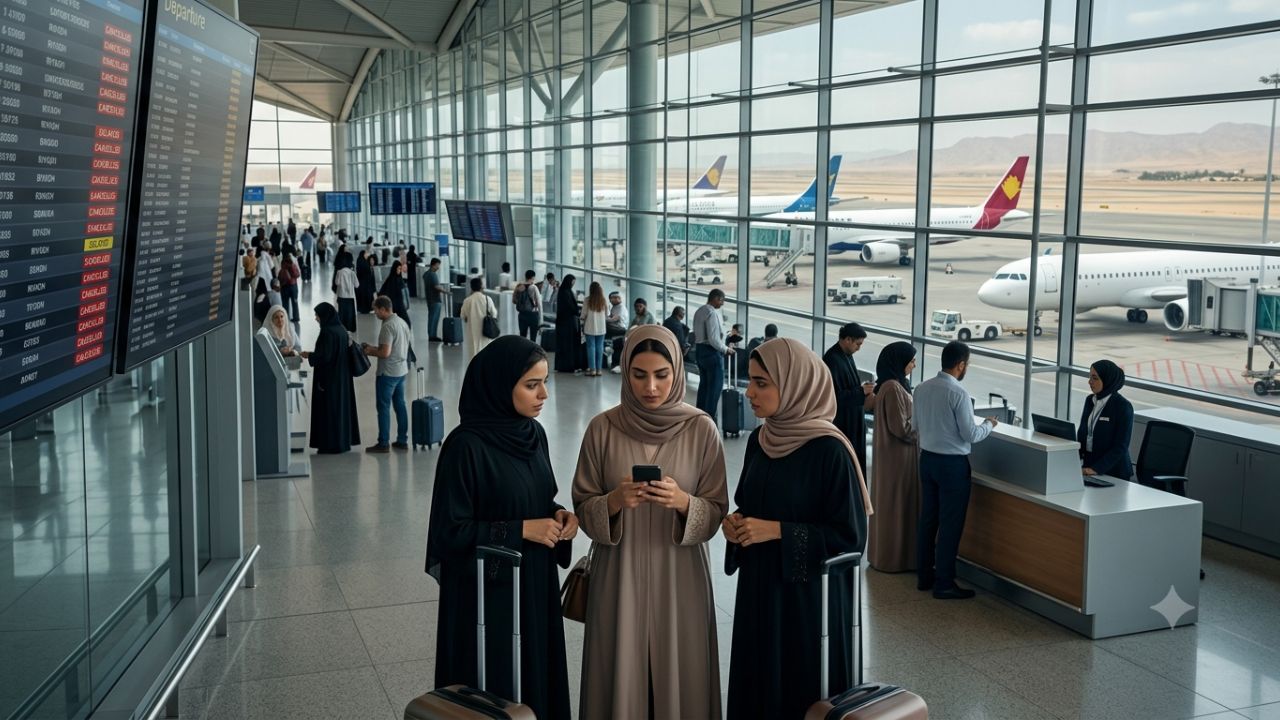
Commercial aviation across the Middle East has plunged into severe operational turmoil, with verified flight tracking records documenting 1,212 cancellations and 1,304 delays across major regional hubs following heightened security warnings and drone and missile threats targeting Saudi aviation infrastructure.
The extensive wave of cancellations, verified through operational records captured on October 12, 2026, at 5:00 PM ET (October 13 at 1:00 AM Gulf Standard Time) via FlightAware and regional dispatch centers, has disrupted travel itineraries for tens of thousands of international and domestic passengers. Saudi Arabia sits at the center of the disruption, with its primary international gateways in Riyadh, Jeddah, Dammam, and Medina recording dramatic schedule breakdowns. The operational fallout has quickly spread across adjacent airspace, forcing cascading delays and tactical groundings throughout the United Arab Emirates, Egypt, Qatar, Jordan, Bahrain, Oman, Kuwait, Syria, and Türkiye.
Airlines have instituted emergency route realignments, precautionary flight suspensions, and elevated security protocols in response to credible security threats. With national flag carriers and low-cost operators alike struggling to reposition airframes and flight crews around expanding military avoidance zones, long-haul connecting banks connecting Europe, Asia, and North America face mounting operational strain.
Ground Zero in Saudi Arabia: 997 Cancellations Across 14 Gateways
Saudi Arabia has absorbed the brunt of the aviation disruption, logging 997 cancellations and 342 delays across 14 monitored civil and regional airports.
The concentration of groundings reflects immediate security cautions surrounding the Kingdom's airspace:
- King Khalid International Airport (RUH) in Riyadh: Suffered an unprecedented paralysis, leading the entire regional dataset with 569 cancellations alongside six delays. Tracked operations reveal 285 inbound cancellations (representing 81 percent of scheduled arrival traffic) and 284 outbound cancellations (83 percent of scheduled departures).
- King Abdulaziz International Airport (JED) in Jeddah: As the Kingdom's primary western gateway and pilgrimage hub, Jeddah recorded 179 cancellations and 210 delays. Inbound cancellations stood at 88 flights (23 percent), while outbound groundings reached 91 flights (24 percent).
- King Fahd International Airport (DMM) in Dammam: The Eastern Province hub logged 89 cancellations (44 inbound, 45 outbound, representing roughly 36 to 37 percent of tracked operations) and 58 delays.
- Prince Mohammad Bin Abdulaziz International Airport (MED) in Medina: Processed 38 cancellations (19 arrivals and 19 departures, impacting 20 to 21 percent of its schedule) alongside 32 delays.
- Abha Regional Airport (AHB): Recorded 31 cancellations (15 destination, 16 origin, roughly 37 to 39 percent) and 20 delays.
- Prince Sultan Bin Abdulaziz Regional Airport (TUU) in Tabuk: Documented 17 cancellations (8 destination, 9 origin) and eight delays.
- Taif International Airport (TIF): Reported 16 cancellations (eight inbound and eight outbound, accounting for over 61 percent of scheduled traffic) and two delays.
Secondary and domestic stations throughout the Kingdom experienced severe operational halts:
- Al Jouf Domestic (AJF): 12 cancellations (6 arrival, 6 departure, up to 75 percent of flights).
- Hail Regional (HAS): 12 cancellations (6 arrival, 6 departure, up to 60 percent).
- Bisha Domestic (BHH): 8 cancellations (5 arrival, 3 departure, representing up to 100 percent of scheduled arrivals).
- Arar Domestic (RAE): 7 cancellations (4 arrival, 3 departure, up to 66 percent).
- Guriat Domestic (URY): 6 cancellations (3 arrival, 3 departure, 75 percent).
- Al Qaisumah International (AQI): 7 cancellations (3 arrival, 4 departure, up to 100 percent of departures).
- Prince Abdulmohsin Bin Abdulaziz Airport (YNB) in Yanbu: 6 cancellations (3 arrival, 3 departure, 75 percent).
This widespread domestic collapse illustrates how disruptions at hub centers like Riyadh and Jeddah immediately immobilize civic mobility across the Kingdom's provincial network.
Regional Ripple Effects: UAE, Egypt, Qatar, and the Levant
While Saudi Arabia absorbed the highest proportion of absolute cancellations, neighboring hubs across the Gulf Cooperation Council (GCC) and the wider Middle East experienced widespread schedule delays as controllers managed traffic diversions and congested holding patterns.
1. United Arab Emirates: 409 Delays and 78 Cancellations
The UAE’s aviation system faced intense operational friction:
- Dubai International Airport (DXB): The world’s busiest international passenger hub recorded 220 delays and 62 cancellations (31 arrival cancellations and 31 departure cancellations, representing 6 percent of tracked traffic).
- Zayed International Airport (AUH) in Abu Dhabi: Processed 129 delays and eight cancellations (5 destination, 3 origin).
- Sharjah International Airport (SHJ): Reported 60 delays and eight cancellations (4 destination, 4 origin).
2. Egypt: 126 Delays and 48 Cancellations
Egypt served as a secondary bottleneck for flights transiting between Europe and the Red Sea corridor:
- Cairo International Airport (CAI): Recorded 118 delays and 42 cancellations (22 inbound cancellations and 20 outbound cancellations, representing 6 to 7 percent of operations).
- Alexandria International Airport (ALY): Logged eight delays and six cancellations (3 destination, 3 origin, representing up to 14 percent of its scheduled service).
3. Other Regional Aviation Gateways
- Qatar (Hamad International Airport DOH): Documented 116 delays and 22 cancellations (11 arrival, 11 departure, representing 3 percent of operations).
- Jordan (Queen Alia International Airport AMM in Amman): Logged 32 delays and 21 cancellations (11 inbound, 10 outbound, affecting 10 to 11 percent of operations).
- Bahrain International Airport (BAH): Reported 39 delays and ten cancellations (5 destination, 5 origin, representing 5 percent).
- Oman (Muscat International Airport MCT): Recorded 31 delays and 12 cancellations (6 destination, 6 origin, representing 5 to 6 percent).
- Kuwait International Airport (KWI): Logged 14 delays and five cancellations (3 inbound cancellations).
- Syria (Damascus International Airport DAM): Recorded three delays and seven cancellations (3 destination, 4 origin, affecting 11 to 12 percent).
- Türkiye (Istanbul Hubs): Istanbul Airport (IST) recorded 192 delays and 12 cancellations (6 arrival, 6 departure), while Sabiha Gökçen (SAW) reported five cancellations (2 destination, 3 origin).
Carrier Breakdown: Saudi Operators Absorb Over 50 Percent Cancellations
Operational statistics across individual airlines highlight the heavy toll on home-based Saudi carriers, while international Gulf mega-carriers weathered the disruption primarily through extended en-route delays.
Saudi Arabian Airlines and Domestic Fleets
- Saudia: The Kingdom's national flag carrier canceled 273 flights—representing 53 percent of its entire tracked schedule—while posting 111 delays (21 percent).
- Flynas: The prominent low-cost carrier suffered an even higher cancellation rate, grounding 138 flights (57 percent of scheduled operations) alongside 40 delays (16 percent).
- flyadeal: The budget subsidiary of Saudia recorded 64 cancellations (37 percent) and 27 delays (15 percent).
- Riyadh Air: The emerging national carrier recorded 29 cancellations, representing 100 percent of its tracked active sectors, with zero delays.
Gulf Mega-Carriers and Regional Airlines
- Emirates: Canceled 15 flights (2 percent) while absorbing 122 delays (23 percent) as long-haul flights navigated airspace detours.
- Qatar Airways: Reported 16 cancellations (2 percent) and 104 delays (16 percent).
- Etihad Airways: Documented four cancellations (1 percent) alongside 106 delays (32 percent of its tracked schedule).
- flydubai: Logged 19 cancellations (6 percent) and 78 delays (27 percent).
- Air Arabia: Recorded eight cancellations (3 percent) and 52 delays (22 percent).
- Gulf Air: Logged eight cancellations (6 percent) and 28 delays (22 percent).
- Oman Air: Grounded ten flights (11 percent) alongside nine delays (10 percent).
- SalamAir: Recorded two cancellations (2 percent) and 14 delays (20 percent).
Levant and Eastern Mediterranean Carriers
- EgyptAir: Logged 18 cancellations (7 percent) and 35 delays (14 percent).
- Air Cairo: Reported two cancellations (1 percent) and 37 delays (24 percent).
- Royal Jordanian: Recorded eight cancellations (6 percent) and 13 delays (9 percent).
- Jordan Aviation: Documented two cancellations (18 percent) and two delays (18 percent).
- Turkish Airlines: Logged eight cancellations and 182 delays (12 percent).
- Pegasus Airlines: Recorded three cancellations and 165 delays (22 percent).
- Middle East Airlines (MEA): Reported four cancellations (7 percent) and five delays (8 percent).
- Jazeera Airways (Kuwait): Recorded two cancellations (3 percent) and one delay (1 percent).
- Israir (Israel): Documented two cancellations (2 percent) and 36 delays (51 percent of tracked flights).
Detailed Disruption Data: Airport-by-Airport Matrix
The following table provides verified operational data captured across 23 key regional airports during the monitoring period.
Middle East Airport Cancellations Matrix (October 12–13, 2026)
| Airport Name | IATA Code | Country | Cancellations as Destination (Inbound) | Cancellations as Origin (Outbound) | Operational Share Cancelled |
|---|---|---|---|---|---|
| King Khalid International | RUH | Saudi Arabia | 285 | 284 | 81% In / 83% Out |
| King Abdulaziz International | JED | Saudi Arabia | 88 | 91 | 23% In / 24% Out |
| King Fahd International | DMM | Saudi Arabia | 44 | 45 | 37% In / 36% Out |
| Prince Mohammad Bin Abdulaziz | MED | Saudi Arabia | 19 | 19 | 21% In / 20% Out |
| Abha Regional | AHB | Saudi Arabia | 15 | 16 | 37% In / 39% Out |
| Prince Sultan Bin Abdulaziz | TUU | Saudi Arabia | 8 | 9 | 36% In / 39% Out |
| Taif International | TIF | Saudi Arabia | 8 | 8 | 66% In / 61% Out |
| Al Jouf Domestic | AJF | Saudi Arabia | 6 | 6 | 66% In / 75% Out |
| Hail Regional | HAS | Saudi Arabia | 6 | 6 | 60% In / 54% Out |
| Bisha Domestic | BHH | Saudi Arabia | 5 | 3 | 100% In / 75% Out |
| Arar Domestic | RAE | Saudi Arabia | 4 | 3 | 66% In / 60% Out |
| Guriat Domestic | URY | Saudi Arabia | 3 | 3 | 75% In / 75% Out |
| Al Qaisumah International | AQI | Saudi Arabia | 3 | 4 | 75% In / 100% Out |
| Prince Abdulmohsin (Yanbu) | YNB | Saudi Arabia | 3 | 3 | 75% In / 75% Out |
| Dubai International | DXB | UAE | 31 | 31 | 6% In / 6% Out |
| Zayed International | AUH | UAE | 5 | 3 | 1% In / 1% Out |
| Sharjah International | SHJ | UAE | 4 | 4 | 2% In / 2% Out |
| Cairo International | CAI | Egypt | 22 | 20 | 7% In / 6% Out |
| Alexandria International | ALY | Egypt | 3 | 3 | 13% In / 14% Out |
| Hamad International | DOH | Qatar | 11 | 11 | 3% In / 3% Out |
| Queen Alia International | AMM | Jordan | 11 | 10 | 11% In / 10% Out |
| Bahrain International | BAH | Bahrain | 5 | 5 | 5% In / 5% Out |
| Muscat International | MCT | Oman | 6 | 6 | 6% In / 5% Out |
| Damascus International | DAM | Syria | 3 | 4 | 11% In / 12% Out |
| Istanbul Airport | IST | Türkiye | 6 | 6 | <1% In / <1% Out |
| Sabiha Gökçen | SAW | Türkiye | 2 | 3 | <1% In / <1% Out |
Comprehensive Carrier Performance Matrix
The operational impact across all 21 tracked commercial airlines is detailed below:
Airline Performance Under Airspace Disruption
| Airline | Home Country / Base | Tracked Cancellations | Cancellation Share (%) | Tracked Delays | Delay Share (%) | Primary Operational Consequence |
|---|---|---|---|---|---|---|
| Saudia | Saudi Arabia | 273 | 53% | 111 | 21% | Severe nationwide hub disruption |
| Flynas | Saudi Arabia | 138 | 57% | 40 | 16% | Major domestic schedule collapse |
| flyadeal | Saudi Arabia | 64 | 37% | 27 | 15% | Heavy regional fleet groundings |
| Riyadh Air | Saudi Arabia | 29 | 100% | 0 | 0% | Total schedule suspension |
| Emirates | UAE (Dubai) | 15 | 2% | 122 | 23% | Widespread en-route holding delays |
| Qatar Airways | Qatar (Doha) | 16 | 2% | 104 | 16% | Connecting bank misconnects |
| Etihad Airways | UAE (Abu Dhabi) | 4 | 1% | 106 | 32% | Extended flight plan diversions |
| flydubai | UAE (Dubai) | 19 | 6% | 78 | 27% | Regional destination cancellations |
| Air Arabia | UAE (Sharjah) | 8 | 3% | 52 | 22% | Schedule delays across Middle East |
| Gulf Air | Bahrain | 8 | 6% | 28 | 22% | Regional transit friction |
| Oman Air | Oman (Muscat) | 10 | 11% | 9 | 10% | Secondary hub cancellations |
| SalamAir | Oman (Muscat) | 2 | 2% | 14 | 20% | Moderate low-cost delays |
| EgyptAir | Egypt (Cairo) | 18 | 7% | 35 | 14% | Red Sea corridor disruption |
| Air Cairo | Egypt (Cairo) | 2 | 1% | 37 | 24% | Heavy charter and leisure delays |
| Royal Jordanian | Jordan (Amman) | 8 | 6% | 13 | 9% | Airspace avoidance realignments |
| Jordan Aviation | Jordan (Amman) | 2 | 18% | 2 | 18% | High relative percentage impact |
| Turkish Airlines | Türkiye (Istanbul) | 8 | <1% | 182 | 12% | Major connecting bank delays |
| Pegasus Airlines | Türkiye (Istanbul) | 3 | <1% | 165 | 22% | Significant charter schedule delays |
| Middle East Airlines | Lebanon (Beirut) | 4 | 7% | 5 | 8% | Security buffer flight holds |
| Jazeera Airways | Kuwait | 2 | 3% | 1 | 1% | Isolated regional cancelations |
| Israir | Israel (Tel Aviv) | 2 | 2% | 36 | 51% | Majority of schedule delayed |
Airspace Security and Rerouting Dynamics
The root cause of this systemic paralysis stems from heightened security advisories issued after drone and missile threats raised risks for civilian air corridors across central and southern Saudi Arabia.
When military risks escalate near civil airways:
- Civil Aviation Authorities Issue NOTAMs: Notices to Air Missions (NOTAMs) designate temporary restricted areas, requiring civil airliners to alter filed flight plans.
- European and American Avoidance Advisories: Agencies like the European Union Aviation Safety Agency (EASA) and the US FAA issue Conflict Zone Information Bulletins (CZIBs), advising international operators against operating within specific flight information regions (FIRs).
- Severe Airway Congestion: When direct flight corridors over the Arabian Peninsula are narrowed or closed, hundreds of intercontinental flights are channeled into bottleneck corridors over Egypt, the Sinai, Jordan, and the Persian Gulf, triggering systemic flow control delays.
- Crew Duty Limitations: Longer flight times required to circumvent restricted airspace cause pilots and cabin crews to exceed statutory duty limits, forcing cancellations even in regions unaffected by direct security threats.
Practical Traveler Survival Guide: Navigating Middle East Disruptions
Passengers holding tickets to, from, or through the Middle East must take urgent, proactive measures to safeguard their travel plans:
1. Verification of Multi-Sector Connecting Flights
- Independent Leg Verification: Travelers transiting via mega-hubs like Dubai, Doha, Riyadh, or Cairo must not rely on the on-time status of their initial departure flight. Verify the operational status of every connecting sector independently on carrier mobile apps or FlightAware.
- Minimum Layover Buffers: Given that over 400 flights across the UAE and 126 in Egypt are operating with severe delays, connecting passengers should rebook itineraries with layovers of at least 3.5 to 4 hours to avoid stranded luggage and missed transfers.
2. Passenger Rights, Rebooking Waivers, and Refund Protocols
- Fee-Free Emergency Waivers: Saudia, Flynas, Emirates, and Qatar Airways have activated flexible travel waivers for ticket holders traveling through affected airports, allowing free date changes or full refunds to original forms of payment.
- Cash Refund Entitlements: Under international carriage contracts and standard aviation consumer protection rules, if a carrier cancels a flight due to airspace closures or operational issues, passengers are entitled to a complete cash refund rather than non-negotiable travel vouchers.
3. Securing Duty of Care and Documenting Claims
- Airline Duty of Care: If stranded during an international layover due to airline operational delays, passengers have the right to request meal vouchers, hotel accommodation, and ground transportation from the operating carrier.
- Retaining Paper Trails: Save digital boarding passes, flight cancellation text messages, automated rebooking emails, and receipts for out-of-pocket expenses (lodging, dining, emergency local transport) to support travel insurance claims or statutory compensation requests.
As civil aviation authorities and airline safety directors monitor airspace safety developments across the Arabian Peninsula, the Middle East travel market faces a volatile period where flexibility, real-time tracking, and verified data remain essential for global passengers.
Related Travel Guides
Disclaimer
This article is for informational and educational purposes only. It does not constitute legal, financial, or professional advice. While we strive to provide accurate and up-to-date information, travel policies, regulations, and conditions change rapidly. Always verify information with official sources before making travel decisions. Nomad Lawyer makes no representations about the accuracy, reliability, completeness, or suitability of the information provided. Readers should consult qualified professionals for advice specific to their circumstances. The views expressed in this article are those of the author and do not necessarily reflect the views of Nomad Lawyer.
Raushan Kumar
Founder & Lead Developer
Full-stack developer with 11+ years of experience and a passionate traveller. Raushan built Nomad Lawyer from the ground up with a vision to create the best travel and law experience on the web.
Learn more about our team →